

How Liberals Trick Republicans into Ceding the Moral High Ground.
The End of Old Guard Conservatism
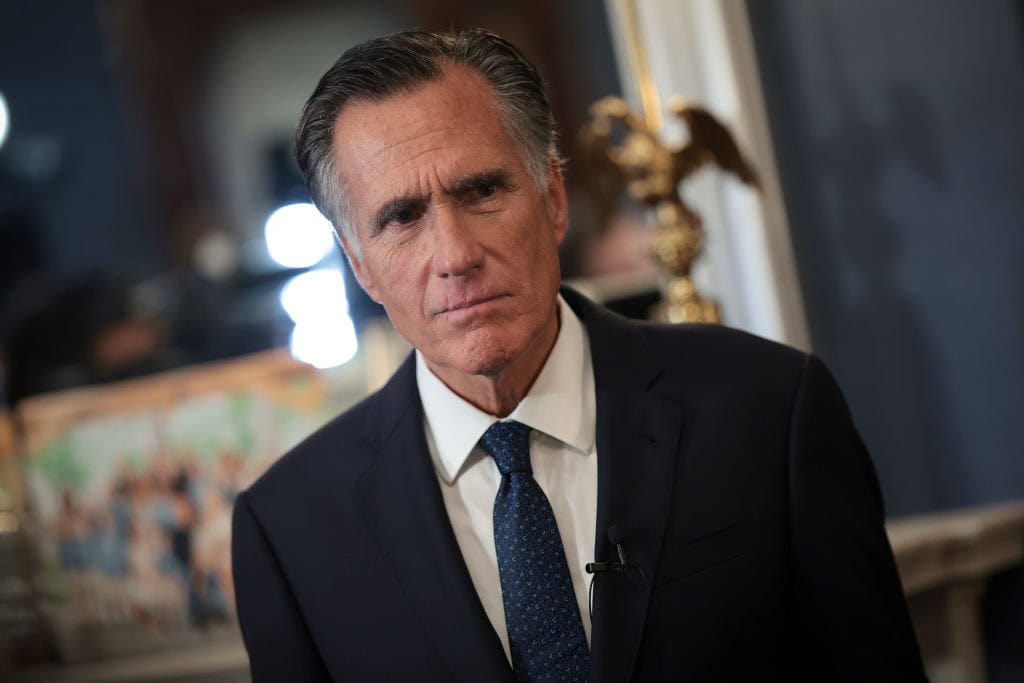
Why they couldn’t beat Trump—and won’t beat Vance.
Over the past few weeks, Old Guard conservatives have been making a concerted effort to attack Vice President JD Vance and the New Right.
Many were critical of Vance’s support for a Trump Administration proposal to allow federal dollars to go to stay-at-home parents. Dana Loesch suggested that those who accepted such funds weren’t “man enough.” Another conservative called it a “scheme” and “a longstanding tenet of the Postliberal/Orbanist policy agenda.”
Old Guard critic Jay Caruso mocked Vance for saying the administration would not “let” companies exchange American workers “with cheap foreign labor,” accusing the vice president of turning his back on the free market. Simultaneously, a chorus of Old Guard conservatives have been blasting Vance for supposedly refusing to distance himself from Nazis and groypers—and from a group of trinitarian Christians, the Society for American Civic Renewal.
These tantrums stem from the Old Guard’s belief that history was meant to unfold differently. Many conservatives mock the Left for their notion that America had reached an “end of history,” epitomized by the expected crowning of Hillary Clinton in 2016 as successor to Barack Obama, an outcome that would have solidified progressive rule for at least a generation.
But many fusionist Old Guard conservatives have their own version of an end of history, which the unlikely rise of Donald Trump has so far prevented. And as the date of the resurgence is pushed further back, their impatience is crystallizing into fury.
Santorum and Trump
The election of Barack Obama to the presidency—the first openly progressive Democrat since Lyndon Johnson—sent a jolt of fear through conservative voters in 2008. This gave way to the Tea Party wave of 2010, which produced astounding results: the Republican Party recaptured the House of Representatives, winning its largest majority since the late 1920s and a bevy of governorships.
Many groups behind these candidates, such as the Koch-backed Americans for Prosperity and the free-market-oriented FreedomWorks, were libertarian in nature and pushed dogma like Grover Norquist’s “No New Taxes” pledge. The resulting victories convinced them that their time was near. Voters had responded to their message, and in 2012 they would ride it all the way to the White House. But Obama was re-elected in 2012, easily besting Mitt Romney.
Though he did not quite fit the Tea Party mold, Romney matched well with its economic orthodoxy, especially against Rick Santorum, his spirited opponent in the Republican primaries. In mid-February 2012, the former Pennsylvania senator had surged to the top of several polls, briefly pulling ahead of Romney. Though the media focused on Santorum’s social conservatism, particularly his fervent opposition to gay marriage, his skepticism of free trade made him stand apart from the other Republican hopefuls. At the time, free trade orthodoxy was a key plank of the Republican Party.
Shortly after Santorum reached first place, attacks on this front started rolling in. “Economic Conservatives Question Santorum’s Record” read one headline. A New York Times piece, bearing all the hallmarks of an opposition hit piece, lambasted Santorum for supporting the domestic steel industry. Romney joined in, critiquing Santorum for backing what he termed a “bailout” of the sector. However, Santorum refused to yield, noting that many of his voters had lost jobs and livelihoods as the industry was enticed to leave the country.
Romney’s defeat of Santorum gave the original Tea Party relief from temporary heartburn. After winning the House in 2010, Tea Party leaders clearly had a vision: they would wrest control from the “compassionate conservatives” who had governed during the George W. Bush years and finally get one of their own in the White House.
Six years later, those plans turned to ash. All the Tea Party presidential candidates of 2012, and their most promising candidate of 2016, Ted Cruz, were crushed by the insurgent candidacy of businessman and television star Donald Trump. Announcing his presidential campaign, Trump delivered a stemwinder of a speech, addressing four key themes: the need to build a wall and deport illegal aliens, to confront China, to replace free trade with fair trade, and to ensure Iran never acquires a nuclear weapon.
On some issues, such as taking on Iran and ISIS or border security, Trump shared ground with the Tea Party, which believed Obama was too weak. But he went much further. While Cruz talked about building a fence and leading an international coalition to defeat ISIS, Trump spoke about constructing a “great wall” on the southern border and bombing “the sh*t out of” the terrorist group. And on issues such as free trade, Trump totally rejected GOP orthodoxy, like Santorum had four years previously. Unlike Santorum, however, Trump made it a centerpiece of his campaign—and GOP voters rewarded him for it.
The Latest Target
The Tea Party sought to make the best of the first Trump Administration. Many of its major figures were Tea Partiers. Mike Pompeo, elected to the House in 2010 on the Tea Party wave, later served as secretary of state. Mitt Romney’s running mate, Paul Ryan, was a Tea Party-aligned Republican who became Speaker of the House, helping shepherd the first major legislative win of Trump’s term: tax cuts, a GOP staple since Ronald Reagan’s presidency.
Vice President Mike Pence, who served in the Tea Party Caucus in the House, worked with figures like Defense Secretary Jim Mattis and Trump’s first secretary of state, Rex Tillerson, to channel and redirect Trump’s energies. Pence himself was repeatedly dispatched to Europe to deliver the increasingly difficult-to-believe message that the United States would remain enmeshed in Cold War-era thinking.
Tea Party and small-government conservatives had to grit their teeth through a fair amount of Trump’s policies, such as his early steel tariffs. After he left the White House in 2021, however, many Old Guard conservatives believed the Trump moment was over. They had always viewed him as an accident of history: Trump had decisively put an end to the Obama era by dispatching Hillary Clinton, but now they could get back to marching toward their goal.
During the Biden Administration, Paul Ryan called for GOP voters to reject Trump’s politics. Mick Mulvaney and Nikki Haley, two Tea Partiers who served in Trump’s first administration, said Trump should not run in 2024. Erick Erickson called for shooting the January 6 protesters and barring Trump from running for office again.
But the Old Guard’s hopes for a Trump challenger failed to materialize. Ron DeSantis fizzled, and Nikki Haley won only the D.C. and Vermont primaries. Trump stormed back to the nomination. Along the way, he picked JD Vance as vice president over then-North Dakota Governor Doug Burgum because, as many political observers concluded, Vance could be a potential heir, whereas Burgum would serve only as a seat warmer and was less ideologically aligned with Trump.
Trump, significantly more powerful in 2025 than in 2017, was less restrained by the party’s establishment. During the Biden interregnum, Trump had a hand in Speaker Mike Johnson’s rise to power, urging House members to pick him amid endless balloting. In 2025, Johnson returned the favor by blocking motions to rescind Trump’s tariffs—significantly expanded from the steel tariffs of 2018—and supporting other policies that his predecessor, Paul Ryan, would have strongly opposed.
The 47th president’s popularity with the base after his comeback put Tea Partiers in a bind. Republicans and movement conservatives who still wanted to work with the administration could no longer openly lambaste the president; doing so would make their message dead on arrival for the base. The direction Trump had taken the party was also clearly popular with Republicans.
Their answer, as demonstrated by Erick Erickson’s recent screed, is to attack Trump’s ideological successor instead: Vice President Vance.
Fukuyama’s Children
Those who predict an end of history are wrong. Democrats were wrong to predict decades of dominance with Hillary Clinton’s coronation in 2016. The Old Guard was likewise wrong for assuming that a politics of the 1980s would never expire.
The Old Guard’s genuine incomprehension at the poor position they find themselves in is demonstrated by their lackluster complaints of socialism, when it comes to using government to strengthen the pillars of civilization, and Nazism, when it comes to terminating the endless stream of cheap foreign labor. As Vice President Vance has argued, screaming “Socialist!” will not sway young voters if the alternative is unaffordable housing, unsafe streets, and a country they no longer recognize.
The truth is, the Old Guard’s pull-up-your-bootstraps, hyper-meritocratic politics, which forces Americans to compete against the world for jobs in their hometown, is a failure. Fusionist Old Guard conservatism has not won the presidency on its own terms since 1984—before most Millennials were even born. It failed in 2008 and failed in 2012. GOP voters rejected it in 2016, 2020, and 2024. And there is no reason to expect a different result in 2028. While there is still room in the coalition for skeptics of Trump and Vance, they must understand that their time of dominating the coalition has passed.
The train has switched tracks and is heading in a different direction. Old Guard conservatives can stay on and help the engineer, possibly negotiating the speed. But they cannot change direction without derailing it.
They have two years to decide which path they want to take.
The American Mind presents a range of perspectives. Views are writers’ own and do not necessarily represent those of The Claremont Institute.
The American Mind is a publication of the Claremont Institute, a non-profit 501(c)(3) organization, dedicated to restoring the principles of the American Founding to their rightful, preeminent authority in our national life. Interested in supporting our work? Gifts to the Claremont Institute are tax-deductible.
Suggested reading

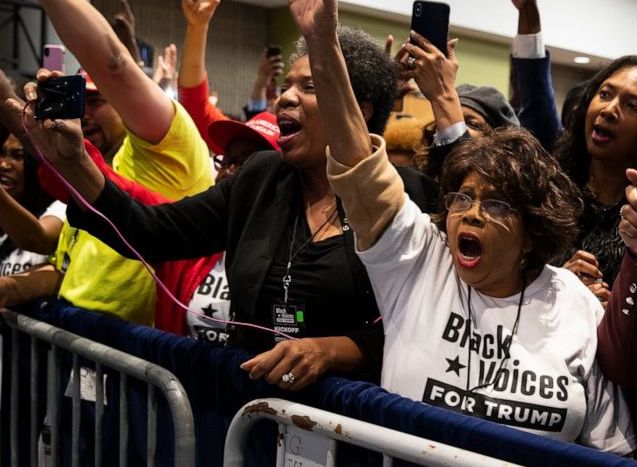
Why African Americans should be very, very mad at the Democratic Party

Patriot Front may not technically be staffed by FBI agents, but the effect is the same.

Perhaps his fellow Americans recognized he had a great soul.
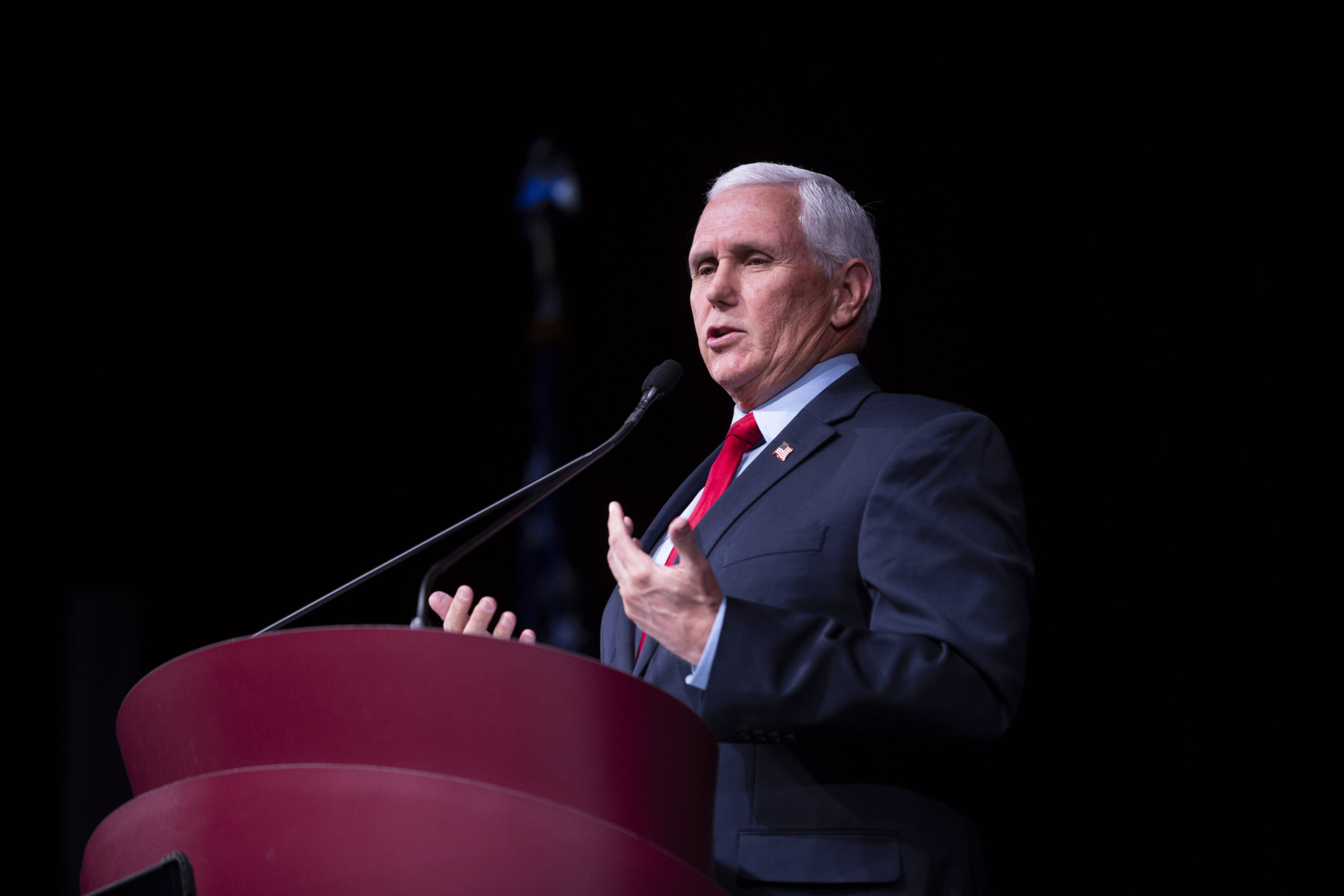
Demonizing war skeptics is wrong and wrongheaded.
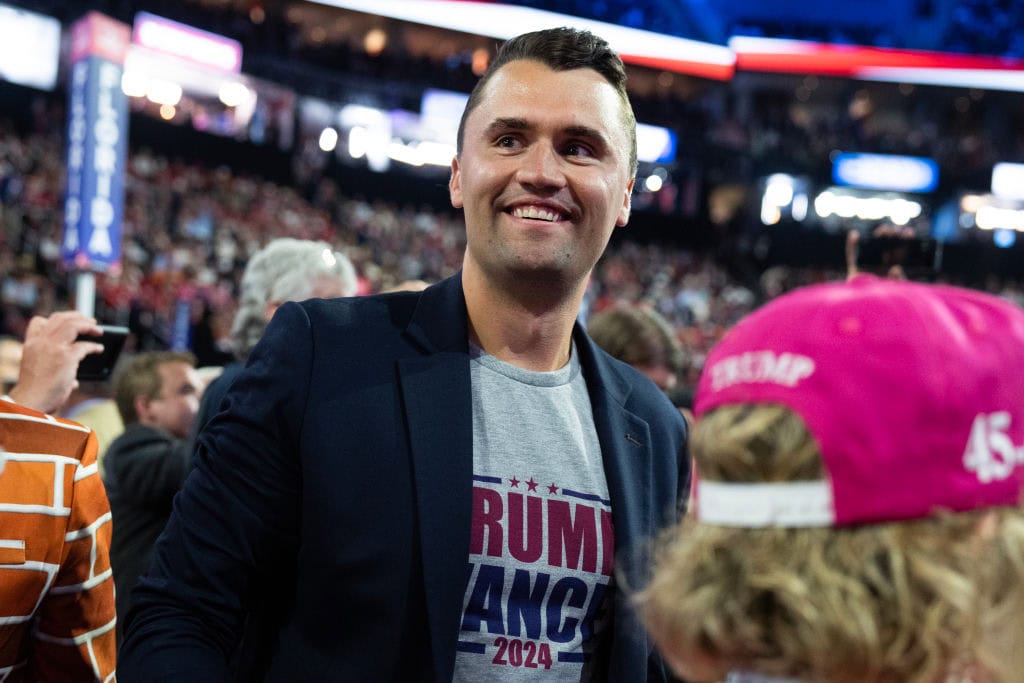
His greatest legacy is showing how faith, courage, and action can improve the nation.

