
Israel and the New American Right
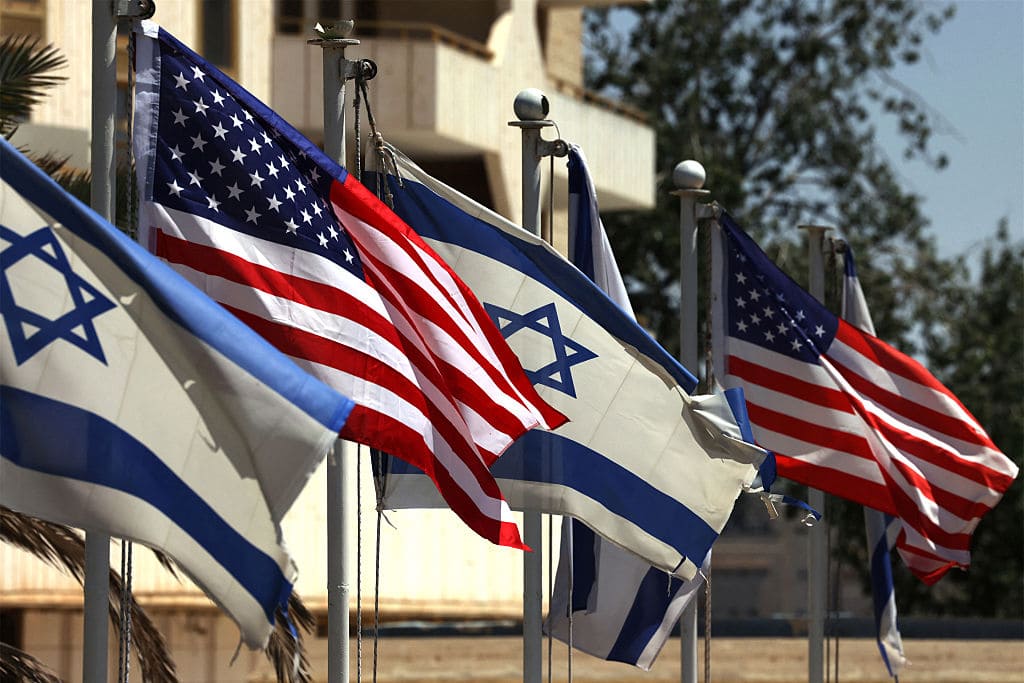
Treating every difference as bigotry will drive away young Americans.
This lightly edited speech was delivered at the 2026 National Conservatism Conference in Jerusalem on October 7, during a panel on the young Right in America and the state of Israeli-American relations.
I came here because supposed friends on the Right, as well as enemies on the Left, are slandering the great realignment that the American Right has been undergoing over the last decade, which led to the coalition that put Trump in office for the second time in 2024.
I noticed that by merely announcing online my plan to attend this conference, I have since been called both a Nazi and a sellout to the Zionists. This dual claim may not make logical sense, but it does give us a sense of what’s happening right now. People are trying to rip our coalition apart.
Many are now being encouraged to conclude that the New Right, the coalition that helped put President Trump back in the White House, and a whole generation of young conservatives have gone mad. And that story is no doubt very useful to the people telling it. The problem is that it’s just not true.
The National Security Strategy released last year describes President Trump’s foreign policy using these words: “realistic,” “pragmatic,” “principled,” “muscular,” and “restrained.” To quote: “It’s not grounded in traditional political ideology. It is motivated above all by what works for America—or, in two words, America First.”
In regard to the Middle East, it states that
America will always have core interests in ensuring that Gulf energy supplies do not fall into the hands of an outright enemy, that the Strait of Hormuz remain open, that the Red Sea remain navigable, that the region not be an incubator or exporter of terror against American interests or the American homeland, and that Israel remain secure. We can and must address this threat ideologically and militarily without decades of fruitless ‘nation-building’ wars. And of course, we also have a clear interest in expanding the Abraham Accords to more nations in the region.
And that’s pretty much the national security strategy of the United States under Trump.
Now, the worry about the conflict in Iran on the part of most Americans on the Right is not, of course, due to any support for the current regime in Iran. We would all like to see it go. The worry is that this turns into another fruitless war, which is why its outcome will likely shape Israeli-American relations for the next generation.
Take me as an example. I support the American military. I support President Trump and his administration in the hard work of governing. But I’m also among those troubled by the framing, escalatory logic, and timing of the conflict with Iran. If I’d been in a position to advise the president, which I was not, I would likely have counseled restraint. I have many friends who disagree vehemently. That disagreement, of course, is not civilizational betrayal.
Opposing endless war is not hostility to Israel. Having a different opinion of how America should fight Iran is not hatred of Jews. Those who conflate these things are committing an error with strategic consequences.
America is a nation. Israel is a nation. Interests sometimes align and sometimes do not. When they align, we act together with clarity and strength. When they do not, it is not a scandal. It’s ordinary politics among free peoples. George Washington’s Farewell Address, which warned of entangling alliances, was not a conspiracy theory. The adult posture between nations is to map the overlap honestly without either side dissolving its sovereignty into the other’s.
Regardless of our views on the issue, the future of the American-Israeli relationship is not going to look exactly like it did in the past, nor should it. What it becomes must be decided by serious people arguing from reality, not by Twitter mobs, paid intermediaries, or a binary in which every skeptic online is answered by bots as a Nazi or a Zionist pawn. That trap prevents a growing number of Americans on the Right from saying what they actually believe. They do not share every position of the old neocon hawks. They know that American and Israeli interests are not always identical. But they do not hate Jews, wish Israel destroyed, or, for heaven’s sake, support Marxist Islamists.
Whether well-meaning or not, the people who squash any discourse along these lines are not defending Israel. They’re isolating it from the next generation of American power.
It’s very sad that, over the last few years, many sensible Americans have been unwilling to have public adult discussions about this and related matters because of the controversy among the influencers and the online swirl and swarm. So many Republican voters are prevented from making clear that, while they may not think about Israel exactly like Mike Huckabee or Ted Cruz, they’re generally supportive and they oppose the Islamists.
Why is this happening? There are many reasons, but this dynamic would almost seem ridiculous if larger political forces in America weren’t using bad actors to try to divide the coalition on the Right. They appear suddenly and deeply concerned about anti-Semitism and increasingly attempt to besmirch the names of good people. And I would submit to you that this is because the remnants of the prior establishment on the Right in America hope that when Trump leaves the scene, they will rise to power once again. And they seek to use whatever means necessary to attack the vice president and others who represent the obvious future of the American Right, and to muddy the waters for American Jews and older American donors alike.
Now, American Jews and Israelis are understandably deeply concerned about the current scene. But I think this makes people especially receptive to commentators and analysts who are spreading lies about the actual landscape of reality on the Right. These actors use the tactics of the Left. They paint a picture, whether it’s true or false, of someone as anti-Semitic or a fascist. Then they smear whoever they can with guilt by association, asking the journalistic equivalent of “When did you stop beating your wife?” And then they demand denunciations. The problem in America is that many of us have stopped playing this game a long time ago, because it is the Left’s central tactic.
So while my concern is for America and the American political coalition, I think the loop of much of this discourse, the way in which it’s stuck, is harming Israeli interests.
For what it’s worth, here’s my counsel: five quick points.
First, be wary of buying a map of the American Right from intermediaries whose product is fear. Watch the people who are actually leading on the Right. Read what they write. Listen to what they say. Ask them direct questions about what they think. Make few assumptions. The prevailing larger changes in opinions about foreign policy on the Right are not based upon irrational hatred and cannot be countered, never mind prevented, by reacting as if they are.
Second, to this effect: I understand the desire to call out hatred. But here’s the problem. Denouncing anti-Semitism in America in the abstract these days is much like calling an opponent racist. Both terms have been hollowed out by the Left. The ADL, for instance, has long since lost any power over the Right by attacking figures like Donald Trump, Elon Musk, and TPUSA, which is why the FBI cut ties with them last year. We have a boy-who-cried-wolf problem in America and the West. The Left makes accusations like this all the time, and the younger rising Right doesn’t care about being called names or abstract -ists or -isms from any side. And frankly, neither do I.
But I do not mean to tell anyone to be silent. Far from it. On the contrary, if we’re going to sort through the noise, my advice is to stop using abstract categories and -isms and -ists and -istics. Call out and argue instead about specific statements and positions you think wrong or evil. Ask specific questions to specific people.
Third: understand where many of the young men on the Right are coming from. As Stephen Miller posted from the White House: “A nation is its people. This has always been true. This will always be true.”
But if you are a young white American, you have grown up in an education system and culture that celebrated both mass migration to America and organized tribalism among all those being imported there—an educational system and political culture that encouraged every ethnicity to join together as an interest group against oppression from—well, you. Young white Americans have been told that they must apologize for their whiteness, and that if they were ever to act as a group like everyone else in America they see is trained to do and celebrated for doing, they are evil or Nazis. And this anti-white sentiment and discrimination have had very predictable results.
Now I’m not going to go into this in detail, other than to say I’m not happy or sanguine about the tribalization of America. But this is the reality young people have been born into—a reality in which World War II is as far away as the Civil War was to those who fought in that conflict. And rather than clean up this mess—the great political task that is part of the work I and others must work to resolve every day—those who caused it or allowed it to happen constantly denigrate this younger generation and make things worse.
The young people on the Right have reached a point in which they justifiably feel betrayed by institutions that demanded their loyalty yet gave them contempt in return. They are re-evaluating alliances because they are re-evaluating everything, as is the United States as a whole. It isn’t just Israel; it’s NATO, it’s our relationship with every nation, it’s our entire history outside of leftist indoctrination in the classroom.
So if the collective response by the “adults in the room” to all these issues is the rhetoric of 1985 plus accusations of evil, a lot of the young Right aren’t going to be persuaded. If the response is seriousness, however—shared enemies named, shared interests argued, shared goods defended without apology—you may find more allies than many of those who are full of doom and gloom would lead you to believe.
Fourth: young men in America who probably have never even met, or don’t know that they have met, someone who is Jewish will still notice that many American Jews on the Left have been supportive of mass immigration and woke Communism. Clearly some American Jews thought, and many still seem to think, that the identity politics coalition of the Left did not consider them white oppressors, that they were a minority whose rights the Left was fighting for alongside other ethnic groups.
This has been revealed as a lie—a total lie. The Left will not prevent Jewish American college kids from being chased down on college campuses. The Left will not condemn the DSA, Mamdani, or Abdul El-Sayed, who Obama is about to campaign with in Michigan. Their coalition, as we know, will treat American Jews as white or white-adjacent oppressors as soon as they feel they can get away with it, and they feel that way now.
The flip side of this, however, is that many Americans know little of Israeli politics. They don’t know much about what right-wing Israeli leaders think, and they do not often hear what they say at conferences like this one. What they do end up hearing sounds hypocritical or worse.
This is what they think: If the nation of Israel will not allow itself to be overrun by foreigners who are trained to call Jews oppressors, how can Jews support mass migration of such people to Western countries, and why would they do so? Of course, there are right-wing Jews in America who are very good at answering this question, but younger Americans need that question answered, and the position of the members of the Israeli Right on the matter—stated clearly—would have an enormous impact on American politics.
In fact, only the Israeli politicians who, by their words and deeds, condemn this suicidal path the West is currently walking down will have influence on America on the Right in the future. Further, whoever says to the American Right, “We don’t need your aid anymore. We’re a sovereign nation like you and not a client state,” will be hailed as an honest leader.
Fifth, and I can’t emphasize this enough, though I don’t have time to go into it in detail: while many of my evangelical friends—and they are my friends—still hear “stand with Israel” as a religious duty, for many other Christians in America, the idea that their religion requires them to support the particular policies of another nation is deeply insulting. Many Republicans frequently complain to me that they’re done with this dynamic. Many who support Israel want me to convey this message. They do not think their Christianity requires them to blindly support whatever decisions Israel chooses to make, and find it condescending if anyone assumes that this is the way they should think about it.
Now, this does not mean that they see no religious ties to the Holy Land. It means that relying on this approach alone to persuade American Christians is a dead end. I submit the way forward is frank policy discussions based on reality. This means getting clear on where our interests align and do not, and when they do not, it’s okay.
To summarize, I think the central question we face is not anti-Semitism or podcasters, but reaching agreement within the shifting landscape of political reality we’re in right now, with new constituencies, with new concerns and goals, as opposed to the Cold War era or the ensuing Gulf War era. The question before us is what a new Israeli-American relationship for the 21st century should look like, shaped with goodwill and honest speech.
So to close, some words of encouragement in this churning time of Babel.
First, Yoram Hazony. Yoram has taken flak on all sides for this project, when he should be praised for doing what a lot of people in America and Israel should have been doing all along—and that is openly and honestly hosting these discussions and having the prescience to put future presidents on his stage.
Second, and more generally: it’s easy when navigating difficult waters to lose hope, to try one direction and fail, to misperceive the true nature of the swirling currents around you, and, seemingly beset on all sides by the tides, to despair. But hope is not just a wish or a feeling. It’s a virtue—a virtue we are commanded by God to take on as part of ourselves, as a habit of thought and action, as a light that guides our thought and action.
And we are gathered in Jerusalem, the holy city, whose history, human beings being what they are, is also tied to violence and war. In fact, many of those who wish to completely forget about the Middle East and its troubles in the West themselves forget that even the European ancestors of people like myself fought and shed blood over this city, and that Jerusalem will never be forgotten. And this is because Jerusalem is also the city of hope.
As the prophet said in Lamentations, in the wreckage of Jerusalem:
This I recall to my mind, therefore have I hope. It is of the Lord’s mercies that we are not consumed, because his compassions fail not. They are new every morning: great is thy faithfulness. The Lord is my portion, saith my soul; therefore will I hope in him. The Lord is good unto them that wait for him, to the soul that seeketh him.
May we all act and speak with the boldness of hope, which brings with it the confidence that we’re all capable of rejecting lies and deception, and able to seek the truth and act on it.

The American Mind presents a range of perspectives. Views are writers’ own and do not necessarily represent those of The Claremont Institute.
The American Mind is a publication of the Claremont Institute, a non-profit 501(c)(3) organization, dedicated to restoring the principles of the American Founding to their rightful, preeminent authority in our national life. Interested in supporting our work? Gifts to the Claremont Institute are tax-deductible.


The minor prophets of conservatism may be past their sell-by date.

What Greta Gerwig’s 'Little Women' misses.

The human person is irreducible.

This isn’t a proletarian revolution. This is a generational fight within our ruling elite class.
The 2020 election is a battle for the soul of America.

