

The “common good” didn’t mean what its modern proponents want it to mean.
Against the Imperial Press
The Constitution does not grant them special privileges.
Writing in 1833, Justice Joseph Story, one of the greatest jurists of the early republic, warned against a dangerously exaggerated conception of the freedom of the press. “There is,” Story observed in his Commentaries on the Constitution of the United States, “a good deal of loose reasoning on the subject of the liberty of the press, as if its inviolability were constitutionally such, that, like the king of England, it could do no wrong, and was free from every inquiry, and afforded a sanctuary for every abuse; that, in short, it implied a despotic sovereignty to do every sort of wrong, without the slightest accountability to private or public justice.” This idea, Story held, “is too extravagant to be held by any sound constitutional lawyer.”
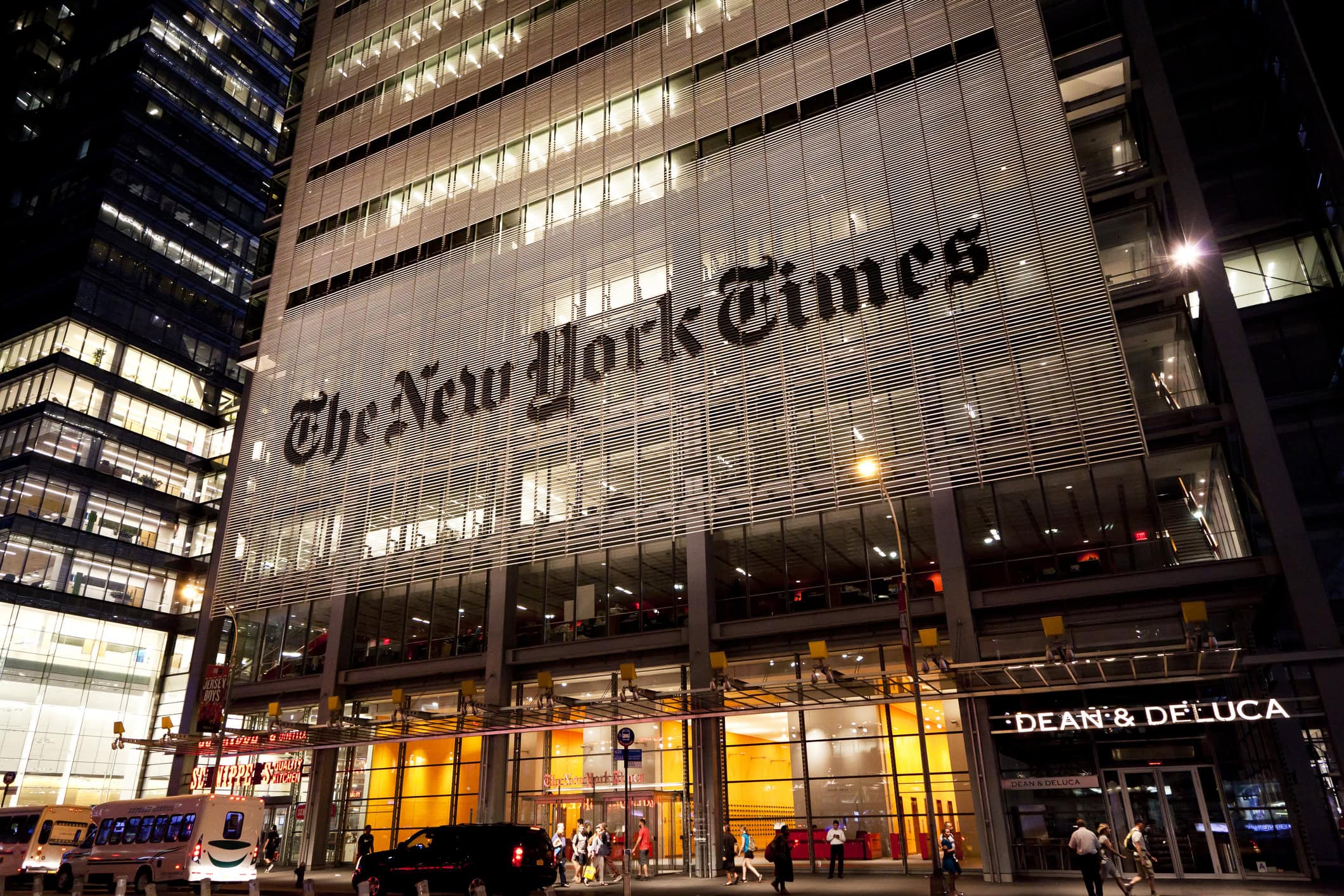
Story’s warning is as relevant today as it was when it was written almost 200 years ago. Much too often, the contemporary press is not content with the equal constitutional rights shared by all Americans. Instead, its members frequently assert special privileges that are not based on the Constitution. In some cases, they even claim a prerogative to do things that would land any ordinary American in serious legal trouble. This problem is illustrated by the recent remarks of A.G. Sulzberger, the publisher of the New York Times, at an event sponsored by Yale Law School.
In his speech, Sulzberger presents himself, his newspaper, and its supporters as defenders of the First Amendment and the freedom of the press. This great freedom, he rather predictably suggests, is under assault by President Trump. Yet many of Sulzberger’s grievances are actually based on asserting special privileges for the press that are not guaranteed by the First Amendment.
Sulzberger criticizes Trump’s “rhetorical” attacks on American journalism, such as his memorable labeling of many in the press as “fake news.” Yet under the First Amendment, Trump has as much right to his freedom of speech as the Times does to its freedom of the press. Sulzberger laments Trump’s effectiveness here, observing that a large majority of Americans now say that “they don’t trust the press to report the news fairly, accurately, or in the public interest.” He does not even consider the possibility that this dismal public approval rating is the result of the press’s own misconduct, and not of Trump’s violation of some imaginary immunity of the media from criticism.
Sulzberger also faults Trump for bringing civil cases against some media organizations for defamation and other forms of wrongdoing. For ten straight years, their coverage of Trump has been relentlessly negative, often personal, and in some noteworthy cases based on the use of anonymous sources. Is it any wonder that a man subjected to such unremitting attacks on his public reputation might choose to sue?
Sulzberger admits that some of these news organizations chose to settle Trump’s lawsuits. But in his mind these settlements are not a tacit admission of press misbehavior. They are rather just more evidence of the nefariousness of Trump’s campaign against the media, which Sulzberger seems to believe should not be held legally accountable for its conduct. But Trump has as much legal right as any other American to sue in defense of his reputation. This is a right the Supreme Court still recognizes (although in an unjustifiably narrowed form, as I argue in my new book), even for public officials and public figures.
The Times’s publisher fares no better when he turns to President Trump’s use of executive branch authority. On Sulzberger’s telling, “Last fall, the Defense Department issued an ultimatum to the Pentagon press corps: sign what amounted to a loyalty oath, or get out.” This is a very tendentious account of the policy, which merely asked reporters with access to the Pentagon to sign a form acknowledging the administration’s policy that a press pass might be denied to a reporter who tried to get department personnel to divulge confidential information. In any event, the First Amendment protects the right of everybody to publish, but it does not protect a right to have access to any particular government building or agency.
One can similarly dispose of Sulzberger’s complaints that a journalist was charged under federal civil rights law for “covering a protest that entered a Minnesota church” and that the administration has pursued investigations of journalists who refused to “give up their confidential sources” who may have improperly leaked confidential information. The First Amendment’s protection for the “freedom of the press” does not include a right to trespass on private property or to disrupt a religious service being held by one’s fellow citizens. And the First Amendment does not absolve journalists any more than anybody else of the ordinary responsibility to provide evidence relevant to the investigation of a crime.
The 250th anniversary of our nation’s birth is a good time to return to basic civics—and to reaffirm our real freedoms and to reject their fanciful and harmful distortions. Under the First Amendment, the institutional press should have the same rights as all Americans but no special privileges. Our free society needs a free press, but not an imperial one.
The American Mind presents a range of perspectives. Views are writers’ own and do not necessarily represent those of The Claremont Institute.
The American Mind is a publication of the Claremont Institute, a non-profit 501(c)(3) organization, dedicated to restoring the principles of the American Founding to their rightful, preeminent authority in our national life. Interested in supporting our work? Gifts to the Claremont Institute are tax-deductible.
Suggested reading
The moral limits of our constitutional order.

The president should make up to five prospective nominations in the first 100 days.
A myth and its legacy.
A tale of the heroic deeds of old from men of renown.
The divide between church and state doesn’t separate religion from public education.

