

If the Golden State’s way of handling crime spreads, we’re all in trouble.
Adapt or Die
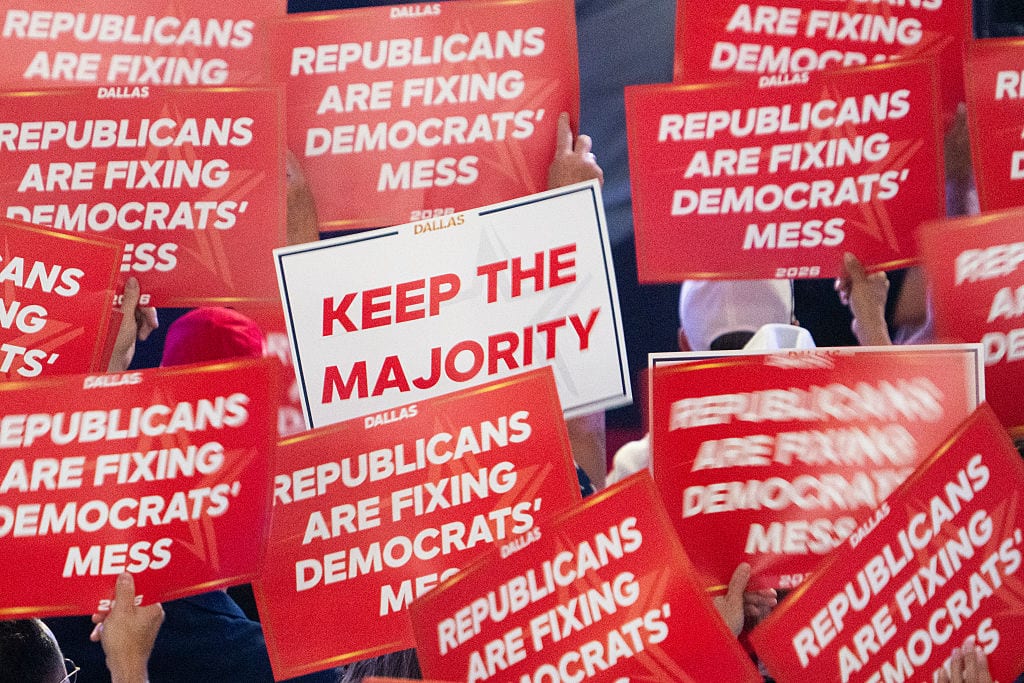
Where does the Republican Party go from here?
Most right-wing politicos expected a loss on Election Night. Some even expected a drubbing, but I don’t know very many of us who expected Republicans to lose seven Senate seats, with two more likely to go to the Democrats—including one in Mississippi.
That kind of generational loss in politics demands some soul-searching. Vice President JD Vance jumped on X to take ownership of the defeat, but also to put it in context: “The reason we lost is the war.” There’s a great deal of truth to that. National exit polling from NBC News found that 74% of voters said the war with Iran was a “crucial or major” factor in their vote in congressional races. Democrats won this cohort 63% to 35%.
Not only was the war unpopular on its merits, but it had deleterious downstream effects that repelled voters from the Republican Party. In normal times, American citizens need not concern themselves with the geography of foreign nations halfway across the world. But by Election Day, every agricultural worker in the Carolinas and every trucker in Iowa had become quite familiar with the Strait of Hormuz. They rightfully suspected that what was happening there might have something to do with gas sitting at $4.15 a gallon nationally—double what it had been a year before—and diesel prices reaching an all-time high in September.
But even this explains only part of what turned a typical midterm pushback into the worst political crisis for the GOP since Watergate. Many observers have tracked the leftward swing of young men and Hispanics, who only two years earlier had ushered in the red wave of 2024. The canary in the coal mine for Republicans was the extreme backlash from their most previously reliable supporters: married voters and parents.
In the 2022 midterms, married voters went 58% for GOP candidates while unmarried voters went 59% for Democrats. What turned the red trickle of 2022 into the Trump wave of 2024 was that more than 20 million married voters headed to the polls.
Exit polling in 2026 did not track marital status, but Republican performance among parents plummeted from its historic numbers. Fathers with minor children favored Republicans only by one point, while Republicans fell underwater among mothers. It’s not hard to see why that occurred considering the rhetoric from both sides in the final days of the campaign.
In his closing argument to Michigan voters, now Senator-elect Abdul El-Sayed told 60 Minutes:
Maybe we should stop making it so expensive to have kids…if the only argument that we have about America is we can’t possibly do anything to make it easier to have kids, we are going to have a race to the bottom…. You need to be invested in the means of making it easier to have children.
Days later, he would win in a landslide over Mike Rogers.
El-Sayed’s policy views—namely, his support for socializing everything from sex change surgery to health care and daycare—may be insane. But his willingness to speak to the economic anxieties of most voters propelled him to victory, particularly given that the Republicans had drifted far from their concerns.
The point bears repeating:
The benchmark of national success is not our GDP number or our stock market, but whether people feel that they can raise thriving and healthy families in our country…. It is the task of our government to make it easier for young moms and dads to afford to have kids, to bring them into the world and to welcome them as the blessings that we know they are.
But that wasn’t Abdul El-Sayed. That was JD Vance at the 2025 National March for Life, just days after he was sworn in as vice president.
That was the type of messaging Republicans sorely needed this cycle. It was the messaging Vance is uniquely adept at delivering and that El-Sayed repeated throughout his campaign.
But Republicans got something more discombobulated in the final days of the midterms. When a young voter asked Vance how her generation is supposed to afford a family, he led with a joke about Jon Husted’s backside as part of a running bit that President Trump had fully embraced in the lead-up to last Tuesday. That clip, instead of the vice president’s full response, went viral. A few days later, Democrat Sherrod Brown was elected to fill Vance’s old Senate seat, besting Husted by nearly five points.
The 2026 midterm blowout is not a one-cycle problem for Republicans. It is better understood as the culmination of a generation of economic anxiety.
In September, Harvard released its latest Youth Survey tracking attitudes among Americans aged 18-29. Young voters said the country was on the wrong track by a record margin. You would have to go back to 2003 to find a time when young people said that the country was on the right track.
Young adults have been pessimistic about their economic prospects for nearly a generation. Over that time we have witnessed a populace that no longer sees opportunity ahead. The unhappy 18-year-olds of the Great Recession have come of age, and the fruits are there for all to see. There’s been a steep drop in marriage rates among people under 40 and a total collapse of birth rates to near-European levels. The age of first-time homeownership is creeping into middle age.
When housing, childcare, and student debt stay high, and wages for people who don’t already own assets stay flat, fewer younger Americans form the households that used to deliver reliable Republican majorities. A sizable portion of the Republican base, already dwindling thanks to a growing slice of the electorate that has never married, looked at a leadership class in 2026 that failed to address the affordability crisis and decided to make its members pay.
And can you really blame them?
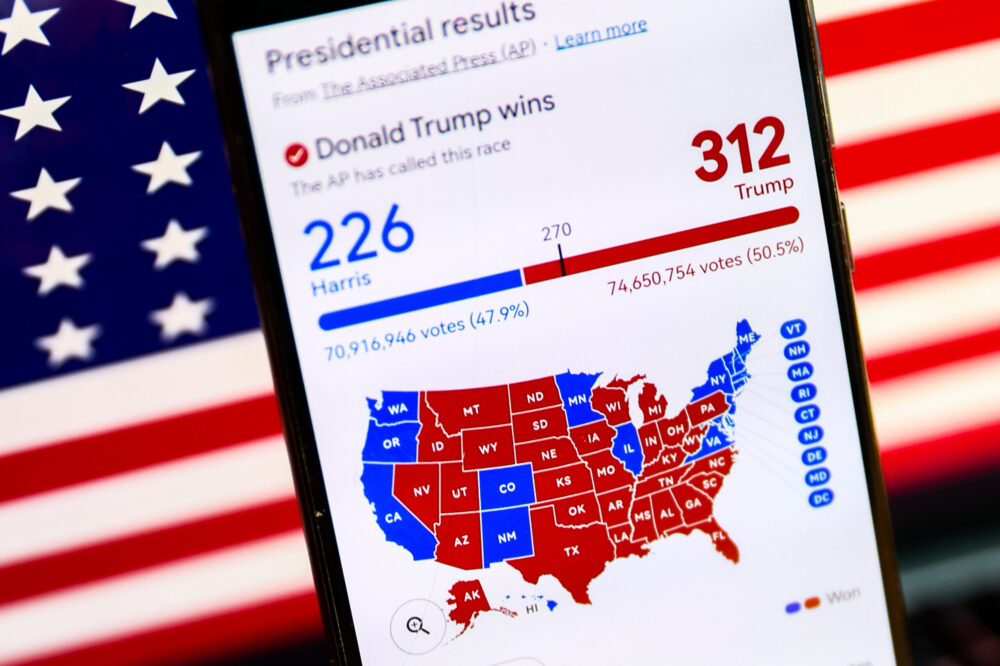
Moving forward, if Republicans want to expand the coalition that delivered President Trump an emphatic Electoral College victory and the popular vote in 2024, they should focus on policies that will raise real wages and make it more affordable for people to start and raise a family. If Republicans cannot provide better solutions to the affordability crisis than the Democrats, they will never again win a meaningful federal election.
For Republicans to build a successful political coalition for 2028, they should seek to win back the voters they’ve lost—married voters and families. If they don’t, demographics are destiny, and the next election will look a lot like this one. As the great Billy Beane once fictionally said, “Adapt or die.”
The American Mind presents a range of perspectives. Views are writers’ own and do not necessarily represent those of The Claremont Institute.
The American Mind is a publication of the Claremont Institute, a non-profit 501(c)(3) organization, dedicated to restoring the principles of the American Founding to their rightful, preeminent authority in our national life. Interested in supporting our work? Gifts to the Claremont Institute are tax-deductible.
Suggested reading


Notes from the convention that wasn’t.
Trump’s resounding populist mandate signals an enduring shift in our politics.

The case of Sam Brinton demonstrates why standards aren’t always a bad thing.

Main Street concerns should trump the progressive Left’s unpopular views.
Why younger Americans are interested in the 37th president.

