

The divide between church and state doesn’t separate religion from public education.
Why America Stopped Prosecuting Pornography
Laws against its distribution are still on the books.
It is no surprise even to the most casual observer of American culture that pornography is rotting the soul of America. More than 10% of American men self-report being addicted to pornography, while over 70% say they used pornography in the last year—and the actual figures are likely much higher. Declining marriage rates, increased incidents of suicide, and decreased productivity can all be traced to the rise of this nearly $100 billion industry. And, even worse, the kind of pornography that saturates the internet is not the type of casual nudity the average American imagines. It is hardcore pornography that would immediately disgust all but the addicted.
That’s far from the founders’ vision for America.
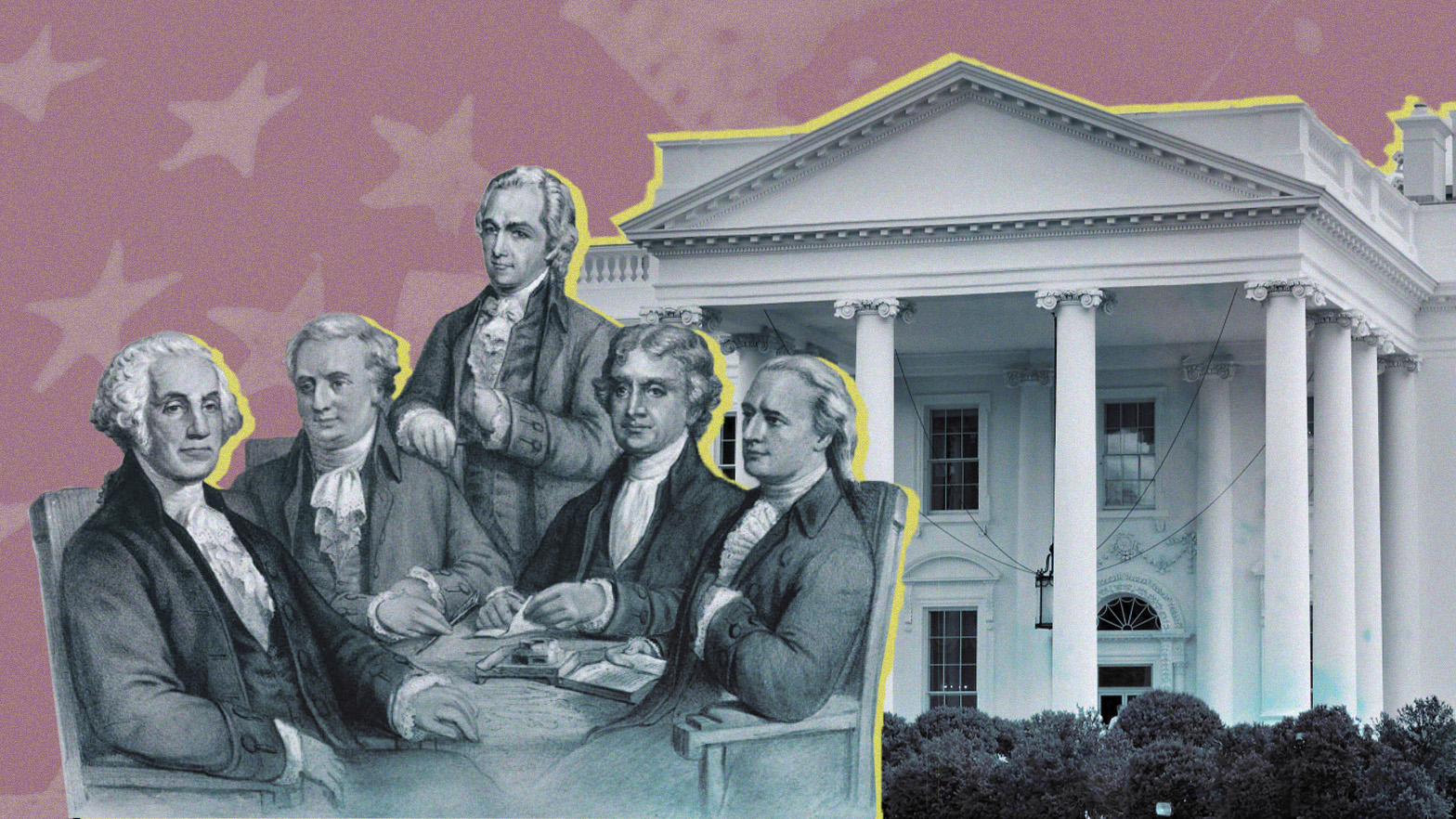
Any honest scholar of the American Founding will assure you that no founding father would ever have imagined that a republican form of government could coexist with such rampant moral degeneracy. For most of American history, obscene material was not only illegal but subject to criminal prosecution.
What changed? For starters, government officials have gradually come to believe that the First Amendment protects almost all pornography. To make matters worse, officials increasingly lack the courage and honor to prosecute obscenity. Society suffers. Pornographers win.
Pornographers point to the absence of laws prohibiting pornography at the founding to support their claim that the First Amendment protects pornography. But as Professor Adam Candeub points out, the lack of robust obscenity laws at the time was not because Americans had no concerns about widespread pornography—it was because there was no widespread pornography to prompt laws regulating it. The printing press was still expensive and controlled by publishers who would never dare risk their reputations by printing smut. There was simply no way to mass-produce pornography.
But as printing became easier and cheaper, pornography began to emerge in the dark corners of society. Officials quickly banned it in every medium in which it appeared, first in print and then on the radio and on television. Prosecutors prosecuted it. Pornographers went to jail.
Then came the sexual revolution—and with it permissive courts. The Supreme Court limited the kinds of material that could be constitutionally restricted but still left prosecutors considerable leeway to prosecute hardcore pornography that met its new test for “obscene” material.
Prosecutors had to change their tactics, but they continued to go after distributors. The amount of material that could constitutionally be prosecuted, however, only grew with the rise of the internet. As recently as the mid-2000s, the federal government actively investigated and prosecuted obscenity.
Now? Prosecutions are nowhere to be found.
Scott Yenor and I examined why that’s the case in a recent report for The Heritage Foundation. We conclude that most prosecutors and government officials lack the courage and honor to protect society. They fear being labeled with what Brent Ward, the director of the Bush Administration’s Obscenity Prosecution Task Force (OPTF), described as “the scarlet A of anti-free speech.”
Ward provided us with his previously unpublished internal memorandum to then-Attorney General Michael Mukasey, which outlines the task force’s actions and the successive internal roadblocks it faced, from difficulty retaining investigators to interagency incongruity and uncooperative federal prosecutors. All these challenges told one unified story: the task force was allowed to fail. It did excellent work, obtaining convictions or plea deals in every case it prosecuted, but it lacked the support needed to stem the tide.
Despite the memo’s otherwise depressing observations, there are some reasons for optimism.
First, juries across the country were still willing to convict pornographers, and courts were willing to uphold the convictions. Second, even a small number of prosecutions could have a significant deterrent effect—one prosecution alone caused numerous pornography producers to hire lawyers to monitor for compliance. Finally, prosecuting obscenity is possible. The dearth of obscenity prosecutions today is simply a matter of political will. That can be fixed.
Laws prohibiting obscenity remain on the books at both the state and federal levels. Most statutes use the test the Supreme Court laid out in Miller v. California (1973), meaning they can be enforced under current precedent. Investigators just need to investigate these cases. Prosecutors just need to prosecute them. And legislators and other officials with funding authority just need to make sure investigators and prosecutors have the support they need to pursue pornography creators and distributors.
We have seen pornography’s devastating effects on our society. It is time for political officials to act before our country slides further into moral anarchy.
The American Mind presents a range of perspectives. Views are writers’ own and do not necessarily represent those of The Claremont Institute.
The American Mind is a publication of the Claremont Institute, a non-profit 501(c)(3) organization, dedicated to restoring the principles of the American Founding to their rightful, preeminent authority in our national life. Interested in supporting our work? Gifts to the Claremont Institute are tax-deductible.
Suggested reading

We can’t count on the Supreme Court.
A qualified victory for republicanism in its removal power decisions.
An Ohio pastor is seeing firsthand how government can violate the free expression of religion.
Understanding the Enlightenment underpinnings to the Constitution is crucial to understanding America.

Forming Americans who are worthy to carry on the country’s legacy.

