

Reaching out to some doubters of the American Revolution.
What the Hyper Creedalists Get Wrong About America
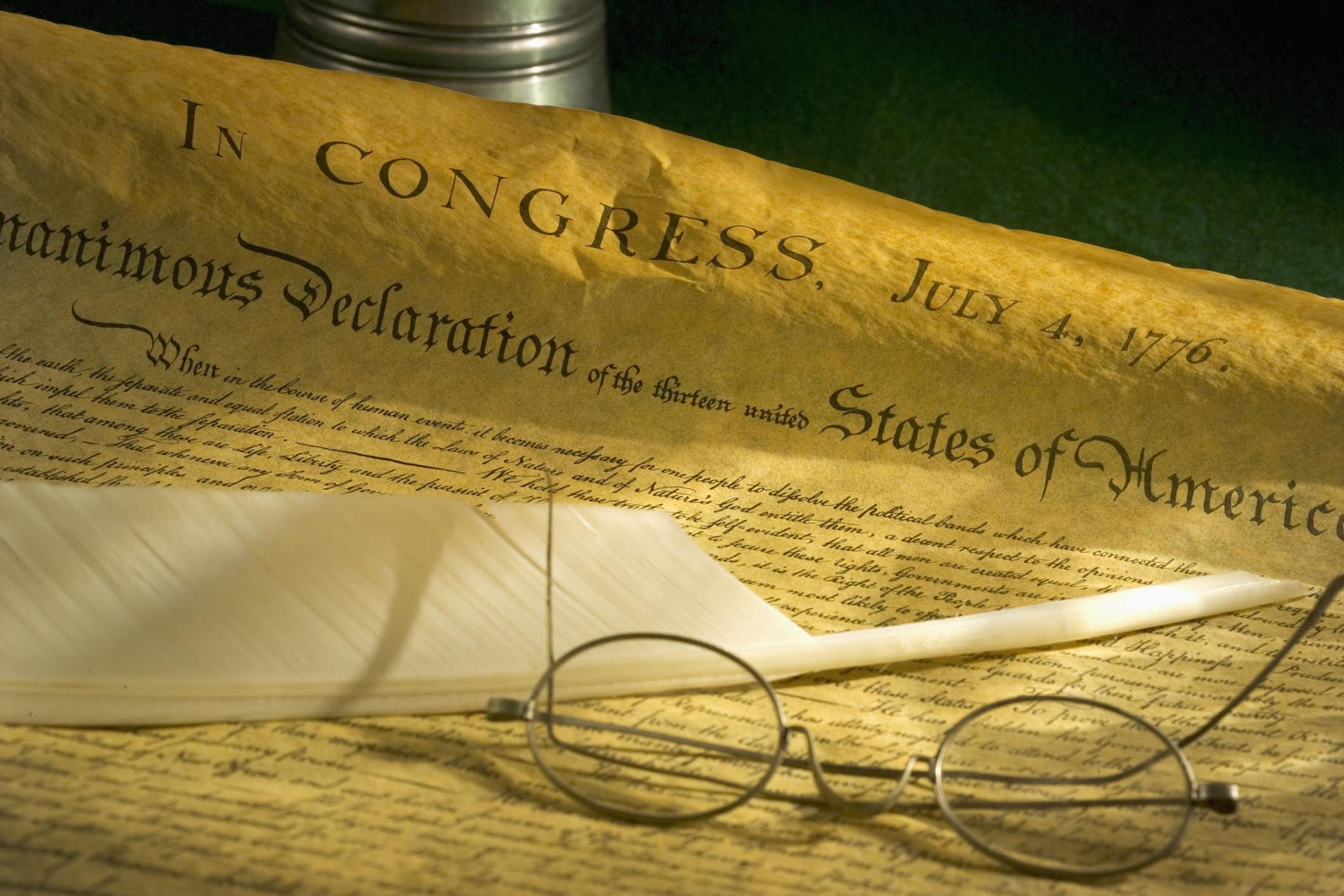
They ignore the character befitting republican government.
Another week, another round of discourse on the idea that America is merely a “creedal” or propositional nation.
One of the thorny consequences of having a creed, of course, is the unavoidable conclusion that one must draw about those who refuse it: they are outside the body that holds the creed. If Justice Neil Gorsuch (following Vivek Ramaswamy and the Cato Institute a few months back) is correct that America is purely a creedal nation, doesn’t it necessarily follow that those in our midst who reject the creed are not Americans? Is Senator Tim Kaine not an American because he dissents from the doctrine of natural rights?
But merely professing a creed does not equate to being a member of a community. In Catholicism, adult converts (and godparents on behalf of baptized infants) recite the Nicene Creed as part of the sacramental liturgy of baptism. However, adult converts to the faith are also instructed in the Christian moral life—which concerns not just what one thinks about revealed truths, but also how one is to act as a member of Christ’s body.
In practice, it looks a lot like what we in America used to call “assimilation.” One joins a community—most of whose members have been raised in it from birth—as part of a web of families who work to maintain and pass on its identity and traditions. This is why it was not unusual for a convert before baptism to have his sincerity and commitment evaluated by a teacher, friends, and the pastor. Perhaps this is perfunctory these days, but it was not always so. Christian converts were once examined for their readiness to be killed by the Roman emperors rather than renounce their faith.
Likewise a convert to the American creed must necessarily leave behind his old nation and swear complete allegiance to the new one. Even under Justice Gorsuch’s creedal logic, a foreign-born person is not sufficiently American if he joins our workforce and sends a substantial amount of that benefit home in remittances, all the while retaining the option to choose the nation to which he will eventually pledge his loyalty. And what about an immigrant community that perpetrates systemic fraud on the taxpayer? Because that doesn’t sound very creedal either.
Considering the forthcoming Supreme Court decision on birthright citizenship that’s currently before Justice Gorsuch, is being born in a boutique American birthing center after your parents flew in from Shanghai, Mumbai, or Moscow a violation of the spirit of the American creed?
Of course, we all agree that America has a creed. But while understanding the creed as the founders understood it is a necessary part of being an American, it is not sufficient.
To return to the Christian analogy, the Nicene Creed is not a set of “first principles” from which the rest of Christian doctrine and life are elaborated. It is a basic set of conclusions arising from the multi-generational experience of particular communities of disciples trying to discern the fundamental articles of the faith and to practice living in light of them. One can make nothing of what the Nicene Creed really means without knowing the narrative of salvation history, first in the Bible and in Church history after the apostolic period.
Or imagine thinking you can enjoy baseball or know how it’s played only if you know and assent to the Major League Baseball Official Rules Book. That is ridiculous. You have to play baseball to know what baseball is. The rulebook is there to make sure you are playing it correctly, but baseball cannot be reduced to a rulebook. (Credit to Tim Gray of the Augustine Institute for this analogy.)
In the same sense, those who reduce America to being a creedal nation simply seem to imply that our country’s history, traditions, and mores, which would illuminate or limit their meaning and application, can be completely ignored.
The utility of such a view is that one can then nimbly elaborate all kinds of different and even violently incompatible ways of life from the founding principles without ever departing from the strict text of the creed. Any group of arrivals (of any size) can become American without regard to their integration into the existing community simply by reciting some phrases and asserting that they mean them.
But the creed cannot be separated from the specific character of the people who wrote it and lived by it. One has to be (or authentically become) a member of that community for the answers to mean something of significance. Just like the baseball rules book, the American creed cannot be understood apart from the historic character of the American people. Merely reciting the Declaration and the Preamble to the Constitution doesn’t accomplish that task, and it never will.
The cultural pressure that assimilated the waves of immigrants in the past did the heavy lifting of making those migrants Americans. Though that pressure was severe and regrettably violent at times, it was necessary in principle for immigrants to become Americans. Assimilation focused on forming the American character and teaching immigrants how to think about our rights and freedoms.
To assimilate the recent waves of those who have legally immigrated to our country, we must go beyond thinking of America as only a creedal nation. We need to act like Americans, not just assume that thinking like one is sufficient.
The American Mind presents a range of perspectives. Views are writers’ own and do not necessarily represent those of The Claremont Institute.
The American Mind is a publication of the Claremont Institute, a non-profit 501(c)(3) organization, dedicated to restoring the principles of the American Founding to their rightful, preeminent authority in our national life. Interested in supporting our work? Gifts to the Claremont Institute are tax-deductible.
Suggested reading
The character of our novus ordo seclorum.
Chief Justice Roberts forgot the Declaration of Independence.

The Editor-in-Chief of the viral satire website tells his story, addresses factchecking controversies, and explores the philosophy of the Bee.

“Pride Month” and the cardinal sin.
The post-Christian West is descending into relativism and, ultimately, nihilism.

