

Revisionist Black supremacist history can't grasp our shared equality.
The Jason Arday Scandal Proves Woke Isn’t Over
It shows why the Right has a long way to go.
Optimists have lately claimed that wokeness was a fad that has gone out of style. To their credit, there has been evidence to support this. “Woke 1 was crazy,” Rep. Alexandria Ocasio-Cortez said in August on ABC News. “Rhetoric in that time is not rhetoric we would use today.” Progressivism’s biggest champions seem eager to distance themselves from its recent excesses.
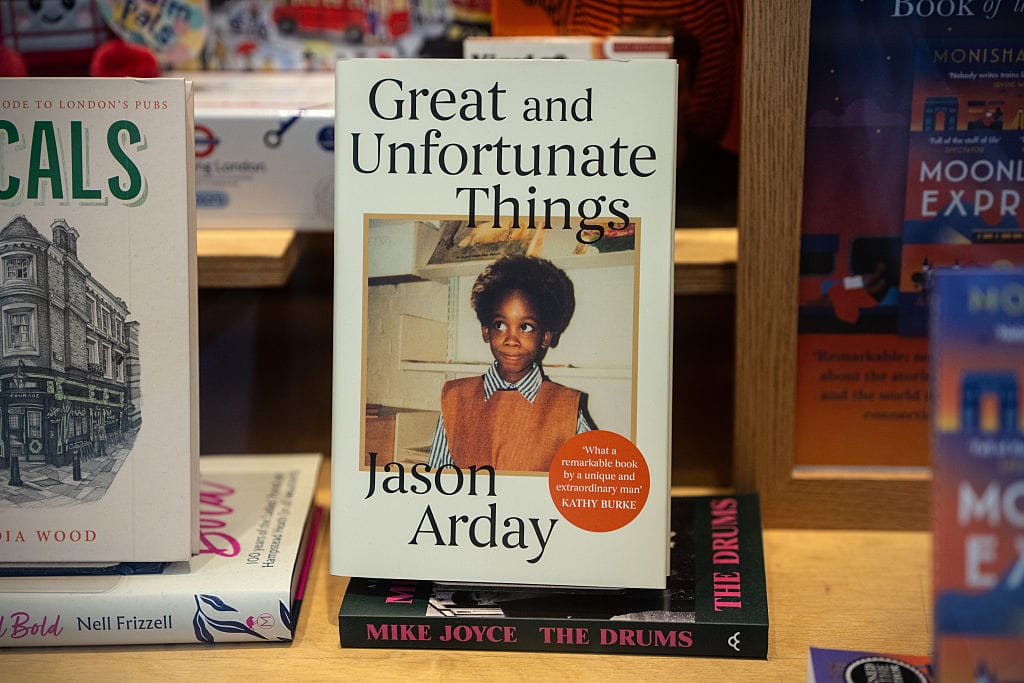
But the Jason Arday scandal shows that wokeness is not over, not by a long shot. The fact that Arday held a well-paid position at one of the world’s most prestigious universities is a telling sign that wokeness is alive and well.
More telling still is that powerful and otherwise seemingly intelligent people, such as the autism specialist Simon Baron-Cohen, have leaped to defend Arday. It would have been easy for people on the Left to acknowledge his blatant fraud and dismiss him as an isolated case whose offenses have no bearing on the broader issue of DEI in higher education. They did not.
The lesson for the Right is that there is much more work to do to dismantle wokeness, and it will not simply be a matter of doing more of what we have been doing so far. The power centers of wokeness are not just holdouts we haven’t gotten around to eliminating yet. They are strongholds that have been impervious to our tactics.
The details of the Arday case offer clues to where our efforts should be concentrated. So let us review them.
What Happened at Cambridge
On July 21, Nathan Cofnas, a postdoc at Ghent University in Belgium, published an essay on his Substack that demonstrated beyond any doubt, using side-by-side comparisons, that Jason Arday had committed plagiarism in almost all of his important academic papers. “When you take away the work that is plagiarized or not otherwise written by Arday, there is essentially nothing resembling real scholarship,” Cofnas wrote.
Arday’s plagiarism was not just the run-of-the-mill kind where he repeated another scholar’s arguments. He put words into the mouths of research subjects he claimed to have interviewed, lifting them from other people’s published papers. That kind of plagiarism can’t be dismissed as a citation error made in haste. It was deliberate fabrication.
The real scandal, according to Cofnas, was not so much Arday’s misconduct as Cambridge’s refusal to discipline him for it. The plagiarism allegations were first brought to Cambridge’s attention by a whistleblower three years ago, in June 2023. The Faculty of Education, which employed Arday, quickly determined that no disciplinary action would be taken. The reason given was that the papers had been published before Arday joined Cambridge, putting them outside the university’s purview.
The head of the Faculty of Education, Hilary Cremin, further told the whistleblower:
I can confirm that, having looked into your concerns about Prof Arday’s work, I arranged a meeting between myself, Prof Arday and my director of research… During our meeting Prof Arday spoke movingly about his ongoing experiences of direct and indirect racism, and the conditions that he was living in whilst the 2018 article was being prepared (in 2016). At this time he was early career and living away from home whilst dealing with significant health issues.
During that meeting, Arday told Cremin that he wanted to “take the article down from the journal online platform in order to address concerns and re-upload it.” It sounds like he privately admitted he made mistakes, attributed them to his difficult life circumstances, and pledged to make them right. His bosses accepted this and agreed not to end his career over it.
But this career-saving compromise could not last, because Arday was not just a plagiarist. He was a fabulist. He lied repeatedly about his personal life, which was a matter of professional concern because Cambridge hired him in large part on the basis of his compelling personal story—a story he repeated in his memoir, published by Simon & Schuster UK in early August.
The lies about his personal life are not as straightforward to prove as his plagiarism. Arday claimed he did not speak until age 11, which is conceivable but medically unlikely. Non-verbal children do sometimes learn to speak, but rarely at such a late age. He claimed that he ran 30 marathons in 35 days for charity despite having a hairline fracture in his leg for the last nine runs—again, theoretically possible but unlikely. He claimed that a masked man threatened him with a knife near his Cambridge office as part of a campaign of racist harassment. The masked man was never captured on any of the school’s CCTV cameras, and no other witnesses saw him.
Arday resigned from Cambridge on August 5 in a statement that admitted no wrongdoing. He was found dead in his London home on August 17.
The Atlantic and the New York Times both published essays acknowledging the extensive evidence of Arday’s lies—certainly a sign that wokeness is weaker than it was. But the New England Journal of Medicine, the New Yorker, and National Public Radio all published articles claiming that Arday was a victim of harassment and unfairly hounded to death by racists.
Simon Baron-Cohen told BBC Radio 4 about his last conversation with Arday, blaming “relentless scrutiny, including ridicule, discrediting absolutely every detail of his life,” for driving Arday to mental collapse. Other prominent figures who have defended Arday include the leader of the U.K. Green Party and several members of Parliament.
Some defenders, such as investigative journalist Carole Cadwalladr, took the position that Arday was telling the truth about his improbable life story. For example, she found contemporaneous press coverage of Arday’s claim to have run 30 marathons in 35 days. Other defenders said that Arday might have lied about some things, but, even if he did, the media frenzy leading up to his death was disproportionate. “I want to be clear that I don’t care whether or not any of these allegations against Prof. Arday were true,” wrote Dr. Kemi Doll in the NEJM. “None of them were worth his career. And certainly not his life.”
Lessons from the Scandal
So that is how the fault lines broke down in the Arday case. What conclusions can be drawn? I see at least four.
1. Many proponents of wokeness are, like Arday, just plain lying. There is a strong taboo against calling someone a liar in a public forum, especially when it comes to personal anecdotes. If a man says that something happened to him, we tend to accept it at face value. We might say that the incident was not typical or representative, or that he put the wrong interpretation on it, but not that he made it up.
Wokeness makes this taboo untenable, because it turns personal anecdotes into tools for gaining power. If a person of color suffered racist indignities at the hands of white people, then racism must still be a big problem in society, which in turn justifies DEI measures to advantage non-whites over whites.
Arday “started reporting racism within weeks of him being at Cambridge,” Simon Baron-Cohen recalled in his BBC Radio 4 interview. “It included things like threats of physical assault to him and his family, racist hate speech, and racist actions, hate actions.”
The Guardian investigation “Playbooks, Plagiarism, and a Pig’s Head: New Claims Surrounding a Star Cambridge Professor,” published on August 1, examined some of these racist incidents. The knife-wielding masked man who somehow never appeared on CCTV has already been mentioned. Another supposed act of racial intimidation was a pig’s head left on the doorstep of his family home. Arday said a police investigation had identified the butcher who sold a whole pig on the morning of the incident, but the Guardian spoke to the police and the butcher, both of whom said they had no recollection of any such investigation.
The Guardian did excellent work here, but, to be honest, if a professor told me he had been the target of such mafia-like tactics from an organized gang of racists who don’t like his sociological scholarship, I would not need proof that he was lying. I would assume that he was lying and need very strong proof before I entertained the possibility that he might be telling the truth.
It is tempting to indulge in these self-dramatizing fibs because they are so rarely punished. In January 2026, actress Pam Grier claimed that she saw a lynching victim hanging from a tree as a little girl in Columbus, Ohio, and her mother pulled her and her siblings away, saying, “Don’t look, don’t look.” Fact-checkers pointed out that the last lynching in Ohio took place years before Grier was born. She did not apologize or even address the controversy.
In a podcast interview published on April 30, New York Times columnist David French claimed that his adopted daughter, who is Ethiopian, was standing outside a football game at Montgomery Bell Academy in Nashville when “a truck full of guys screaming the N-word” drove straight at her and swerved away at the last second. David French used this anecdote to illustrate how his “white, educated, upper-middle-class bubble” had shielded him from the reality of Southern racism.
It took guts for conservative commentator Scott Greer, who is from Nashville, to tweet that French’s claim “is complete BS. I grew up around the same people in the same area. No one did stuff like that. It’s either him or his daughter making this up.”
My upbringing in Raleigh, North Carolina, led me to the same conclusion: French’s story simply isn’t plausible. I don’t think he is consciously telling a falsehood. Having lived among teenage girls, my recollection is that they lie all the time, especially to their parents, so there are plenty of possibilities here aside from deliberate fabrication by French.
The bottom line is that Arday was able to paint himself as a victim of racism—and make a highly lucrative career for himself on that basis—because he knew that no one would question his anecdotes, no matter how outlandish they became. That feeling of immunity to scrutiny or skepticism must be eroded.
2. The “Great Feminization” thesis is correct. The rise of wokeness in the academy has coincided with an increase in the share of academic positions held by women. I argued in Compact last October that these two things are connected, as anyone might have guessed from the way wokeness mirrors feminine traits such as valuing empathy over rationality and group cohesion over the pursuit of truth.
A natural test of this hypothesis is to look at the open letters in support of Jason Arday and Nathan Cofnas. The latter ones are predominantly, though not exclusively, signed by men. A majority of the 60-some named signatories to the Good Law Project open letter supporting Arday are women.
The reason to bring gender into this is that if wokeness is a product of demographic feminization, then wokeness in higher education will never subside as long as its demographics remain as they are now.
3. Disability is an even more potent identity than race. Both sides of the Arday debate have focused on his being a black scholar, but when it came to insulating Arday from scrutiny, his status as “neurodivergent” may have been more relevant.
Individuals with disabilities enjoy considerable protections under British law. They can request accommodations from their employers under laws similar to the Americans with Disabilities Act, which employers must grant so long as the accommodation does not interfere with the employee’s work performance. If the worker and employer disagree on what constitutes a “reasonable adjustment” or a workplace necessity, the dispute is adjudicated by a tribunal led by an employment judge.
Once disability protections have been triggered, an employer becomes subject to extensive restrictions. He is not allowed to ask the employee the nature of his disability, as that violates his medical privacy. He can ask only how the disability affects the employee’s ability to do his job. Even if the worker has never requested any accommodations, if the employer merely suspects that an employee’s poor performance might be due to a disability, he cannot discipline the employee as he would any other underperformer. He must first explore potential disability accommodations that might make the worker’s job easier.
Mental disabilities qualify for the same protections as physical disabilities. Equal employment laws in the U.K. have been used to force employers to grant paid leave to workers who feel “overwhelmed” by work and too agoraphobic to leave the house; to grant workers with anxiety the right to communicate by text message rather than voice call; and to allow workers who struggle with overstimulation or fatigue periodic nap breaks during the day.
Jason Arday claimed to be autistic, specifically “a form of hybrid autism, Asperger’s syndrome and global development[al] delay.” One symptom was “processing delay,” he told an interviewer. “During a meeting, ‘90% of the time I don’t know what is going on…but normally I understand about two days after the meeting.’” He said the delay was a matter of working out the “algorithm and the pattern of something.” During that 48-hour processing interval, “I don’t have a clue what that [pattern] is because my brain hasn’t computed what the algorithm of the pattern is yet.”
Because of the legal protections described above, Arday’s employers were not allowed to say what a reasonable person might have said in the circumstances: that taking two days to understand something is not a quirk of neurodivergence but a sign of low intelligence or, if not that, then a dog-ate-my-homework excuse for laziness. On the contrary, his employers were required to treat his most ludicrous claims with the utmost gravity.
Cambridge may well have felt it necessary to treat Arday with kid gloves for this reason. His professional shortcomings—including spelling mistakes and grammatical errors—could always be blamed on his neurodivergence, which meant that any adverse action against him could land the school before an employment tribunal.
Here in the United States, many of the same legal protections for those with disabilities exist. As the Democratic Party doubles down on identity politics as its organizing principle, it will need to find a way to reincorporate straight white people into its coalition. Disability is a way to do that. It does not matter whether identity politics is fashionable or whether we get a national “reckoning” on disability the way we did on race. The law treats disability as a protected identity, and anti-discrimination law is wokeness’s greatest stronghold, allowing it to endure bouts of unpopularity.
4. Professional standards are dying or dead. What makes a job a profession? There are certain things that professions tend to have in common: they require many years of education and involve brain work rather than physical labor. But those are not the essential things.
The characteristic that sets professions apart is that they are not subject to market discipline in the same way as other jobs. Consumers don’t have the expertise to tell a good doctor from a bad one. Clients of a lawyer or a banker must trust the advice they are given, as they cannot evaluate it themselves. Professionals have power over their clients in a very one-sided way, which is why they have historically developed strict codes of conduct to regulate themselves.
Academics are very much a profession in this sense. Charles Murray tells an anecdote about a conversation he had with Richard Herrnstein, his co-author on The Bell Curve. The young Murray said that being a tenured professor at Harvard seemed like the perfect job, almost too good to be true. “Dick, what’s the catch?” he asked. The older man replied, “The catch is that you have to tell the truth.”
Professors live an immensely privileged existence, subsidized by taxpayers and insulated from criticism from anyone outside their caste. The price of all this privilege is—or should be—rigorous adherence to a professional code of honor.
Wokeness is an assault on professionalism in multiple ways. First, it directly attacks the neutrality that most professions aim to adopt. Doctors have to treat every patient regardless of their personal feelings; lawyers have to give every client the best possible representation—wokeness undermines these kinds of rules by inviting people to bring their grievances into work.
It also undermines professionalism by attacking standards. Being more inclusive always means lowering them. Eventually this leads to a situation where a profession is full of people who aren’t just too dumb to meet the old standards but too dumb even to grasp them. They truly do not see any difference between the blather they put between two covers and the serious intellectual books written by earlier generations, because to them it is all just words on a page.
A glimpse into what Arday himself made of the allegations against him—whether he was conscious of being a fraud or had genuinely come to believe his own lies—came in an April 2026 speech he gave to the British Sociological Association at a conference in Edinburgh. His topic was plagiarism accusations against black academics. At the time, Arday knew that a journalist at Times Higher Education was preparing an article about him because the journalist had reached out to Arday with questions. He knew, even if his audience didn’t, that his remarks had personal significance.
“The instruments that are designed to protect academic integrity, designed to protect our wellbeing and our intellectual property, are weaponized,” Arday said. “You get the email and they say you conducted academic misconduct. And you think to yourself, ‘Well this is incredible. I’m on the back foot here. How do I defend myself against this machine?’” He called it “abhorrent” and “a disgrace” that accusers “engage in the absolute destruction of another person’s life on the basis of something they don’t agree with.”
This speech was highly revealing. It showed that Arday assumed his attackers were motivated by racist animus. He was unable to conceive that they might just want to uphold academic standards. For Arday, such standards were “designed to protect our wellbeing,” and any use of them to his own disadvantage must be a perverse tactic used in bad faith.
This speech, and the decline of professional standards more broadly, illustrate why people like Jason Arday cannot be reasoned with. They genuinely do not understand how unfit they are to fill the positions they hold, and they cannot be made to understand it. The only way to end their pernicious influence on higher education is to eject them from the positions they never deserved in the first place.
The American Mind presents a range of perspectives. Views are writers’ own and do not necessarily represent those of The Claremont Institute.
The American Mind is a publication of the Claremont Institute, a non-profit 501(c)(3) organization, dedicated to restoring the principles of the American Founding to their rightful, preeminent authority in our national life. Interested in supporting our work? Gifts to the Claremont Institute are tax-deductible.
Suggested reading
The data is in: women aren’t happy.

We all should have a profound sense of gratitude for the many blessings our nation has given us.

How the Grinch Stole Kid’s Lit.
Why African Americans should be very, very mad at the Democratic Party

DEI threatens the integrity of our military—and our republic.

