

Libertarianism again fails natural right.
Restoring Honor Culture in the U.S. Military
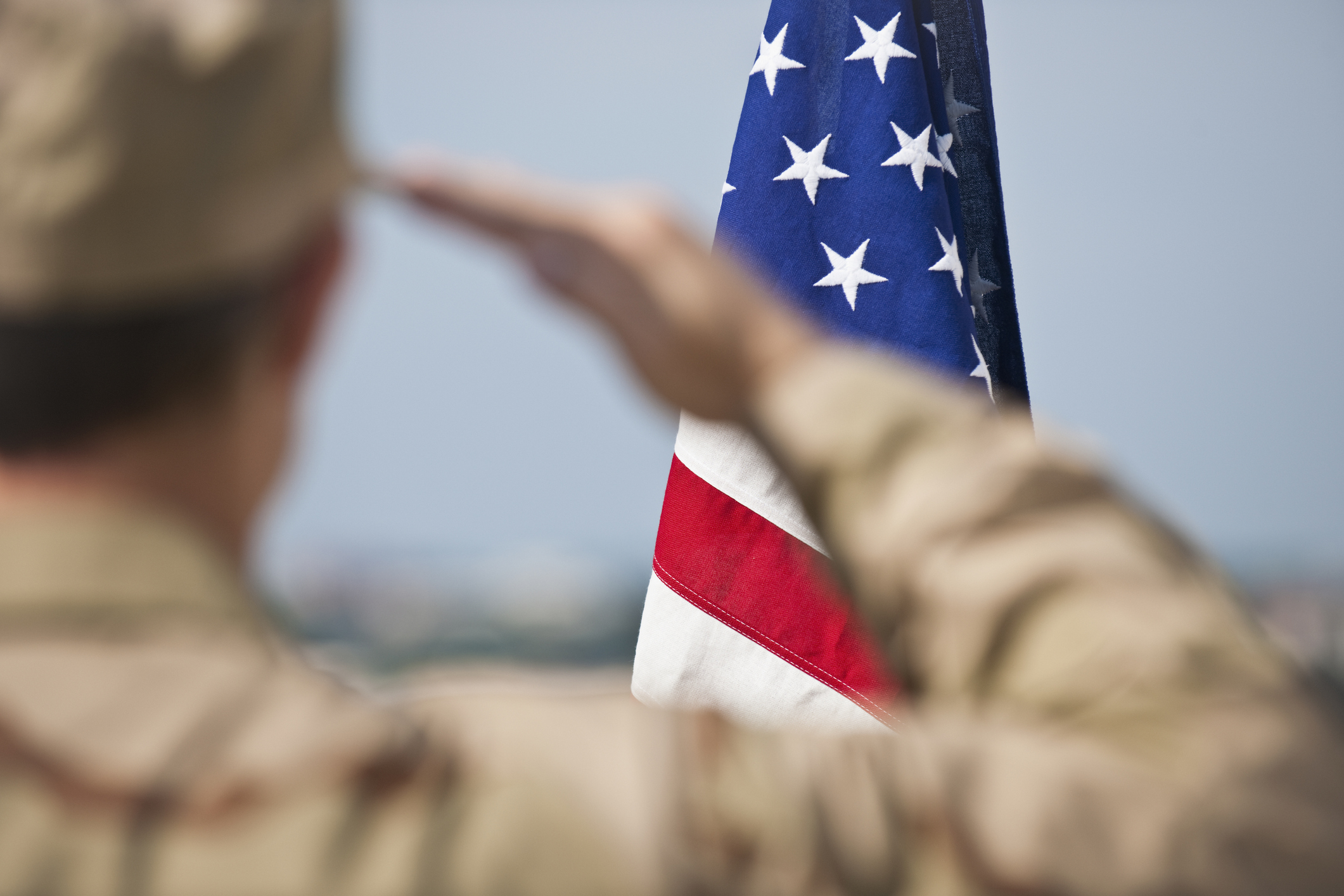
The difficult path to revival.
The next time one hears of virtue, honor, and “the profession of arms” in the U.S. military, one should ask whether those words still mean anything. Consider a military in which the highest flag ranks sell influence for future employment, commanders conspire to steal optics before deployment, soldiers loot their own supply rooms, chiefs sell night-vision devices online, officers defraud grieving families, and bureaucrats steal money meant for military children. Petty theft below, influence peddling above, and a thick frosting of platitudes about honor everywhere.
It sounds like Russia—a kleptocratic band of mercenaries where the uniform is just another way to get paid. The officer corps that emerges from this culture is not simply politically adrift, but morally unformed.
As Alasdair MacIntyre argued in After Virtue—the most important book the military profession has not read—although we still use the words “honor,” “duty,” and “integrity,” we have lost the traditions that gave those words their content. We are, MacIntyre argues, like the survivors of a catastrophe who have salvaged pieces of a scientific textbook without retaining the theories that made them coherent. This describes the average Army Values poster.
The loss of the military’s honor culture is exemplified in its typical response to an ethics scandal, which follows a predictable liturgy. A stand-down is called for. A policy is updated. A general delivers remarks about what the uniform represents. Yet nothing changes because the problem is not a deficit of information. It is a deficit of formation.
MacIntyre’s insight is that virtue and honor—the public recognition of virtue—cannot be transmitted through instruction alone. They require practices: socially established, cooperative activities with internal standards of excellence conducted within institutions that have a coherent sense of purpose. Honorable officers are made by placing them inside a community where virtue is demanded, rewarded, and—critically—where its absence is punished publicly and without mercy.
The Army Values and their equivalents are the ghosts of morality: a past civilization’s catechism recited by an institution that can no longer summon the world that made them intelligible.
The linguistic evidence is all around. No one says “that’s dishonorable” anymore—not in barracks, not in the Pentagon, not in the pages of professional military journals. The word survives only as a legal term, a bureaucratic category. As something one man could say to another’s face and have it land, honor has been mocked entirely out of the language. You can call a fellow officer unethical, unprofessional, or toxic. But call him dishonorable, and you sound like you wandered in from a Patrick O’Brian novel. MacIntyre’s point drives this home: an institution cannot enforce a norm whose name has become a joke.
Honor Factories
It was not always this way. For most of American military history until very recently, West Point and Annapolis stamped honor into young men through consequences so immediate and so public that the culture became self-enforcing. A cadet who lied, cheated, or stole did not receive counseling or remedial training. He was gone, and the entire corps knew what had happened and why. Honor functioned because shame functioned, and shame requires witnesses.
The results were not incidental. The officer corps that fought from Cold Harbor to Normandy was decisively shaped by such institutions. These were not perfect men. But they were men whose relationship to honor had been formed by years of practice.
At the service academies, honor adjudication has become increasingly legalistic, with due-process protections, administrative review, and all sorts of punishment short of separation now built into the system. The total institution—Erving Goffman’s term for an organization with sufficient control over its members’ lives to form their character—is systematically liberalized into an expensive state college with uniforms. Honor talk remains in the brochure, but the machinery around it treats dishonor as an adjudicative problem rather than a communal rupture.
No civilizational catastrophe forced a reckoning with what courage and loyalty meant. In conditions of relative peace and institutional stability, the honor culture of the services was eaten away within a single generation.
The post-Vietnam civilianization of military culture brought enormous external pressure to make the academies more like the universities they competed with for talent. Overreaching judicial decisions through the 1970s and 1980s extended due process protections to cadets that made swift, public expulsion essentially impossible. The rise of Diversity, Equity, and Inclusion in the 1990s introduced the concern that strict honor enforcement produced disparate outcomes that disadvantaged certain populations.
Each of these pressures was arguable in isolation. Taken together, they achieved something none of them individually intended: institutions designed to form officers became institutions designed to credential them. Formation requires the authority to demand, correct, and, if necessary, expel. Credentialing requires only that the student complete the program.
The good news is that these are policy choices, and while they can theoretically be reversed, they will be difficult to undo. Unlike military revolutions of the past, which left wreckage that demanded reconstruction, this one is comfortable—and lucrative.
Rebuilding the Culture
The service academies are the only total institutions remaining in the American military enterprise. If honor cannot be rebuilt there, it cannot be rebuilt anywhere—because nowhere else in the military does an institution have sufficient formative authority to do the necessary work.
What restoration looks like is not complicated. Public consequences for honor violations being swiftly administered and witnessed by the community. Superintendents having the moral courage to empower an honor system run by cadets with genuine authority to separate their peers, not a board whose findings are subject to administrative review and legal appeal. A culture in which the response to a classmate’s dishonor is not sympathy but shame—for him and, if they tolerated it, for those around him.
The non-toleration clause of the Honor Code—a cadet will not lie, cheat, steal, or tolerate those who do—was once the Sword of Damocles. It made the entire corps complicit in enforcement rather than being diluted by heavy-handed oversight.
When a cadet violated the honor code at the Virginia Military Institute, the cadet commander would formally assemble the corps and announce: “Cadet X has been found guilty of an honor violation. His name will never again be spoken within the walls of this institution.” And then the drumming out—the cadet was brought to the center of the quad, marched to the gate, and thrown out. In 2021, amid legal concerns and political pressure during a state-ordered racism investigation, VMI stopped naming expelled cadets during the drum-out.
Shame requires an audience. When you remove the audience, you remove the shame. When you do that, you remove the social technique that humanity used for thousands of years to enforce honor from the inside out rather than ineffectively from the top down.
Consequences must communicate to every observer that dishonor is not a career setback but social death. The burden of proof is entirely on those who would defend the present arrangement, which produces flag officers who leave public service under a cloud, pass through a mild embarrassment ritual, and reappear almost immediately as best-selling authors, board members, fellows, or global-security sages.
The academies cannot do this alone, and no honest argument claims they can, but they are the only place left where the military has the authority to begin.
When institutions fail to enforce virtue through honor, the only remaining answer is the man who enforces it from within—who understands that he cannot be responsible for the Army but is unconditionally responsible for himself, and refuses to be complicit in his own degradation.
The ultimate purpose of the service academies is to produce military officers who win without losing their souls in the process. We are not made to be machine men with machine hearts. We were made for something greater.
What is required is deep and far-reaching—a national renaissance, a rebirth on the 250th anniversary of America, out of the conviction that there are things worth being, not merely things worth having.
The American Mind presents a range of perspectives. Views are writers’ own and do not necessarily represent those of The Claremont Institute.
The American Mind is a publication of the Claremont Institute, a non-profit 501(c)(3) organization, dedicated to restoring the principles of the American Founding to their rightful, preeminent authority in our national life. Interested in supporting our work? Gifts to the Claremont Institute are tax-deductible.
Suggested reading
How American Parents Turn Their Daughters Out.
No future awaits those who rage against family, work, and community.

Washington and Lincoln displayed the best of the office.
DEI threatens the integrity of our military—and our republic.
The president’s gut punch to the veterans.

