
Kash Patel and the Libel Standard That Protects No One
The Supreme Court needs to jettison the actual malice doctrine.
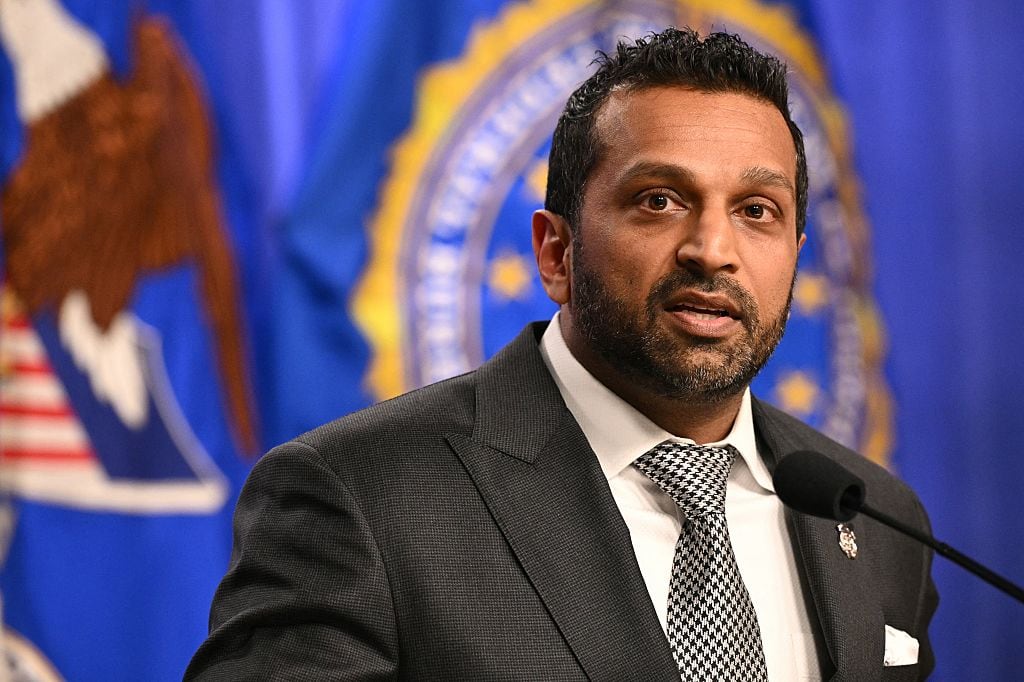
Earlier this month, The Atlantic published a hit piece on FBI Director Kash Patel, accusing him of frequently drinking to excess and often being absent from work and unreachable by colleagues in the administration. Reporter Sarah Fitzpatrick’s article claims that Patel’s deficiencies are a threat to national security given the essential role the FBI director has in protecting the country from grave threats.
Patel responded by suing The Atlantic and Fitzpatrick for defamation. His lawyers argued that the article’s claims are false and accused The Atlantic of behaving irresponsibly by publishing them. The lawsuit alleges that, among other things, the magazine did not give Patel sufficient time to respond to the allegations before publication, and that the article did not adequately convey the denials and counterevidence that Patel and his supporters had provided.
What are we to make of all this?
Patel certainly has something to complain about. The Atlantic presents the claims of his alleged drunkenness and absenteeism as facts, not as mere speculation. And, as his filing notes, such factual claims certainly amount to libel per se. That is, they are claims that are prima facie injurious to reputation without the need to consult their context.
In addition, all of The Atlantic’s allegations against Patel are based on anonymous sources. Not one person went on the record. Indeed, as is all too common, the article is written in such a way that the reader cannot tell if the anonymous sources are claiming first-hand knowledge of what they are reporting or are passing along something they may have heard from others. As a result, no fair-minded person has any way to judge whether the claims really are true, or whether The Atlantic fabricated the sources, or whether the sources are real but lied to The Atlantic.
From the standpoint of moral common sense, Patel has a strong case. No person would feel he were being treated justly if his reputation and career were attacked based on unverified claims of serious professional misconduct from unknown sources. Nevertheless, American libel law is no longer governed by moral common sense, and Patel will accordingly have a difficult time prevailing in his lawsuit.
Under traditional American legal standards, false assertions that a person is incompetent at his job are considered libelous and presumed to be worthy of an award of damages. Throughout much of American history, it would have been up to the publisher of such extreme and damaging claims to show that they were true. However, this is no longer the case, and it will be up to Patel’s lawyers to bring satisfactory evidence to refute The Atlantic’s claims.
Moreover, and very remarkably, Patel will not necessarily be able to win his suit even if he succeeds in showing that The Atlantic’s claims against him are false. According to the libel standards laid down by the modern Supreme Court in New York Times v. Sullivan (1964), in his standing as a public official, Patel will also have to demonstrate that Sarah Fitzpatrick and The Atlantic acted with “actual malice”—that is, with knowledge that the article’s claims were false, or at least with “reckless disregard” for their truth or falsity.
Actual malice is very difficult to prove, not only because of its element of subjectivity—requiring the plaintiff to show something about the state of mind of the defendant—but also because of the extreme degree of misbehavior that it entails. The Supreme Court has made clear that the “reckless disregard” for the truth that the plaintiff must show goes far beyond mere negligence or carelessness on the part of the publisher. It must rather be a “high degree” of “awareness of probable falsity.”
In view of these standards, Patel’s legal filing makes an effort to claim that The Atlantic published its accusations with actual malice. Again, the magazine published claims of very serious misconduct on Patel’s part, based entirely on anonymous sources, giving Patel less than two hours to respond before publication, and not giving sufficient weight to his denials and evidence to the contrary. All of this, according to Patel’s lawyers, shows such a serious departure from the standards that would be observed by “a minimally competent journalist” as to amount to the recklessness sufficient to establish actual malice.
It is not at all clear, however, that even these claims are enough to show actual malice as it is understood by American courts. After all, The Atlantic and Sarah Fitzpatrick will be able to argue in response that they certainly did not know that the allegations of Patel’s being drunk and absent from work were false, and thought they were credible enough to warrant publication. They had sources they trusted, but they were also faced with Patel’s denials, so they published both, thinking that the claims were serious enough that the public good required their publication. Hence, they will say they did not act with actual malice, even if it turns out the allegations were false all along.
Patel’s suit thus points to a deeper problem in American constitutional law. The actual malice rule is not a necessity of American law—that is, it is not based on the text of the First Amendment or on its original meaning. As Justice Clarence Thomas has contended, it is instead an invention of Justice William Brennan and the modern Supreme Court in New York Times v. Sullivan. Such standards were utterly unknown to those who framed and ratified the language in the First Amendment that protects freedom of speech and of the press.
As I argue at greater length in my forthcoming book, No Liberty to Libel, for generations before its ruling in 1964, the Supreme Court had held that libel is no part of the freedom of the press and is instead a licentious abuse of that freedom. For this reason, the contemporary Supreme Court should revisit that ruling and reconsider the actual malice standard itself.
If The Atlantic’s allegations are true, then they have done a service to the public, because nobody with any sense thinks it is acceptable to have an FBI director who is a habitual drunk who sometimes treats his position as a no-show job. But if The Atlantic’s allegations are false, they are harmful not only to Kash Patel, but also to the public. If they are false, they waste the director’s and the administration’s time that could instead be used for tasks vital to national security. If they are false, they dupe some citizens into a baseless lack of confidence in their own institutions and deprive them of the information they need to hold their government accountable in coming elections.
It is vital to the country that the press be held to a standard of truth when publishing about public officials.

The American Mind presents a range of perspectives. Views are writers’ own and do not necessarily represent those of The Claremont Institute.
The American Mind is a publication of the Claremont Institute, a non-profit 501(c)(3) organization, dedicated to restoring the principles of the American Founding to their rightful, preeminent authority in our national life. Interested in supporting our work? Gifts to the Claremont Institute are tax-deductible.

tfw the dating app is creepier than the date.

A society that teaches its children to despise their elders will collapse.

The decay of the First Amendment is on display in Virginia.

U.S. citizens must be vigilant against anti-free speech forces in this country.

Bad news for Obama and his national intelligence team.

