

Granting felons the franchise will not improve the democratic process.
Clearing Up Confusion on Birthright Citizenship
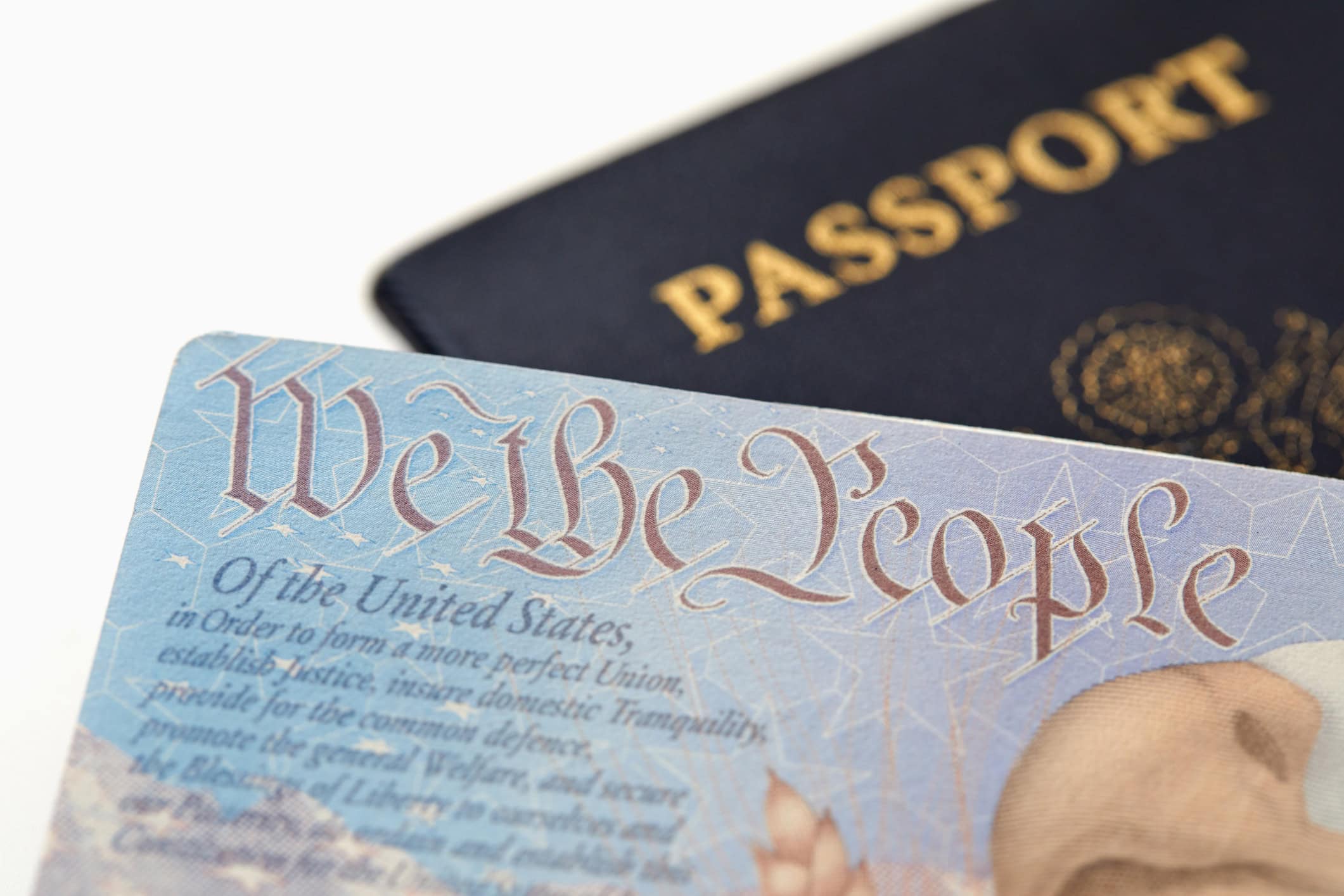
From English history to the 14th Amendment, the record makes a strong case for the Trump Administration.
Editors’ Note
The following is lightly edited testimony that was given on March 10 before the Senate Judiciary Subcommittee on the Constitution. For an extended treatment of this matter, please read Ilan Wurman’s article “Jurisdiction and Citizenship” in the Harvard Journal of Law & Public Policy.
It is often believed that the common-law rule of birthright citizenship was that mere birth on the sovereign’s soil was sufficient to create such citizenship. That is incorrect. Although that statement is an approximation of the rule that usually gets the correct result, the precise common-law rule was birth on the sovereign’s soil to parents under the sovereign’s protection.
That is how Sir Edward Coke described the rule in Calvin’s Case, the leading common-law decision from 1608. Aliens from friendly countries with permission to be in the realm were under the sovereign’s temporary protection and owed in exchange a temporary allegiance to the sovereign. They were, while in the realm, natural subjects of the king. That is why their children born in the realm were natural-born subjects. In contrast, the children born of invading soldiers were not birthright subjects “although born upon [the king’s] soil,” because they were not born “under the ligeance of a subject” or “under the protection of the king.” That is, a natural-born subject is one born to another subject, a subject who was under the protection of the king. Invaders did not count, but aliens were subjects of the king if they were under his protection and, in exchange, explicitly or implicitly, swore allegiance to him.
William Blackstone, in his influential Commentaries, described the rule respecting foreign ambassadors similarly: their children were not natural-born subjects because they were born under the protection and within the allegiance of another sovereign represented by the father, the ambassador.
To summarize the rule, here is Supreme Court Justice Joseph Story: “Nothing is better settled at the common law than the doctrine that the children even of aliens born in a country, while the parents are resident there under the protection of the government, and owing a temporary allegiance thereto, are subjects by birth.” (Emphasis added.) The parents’ status mattered, and the relevant status was whether they were under the sovereign’s protection.
What is more, in the relevant periods of English history, it appears that an alien could come under the sovereign’s protection through one of two ways: the grant of a royal safe-conduct or through statutory permission to enter. Safe-conducts were formal legal documents from the king granting permission to enter the realm and extending the king’s protection. Examples of these safe-conducts using the language of protection are legion. For present purposes, here is a summary from Blackstone: “[D]uring the continuance of any safe-conduct, either express or implied, the foreigner is under the protection of the king and the law.”
Eventually, safe-conducts were replaced by statutes. Magna Carta guaranteed friendly aliens “safe and secure conduct” to engage in trade “unless they have been previously and publicly forbidden.” The Carta Mercatoria of 1303 was a general grant of safe-conduct to merchants from several European provinces. The charter specifically guaranteed them “our protection.” A 1353 statute provided clearly and unequivocally, “Merchant Strangers…may safely and surely under our Protection and safe-conduct come and dwell in our said Realm.” (Emphasis added.)
Even subjects of warring nations could be under the sovereign’s protection so long as they had permission to remain. In an American case arising out of the War of 1812, Chancellor James Kent explained the rule in Clarke v. Morey as follows: “A lawful residence implies protection, and a capacity to sue and be sued.”
In summary, it appears from the historical record that unlawfully present aliens would not have been considered under the protection of the sovereign, and their children would not have been considered birthright subjects or citizens.
The case from the War of 1812 also illustrates another important proposition: the connection between protection and jurisdiction. As Kent wrote, not only does a lawful residence imply protection, but it also implies “a capacity to sue and be sued.” An alien caught at the border may be subject to U.S. criminal jurisdiction, but it does not follow that that alien must be allowed to sue or be sued in U.S. courts or to enter into contracts. Such an alien is not subject to the complete jurisdiction of the United States in the sense of the 14th Amendment.
The case of temporary visitors was more complex under the common law. The parents, if lawfully present, were under the sovereign’s temporary protection. That is why one judge in a famous case, Lynch v. Clarke, held that a child born of temporary sojourners was a citizen. However, the rule was challenged due to increased international travel and the resulting dual allegiances. Joseph Story suggested that an exception for temporary visitors would be a “reasonable qualification” to the rule. Henry St. George Tucker, in his treatise, stated flatly that temporary visitors fell outside the common-law rule. An appellate decision from New York in 1860 strongly suggested a similar approach.
Most significantly, the military authorities in the Department of the Gulf had to decide whether, during the Civil War, they could conscript into the Union army children born in Louisiana to French parents. A provost judge and the commanding general both concluded that such children, though born on U.S. soil, were only liable to the duties of American citizenship if their parents had been domiciled at the time of their birth.
The Louisiana example also suggests other ways in which temporary visitors are not subject to the complete jurisdiction of the United States. Would it be lawful under international law to conscript them or their children? The Union military authorities appear to have thought not. Domicile also creates a general judicial jurisdiction in the courts, a rule inapplicable to temporary visitors. In these and other respects, temporary visitors are not fully subject to the jurisdiction of the United States under the 14th Amendment.
The American Mind presents a range of perspectives. Views are writers’ own and do not necessarily represent those of The Claremont Institute.
The American Mind is a publication of the Claremont Institute, a non-profit 501(c)(3) organization, dedicated to restoring the principles of the American Founding to their rightful, preeminent authority in our national life. Interested in supporting our work? Gifts to the Claremont Institute are tax-deductible.
Suggested reading

Real journalists are supposed to challenge the status quo—not carry water for lobbyists.
A case study in claiming undue credit.

The Trump Administration has an opportunity to promote quality civics.

“Prioritized Deterrence” can set the agenda for the Republican Party for generations to come.

They’re attempting to subvert the chain of command.

