

The divide between church and state doesn’t separate religion from public education.
America’s Net Zero Near Miss
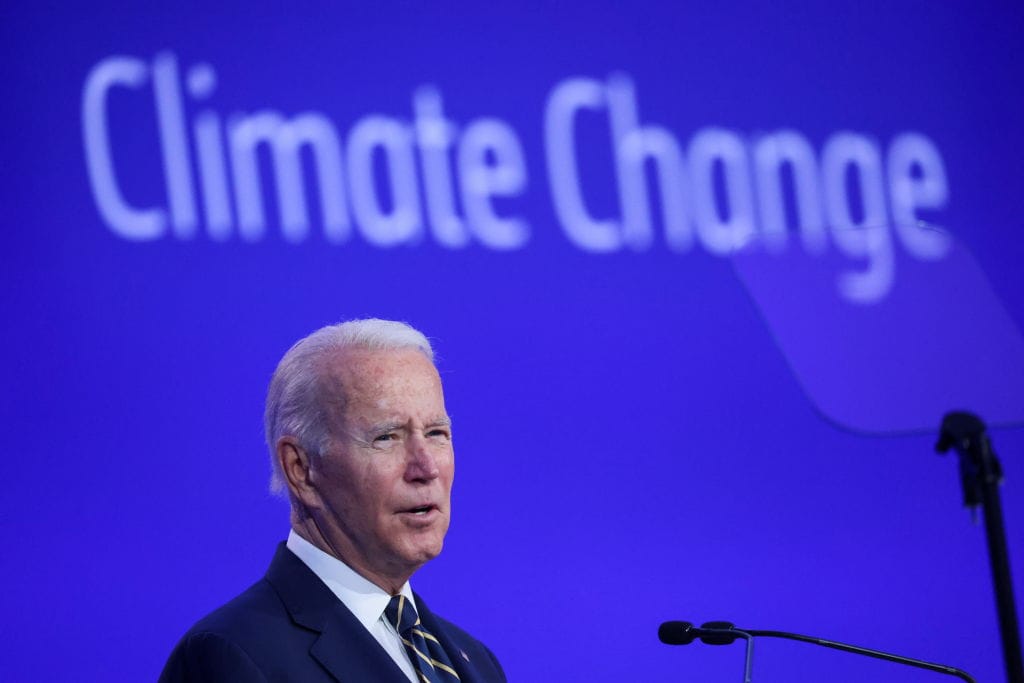
How Trump stopped the green ideology that nearly conquered the country.
America came closer to going net zero than many realize. To explain its rise, we need to consider a prophetic 1983 essay, “Risk and Culture,” by British anthropologist Mary Douglas and American political scientist Aaron Wildavsky. They argued that the risks a society deems most serious are a product of culture. “Each social arrangement elevates some risks to a high peak and depresses others below sight. This cultural bias is integral to social organization,” they wrote.
Douglas and Wildavsky observed the rise of the environmental movement as an insurgent political force, or what they termed the “border.” Led by white Boomer liberals inspired by the African Americans’ fight for civil rights, environmentalists appropriated the movement’s moral absolutism and refusal to compromise.
They predicted the border insurgency would conquer the political center thanks to generational turnover and because it would co-opt green ideology to avoid being on the losing side. Their predictions have been vindicated. Campaigning for the presidency in 1988, George H.W. Bush said he would tackle the greenhouse effect with “the White House effect.” Less than two decades later, his son George W. Bush complained of America’s addiction to oil and then signed into law the Energy Independence and Security Act, requiring tougher fuel economy standards and biofuels, and the Consolidated Appropriations Act 2008, which imposed mandatory greenhouse gas reporting.
Co-option was followed by conquest. “This was the moment when the rise of the oceans began to slow and our planet began to heal,” Barack Obama declared in June 2008 after winning the Democratic nomination for president. Once in the White House, he met early disappointment. Obama carried forward his predecessor’s objective of agreeing to a global climate treaty that included the largest emitters from the Global South. The November 2009 Copenhagen climate conference sought to produce such a treaty, but these efforts were sabotaged by the Global South, led by China and India.
That same year also saw the Waxman-Markey cap-and-trade bill die a lingering death in the United States Senate. The Senate filibuster, which requires 60 votes to overcome, spared America the type of aggressive climate legislation enacted on the other side of the Atlantic. Britain’s Climate Change Act, passed the previous year, imposed a goal of 80% decarbonization by 2050, which in 2019 was raised to 100%, or net zero.
The Democrats’ shellacking in the 2010 midterms put a definitive end to the prospect of Congress passing any climate legislation. At a post-election press conference, President Obama promised that cap-and-trade had been just one way of “skinning the cat.” For the rest of his presidency and into a third Obama term under Joe Biden’s titular presidency, the strategy was the same: do climate policy while bypassing Congress and refusing to let the Senate give its advice and consent on any climate treaty. Todd Stern, Obama’s climate envoy, used to joke that if you took the Declaration of Independence and stamped “climate change” at the top, it wouldn’t have gotten any votes in the Senate.
The strategy required pretending to believe two things that Obama’s presidential memoir tells us he knew were untrue. He justified his “happy talk” about a painless shift to a carbon-free future as necessary in the “highly irrational world” of American politics. There wouldn’t be any climate policy, Obama’s 2008 campaign strategist David Plouffe pointed out, “if we lose Ohio and Pennsylvania.”
The second involves what Paul Tucker, in his 2022 book Global Discord, calls the “Humean institution of promising,” on which any global climate treaty would have to rely. At every international forum he attended, Obama was struck by how “few nations felt obliged to act beyond narrow self-interest…China, Russia, and even genuine democracies like Brazil, India, and South Africa still operated on different principles.” “They abided by the established rules only insofar as their own interests were advanced…and they appeared happy to violate them when they thought they could get away with it.”
The Obama Administration’s post-Copenhagen approach sought to get around potential treaty vetoes from China and the U.S. Senate by having each country create its own climate pledges. At the start of his second term, Obama formed a climate G2 with China, opening the way to the Paris Climate Agreement and its novel structure, which can best be understood as synchronized unilateralism.
There was a catch that should have sent the resulting agreement to the Senate. The Paris Agreement states that developed-country parties should continue to take the lead by setting economy-wide emissions cuts. Worse, once they submitted their initial pledges, the United States and advanced democracies became subject to a legally binding ratchet that sets increasingly stringent emissions targets irrespective of what the rest of the world is doing. In practical terms, the Paris Agreement is not so very different from the discredited 1997 Kyoto Protocol: the West is on the hook for mandatory emissions cuts while the non-West is exempt, the principal difference being that the West gaslights its citizens by falsely claiming that under the Paris Agreement, everyone is in it together.
The domestic counterpart of the Paris Agreement was the Obama Administration’s war on fossil fuels, coal in particular. In 2012, the Environmental Protection Agency (EPA) imposed onerous standards on mercury emissions from coal-fired power stations (the MATS rule) that entailed billions in costs for trivial environmental benefits. The Supreme Court struck down the rule in 2015, but not before the EPA had proposed the Clean Power Plan, which aimed to achieve a nearly one-third reduction in carbon dioxide emissions from power generation. In 2016, the Court stayed the plan’s implementation, and in 2022, it decided that the regulation exceeded the EPA’s statutory authority.
With the Supreme Court closing off the Clean Air Act as a substitute for Congress passing climate change legislation, the Biden Administration found a more insidious way of doing climate policy. Having announced its goal of net-zero emissions by 2050 only two weeks after Biden’s inauguration, the White House issued an executive order on climate-finance-related risk that sought to use the financial system to achieve net zero. This was the high point of environmental, social, and governance (ESG) investing.
The Securities and Exchange Commission would require companies to disclose their greenhouse gas emissions, and suppliers, customers, and big institutional investors would do the rest. In his 2021 letter to chief executives, BlackRock’s Larry Fink said he wanted companies to submit a plan showing how their business model would align with a net-zero economy. Corporate America was being made a net-zero offer it couldn’t refuse.
The Obama Administration’s climate policy was stymied by process (the Senate filibuster) and the Supreme Court (Justice Scalia died four days after the Court issued its stay). Biden failed for different reasons. Asset managers got cold feet at the threat of an antitrust suit launched by Republican state attorneys general while the stock market did the rest. Energy was the S&P 500’s top-performing sector in 2022. At the same time, ESG indices and exchange-traded funds suffered double-digit losses.
Mary Douglas and Aaron Wildavsky described environmentalism’s ideological ascendancy as co-option followed conquest. What was missing was confrontation. No Western political leader dared challenge the environmental movement—until Donald Trump.
“The environmental [sic] is the biggest tool for stopping growth,” Trump told Joe Rogan during the 2024 presidential campaign. As a New York real estate developer, Trump saw firsthand the scam run for the benefit of environmental consultants and lawyers. And he grasped the strategic importance of the shale revolution in giving America unparalleled energy dominance.
Even before Trump re-entered the White House, his election victory was a political turning point. Chief among its casualties was climate catastrophism, which is essential to environmentalism’s Malthusian substructure of sin, punishment, and redemption. It serves as a form of rhetorical blackmail, with any instance of denial framed as risking the planet’s future, thereby making climate policy ever more extreme—the moral absolutism Douglas and Wildavsky noted.
Without catastrophism, environmentalism loses its potency and renders the prospect of planetary salvation meaningless. Trump’s example is likely to encourage other Republican politicians to follow his lead. A return to a stringent climate policy under a Democratic president will look far more like a grubby rent-seeking affair than a noble crusade against an existential threat.
President Trump has permanently changed the politics of climate change. Net zero will never happen in America.
The American Mind presents a range of perspectives. Views are writers’ own and do not necessarily represent those of The Claremont Institute.
The American Mind is a publication of the Claremont Institute, a non-profit 501(c)(3) organization, dedicated to restoring the principles of the American Founding to their rightful, preeminent authority in our national life. Interested in supporting our work? Gifts to the Claremont Institute are tax-deductible.
Suggested reading

We can’t count on the Supreme Court.
A qualified victory for republicanism in its removal power decisions.
Big Tech needs big oversight.
It’s illegal in theory and ineffective in practice.
Climate apocalypse porn is a lever to impose a radical economic agenda.

