

The divide between church and state doesn’t separate religion from public education.
After Barbara: Illegal Aliens and the Census, Part II

A roadmap for excluding illegal aliens from the apportionment base.
Editors’ Note
This is part II of a series. Read part I here.
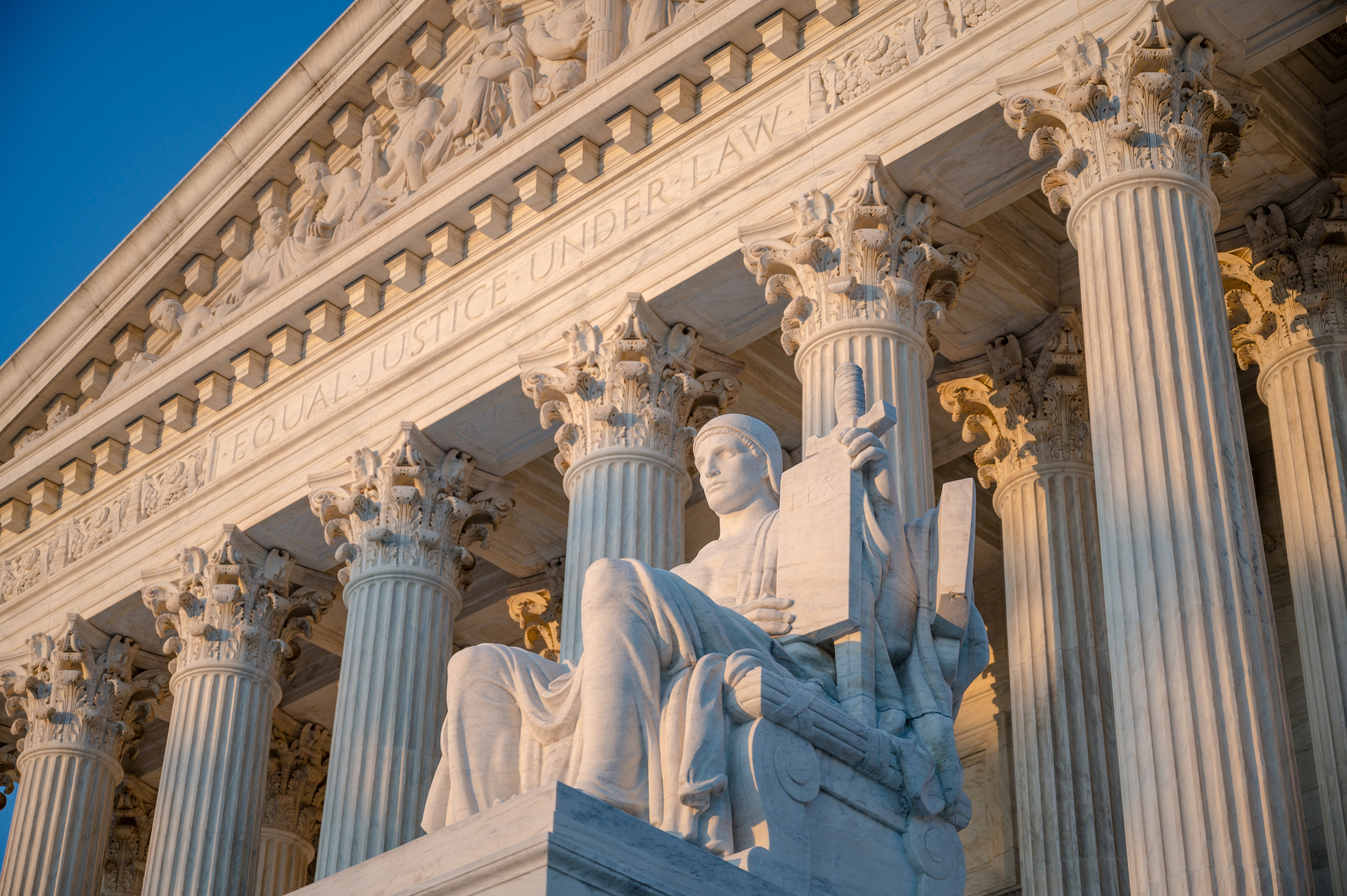
In Trump v. Barbara, the Supreme Court deemed birthright citizenship a constitutional right for the children of illegal aliens and birth tourists. It did so based on a dubious reading of the law, a blindness to its spirit, and a stubborn dismissal of relevant history, policy, and practices. That jurisprudence, I argued in part I, could spell coming doom for the Trump Administration in parallel cases likely to arise in response to its effort to exclude illegal aliens from the census apportionment base. This is a critical initiative given that those figures are used to allocate congressional seats and Electoral College votes across the states, redistrict, and dole out trillions of dollars in federal funds.
However, there is one powerful argument the Court did not countenance in Barbara or elsewhere that could lead it to render a more favorable judgment if and when the census-citizenship issue comes before it.
The Constitution is a compact of, by, and for “We the People of the United States,” who choose their representatives, per Article I. The American people determined that, via the Enumeration Clause, modified by Section 2 of the 14th Amendment, political power would be distributed by apportioning representatives and presidential electors based on “the whole number of persons in each State, excluding Indians not taxed”—language making clear that political representation was intended only for Americans. This follows the Census Act of 1790, in which Congress set forth an enumeration schedule comprising “inhabitants” limited to free peoples and slaves.
The founders never conceived of millions of foreigners being permitted to breach our borders with impunity and then considered part of the “people” for purposes of enumeration and apportionment. Illegal aliens, as well as those passing through for business or tourism, lack allegiance to our country, neither enjoy the full rights of citizenship nor bear its full responsibilities, and cannot vote in elections—all proof that they are not part of the American political community.
Those whose first act in America is to violate our sovereignty and break our law are in open conflict with a community that never consented to their presence, much less their political influence. Yet by being included in the apportionment base, they distort the representation of Americans—artificially inflating the political power of some citizens over others.
Because apportionment is a zero-sum game, if one state receives a disproportionate allocation of House seats and Electoral College votes, every other state’s citizens are, to an extent, disenfranchised. The same goes for state and local districting since jurisdictions that harbor non-citizens are granted disproportionate political representation.
How can the principle of “one man, one vote” stand if those here illegally alter the distribution of representation and the weight of Americans’ votes? By counting millions of illegal aliens and other sojourners for apportionment, our leaders have foisted on us a system of unequal representation—a “one man, half vote,” or “one man, two-and-a-half vote” regime, depending on the relative concentration of illegal aliens.
Those in support of such a regime will claim either that apportionment is based on “persons,” as they colloquially interpret the term without reference to immigration status, or that because illegal aliens or other analogous cohorts have historically been counted, the matter is settled. But they ignore the constitutional context for the enumeration and apportionment language, which is inextricably intertwined with representation and the vote—the express domain of the American political community. They also cast aside compelling Supreme Court precedent, as the Claremont Institute’s own John Eastman has cogently and comprehensively detailed.
It is long overdue to confront the corruption of the American political community by foreign influence via apportionment. The first Trump Administration sought to do so through executive action by identifying the illegal-alien population through cross-referencing administrative records and census data, and then excluding that population from the apportionment base to the extent possible. Progressive defenders of what amounts to systematic malapportionment challenged the policy. The Trump Administration litigated it up to the Supreme Court in Trump v. New York. But the Court never weighed in on the merits, including the political community argument. It dismissed the case in December 2020 because of issues of standing and ripeness before the apportionment calculation took place.
The case was instructive, as several justices focused in oral arguments on practical questions over legal ones. In part, the Court wanted to know the size of the illegal alien population that the first Trump Administration had identified in the census, whether and to what extent it was prioritizing a subset of illegal aliens such as those held in detention centers for exclusion over others, and what the impact of excluding such individuals would be on apportionment.
The Court ruled 6-to-3 that it could not proceed while the administration’s Commerce Department was still working to finalize those numbers, which were required to create the administration’s apportionment figures before being transmitted to Congress.
Only two current Supreme Court justices signed on to a dissent written by retired Justice Stephen Breyer asserting that “aliens without lawful status cannot be excluded from the decennial census solely on account of that status.”
The Trump Administration ultimately ran out of time to implement its policy, and the Biden Administration rescinded the illegal alien exclusion directive.
A Playbook for the Future
What should the second Trump Administration and like-minded state authorities do to increase the odds their policies are enacted this time around?
I propose an all-of-the-above approach that would maximize the chances of adopting durable policies that withstand court decisions. It would also build public support and political momentum for reshaping the legislative and legal landscape should these efforts ultimately fail.
First, since personnel is policy, the Trump Administration must appoint the right leaders, beginning with a Census Bureau director who understands the stakes of the census-citizenship issue and is prepared to fight against internal resistance. It remains unclear whether such a leader is in place. The Commerce Department’s Office of the Undersecretary for Economic Affairs is currently relying on its chief of staff to perform the census director’s duties, meaning there is no permanent director, and the department has largely remained silent on census-citizenship issues.
Second, that pivotal issue notwithstanding, the Trump Administration should take executive action akin to its first-term directives to identify all non-citizens, including by immigration status where available, on a rolling basis to produce an accurate database as of Census Day 2030. The policy should call on all relevant federal agencies, led by the Department of Homeland Security and including the Internal Revenue Service and the Social Security Administration, among others, to coordinate with each other and relevant state authorities such as motor vehicle bureaus—including through use of the SAVE database—to develop a list that can be cross-referenced with the 2030 Census data. The memorandum should permit those agencies to coordinate with the Census Bureau accordingly.
Issuing this memorandum immediately is imperative. As a practical matter, it would force state authorities to establish and refine the processes necessary for the administration presiding over the next census to produce a comprehensive and accurate set of non-citizen figures for apportionment. It will also generate substantial political buzz when Americans see the magnitude of changes to the political map that will occur should illegal aliens be excluded from apportionment. Since it will almost certainly be challenged on privacy grounds and otherwise—as has already occurred in analogous efforts related to immigration enforcement—it would give the administration a chance to obtain a ruling on the merits or determine workarounds as soon as possible. If nothing else, it would give the Court the figures it sought in 2020 to be able to rule on the merits.
Third, and in parallel, the Trump Administration should reinstate a citizenship question on the census form, an initiative that may already be underway. That question should include asking the immigration status of non-citizens, particularly to the extent the Supreme Court may rule that some subsets of non-citizens may be excluded from the apportionment base, while others must be included.
During oral arguments in Trump v. New York, the Court identified DACA recipients, those in temporary protected status, and visa overstayers as discrete non-citizen populations on which it might render judgment regarding inclusion/exclusion. Reinstating the citizenship question will likely be legally challenged, as occurred during the first Trump Administration. But the administration may well prevail this time around by avoiding any technical infractions, the specious justification the Court used to stop this policy from being implemented during the first administration.
Fourth, both houses of Congress should push legislation that excludes non-citizens from the apportionment base and hold a series of related hearings. Such legislation has come up before, only to die. The purpose of this effort would not so much be to enact legislation as to use the bully pulpit to make this a politically potent issue, and one that on prudential grounds the courts may have to take more seriously. If the political environment changes in the future, then perhaps Congress will be able to pass such legislation—to the extent that, as in Barbara, the Supreme Court does not effectively moot any such effort by creating a constitutional right for non-citizens to be included in the apportionment base.
Fifth, as a backstop, states should coordinate with the Trump Administration to develop and advance legislation requiring that redistricting be based on the citizen population, with the federal government providing the data necessary to implement such policy. The executive branch may be prohibited from excluding non-citizens from the apportionment figures. But it can still attempt to tabulate non-citizen figures and share them with states, which could use them to mitigate the impact of misallocated seats by ensuring that districts are drawn to reflect the citizen population.
As reported in RealClearInvestigations, Christopher Hajec of the Immigration Reform Law Institute, representing Kansas in one of the state lawsuits challenging the counting of illegal aliens and nonimmigrant aliens, told me, “Whatever Congress does or does not do, our position is that the Constitution implies that illegal aliens should not be counted in the census for apportionment.” That constitutional understanding should guide leaders in every state capital across this country.
There will be legal, political, and practical issues with these initiatives. We do not know if the courts will rule on them in a timely manner. We do not know who the next president will be when the 2030 Census is taken. Given all these uncertainties, the best course would be to pursue every available avenue and let the best approach prevail.
Nothing is more fundamental to the integrity of our republican system than ensuring that only Americans have political representation. Our leaders must take up this fight posthaste. And they must do everything within their power to win.
The American Mind presents a range of perspectives. Views are writers’ own and do not necessarily represent those of The Claremont Institute.
The American Mind is a publication of the Claremont Institute, a non-profit 501(c)(3) organization, dedicated to restoring the principles of the American Founding to their rightful, preeminent authority in our national life. Interested in supporting our work? Gifts to the Claremont Institute are tax-deductible.
Suggested reading

We can’t count on the Supreme Court.
A qualified victory for republicanism in its removal power decisions.

Nationalist localism—unlike globalism—survives the virus.

One fit for republican government.
A report from the Southern border.

