

One dose will erase your whole political mind.
Citizenship Requires Attachment, Not Recall
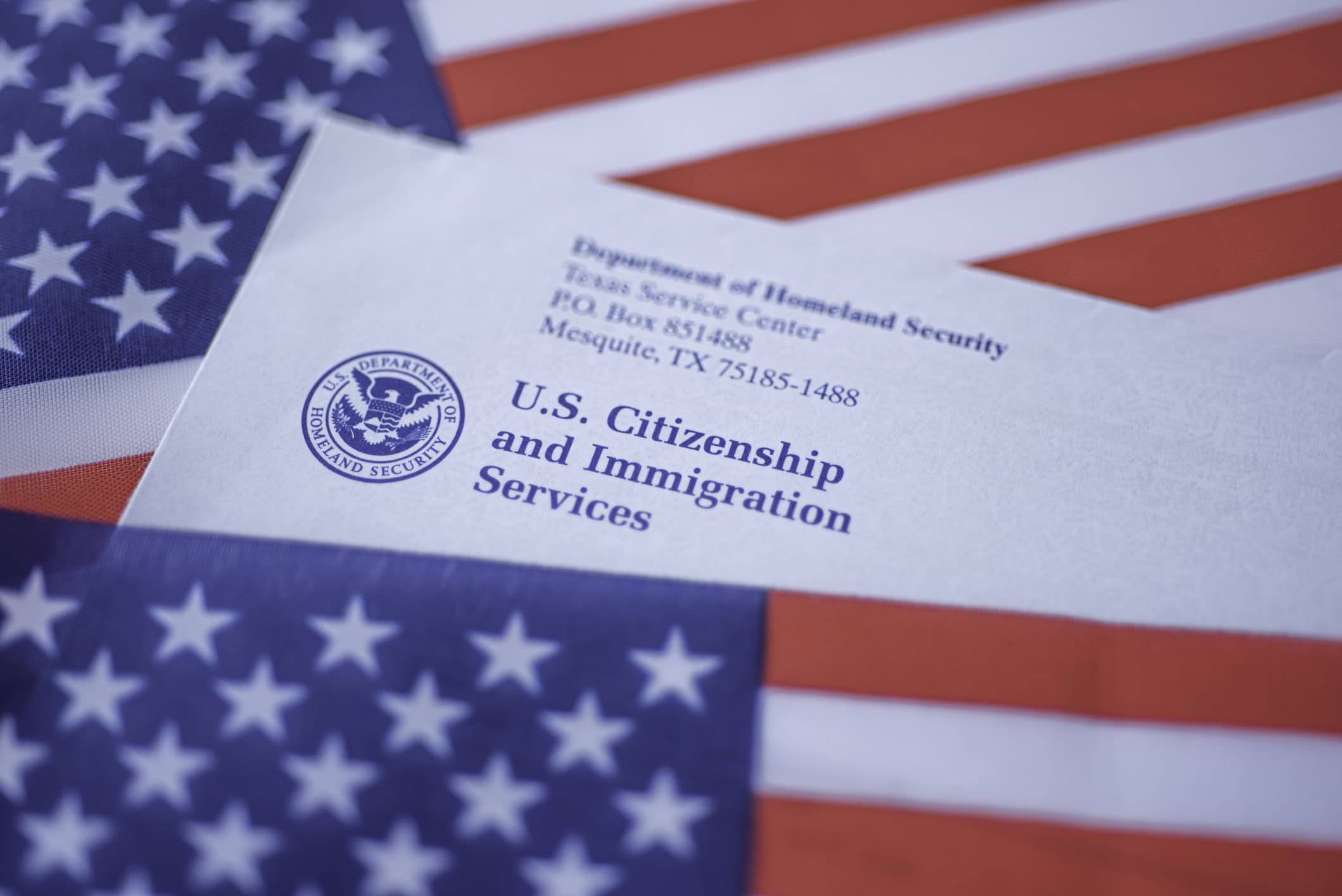
America hands it out based on a quiz whose answers the government publishes in advance.
If an American moves to Japan, passes a quiz about Japanese civics, takes a job, and naturalizes, is he Japanese? Whatever the answer is in Japan, the American answer is supposed to be yes. A man born elsewhere can become one of us. Today, that yes rests mostly on a short oral quiz containing questions drawn from a list the government publishes in advance.
The Trump Administration deserves credit for trying to raise the bar. U.S. Citizenship and Immigration Services (USCIS) Director Joseph Edlow told the New York Times that it was “very easy to…memorize the answers” in the old civics test. The numbers bear him out. In fiscal year 2024, 94.4% of applicants passed, counting re-exams.
In October 2025, USCIS rolled out a new civics test that is meant “to restore integrity” to naturalization. The pool of published questions grew from 100 to 128, and the officer now asks up to 20 questions, stopping once the applicant answers 12 correctly. Yet the agency’s own policy alert says the new test “retains the 60 percent passing score.” If the 20 questions are drawn at random, an applicant who has memorized 90 of the 128 answers passes about 91% of the time. One who knows only 77 of them, or 60% of the list, still passes about three times in five.
Fortunately, the law asks for far more than a test score. Federal regulations place the burden on the applicant to prove eligibility “by a preponderance of the evidence,” which the USCIS Policy Manual glosses as “probably true” or “more likely than not.” The same manual says attachment to the Constitution “implies a depth of conviction, which would lead to active support of the Constitution.” In practice, officers review the applicant’s record and interview testimony for ties to the Communist Party, other totalitarian parties, or terrorist organizations. The applicant then declares his allegiance at the oath ceremony.
Critics of the new civics test, including Senator Mazie Hirono and her Democratic colleagues, cite a survey finding that only one in three Americans would pass the old test, let alone the newer, harder one. That is a scandal of American civic education, not an argument against the civics test in principle. Yet the distinction remains: native-born Americans are members by birth, while applicants are petitioners. As the Supreme Court put it in Berenyi v. INS (1967), when an alien seeks citizenship, “the shoe is on the other foot.”
The American Founders placed the burden on the newcomer from the start. In February 1790, during a congressional debate on the nation’s first naturalization bill, James Madison said he would extend citizenship only to those who “would be a real addition to the wealth or strength of the United States.” Benjamin Franklin’s 1784 pamphlet, Information to Those Who Would Remove to America, warned Europeans that Americans do not ask of a stranger “What IS he? but What can he DO?” Anyone who braved crossing the Atlantic on those terms had already distinguished himself. George Washington honored Americans as “citizens, by birth or choice,” but he assumed the choice meant something. In 1783 he had promised newly arrived Irish immigrants “all our rights and privileges”—but only “if by decency and propriety of conduct they appear to merit the enjoyment.”
Early American statutes enforced that condition in court. The Naturalization Act of 1790 required an applicant to prove “to the satisfaction of such court, that he is a person of good character.” As Thomas G. West notes, this “could ordinarily be done by having a citizen sponsor testify on one’s behalf.” In 1795, Congress required the applicant to show he was “attached to the principles of the constitution of the United States.” The Naturalization Act of 1906 required two citizen witnesses to testify in open court that an applicant met requirements for “residence, moral character, and attachment to the principles of the Constitution.” Attachment was supposed to form over time under the watchful eyes of neighbors and then be proven before a judge.
The civics test came much later. In the 1930s, by USCIS’s own account, INS Commissioner Daniel W. MacCormack stressed that examinations were meant to “demonstrate the attachment to the principles of the Constitution rather than memorization of facts.” A civics knowledge requirement arrived in 1950, as Section 30 of the Internal Security Act, an anti-Communist law passed over President Truman’s veto.
Then came the hollowing out of the naturalization process. In 1981, Congress abolished the two-witness requirement, partly on the theory that an investigation would reveal an applicant’s character better than testimony could. By 1991, the immigration service had essentially stopped sending investigators. The rest of the system loosened too. Exemptions from the English and civics requirements for older applicants widened in 1978, 1990, and 1994, and in 1990, Congress moved naturalization from the courts to the immigration bureaucracy. The quiz became the whole process.
The stakes of this error are lopsided. Revoking naturalization requires “clear, unequivocal, and convincing” evidence, as the Supreme Court stated in Schneiderman v. United States (1943), a denaturalization case of an avowed Communist. The Court made criminal denaturalization harder still in 2017, requiring proof that the applicant’s lie actually influenced the grant. Citizenship granted at 51% confidence can be taken back only on far stronger proof, making the error effectively permanent.
A meaningful conception of naturalization would start from a truth West captures well: “virtue, unlike beauty, is invisible. In an individual it becomes manifest through his deeds over a long time.” A quiz cannot reveal character. Witnesses, a judge, and time can. This approach would also treat naturalization as a bargain between two parties. “Naturalization is the result of contract,” writes Edward Erler, “an offer on one side and an acceptance on the other.”
The applicant must want to be American, and America must want him.
Strictness at the entry gate follows from the equality of both native and naturalized citizens before the law. Chief Justice John Marshall wrote in 1824 that a naturalized citizen stands “on the footing of a native.” Congress cannot create second-class citizens after the fact, so admission is the only moment to judge. As David Upham puts it, “a duty at the border of the citizenry becomes a crime among the citizenry.”
The fixes are up to Congress since the naturalization power lies, in Marshall’s words, “exclusively” with them. The simplest one involves bringing back citizen witnesses who know the applicant and can testify about him in open court. Congress should restore public hearings before a judge along with mandatory neighborhood investigations. USCIS revived those investigations in August 2025, and wrote them into its Policy Manual a year later, but the next director can easily reverse that. Congress should also require applicants to take a written test based on concrete facts drawn from an unpublished pool, with a passing score of at least 80% and no native-language exemptions.
The meaning of “attachment” must also be defined in statute, along the lines of Chief Justice Harlan Fiske Stone’s 1943 dissent in the Schneiderman case. Stone contended that an applicant must “be in fact attached to [the Constitution’s] principles when he seeks naturalization,” not merely capable of attachment. Congress should demand clear and convincing proof of attachment and good moral character, a standard comparable to the one the government must meet to revoke citizenship.
Congress must make the oath of citizenship mean what it says. Every new citizen swears to “bear true faith and allegiance” to the Constitution. He also swears to “absolutely and entirely renounce and abjure all allegiance and fidelity to any foreign prince, potentate, state, or sovereignty,” nearly the words Congress required in 1795. Yet current American law does not compel a citizen to choose between nationalities. The oath promises what the process never enforces.
After the November 2025 shooting of two National Guardsmen in Washington, President Trump announced a permanent pause on migration from what he called “Third World Countries.” Short of a full stop, the least America owes itself is a gate that means something.
George Washington spoke of citizens “by birth or choice.” The law asks those who seek to become an American citizen to demonstrate their attachment to the principles of the Constitution. It is time we tested for it again.
The American Mind presents a range of perspectives. Views are writers’ own and do not necessarily represent those of The Claremont Institute.
The American Mind is a publication of the Claremont Institute, a non-profit 501(c)(3) organization, dedicated to restoring the principles of the American Founding to their rightful, preeminent authority in our national life. Interested in supporting our work? Gifts to the Claremont Institute are tax-deductible.
Suggested reading


We need serious statesmen to emerge to prevent a fiscal calamity.
A tale of the heroic deeds of old from men of renown.

Undoing a corrupt eminent domain case doesn’t justify society-wide wealth redistribution.
The cure for what ails America.

