

Meet this moment, Mr. President, before it’s too late (and it’s almost too late)
Feeding the Fraudsters
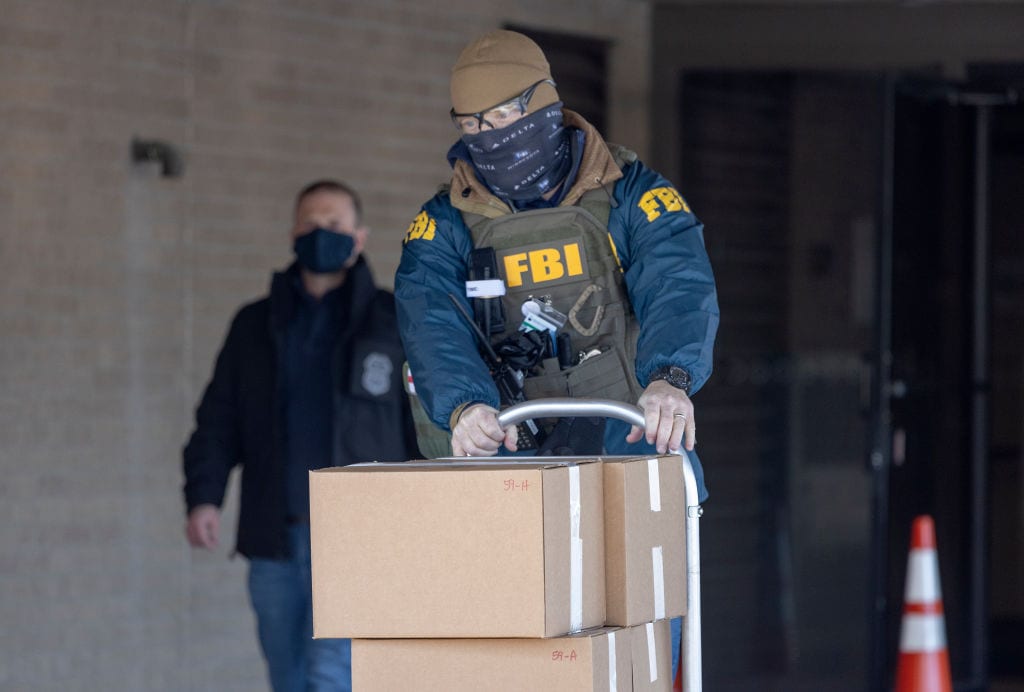
The largest COVID fraud case yet reveals systemic blind spots.
The nonprofit Feeding Our Future claimed to have served 91 million meals to children across Minnesota. But as Assistant U.S. Attorney Rebecca Kline described in a recent court hearing, they were not feeding kids—they were instead “feeding the bank accounts of fraudsters.” FOF founder Aimee Bock was sentenced to nearly 42 years in prison for stealing close to $250 million in taxpayer dollars, orchestrating what the DOJ called the largest COVID-19 fraud scheme in the country.
Seventy-eight defendants and counting set up shell companies and phantom sites to feed nonexistent children. Former prosecutor Joe Thompson described the urgency of the FBI takedown: “I remember we took down the case on a Thursday because the following day, on a Friday, is when [the Minnesota Department of Education] paid out the money. Every Friday, they paid out about $20 million.” Twenty million dollars every Friday for meals the system never independently verified.
How exactly did a $4.1 billion federal program pay a quarter of a billion dollars for meals that were never served—and never notice?
Consider Safari Restaurant in Minneapolis. Before the pandemic, it pulled in roughly $600,000 a year. After enrolling in the Federal Child Nutrition Program through Feeding Our Future in April 2020, the restaurant claimed to serve 5,000 children per day by July, seven days a week. When the FBI placed cameras inside, actual visitors averaged around 40. The restaurant’s total take was a cool $12.1 million.
Another restaurant, Empire Cuisine, received more than $25 million in funds. The FBI documented that only $3 million was spent on food. Its co-owner, Abdiaziz Farah, used the proceeds to build a luxury apartment complex in Nairobi. A separate defendant, Liban Yasin Alishire, wired money to purchase a beach resort in Diani, Kenya.
Of the $250 million Feeding Our Future stole, just $60 million has been recovered, less than a quarter. Much of the money left through hawala networks, informal channels that move an estimated $1.3 billion annually from the U.S. Somali diaspora to East Africa.
Mosques were recruited as distribution sites because, as prosecution witness Hadith Ahmed testified, they were “high-traffic areas [and] were already nonprofits.” Sites at Dar Al-Farooq Islamic Center in Bloomington, Minnesota, claimed to serve 3,500 meals per day in November 2021. Qamar Hassan, another prosecution witness, testified she joined after hearing people in the community “were getting rich from it. People were buying cars and homes and everything.” When the jury began deliberating, the defendants attempted to bribe a juror with $120,000 in cash; the DOJ charged five in this scheme.
The fraud’s geographic reach extended far beyond Minnesota. In Columbus, Ohio, the owners of a Somali specialty market redeemed more than $10 million in fraudulent food stamp and WIC benefits before federal agents shut them down. In New York, the DOJ charged a $66 million SNAP fraud ring that also exploited the gap between reported claims and actual disbursement. USDA’s own estimates put annual improper payments across nutrition programs at $10.5 billion.
The federal government didn’t just fail to monitor fraud: it built the on-ramp.
The Office of Refugee Resettlement runs Refugee Family Child Care Microenterprise Development (RFCCMD), a program designed to help refugees who have been in the U.S. for less than five years start family child care businesses in their homes. Minnesota received $185,000 in RFCCMD funding in FY 2016, plus $230,000 in microenterprise development grants. The African Development Center in Minnesota provides training and small business loans. The Neighborhood Development Center, which employs Somali-speaking staff, trained over 550 entrepreneurs, predominantly immigrants. Minnesota requires no English proficiency for family childcare licensing.
These programs expanded who could participate, but the system’s ability to verify what happens never expanded with it.
The Child and Adult Care Food Program reimburses based on meal counts submitted by sites. Those counts are verified by the sponsoring organization itself—the same organization that collects administrative fees for every site it enrolls. The more sites, the more fees collected. The federal government’s primary routine visibility into the program is a single document: the FNS-44 form, a monthly aggregate reporting total meals claimed across the entire state. There is no site data, no child data, and no individual meal records. Through routine reporting, the federal government sees nothing below the state summary. The state sees only what the sponsor reports. And the sponsor sees only what the site reports.
COVID compounded these issues, as federal waivers suspended the requirements for on-site visits, semi-annual reviews, and sponsor oversight, removing what little mandatory monitoring existed. Feeding Our Future’s enrollment exploded to over 250 Federal Child Nutrition Program sites by 2021. Bock collected $18 million in administrative fees for “monitoring” the sites she was defrauding.
Some individual politicians were participants.
Abdi Nur Salah, a senior policy aide to Minneapolis Mayor Jacob Frey, lobbied politicians to pressure the Minnesota Department of Education (MDE) to keep Feeding Our Future open, even as he operated fraud sites himself. His brother co-owned Safari Restaurant.
City Council Member Jamal Osman’s wife ran a Feeding Our Future meal site that the Minnesota Attorney General called a “fraudulent shell company.” State Senator Sandra Pappas lobbied the MDE for a site whose director was later sentenced to 43 months in prison.
Ilhan Omar’s MEALS Act eliminated site inspections and allowed for-profit restaurants to participate in the program; a Minnesota legislative committee said it took the guardrails off. In a TV appearance promoting the program to Somali-language media, Omar highlighted Safari Restaurant—the same site that was claiming 5,000 children a day while serving only 40.
When the MDE tried to suspend payments, Bock sued, alleging racial discrimination. It backed down and resumed payments.
Jenny Butcher, a 25-year MDE veteran, told the FBI the fraud was “an open secret” and that management warned her that pursuing it would make her appear to be “targeting certain groups.” Camille Jones, another MDE employee, reported that her supervisors showed “little interest” in pursuing her concerns about “totally crazy” reimbursement claims. The U.S. House Oversight Committee found that Governor Tim Walz and Attorney General Keith Ellison were aware of the fraud, lied about their knowledge of it, and retaliated against employees who raised concerns. Democratic members of the committee blocked the subpoena of Omar’s communications.
Judge Nancy Brasel, sentencing Bock, said, “When the state raised concerns about fraud you didn’t help, you cried racism and filed a lawsuit.” Bock exploited a system whose architecture made fraud not just possible, but incentivized it.
Mind the Gaps
Every layer of the Child and Adult Care Food Program is funded by the volume it reports. Sponsors collect fees per site. States receive federal administrative funds proportional to program size; Minnesota’s CACFP budget grew from $70 million in 2020 to $336 million in 2021. The USDA reports participation to Congress as a measure of reach—1.7 billion meals served in fiscal year 2024.
Detecting fraud shrinks the numbers. Shrinking the numbers shrinks budgets, staff allocations, and performance metrics at the state and sponsor levels. Even back in 1999, USDA Inspector General Roger Viadero concluded, “The temptation to cheat was too great and the controls to prevent cheating were too weak.” Twenty-seven years later, the core architecture remains substantially unchanged. The specific reform needed to prevent another Feeding Our Future—a “serious deficiency process” for removing bad sponsors—is still a proposed rule.
In 1998, political scientist James C. Scott described the central problem of modern statecraft as legibility: the state’s compulsion to simplify complex social realities into standardized, administratively convenient categories. “The premodern state was, in many crucial respects, partially blind,” he wrote. “[It] knew precious little about its subjects, their wealth, their landholdings and yields, their location, their very identity.” The solution was the map: the census, the cadastral survey, and the tax roll. But Scott warned that these maps were always “abridged”: “They did not successfully represent the actual activity of the society they depicted, nor were they intended to; they represented only that slice of it that interested the official observer.”
The Child and Adult Care Food Program is this abridged map. The FNS-44 form records a state’s claim to have served a certain number of meals. What actually happened inside the sites—whether children were present, whether food was served—is in Scott’s phrase “left blank—unspecified—since it is not germane to the map plotting itself.” The system was designed to count claims, not to see meals.
Scott predicted exactly the dynamic that followed. He observed that intermediaries who “first plumbed the mysteries of the new tenure administration enjoyed unique opportunities”—the Vietnamese secrétaires who served as go-betweens for French colonial officials—“occasionally became landlords to whole villages of cultivators who had imagined they had opened common land free for the taking.” Feeding Our Future was this intermediary.
Bock understood what the state could see and what it couldn’t, and she built an empire in the gap.
Scott wrote that the formal scheme “was parasitic on informal processes that, alone, it could not create and maintain.” The program’s reimbursement machinery depended entirely on honest sponsors, real children, and genuine meals, informal social foundations the system could not observe and had no mechanism to verify. When those foundations were removed, the thin formal order could not detect the failure.
This is the long-term challenge facing Vice President JD Vance’s Task Force to Eliminate Fraud, created by executive order in March 2026. Its initial findings are staggering: 355,000 individuals receiving double SNAP benefits, 186,000 claiming benefits using the identities of the deceased, and nearly $1.4 billion in payments withheld. For the first time, systematic detection does not depend on the system policing itself.
But catching Bock does not change the architecture that produced her. Scott warned that “the more schematic, thin, and simplified the formal order, the less resilient and the more vulnerable it is to disturbances outside its narrow parameters.” The Child and Adult Care Food Program was designed in 1968, diagnosed as broken in 1999, and is still being reformed in 2026. SNAP has EBT. WIC has eWIC. The National School Lunch Program has direct certification. CACFP still runs on paper. And 21 states have filed suit to block the data sharing that made the task force’s findings possible—fighting, in effect, to preserve their own blindness.
The day Bock was sentenced, the DOJ charged 15 more defendants with $90 million of additional Minnesota fraud, including what it called the “largest autism fraud scheme” in DOJ history.
Vance’s task force can find the fraud. The question is whether it can make the state see what it was designed not to.
The American Mind presents a range of perspectives. Views are writers’ own and do not necessarily represent those of The Claremont Institute.
The American Mind is a publication of the Claremont Institute, a non-profit 501(c)(3) organization, dedicated to restoring the principles of the American Founding to their rightful, preeminent authority in our national life. Interested in supporting our work? Gifts to the Claremont Institute are tax-deductible.
Suggested reading
Ireland’s leaders are inviting disaster.

The philosopher’s focus on citizenship is consistent with Donald Trump’s message.
We need to send them elsewhere.

It could portend even bigger losses in the years ahead.

America’s unserious political class is totally unequipped to deal with the threat.

