

A report from the Southern border.
What Will Replace the Old Order?
The speech heard ‘round the world.
The pivotal question of what will follow the crack-up of the liberal international order dominated the highest levels of European politics last week.
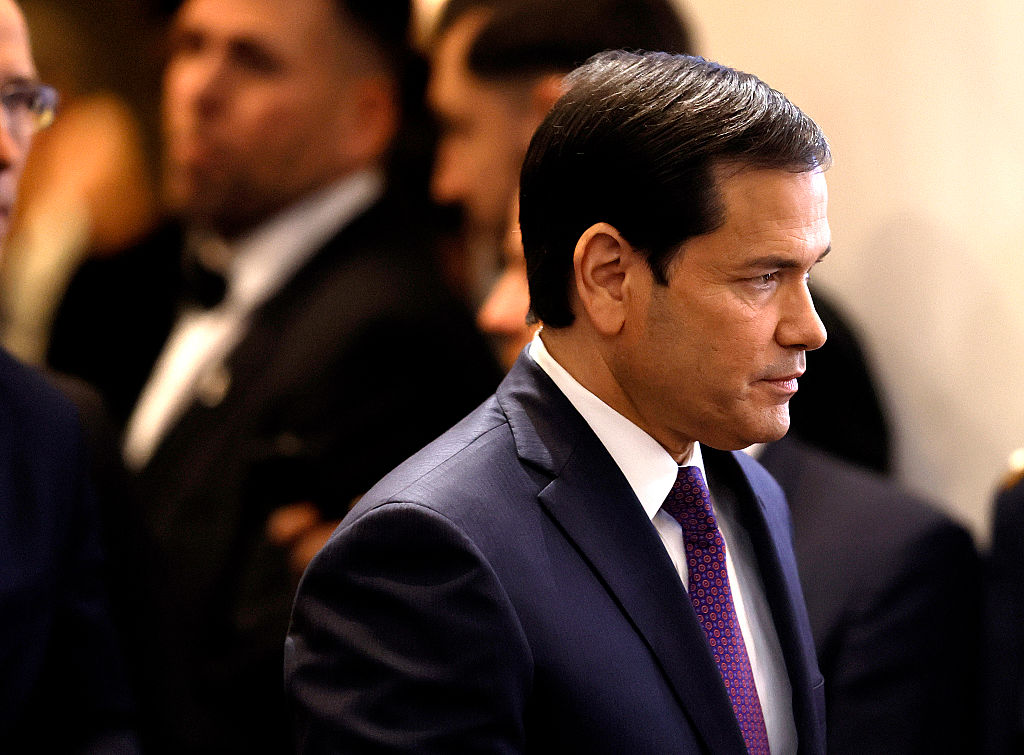
Secretary of State Marco Rubio gave his own, forceful answer at the 2026 Munich Security Conference. Following Vice President JD Vance’s provocative speech last year, Rubio delivered an equally spirited address that issued an ultimatum: rationalizing collapse and weakness is no longer the policy of the United States—and it should no longer be Europe’s policy either. America has no “interest in being polite and orderly caretakers of the West’s managed decline,” he stated forthrightly.
Instead, Rubio urged a reformation of the “global institutions of the old order” to defend and strengthen the key pillars of Western civilization.
The problem in Rubio’s mind was that the 20th-century web of international alliances, designed to counter the Soviets in the wake of two devastating world wars, took on a life of its own. Its keepers began putting the preservation of their supranational relations “above the vital interests of our people and our nations.” Institutions like the U.N. have utterly failed to protect national interests, and they simply have no answers to the most pressing problems in international affairs today. Instead, they actively encourage deindustrialization, mass migration, and shortsighted climate policies, causing a loss of confidence in the very sources that have supplied the West’s vitality for centuries.
To counter this, Rubio proposed that the U.S. partner with Europe to lead a “reinvigorated alliance…that boldly races into the future.” It will focus on “advancing our mutual interests and new frontiers, unshackling our ingenuity, our creativity, and the dynamic spirit to build a new Western century.” If the West wants to safeguard and promote its historic ways of life, then an international realignment is inescapably necessary.
The themes Rubio articulated were also the subject of this year’s “Budapest Global Dialogue,” which took place earlier last week. An annual conference put on by the Hungarian Institute of International Affairs (HIIA) and the Observer Research Foundation, this year’s gathering focused on what HIIA President Gladden Pappin presented as the choices currently before the world: endless conflict that’s likely to spin out of control or the emergence of a foundation for long-term security, peace, and prosperity.
Keynote speakers and panelists agreed that continuing to prop up a decaying international order was not a viable option. Though necessary for its time, it’s clearly inadequate in a world that looks far different from the one that featured creeping death in the form of the USSR. As Secretary Rubio recently told a gaggle of reporters before his address in Munich, “The old world is gone,” noting that nations must reexamine their roles in our “new era in geopolitics.”
The urgency of this project has been amplified by the European Union’s various machinations against popular government. Its censorship machine is attempting to export the E.U.’s liberty-denying laws to America and other Western nations. Unsurprisingly, the problem of censorship, which has been a chief focus of Vice President Vance, took up much of the conversation on the opening night panel.
Headlined by Sarah B. Rogers, the U.S. Under Secretary of State for Public Diplomacy and Public Affairs, and Balázs Orbán, Prime Minister Viktor Orbán’s political director, panelists discussed the countless issues stemming from the E.U.’s Digital Services Act. It uses “trusted flaggers” like HateAid—an organization funded by the German government—to censor online speech, including that of Americans. As Rogers said straightforwardly, “You do not have self-governance without freedom of speech.”
Pappin and other participants also noted the myriad problems stemming from unchecked globalization. Nations happily traded away the most basic elements of sovereignty for a mess of pottage in the form of lower prices on select goods. This was justified using free market language, in which attaining the highest GDP possible seemingly became the summum bonum of political life. Former Trump Administration official Andrew Peek termed this problem “economics without politics.”
In the United States in particular, key supply chains were mostly shipped out of the country, the folly of which was fully exposed during the COVID debacle. The U.S. essentially followed a systematic deindustrialization plan as we helped build up other countries, especially China. This runs counter to the historic American practice of maintaining a vibrant domestic manufacturing sector, a tradition that stretches back to Alexander Hamilton’s Report on Manufacturers.
China’s rise didn’t happen solely due to its sheer geographic size or population. It occurred because the Clinton Administration and Western leaders decided the best way to fend it off was by inviting the Chinese into the heart of the world’s economic system. This was a catastrophic choice that helped hasten the collapse of the old order.
Now, China is by far the world leader in many positive economic indicators, which Harvard’s Graham Allison pointed out in his keynote address. The country is also looking to become the world’s first electrostate, adding another gigawatt of capacity to its grid every year.
Meanwhile, the U.S. is facing mounting problems with our electric grid, which will be further exacerbated by the construction of data centers and older plants going offline (zero nuclear power plants were built in the U.S. between 1996 and 2016—a span of 30 years). Additionally, as noted in a Department of Energy report last year, utopian green energy mandates have helped bring the U.S. closer to the brink of a full-blown energy crisis.
Though the conference featured discussions on other pivotal topics—especially the promise and peril of artificial general intelligence—there wasn’t a dedicated panel on immigration. But that didn’t stop speakers from addressing the topic. Alexandre del Valle, a professor at France’s IPAG, called mass Islamic immigration to Europe a long-term bomb. And in a keynote address that served as a campaign speech of sorts, Hungarian Minister of Foreign Affairs and Trade Péter Szijjártó celebrated the fact that illegal migration to Hungary is non-existent.
Szijjártó also devoted time to underscoring the stakes of the upcoming Hungarian parliamentary elections. The April 12th contest will feature a rather personal battle between current Prime Minister Viktor Orbán and Péter Magyar, who resigned from Fidesz in 2024 and then joined TISZA (The Respect and Freedom Party). The campaign billboards and posters I saw plastered around Budapest, which were nearly all pro-Orbán, showed Magyar gladly acquiescing to Ukrainian President Volodymyr Zelensky’s insistence to send Hungarian armaments to Ukraine.
Fidesz is asking voters if they want to keep Orbán’s government in power or elect those who would sacrifice the country’s blood and treasure in war. President Trump clearly wants the former. During Rubio’s trip to Budapest after his Munich speech, he avowed that the American president is “deeply committed” to Orbán’s victory in April.
As the Trump Administration sees it, the path forward is clear: maintaining alliances when political goals and traditions are shared, as is the case between Hungary and the United States. (In a joint press conference with Rubio, Orbán stated that “A new golden age has set upon us concerning the relationship between the United States and Hungary.”) And as Rubio was careful to point out in his Munich speech, when alliances become strained, renewal through strategic thinking that connects means and ends is required. One such example is Elbridge Colby’s recent discussion of the creation of NATO 3.0, in which U.S. allies bear more of the financial burden.
What won’t work, however, is elevating prudential considerations to the level of principle, as world leaders and bureaucrats have done far too often in recent decades. They have frozen in amber the specific circumstances of the second half of the 20th century, thinking that those paradigms must forever dictate how nations should act. But as Dhruva Jaishankar, the Executive Director of the Observer Research Foundation America, pointed out in a clear illustration, the ballroom in which the 2026 Budapest Global Dialogue was held was built in 1896. Five international orders have come and gone in that time.
Contrary to the Anne Applebaums of our foreign policy elite class, who have helped drive the West into a ditch, the Nazis aren’t marching just over the horizon, and Vladimir Putin isn’t the reincarnation of Adolf Hitler. Alliances should be made, renewed, or even disbanded depending on whether they help secure America’s interests in the present. As Daniel J. Mahoney is fond of saying, it isn’t always Munich 1938. Serious leaders acknowledge current realities and marry their rhetoric to actions that will lead to peace, prosperity, and the good of the West—and the good of America above all.
The American Mind presents a range of perspectives. Views are writers’ own and do not necessarily represent those of The Claremont Institute.
The American Mind is a publication of the Claremont Institute, a non-profit 501(c)(3) organization, dedicated to restoring the principles of the American Founding to their rightful, preeminent authority in our national life. Interested in supporting our work? Gifts to the Claremont Institute are tax-deductible.
Suggested reading

The Left’s persecution against the majority is rising.

Mass migration has radicalized the United Kingdom.

“Prioritized Deterrence” can set the agenda for the Republican Party for generations to come.

It will take more than visa sanctions.
House investigations reveal that the Deep State and the Biden-Harris Administration are engaged in a massive repression of American freedoms.

