

The cure for what ails America.
Three Declarations, Three Revolutions
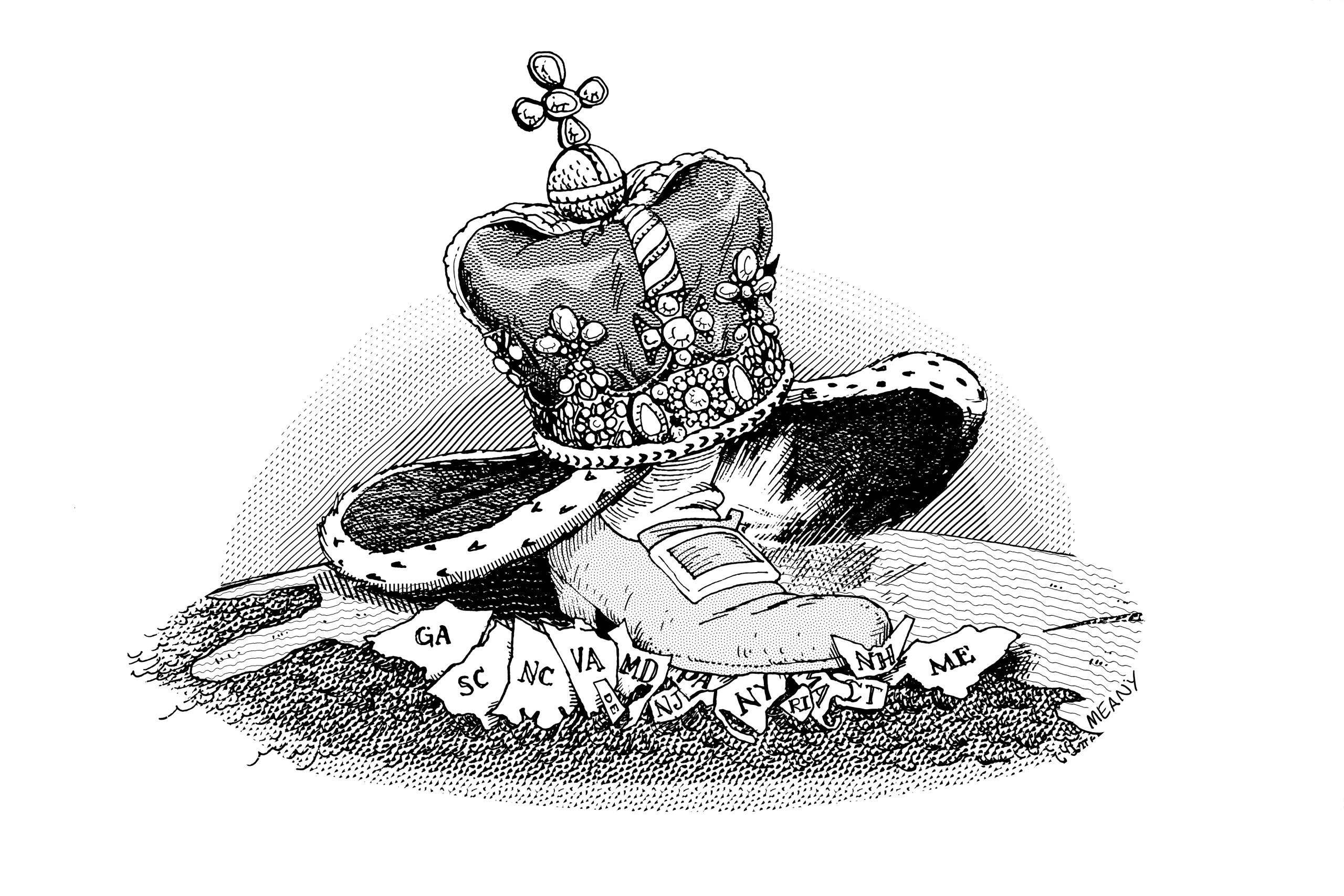
Natural right and American exceptionalism.
Editors’ Note
What follows is an excerpt from Charles R. Kesler’s essay, “Three Declarations, Three Revolutions,” from the Summer 2026 issue of the Claremont Review of Books.
Modern democratic politics began with three great revolutions, with the English, American, and French Revolution each marked, though in very different ways, by a memorable public Declaration justifying and explaining the political changes. Americans’ impending commemoration of the 250th anniversary of our Revolution—and our Declaration of Independence—invites at least a brief comparison with these other revolutions’ declarations, followed by a more sustained interpretation of our own illuminated by its differences with them.
The English Bill of Rights
First came the English Declaration of Rights, proffered on February 13, 1689 by the same irregularly elected convention that offered the crown of England to Prince William of Orange and his wife, Princess Mary, a Protestant daughter of the deposed Catholic former king of Great Britain, James II, now “abdicated,” and fled to France. (The previous November, answering the informal invitation of a small group of Whig and Tory grandees, William had landed in Britain with some 10,000 Dutch troops—as Harvey Mansfield has said, “not enough for an invasion, too many for a visit.”) To solemnize the Declaration of Rights, it was enacted by a formal parliamentary vote and assented to by the new king as “an act declaring the rights and liberties of the subject and settling the succession of the crown” on December 16, 1689. Hence “the English Bill of Rights,” which helped to complete or “settle” the Glorious Revolution, the final act of the English Revolution that had begun in Civil War almost 50 years before.
The English Bill of Rights is not addressed to the world as such. It is addressed by Englishmen to Englishmen. By contrast both the Declaration of Independence and the French Declaration of the Rights of Man and of the Citizen are rhetorical shots heard—and meant to be heard—around the world. They are emphatically documents of natural right. The English Bill of Rights makes no appeal to the idea of nature at all. On the contrary, its whole point might be said to be to blur the distinction between natural and prescriptive (or historical) right. This prudent confusion, which Edmund Burke would later develop into a whole account of politics, enabled the supporters of the Bill of Rights to disguise the Revolution as a succession crisis, thus avoiding the principled debate between parliamentary and prerogative power that had launched the English Civil War, and permitting them to settle the religious question without resolving the kind of sectarian disputes over revealed truths that had roiled Tudor and Stuart England. Through artful indirection, the peculiar legitimacy of the English monarchy, which rested on the king’s position as head of the church, was preserved and transformed into a new regime of toleration. That it was a new regime, based on a new but unarticulated argument for toleration, can be seen in the complete absence of any language of divine right. God is invoked to witness the new oaths of allegiance and is thanked for making the prince of Orange “the glorious instrument for delivering this kingdom from popery and arbitrary power” and for protecting the “royal persons.”
Accordingly, it is not the natural rights of man but the “ancient rights and liberties” of the “Lords Spiritual and Temporal and Commons” that are asserted and vindicated in the English Bill of Rights. The “religion, laws, and liberties” of the kingdom are secured by the Protestant succession and by Parliament’s own vigilance in declaring “the true, ancient, and indubitable rights and liberties of the people of this kingdom.” Sealing the whole arrangement is a new oath, really two oaths, of allegiance to William and Mary and of renunciation of the pope’s influence over English affairs. The latter is not a rejection of the speculative dogmas of Catholicism, but only of “this damnable doctrine and position, that princes excommunicated or deprived by the Pope…may be deposed or murdered by their subjects or by any other whatsoever.” Again, the explicit ground of the new oaths was not theoretical so much as practical, though their practicality had something to do with the new theory of toleration’s distinction between man’s civil interests (life, liberty, property) and his private interest in the salvation of his soul. “It has been found by experience,” the act declares in a bit of Lockean understatement, “that it is inconsistent with the safety and welfare of this Protestant kingdom to be governed by a popish prince, or by any king or queen marrying a papist.”
Read the rest here.
The American Mind presents a range of perspectives. Views are writers’ own and do not necessarily represent those of The Claremont Institute.
The American Mind is a publication of the Claremont Institute, a non-profit 501(c)(3) organization, dedicated to restoring the principles of the American Founding to their rightful, preeminent authority in our national life. Interested in supporting our work? Gifts to the Claremont Institute are tax-deductible.
Suggested reading
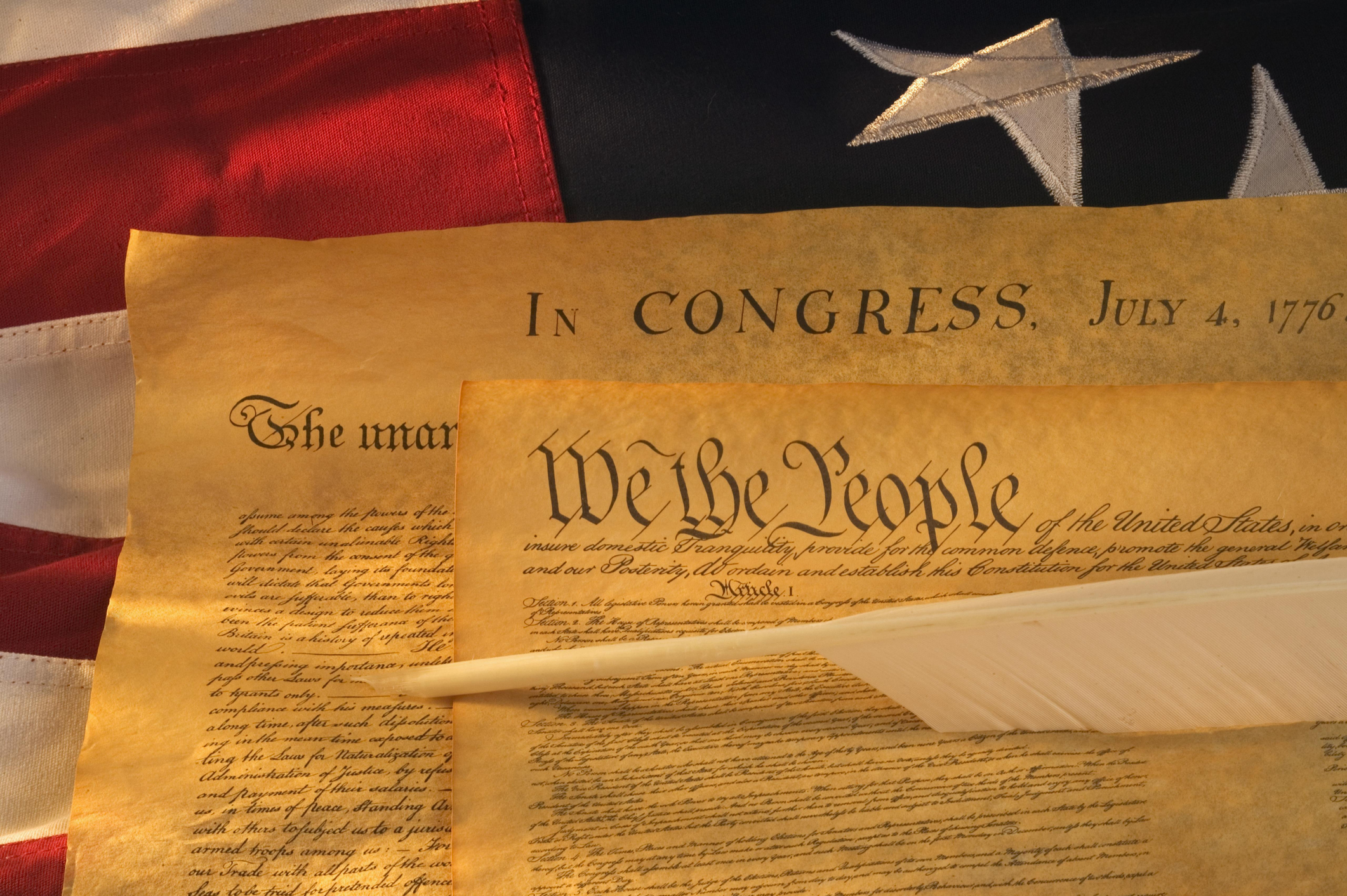
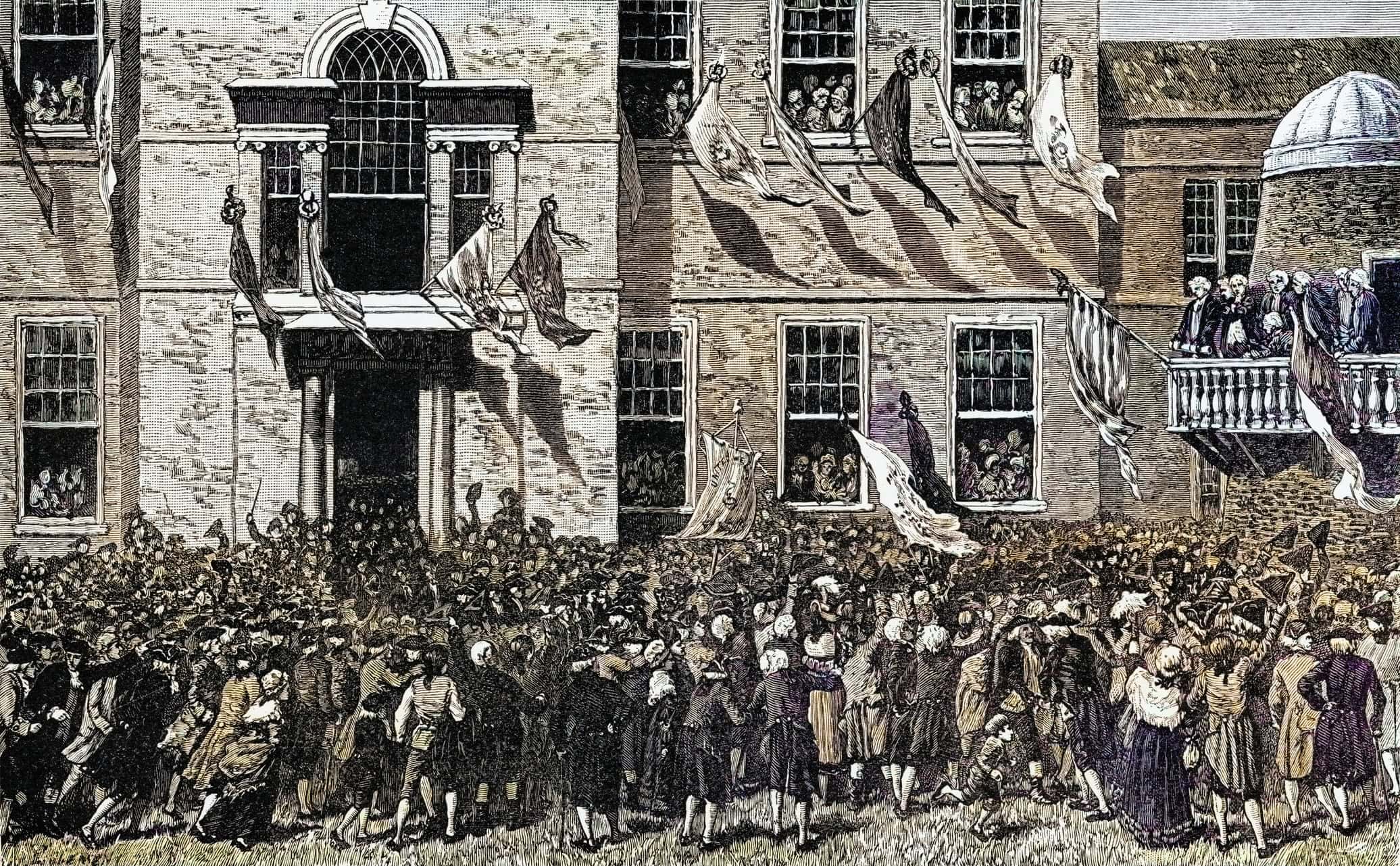
Letting the world know of American independence.
Chief Justice Roberts forgot the Declaration of Independence.

A new political vocabulary is needed for a world itself quite new.
Feel-good platitudes aren’t enough to sustain a healthy society.

Higher education has always been a religious quest.

