

Despite hostility from the Biden Administration, the report stands as a guiding light for future generations.
The Roots of Equality
From “created equal” to “born equal.”
Editors’ Note
What follows is an excerpt from Allen C. Guelzo’s book review, “The Roots of Equality,” from the Summer 2026 issue of the Claremont Review of Books.
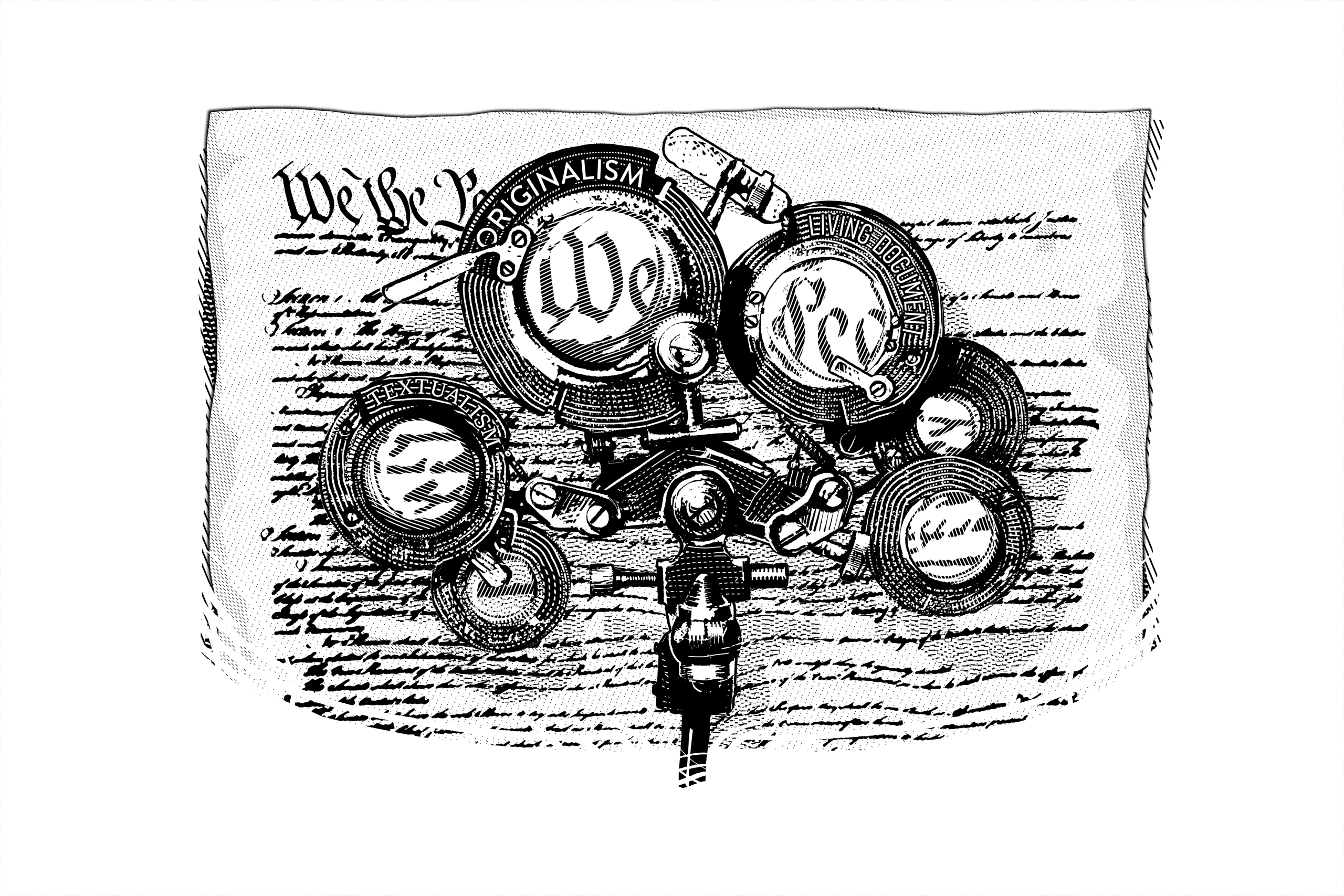
Akhil Reed Amar is one of the rare legal academics who are willing to use the term “originalism” without dismissing the concept out-of-hand, although he will (I suspect) be the first to add that he has his own very idiosyncratic take on what the term can mean. It is originalism’s flexibility that informs his newest volume, Born Equal: Remaking America’s Constitution, 1840–1920, the second installment of a trilogy on the history of constitutional interpretation he began in 2021 with The Words that Made Us: America’s Constitutional Conversation, 1760–1840. This newest extension of Amar’s survey moves from the waning of the founders’ generation, through the Civil War years, and up to the adoption of the 19th Amendment. It is a story told in his inimitably raffish and colloquial style, and it tracks the emerging centrality of equality in American law, and the two dominant impulses equality encouraged: emancipation and citizenship for American slaves and voting rights for women.
That centrality is a story unto itself. In 1776, the Declaration of Independence announced what it identified as a self-evident truth, that all men are created equal. But it did not provide any further explication of what that equality involved, and so it was left to succeeding generations of American jurists and politicos to work through the statement’s implications. There is, in fact, an echo of that uncertainty in Amar’s title: Born Equal. The hasty reader may assume that the two phrases—born equal and created equal—are interchangeable, and Amar himself occasionally lapses into speaking of the two as synonyms. That “[a]ll were born equally free,” he writes at one point, was a “God-given principle…which variously declared that all men were created equal, were born equal, or were naturally equal (that is, equal at birth).” But in the end, to be created equal implies something distinct, perhaps unique to the 18th century, from being born equal, which may reflect more of the long shadow of Romanticism. What Amar finds in the development of American ideas of equality looks over time increasingly like “birth equality,” a species of equality that Amar believes was integral to the abolition of slavery, and which “continued its forward if at times indirect march” inevitably to the 19th Amendment.
***
There is, of course, a great deal of distance between people who are created equal—in other words, the product of an intentionality who therefore can be said to possess certain rational and non-happenstance elements known as rights—and those who are born equal, which is the direction toward which European ideas were moving in the age of Marx and Darwin. Created equal speaks of a universe of law and design which is self-evident in its operation; being born equal requires, at some logical point, the application of political and social force to rebalance what nature or circumstance refuses to support. Pressed into one sentence, that might be what the 19th century was all about.
Amar himself does not address the distinction between created equal and born equal until the postscript. By that point, it is the simple fact of birth that makes individuals equal, and equal in such a way as to require the laws to ensure that equality. Hence, Amar concludes that “babies born in America under the American flag are born equal citizens,” which is legally true and a fact of the 14th Amendment, but for Amar this means “whether or not their parents are citizens or even lawfully in America” (emphasis in the original). Taken one step further, he wonders whether it could be said that the mere fact of birth transcends citizenship itself. “How, if at all,” he asks, “should the birth-equality proposition apply to those born beyond the US perimeter?” Should the fact of birth anywhere entitle each person to a status for which citizenship in a particular place is secondary? Thirty years ago in The Revolt of the Elites and the Betrayal of Democracy (1995), Christopher Lasch insisted that “[i]t is citizenship that confers equality, not equality that creates a right to citizenship.” Amar’s review of constitutional jurisprudence over the century embraced by Born Equal asks us to wonder whether that jurisprudence has marched in exactly the opposite direction from Lasch.
***
As the Sterling Professor of Law and Political Science at Yale University, Amar contends that the fine points of constitutional interpretation are usually “not understood by most leading historians,” and especially when it comes to debates over originalism. “Leading historians” are especially tone-deaf (by Amar’s reckoning) to the fact that Abraham Lincoln “was his generation’s best originalist,” a “key fact largely unnoticed by historians today.”
We should be more than a little touchy about dismissing historians. If anything, historians are likely to be even stricter originalists than the originalists, since we are liable to be the first to question the use of a trope—originalist—which is itself anachronistic. After all, the label “originalist” only surfaced in that form for the first time in the 1980s, and is at best what legal scholar and lexicographer Bryan Garner calls a “retronym.” Since then, it has developed into a number of not-always-harmonious forms, and it has not quite shucked off a sense of being obedient to precedents that may not turn out to be healthy ones. For example, it would be a legitimate originalist understanding of Article I, Section 9 of the Constitution to say that the banning of the transatlantic slave trade was meant to be a long-term solution to slavery by drying up the source of slave imports. That was a misjudgment we had to learn about the hard way and had to correct in the 13th Amendment.
Read the rest here.
The American Mind presents a range of perspectives. Views are writers’ own and do not necessarily represent those of The Claremont Institute.
The American Mind is a publication of the Claremont Institute, a non-profit 501(c)(3) organization, dedicated to restoring the principles of the American Founding to their rightful, preeminent authority in our national life. Interested in supporting our work? Gifts to the Claremont Institute are tax-deductible.
Suggested reading


A half-measure whose time may have come.

Hell is full of laws and due process is strictly observed.

A once-in-a-lifetime opportunity to downsize the bureaucracy.
How the world’s oldest functioning governing document was built to last.

Rejecting the culture of hate.

