

Democrats are laying the groundwork for revolution right in front of our eyes.
The Left’s Long Game in Latin America
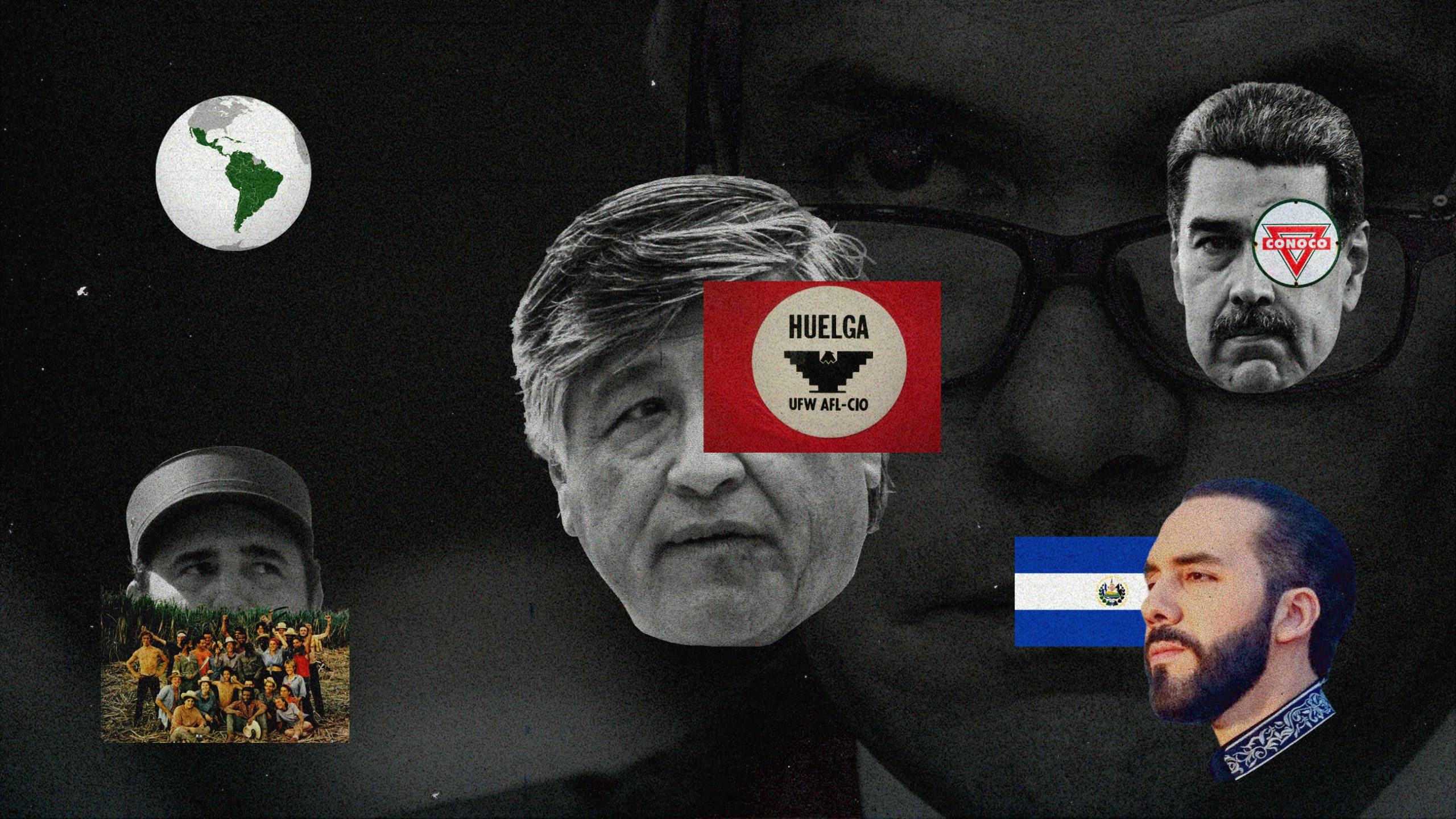
Their revolution could soon be coming to an end.
January 3, 2026. Caracas. 2:47 AM.
The helicopters had come in low over the Caribbean, running dark. The Delta Force operators on board were well-rehearsed. By 3:29 AM, it was over. Thirty-two Cuban bodyguards lay dead in the compound. Maduro and his wife Cilia Flores were in flex cuffs, hustled onto a transport aircraft bound for New York. At Mar-a-Lago, President Trump watched the operation unfold in real time with his national security team. It was January 3—exactly 36 years to the day since American forces had extracted military dictator Manuel Noriega from Panama City.
To the general public, the operation in Caracas may have seemed to come out of the blue. But in fact it was only the latest episode—the most dramatic one yet—in a 60-year war that most Americans have never known about. Our adversary in that war has been the Castro regime, which has been pursuing a project far more ambitious than the survival of Cuban socialism. Its goal has always been the revolutionary transformation of the entire Western Hemisphere—including the United States itself.
“We Shall Be Victorious”
On the night of April 30, 2024, a group of masked protesters stormed Hamilton Hall at Columbia University, smashing windows and barricading themselves inside. Within hours, images of the occupation spread across social media, presenting the affair as a spontaneous eruption of righteous anger over Israel’s military operations in Gaza. Three hours earlier, however, at a nondescript office in Midtown Manhattan, a Cuban regime operative had briefed the core organizers on the same tactics Cuban intelligence had been teaching Latin American insurgents for decades. Months later, Cuba’s foreign minister took a victory lap at the heart of America’s largest city, addressing supporters of the protest at the Apollo Theater in Harlem.
Cuban revolutionaries have long understood that the ultimate prize is the United States. In January 1966, Fidel Castro convened the Tricontinental Congress in Havana, gathering revolutionary movements from across Asia, Africa, and Latin America under a single banner. The goal was nothing less than the global defeat of American power. But Castro also grasped that the most effective way to defeat America was from within—by cultivating a revolutionary fifth column among disaffected Americans themselves.
The vehicle for this cultivation was the Venceremos Brigade, whose name translates to “We Shall Be Victorious.” Founded in 1969, it has sent some 10,000 young American radicals to Cuba over the decades, ostensibly to cut sugarcane in solidarity with the revolution. A 1976 FBI report found that Cuban intelligence agents had “arranged for American youths to be inculcated with revolutionary fervor and, occasionally, to be trained in practical weaponry by Cuban military officers.” Among the groups identified in the report was the Weather Underground, the domestic terrorist organization responsible for bombings at the Pentagon, the Capitol, and dozens of other targets throughout the 1970s.
Bernardine Dohrn, who organized the early Venceremos trips before going underground, would later be placed on the FBI’s Ten Most Wanted list. She and her husband Bill Ayers emerged from hiding to become respected figures in Chicago progressive politics; reportedly, their living room served as the launchpad for a young state senator named Barack Obama. Among those who traveled to Cuba with the Venceremos Brigade was Karen Bass, who cut sugarcane in 1973 and later served as an organizer for the brigade in the mid-1970s, facilitating additional trips despite FBI surveillance. She would go on to serve in Congress and is currently the mayor of Los Angeles.
The Weather Underground eventually dissolved, but Cuba’s role as a sanctuary for American terrorists did not. When Joanne Chesimard (known to her supporters as Assata Shakur) escaped from a New Jersey prison in 1979 after being convicted of murdering State Trooper Werner Foerster, she eventually made her way to Havana. Fidel Castro granted her asylum personally, and she lived as a revolutionary hero for over four decades, becoming the first woman placed on the FBI’s Most Wanted Terrorists list. She died in September 2025—four months before the helicopters came for Maduro—without ever facing justice. The Black Lives Matter Global Network Foundation praised Cuba for protecting “Black revolutionaries like Assata Shakur.” Ayers and Dohrn named their son Zayd after one of Shakur’s accomplices, killed in the same shootout that took Trooper Foerster’s life.
The Cuban government has harbored roughly 80 American fugitives over the decades—cop killers, hijackers, bombers, armed robbers. Members of the Black Liberation Army who had murdered police officers. Members of the Fuerzas Armadas de Liberación Nacional who had planted bombs in New York City. In 1972 Ishmael LaBeet led a group of men onto a golf course in St. Croix and opened fire on white tourists and employees while screaming racial epithets, killing eight. Convicted and sentenced to eight consecutive life terms, LaBeet hijacked a prison transfer flight on New Year’s Eve 1984 and forced the pilot to fly to Havana. As of 2015, he was confirmed to be living freely in Cuba after serving a 10-year prison sentence for hijacking. All of these thugs were granted asylum because, as one Cuban diplomat later explained, “if it annoyed the United States government, that was a good enough reason to do something.”
The Venezuelan Bridgehead
From the perspective of American intelligence in the 1980s, Venezuela seemed an improbable candidate for Communist subversion. Since 1958, it had stood as one of the region’s most stable democracies. A failed Communist insurgency in the 1960s had turned the population decisively against revolutionary politics. Its vast oil reserves had made it Latin America’s wealthiest nation during the oil boom years of the 1970s. But as Soviet subsidies began drying up under Gorbachev, Fidel Castro fixed his gaze on Caracas. Venezuela’s oil would replace Moscow’s patronage.
The groundwork was laid quietly. Douglas Bravo, leader of Venezuela’s militant Communist faction, returned from exile in France with a mission: to plant revolutionary cells within the military. Among the young officers he cultivated was an ambitious cadet named Hugo Chávez.
Chávez was charismatic, eccentric, and obsessive. According to General Carlos Julio Peñaloza, who first identified him as a subversive in 1984, the young officer was already practicing santería in the 1980s, long before he formally met Castro. The Afro-Cuban religion, with its animal sacrifices and spirit possession, had spread through Venezuelan military circles in tandem with Cuban intelligence penetration. By the time Chávez emerged from prison after the failed 1992 coup, he had reportedly been formally initiated—allegedly in the coastal town of Cojímar outside Havana, where he “fed the saints” through blood sacrifice. Chávez claimed that the spirits of Bolívar and other liberators spoke through him.
Under Bravo’s guidance, Chávez began building the Revolutionary Bolivarian Movement-200, a clandestine organization aimed at overthrowing democracy and establishing an authoritarian state aligned with Havana. The first sign of what was to come appeared at the inauguration of President Carlos Andrés Pérez in February 1989. Among the distinguished guests was Fidel Castro himself, who arrived with an entourage of several hundred and commandeered a Caracas hotel. The party hall was transformed into an arsenal. When Castro’s delegation departed, their numbers were mysteriously diminished. Many had melted into the background of the city.
Castro did not have to wait long. Pérez had inherited a nation in crisis: the economy spiraling, inflation soaring, foreign debt mounting. When he announced Venezuela would adopt IMF austerity measures in exchange for a $4.6 billion loan—doubling the price of gasoline overnight—the news landed like a bomb in the streets. Protests erupted before Castro’s agents could even instigate them. Cuban sniper teams were hastily deployed to rooftops in Caracas and began engaging police and military units. But the key military units became too bogged down in street fighting to execute Hugo Chávez’s orders to seize the presidential palace. When the dust settled, 276 people were dead, order was restored, and Chávez had not been able to act.
The failure only intensified Castro’s sense of urgency. In March 1989, he summoned the Brazilian Communist Lula da Silva to Havana. With the Soviet Union visibly crumbling, Fidel saw doom, but Lula saw opportunity. They sketched out an agreement: Fidel would unite Hispanic America’s Left while Lula built a machine to direct political and financial support to socialist movements across the region. But Fidel had one condition. He wanted to complete his plan for a coup in Venezuela first. Then, Venezuelan oil wealth could finance the broader revolution. Lula agreed. The Foro de São Paulo was born.
In July 1990, the Foro held its first meeting in São Paulo. Forty-eight parties and guerrilla organizations from 22 countries attended—the Cuban Communist Party, Colombia’s ELN and FARC, Nicaragua’s Sandinistas, El Salvador’s FMLN, and Guatemala’s URNG were among the many guests. Invitations to social democrats provided a moderate smokescreen. At the second meeting in Mexico City the following year, their invitations were lost in the mail. It was decided to replace the word “Communism”—which after decades of guerrilla violence carried a toxic connotation—with “Socialism” in all communications. As Fidel would later say, they were the same thing.
The plan for Venezuela was simple: upon taking control of the executive, the existing legislature and Supreme Court would be suspended, replaced by a Constituent Assembly that would rewrite the constitution to eliminate separation of powers and term limits. The same playbook would then be exported across the hemisphere. But first, they needed Chávez to succeed.
On February 2, 1992, Chávez received word that President Pérez would return from the World Economic Forum in Davos the following night at ten o’clock. The coup was set in motion.
But from the beginning, fate conspired against it. Captain Gimón Álvarez had been placed at the military academy with orders to seize it and kill its superintendent, General Delgado. There was one complication: he was in love with the general’s daughter. Unable to bring himself to murder his future father-in-law, he warned Delgado, who went immediately to Army Commander Rangel Rojas.
What followed revealed the depth of infiltration within Venezuela’s military hierarchy. Rangel buried the warning, playing for time. When Army Intelligence Director Valero tried to sound the alarm, he found himself trapped in manufactured delays; Rangel was in meetings, couldn’t be disturbed, the news was “old.” Hours ticked by. Key commanders remained conveniently unreachable. The conspirators had allies in high places.
A handful of loyal officers fought to prevent disaster. General Pineda of counterintelligence bypassed the compromised chain of command entirely, alerting unit commanders directly. He finally reached Colonel Hung Díaz, who commanded the president’s military staff. Díaz ordered the Honor Guard Regiment to high alert and reinforced the security detail at the airport. The National Guard commander ordered General Leccia to secure the capital. These actions would prove decisive.
As night fell, Chávez remained confident. The plan was straightforward: naval police would seize the airport, Marines would block reinforcements, and a special operations unit would arrest the president the moment he stepped off the plane. But the plan began unraveling almost immediately. Admiral Gruber, the highest-ranking military official in the plot, had expected to lead the ruling junta. When he learned that former President Caldera would be the figurehead instead, he erupted with rage and ordered his Marines to stand down. Other crucial units began backing out or going silent.
When President Pérez’s plane touched down at ten o’clock, instead of walking into a trap, he found Defense Minister Ochoa and 800 armed personnel waiting to protect him. Surprised at the reception, Pérez asked, “What is going on?” Ochoa replied, “Mr. President, it is the same rumors as always.”
Chávez was informed that Pérez had escaped. His ships were burned—it was too late to call off the operation. So he decided to improvise. The contingency plan called for his forces to meet him at midnight in front of Miraflores, the presidential palace. But Chávez’s sense of punctuality was…Latin in nature. He should have been on the road by nine to allow a margin for delays. His compadres were hitting their marks as scheduled. Cuban sharpshooters had already positioned themselves on rooftops surrounding the palace.
At 11:20 PM, Ochoa called Pérez with news that a tank battalion had rebelled at Maracaibo. Pérez told him to go to the Defense Ministry while he headed to Miraflores. As he was getting dressed, a paratrooper company was surrounding his private residence. When he reached his car, neither his driver nor escort had arrived—only an aide and a National Guard motorcyclist. Pérez ordered the guardsman to drive immediately, headlights off. As they pulled away, the insurgent paratroopers opened fire.
The president reached Miraflores just after midnight. Minutes later, armored vehicles and paratroopers launched their assault. Cuban snipers opened fire on the Honor Guard from the rooftops. In fierce firefights around the perimeter, one armored vehicle punched through to the president’s private entrance. Realizing a breach was imminent, Pérez asked to be brought a machine gun.
Two Communist officers decided the only option left was to lead a squad inside to kill the president. They made it into a palace hallway—where they found themselves face-to-face with Lieutenant Colonel Rommel Fuenmayor and a handful of Honor Guard soldiers. The attackers were cut down. While the fighting raged outside, there was no sign of Chávez or his reinforcements.
The president escaped in a civilian vehicle, dodging cannon fire from an armored car, and made his way to a television station. At 1:15 AM, visibly shaken, he appeared on air to declare that the coup would fail. Meanwhile, Chávez watched from the Military Museum, having arrived too late to coordinate his forces.
The night’s final act nearly ended in assassination. At 5:00 AM, Defense Minister Ochoa arrived at Miraflores accompanied by General Santeliz—both armed, both in fatigues. Santeliz had spent the entire night posing as a loyalist while secretly feeding intelligence to Chávez. Now he attempted to enter the president’s office. But Colonel Hung Díaz, whose earlier vigilance had saved Pérez at the airport, blocked him. Angry, Santeliz retreated to the hallway—and vanished. Given his actions throughout the night, his armed arrival at the president’s door suggested a final assassination attempt had been thwarted.
The coup had failed, undone by passion, tardiness, and a few brave men in key positions. But the level of infiltration it revealed was staggering. Chávez was allowed to surrender on his own terms—first returning to his battalion for a farewell speech, then to a safehouse where secret documents were burned, and finally to a live television appearance where he gave his famous “For now” address. The speech made him a hero to millions of poor Venezuelans.
Chávez was sent to prison. Nearly all of the rebel officers were returned to their posts without punishment. The loyal officers who defeated the coup were reassigned to lesser positions. A cabal of intellectuals with ties to Fidel worked to effect a political coup, and President Pérez was ousted on corruption charges the following year. Rafael Caldera—the would-be chairman of the junta—ran for president and won. Upon taking office, he pardoned Chávez and the rest of the coup leaders.
Chávez’s Conquest
After his release, Chávez made heavy use of Lula da Silva’s playbook. He branded himself as an anti-corruption populist, a framing that resonated deeply with Venezuelans who had watched their oil-rich nation slide into poverty and dysfunction. In December 1998, he won the presidency in a landslide.
He moved immediately to implement the Foro de São Paulo blueprint. The independent judiciary was abolished. Term limits were eliminated. Congress was replaced with a Constituent Assembly dominated by Chávez’s party, which drafted an entirely new constitution and rammed it through a fraud-ridden referendum. The executives and managers of the state oil company PDVSA were purged and replaced with cronies. Once these structural changes were in place, Chávez signed an agreement to supply Cuba with 50,000 barrels of oil per day—later increased to over 90,000. The dying revolution in Havana had found its lifeline.
Venezuelan oil money now flowed to leftist movements across the hemisphere. In Brazil’s 2002 presidential election, a Cuban diplomat smuggled at least $3 million in cash to Lula’s Workers’ Party to buy votes. Lula won, running as a reformer and social democrat. Once in office, he followed the same script. His cronies were installed at Petrobras, Brazil’s state oil company and largest enterprise. They colluded with contractors to inflate prices and skim billions, which were used to enrich Workers’ Party officials, buy votes in municipal, state, and federal elections, and fund Foro-aligned movements across Latin America. Brazil’s national development bank BNDES financed infrastructure projects in leftist-controlled countries—including a billion-dollar line of credit for Cuba and construction of a new port at Mariel. A scheme was launched in which Brazil paid the Cuban regime to send doctors—essentially indentured servants—to work in Brazilian public hospitals.
The model spread. In Argentina, Néstor Kirchner won the presidency in 2003, followed by his wife Cristina. In Bolivia, Evo Morales. In Ecuador, Rafael Correa. In Nicaragua, Daniel Ortega returned to power. Paraguay, Honduras, El Salvador—one by one, the dominoes fell. By the early 2010s, the Foro de São Paulo had achieved what decades of guerrilla warfare could not: a leftist bloc stretching from the Rio Grande to Tierra del Fuego, united against American influence and financed by Venezuelan oil.
The formula was consistent. Communists would run as populists and reformers. Once in office, they would pack the courts, rewrite the constitution, eliminate term limits, loot state enterprises, and funnel the proceeds to allied movements abroad. Then they brought about anarcho-tyranny by allowing violent criminals to victimize society while criminalizing self-defense. In 2004, Lula pushed through the Disarmament Statute, one of the strictest gun control laws in Latin American history. A referendum to affirm the ban was rejected by 64% of Brazilian voters. The government ignored the result. Over the next decade, annual firearms deaths in Brazil rose from 36,000 to over 61,000.
According to General Carlos Peñaloza’s account in Fidel’s Dauphin, the Foro had another tool at its disposal. Fidel had brought to Cuba a number of East German technicians who had worked for the Stasi, putting them to work developing technology that compromised electronic voting systems through embedded firmware that could be controlled remotely. Three Venezuelan engineers founded the digital voting company Smartmatic a year after Chávez took power. The company had no experience in elections until the Chávez government chose it to replace Venezuela’s voting infrastructure—making Venezuela the first country to adopt a fully electronic voting system. Since Chávez consolidated power, the Venezuelan opposition has never won another presidential election.
Then came the largest peacetime collapse ever endured by any economy in modern history.
Chávez had promised to “sow the oil”—to use petroleum revenues to build an economy that would outlast the wells. Instead, he treated Venezuela’s state oil company as an ATM. After the 2002-03 strike, he fired 18,000 employees—engineers, geologists, refinery managers—replacing them with political loyalists, many of whom had never worked in the petroleum industry. Production began its long decline. In 2007, Chávez seized the assets of ExxonMobil and ConocoPhillips outright, driving the last competent operators from the country. International arbitration tribunals would later award billions in compensation that Venezuela never paid.
The nationalization campaign extended far beyond oil. Chávez expropriated steel mills, cement plants, telecommunications companies, banks, supermarket chains, and farms. Each seizure followed the same pattern: the government would accuse the owners of hoarding or speculation, send in troops, raise the revolutionary flag, and install a crony manager. Within months, production would collapse. The steel mills fell silent. The cement plants crumbled. The farms went fallow. At times, Chávez and his officials would go out into cities and personally expropriate whatever businesses and buildings caught their fancy.
The government printed money to cover the gap between production and consumption. Inflation, already chronic, became catastrophic. By 2018, it exceeded 130,000% annually—on pace, economists projected, to reach 10,000,000% by the following year. The Bolívar became worthless. Venezuelans needed wheelbarrows of cash to buy bread. The currency was redenominated repeatedly, dropping 14 zeros in successive reforms, each time erasing whatever savings the middle class had managed to preserve. By 2022, over 60% of transactions occurred in U.S. dollars, the currency of the empire Chávez had spent his career denouncing.
The Comandante and the Apparatchik
Hugo Chávez died on March 5, 2013. Or perhaps he died in late December 2012—his former bodyguard Leamsy Salazar, who later defected to the United States, claimed the announcement was delayed for political reasons. In 2018, former Attorney General Luisa Ortega Díaz corroborated the account, saying Chávez actually died on December 28 and the regime concealed it to orchestrate his succession. Chávez’s cancer had never been fully disclosed—a tumor in his pelvic region, they said, treated in Havana under the care of Cuban doctors. Years later, Maduro would hint darkly that the Americans had somehow induced the illness. After Maduro’s capture, Chávez’s close associate Diosdado Cabello put it more bluntly: “We lost Commander Hugo Chávez; we do not have the physical ability to bring him back because they killed him.” He did not specify who “they” were.
In any case, the constitutional succession that followed Chávez’s death was irregular. Under Venezuelan law, the president of the National Assembly should have assumed power as interim president. That man was Diosdado Cabello—Chávez’s co-conspirator from 1992, the officer who had briefly held the presidency during the 2002 countercoup, and the man who controlled the party machinery and the military’s loyalty. Instead, Nicolás Maduro—Chávez’s vice president, who had spent years in Cuba being groomed as an operative and was placed by Castro near Chávez as a mole—was installed. The revolution passed from the hands of a charismatic military caudillo to an apparatchik whose legitimacy depended entirely on maintaining the machinery his predecessor had built.
The collapse that had begun under Chávez began to accelerate. Agricultural price controls, ostensibly imposed to protect the poor, instead guaranteed that producers would stop producing. Farmers who could not sell corn at a profit stopped planting it altogether. Importers who could not obtain dollars at the official rate stopped importing. By 2016, the food scarcity index—the percentage of basic goods unavailable in stores—reached 80%. Supermarket shelves stood empty. Riots erupted outside grocery stores. Soldiers guarded shipments of flour.
The government responded with the CLAP program: boxes of subsidized food distributed through party networks. But the boxes arrived intermittently, often only to neighborhoods that demonstrated sufficient revolutionary loyalty. Corruption saturated the system. Military officers demanded bribes at every checkpoint. Food destined for the poor was diverted to the black market, where it was sold at prices the poor could not afford. In 2017, the average Venezuelan lost 11 kilograms—24 pounds—from malnutrition. The phenomenon acquired a grim nickname: the Maduro Diet.
By January 2017, 85% of essential medicines had disappeared from pharmacies. Hospitals ran out of antibiotics, anesthesia, and surgical gloves. Doctors performed operations by flashlight during blackouts. Diseases that had been eradicated decades earlier—diphtheria, measles, malaria—resurged across the country. Infant mortality rose 30% in a single year. When the Health Ministry published these statistics, Maduro fired the health minister, put the military in charge of the ministry, and classified further health data as state secrets.
The government denied everything. “There is no humanitarian crisis,” insisted Delcy Rodríguez, president of the Constituent Assembly. “There is simply a decrease in the availability of food.” To accept foreign aid, she explained, would provide a pretext for foreign intervention. And so the Red Cross shipments sat at the border while Venezuelans starved.
Hunger bred desperation, and desperation bred violence. Venezuela became one of the most dangerous countries on earth. By 2017, Caracas had the highest murder rate of any capital city in the world. Armed gangs controlled entire neighborhoods. But the most dangerous killers wore uniforms. The Special Action Forces, known by their Spanish acronym FAES, operated as government death squads. The United Nations documented 5,287 extrajudicial killings by FAES in 2018 alone, with another 1,569 in the first six months of 2019. Officers would raid homes at night, drag young men into the street, and shoot them. They called it “neutralization.”
Protests met the same fate. When demonstrations erupted in 2014, and again in 2017, Maduro deployed not only police and soldiers but also colectivos—armed civilian militias loyal to the regime—who rode motorcycles through opposition neighborhoods, firing into crowds. Over a hundred protesters were killed in 2017. Thousands more were arrested, tortured, and held without trial. Opposition leaders fled into exile or diplomatic asylum. Those who remained faced show trials before judges appointed by the regime.
A steady stream of Venezuelans began leaving the country almost immediately after Chávez came to power. The first to go were the upper and middle classes, professionals, and business owners. The stream continued for years, intensifying as the repression and recessions took their toll on morale. Under Maduro, the stream became a flood.
Each day saw thousands of Venezuelans fleeing across the border—primarily into Colombia, Brazil, Ecuador, Peru, and Chile. It became the largest displacement crisis in the history of the Western Hemisphere. By 2025, nearly 8,000,000 Venezuelans—more than a quarter of the population—had fled their country.
The exodus reshaped the hemisphere. Colombia absorbed nearly three million. Peru took over a million. Ecuador, Chile, Brazil, Argentina—every nation in South America found its cities filling with Venezuelans. These countries already faced significant problems with poverty, unemployment, and crime. The addition of massive numbers of new migrants pushed them to the breaking point and fueled a backlash that would reshape the region’s politics.
Among those who crossed the border were members of a prison gang from the state of Aragua. They called themselves El Tren de Aragua (the Aragua Train). And as millions of Venezuelans dispersed across the continent, the Train followed, establishing cells in Colombia, Peru, Chile, and eventually the United States. The revolution had promised to export socialism, and it did, in the form of hunger, chaos, and violent crime.
Drugs and Drag
On October 24, 1985, Colombian army soldiers arrested a young man dressed as a woman trying to evade a dragnet in Zipaquirá. In his possession were firearms, homemade explosives, and propaganda materials for the M-19 guerrilla movement. Gustavo Petro, age 25, was sentenced to 18 months in prison.
Three weeks later, on November 6, his comrades launched the bloodiest attack in Colombian history. Thirty-five M-19 guerrillas stormed the Palace of Justice in Bogotá’s central square, seizing the Supreme Court and taking some 300 hostages—including half of Colombia’s highest judges. The attack was ostensibly a revolutionary tribunal to put President Belisario Betancur on trial for betraying peace negotiations. The military responded with tanks, helicopters, and overwhelming force. By the time soldiers retook the building 28 hours later, nearly 100 people were dead. Eleven Supreme Court justices had been killed—some executed at point-blank range by guerrillas, others killed in the crossfire.
What the revolutionary rhetoric obscured was the operation’s true patron. Pablo Escobar, then at the height of his power, had been waging a campaign of terror against the Colombian judiciary to prevent his extradition to the United States. Justices who favored the extradition treaty received death threats, then bullets. When M-19’s urban guerrillas offered a solution, Escobar paid. Virginia Vallejo, Escobar’s mistress from 1983 to 1987, testified under oath in Miami that she had been present at a meeting between the drug lord and M-19 commander Iván Marino Ospina two weeks before his death. Escobar later told her he had paid one million dollars in cash and another million in arms and explosives to destroy the files on him that were stored in the Palace of Justice. His son Sebastián confirmed the payment, claiming his father “believed in the ideals” of M-19. The extradition files burned. The Supreme Court was decapitated. Within a year, Colombia’s reconstituted court declared the extradition treaty unconstitutional.
Petro was behind bars when it happened—a fact he emphasizes whenever the Palace of Justice comes up. But his organization murdered half the Supreme Court with drug cartel money, and four decades later, as president, he has made rehabilitating M-19’s image a signature project. He carries Simón Bolívar’s sword—stolen by M-19 in 1974—at state ceremonies. He elevated the hat of M-19 commander Carlos Pizarro to national patrimony. He waves the M-19 flag at rallies. In a 2002 video that resurfaced during the 40th anniversary, he called Luis Otero, the operational commander of the Palace siege, a “genius.” The sons of those murdered in the attack have demanded accountability for 40 years. But they have received none.
Petro did not emerge from nowhere. M-19 was a node in a continental network that stretched from Havana to Managua to Montevideo. According to Stanford University’s Mapping Militants Project, approximately 300 M-19 members received military training in Cuba during the 1980s, including instruction in urban and rural guerrilla warfare at Cuban military academies. The group received weapons from both Cuba and Nicaragua, with logistical support from Panama and Venezuela. Declassified CIA documents describe USSR-manufactured grenades brought to the United States by an alleged DGI agent “involved with the M-19 Colombian terrorist organization” who had “taken shipments of weapons from Cuba to leftist guerrillas in El Salvador and Nicaragua.”
M-19 operated alongside Argentina’s Montoneros, Uruguay’s Tupamaros, and Peru’s Shining Path in what they called a continental revolution. When M-19 seized the Dominican Embassy in Bogotá in 1980, holding 57 diplomats—including the U.S. ambassador—hostage for 61 days, their safe passage led to Cuba. Many later returned to Colombia and rejoined the armed struggle. The network was real. The training was real. The weapons were real.
And then, in 1990, everything changed.
The Soviet Union was collapsing. The Sandinistas had just lost an election in Nicaragua. Armed revolution, Fidel Castro concluded, was no longer viable in the “new historical conditions.” M-19 demobilized, accepted amnesty, and transformed into a political party. Petro, released from prison in 1987, helped negotiate the peace deal. He traded his nom de guerre—“Aureliano,” after the revolutionary colonel in García Márquez’s One Hundred Years of Solitude—for a seat in Colombia’s Chamber of Representatives.
The Foro de São Paulo’s strategy had found its first Colombian test case. An urban guerrilla movement that had murdered Supreme Court justices, kidnapped ambassadors, and taken cartel money was now a legitimate political party. Its members were not in prison. They were in parliament. It would take 32 more years for one of them to reach the presidency.
On August 7, 2022, Gustavo Petro was inaugurated as Colombia’s first leftist president, completing the longest march in the Foro de São Paulo’s history. The former guerrilla who had joined M-19 at 17 now commanded the armed forces of a country that had been Washington’s closest South American ally for decades. He had run three times before finally winning, each campaign refining the message: he was not a terrorist, but a reformer; not a Communist, but a progressive; not a threat to democracy, but its champion against the oligarchy.
The strategy worked. But the old networks remained. Within four days of taking office, Petro announced the restoration of diplomatic relations with Maduro’s Venezuela, which had been severed since 2019. Within weeks he was in Caracas meeting the dictator at Miraflores Palace. He would return at least four more times. He called for lifting U.S. sanctions on Venezuela. Petro hosted an international conference in Bogotá to rehabilitate Maduro’s international standing. He invited Cuba to mediate peace talks with the ELN guerrillas—the same talks that effectively legitimized the narco-terrorist group while extracting no meaningful concessions.
In May 2025, Colombia’s Supreme Court approved the extradition of the leader of Comuneros del Sur (a breakaway faction of the ELN), Gabriel Yepes Mejía, known as “HH,” to face drug trafficking charges in the United States. Petro refused to sign the order. The pattern was not new. Throughout his presidency, he had systematically obstructed the extradition of traffickers and guerrilla leaders wanted in American courts, citing “national reconciliation” and “peace process” justifications that critics called a protection racket.
On October 24, 2025—exactly 40 years after his arrest in women’s clothing with M-19 explosives—the U.S. Treasury’s Office of Foreign Assets Control designated Gustavo Petro, his wife Verónica Alcocer, and his son Nicolás as “Foreign Narcotics Kingpins.” It was the same legal framework used against Nicolás Maduro.
The title was not arbitrary. Petro’s eldest son had already confessed to Colombian prosecutors that illegal drug money had entered his father’s 2022 presidential campaign. The “kingpin” designation froze any U.S. assets and prohibited American companies from doing business with the Colombian president’s inner circle. Colombia, once the cornerstone of U.S. counter-narcotics efforts in the hemisphere, was now governed by a man the United States had formally classified as a drug trafficker.
Brazil in Crisis
For a while, the system worked exactly as the Foro de São Paulo had designed it. Then a car wash in Brasília brought it crashing down.
In March 2014, federal investigators in the southern city of Curitiba began following the money from a nondescript car wash that was laundering cash for drug traffickers. The threads led upward—to a currency exchange operator, then to a Petrobras executive, then into the heart of the Brazilian state itself. What emerged was Operation Car Wash, the largest corruption investigation in Latin American history.
The scale was staggering. Prosecutors uncovered a cartel of Brazil’s largest construction firms—Odebrecht, OAS, Camargo Corrêa, and others—that had systematically rigged bids for Petrobras contracts. The companies inflated prices by 1-5%, then kicked back the difference to Petrobras executives and the political parties that had appointed them. The Workers’ Party received the largest share. A separate bribery division within Odebrecht maintained spreadsheets tracking $788 million in payments to officials across 12 countries, from Hugo Chávez in Venezuela to Ricardo Martinelli in Panama. Petrobras itself estimated it had lost $2.1 billion to bribes alone. The company’s market value collapsed by over $250 billion.
Judge Sérgio Moro, who presided over the Curitiba cases, became a national hero. He sent the CEO of Odebrecht to prison and convicted the treasurer of the Workers’ Party. He issued arrest warrants for senators, governors, and executives who had long believed themselves untouchable. Millions of Brazilians took to the streets in support. For the first time, the perpetual impunity of the political class appeared to be ending. Then, in 2017, Moro came for Lula himself.
The charges centered on a beachfront apartment in Guarujá and a country estate in Atibaia—properties prosecutors alleged were bribes from construction firms in exchange for favorable Petrobras contracts. Lula denied ownership of both. In July 2017, Moro convicted him and sentenced him to nine and a half years in prison. An appeals court upheld the conviction and increased the sentence to 12 years. In April 2018, Lula surrendered to federal police. He had been leading every poll for the upcoming presidential election. From his cell, he watched Jair Bolsonaro win.
Leftism across Latin America was in freefall. In Argentina, Mauricio Macri had defeated the Kirchnerist machine. In Brazil, Bolsonaro had survived being stabbed repeatedly by a would-be Communist assassin, spent the final weeks of the campaign in a hospital bed posting to social media, and still won with 55% of the vote. The architect of the continental project was behind bars. The funding pipelines from Petrobras and PDVSA had been exposed or had run dry. The Foro de São Paulo, its founding country now governed by an avowed anti-communist, was no longer a safe space to plot revolution.
But then the system struck back. In June 2019, an anonymous hacker reached out to Glenn Greenwald, the American journalist who had published Edward Snowden’s NSA leaks and now resided in Rio de Janeiro, with an offer: a massive archive of private communications stolen from the phones of the prosecutors and judge who had sent Lula to prison. What followed would be the most consequential leak in Brazilian history—not for what it revealed, but for what it enabled.
The archive published by Greenwald appeared to show Judge Moro coordinating strategy with prosecutors, suggesting witnesses to call, providing tips on timing, and leaking information to the press. For Lula’s supporters, it confirmed what they had always claimed: the prosecution was a political operation designed to prevent the Workers’ Party from returning to power. For Moro’s defenders, the messages showed nothing beyond normal judicial practice—and had been obtained through criminal hacking. Moro, by then serving as Bolsonaro’s Justice Minister, dismissed it as a smear.
The Brazilian Supreme Court—which the Workers’ Party had spent 13 years stacking with appointees—saw an opening. In March 2021, Justice Edson Fachin annulled Lula’s convictions on procedural grounds, ruling that the Curitiba court had lacked jurisdiction because the charges were not directly related to the Petrobras scheme. Days later, the full court ruled 3-2 that Moro had been “biased.” The evidence gathered against Lula could not be used in any retrial. Lula emerged from the wreckage with his political rights restored, positioned as a victim of judicial persecution rather than a convicted criminal. The statutes of limitations ran out before any retrial could occur. Billions stolen, exposed, documented, and then: nothing.
With Lula free and cleared to run, the Biden Administration made its preferences known. The director of the CIA, the national security advisor, and the secretary of defense all traveled to meet their Brazilian counterparts and deliver a message: don’t touch the election, don’t call it into question, don’t speak of fraud. Brazil’s constitution has a provision giving the armed forces authority to investigate electoral irregularities. But its leaders were told that if they exercised it, they would be sanctioned by the United States. The U.S. Senate unanimously passed a resolution—co-sponsored by Bernie Sanders and Tim Kaine—warning that any military “coup” or challenge to the electoral system would lead to sanctions and suspension of U.S.-Brazil cooperation.
In the final round of the 2022 presidential election, Bolsonaro won the North by two points, the Southeast by eight points, the Central-West by twenty points, and the South by 24 points. There was only one region where he lost—the Northeast—by 39 points. It is a region I am personally familiar with—a place with wonderful people, beautiful landscapes, and a level of political corruption that can only be described as tropical surrealism. Driving from the airport at Maceió into the city, a traveler may be taken aback by the sight of concrete flyover overpasses not connected at either end, merely suspended in air, or unfinished box shanties laid out in a grid without a sign of life around. These are not art installations. These are public works started just before election season to be trumpeted by ruling Workers’ Party politicians, then abandoned immediately after elections, with the rest of the allocated funds disappearing into private pockets.
It was in the northeastern state of Alagoas during the 2014 presidential election that I witnessed Workers’ Party ward heelers exchanging cash and liters of milk for votes in poor neighborhoods. It was here that in the 2022 election, top Workers’ Party officials were caught on video distributing large bundles of cash to party apparatchiks for the purpose of buying votes. Some municipalities in the Northeast reported 100% of their vote totals for Lula—despite affidavits from dozens of voters, backed by cell phone footage, proving they had cast their ballots for Bolsonaro. The final margin was Lula 50.9% to Bolsonaro 49.1%.
With reports of electoral irregularities circulating on social media, Supreme Court Chief Justice Alexandre de Moraes had the social media accounts of several members of Congress and prominent commentators taken down to stop what he called “fake news” about fraud. A massive protest movement mobilized millions of Brazilians calling on the military to exercise their constitutional prerogative to investigate. But the Biden Administration and U.S. Senate had made clear what would happen if they did. The military did not act.
São Paulo 2.0
The South American Left was regrouping. On July 14th, 2019, a summit of political leaders, academics, NGOs, and billionaire activists from across the Latin American and Southern European Left gathered in the city of Puebla to inaugurate a new initiative: the Grupo de Puebla. It was sold as a “horizontal solidarity mechanism”—a fresh start, a new generation. In reality it was the Foro de São Paulo under a different name, with near-identical membership and objectives. The same parties. The same guerrilla alumni. The same narcotrafficker allies. The same billionaire backers—but a new moniker and address in a safe haven.
The strategy was a rehash of Foro tactics, updated for the digital age. Run international Communists in elections but brand them as populist reformers, democratic socialists, champions against authoritarianism. Once in office, pick at the social and political fabric. Use taxes, regulations, and prosecutions to destroy the economic base of political opponents. Weaponize national treasuries and institutions to finance allied movements across borders. The old playbook of using agitators and radical groups to drive street riots was re-implemented, with the additional coordination made possible by social media. Migrants became tools of political destabilization. And the sophisticated voter fraud techniques originally developed by the Cuban regime and expanded in Venezuela remained available to those who needed them.
It did not take long for the updated playbook to bear fruit. Three months after the Puebla summit, the presidency of Argentina fell to Grupo de Puebla member Alberto Fernández. That same month, a wave of severe riots coordinated by far-left activists erupted in Chile, forcing an agreement to rewrite the constitution. Gabriel Boric, a protest leader and Puebla Group member, was elected Chile’s president two years later. In April 2021, similar protests engulfed Colombia. President Lenín Moreno of Ecuador revealed that Ecuadorian intelligence had shown him evidence of Maduro regime agents playing key roles in the Colombian unrest, just as they had been suspected of doing in Chile.
Four thousand miles north, another revolutionary lineage reached the presidency—one stretching back not just to the 1968 student movement, but to the Communist International itself.
The grandfather of Mexican President Claudia Sheinbaum, Chone Sheinbaum, was born in 1906 in Lithuania under the Russian Empire. By 1920, Chone had joined the Communist Party of Lithuania. When the party was outlawed after the Lithuanian-Soviet War, he was imprisoned for three years.
Released in the early 1920s, Chone and his brother Solomon left Europe for good. They headed for the United States, but the Immigration Act of 1924 had slammed that door shut. In 1925, the Sheinbaum brothers washed up in Cuba, where they joined the newborn Communist Party of Cuba. In 1928, both brothers were detained as “undesirable foreigners” and deported to Mexico, where they promptly joined the Mexican Communist Party (PCM).
In December 1930, both brothers were arrested at a labor action. Solomon was deported—this time to the Soviet Union, where he joined the All-Union Communist Party and eventually worked in the Latin American section of the Comintern’s Executive Committee. Chone managed to avoid deportation, and rose through the PCM’s ranks during the leftist presidency of Lázaro Cárdenas. By the late 1930s, he had been elected to the national Central Committee three times and served as secretary of the Central Committee and member of the party politburo. He married Emma Yoselevitz, a fellow Lithuanian Communist. Their son Carlos (Claudia Sheinbaum’s father) was born in 1933.
Carlos Sheinbaum became the organizational secretary for the Communist Youth when he was 19. He and his wife Annie Pardo spent the 1960s deeply involved in Mexican leftist circles. They protested in defense of Cuba. They joined labor movements. They participated in the student uprisings of 1968. On weekends, they took their children to visit political prisoners at Lecumberri prison.
In 1981, the Mexican Communist Party was dissolved, its remnants eventually integrated into the Party of the Democratic Revolution. Claudia, then a student activist at UNAM, was married to one of the PRD’s founders. Three generations of revolutionary lineage—from the Communist Party of Lithuania to the Communist Party of Cuba to the Mexican Communist Party to the PRD to Morena—had culminated in a family whose youngest politically active member would one day become president.
“We are the children and grandchildren of 1968,” Sheinbaum declared at a presidential debate. She was being modest. She is the child and grandchild of the Comintern.
Counterrevolution from the Right
For 60 years, the Latin American Left had one unanswerable argument: the Right had no success stories. Pinochet’s Chile was ancient history, tainted by dictatorship. The neoliberal experiments of the 1990s had ended in riots and defaults. When voters grew tired of socialist mismanagement, the best the opposition could offer was technocratic center-right governments that promised marginal improvements and delivered less. The Left built movements. The Right managed decline.
Then came Bukele.
In El Salvador, Nayib Bukele inherited a country that had been the murder capital of the world. The maras—MS-13, Barrio 18—controlled entire neighborhoods, extorted every business, and recruited children at gunpoint. Previous governments had negotiated truces with the gangs, paid them off, looked away. But Bukele declared war. He suspended habeas corpus, arrested 70,000 gang members, and built a 40,000-bed megaprison in the countryside to hold them. Human rights organizations screamed. The murder rate collapsed. El Salvador went from the most dangerous country in the Western Hemisphere to one of the safest. Bukele’s approval rating hit 90%. In 2024, he won reelection with 85% of the vote.
Next came Milei.
In Argentina, Javier Milei inherited the world’s highest inflation rate—211% annually—and a fiscal deficit of 15% of GDP. The peso was in freefall. The previous Peronist government had hired tens of thousands of party loyalists onto the state payroll as a welfare program for cadres. Milei took office with a single message: “There is no money.” He slashed government ministries from 18 to eight, fired 56,000 civil servants, eliminated subsidies, froze the money supply, and let the peso float. Over 100 economists, including the usual suspects like Thomas Piketty and Branko Milanović, signed a letter warning that Milei would bring “devastation.” Monthly inflation fell from 25% to under 2%. The poverty rate, after an initial spike, dropped to 32%—the lowest since 2018. Argentina posted its first budget surplus in 14 years. GDP grew at 7.6% in the second quarter of 2025, the strongest in nearly two decades. In the October 2025 midterms, Milei’s party won 41% of the vote, more than doubling its congressional representation.
These were practical victories rather than ideological ones. But the results were so dramatic, so undeniable, that they created a new template—a Latin American Right that could point to before-and-after photographs.
The effect has been seismic. In 2025 alone, right-wing candidates won the presidency in Ecuador, Bolivia, Chile, and Honduras. Daniel Noboa consolidated power in Quito. Rodrigo Paz ended nearly two decades of socialist rule in La Paz. José Antonio Kast—whose brother was one of Pinochet’s Chicago Boys—won Chile’s runoff in December. In Honduras, the conservative Nasry Asfura defeated the candidate of outgoing leftist president Xiomara Castro. Nine Latin American countries are now governed by right-leaning presidents. An unbroken line of conservative governments stretches from Ecuador to Argentina. Only the Caribbean coast—Colombia, Venezuela, Brazil—remains pink.
And behind it all stands Washington. Marco Rubio, the son of Cuban exiles, now runs American foreign policy. The Trump Administration has made the Monroe Doctrine operational again—not as a relic of 19th-century imperialism, but as an active program of hemispheric realignment. When Argentina’s peso came under pressure in late 2025, the U.S. Treasury provided a $20 billion swap line to stabilize the currency. The message to Latin American conservatives is unmistakable: Washington has your back.
The Foro de São Paulo spent three decades building a continental infrastructure of revolution. Its members shared intelligence, funded each other’s campaigns, provided refuge for each other’s dissidents, and staffed international institutions with loyalists. Now the Right is learning the same game. Milei, Bukele, Kast, Noboa speak at each other’s events, coordinate messaging, and present a united front.
The Head of the Snake
For this new South American Right, there is one regime that represents the source of the region’s woes. All roads, at last, lead back to Havana.
For 65 years, the Castro regime has survived by finding patrons. First, the Soviets subsidized the island to the tune of $4 billion a year until 1991. Then, Venezuela’s oil kept the lights on in Havana while Cuban intelligence kept Chávez in power. The arrangement was elegant in its simplicity: Caracas shipped 100,000 barrels a day to Cuba at preferential rates, while Havana embedded thousands of intelligence officers, doctors, and military advisors in Venezuela’s state apparatus. Payment for the services of a 60-year-old revolutionary infrastructure that knows how to control populations, neutralize the opposition, and rig elections.
Now, thanks to the most audacious American military operation in Latin America since the invasion of Panama in 1989, this arrangement has been disrupted. After years of empty threats from Washington, President Trump and his national security team and America’s soldiers demonstrated that American words still mean something. The men who planned and executed Operation Absolute Resolve delivered the most wanted narcoterrorist in the Western Hemisphere to a federal courtroom in Manhattan—alive, unharmed, and facing justice.
At Mar-a-Lago, Marco Rubio, the son of Cuban exiles, stood before the cameras. “This is our hemisphere,” he said, “and President Trump will not allow our security to be threatened.” Maduro’s guards, he noted, had been “full of Cubans.” So had Venezuela’s entire spy agency. “One of the biggest problems Venezuelans have is they have to declare independence from Cuba,” Rubio said. “They tried to basically colonize it from a security standpoint.” And then, the warning: “If I lived in Havana, and I was in the government, I’d be concerned—at least a little bit.”
Without Venezuelan oil, Cuba cannot survive. The island’s electrical grid already fails for hours each day. Food shortages have driven hundreds of thousands to flee. The regime’s answer has been repression—mass arrests after the 2021 protests, long prison sentences for anyone who films a blackout or posts about empty shelves. But repression requires resources, and resources require Venezuela.
This is why Venezuela matters—it is the last life support system for a regime that built an entire hemispheric network of subversion. The Foro de São Paulo, the Grupo de Puebla, the Bolivarian intelligence apparatus, the funding pipelines to sympathetic movements from Mexico City to Buenos Aires—all of it traces back to Havana. Cuba is the brain, but Venezuela is the heart pumping the blood. Sever the artery from the heart, and the brain dies.
Cuba declared two days of mourning for the 32 agents who died defending the tyrant in Caracas. The gerontocracy in Havana has no Castro to rally around, no Soviet patron to call, no Chávez to write checks, and now no Maduro to keep the oil flowing. What follows could be the largest political transformation in the Western Hemisphere since the fall of the Berlin Wall.
And then there is Brazil.
In October, Latin America’s largest country goes to the polls. Jair Bolsonaro sits in a prison cell in Brasília, serving a 27-year sentence for allegedly plotting a coup after his 2022 defeat. He is 70 years old and suffers from complications of the 2018 stabbing that nearly killed him on the campaign trail—hernias, chronic hiccups, recurring surgeries. When he fell from his prison bed and hit his head, Justice Alexandre de Moraes—the same judge who convicted him, the same judge who censored social media accounts reporting election irregularities, the same judge who rules on every petition his lawyers file—denied him permission to go to the hospital for brain scans. He is forbidden from running. He is forbidden from leaving. He watches from his cell as his eldest son, Senator Flávio Bolsonaro, carries the family’s banner into the campaign against Lula.
The stakes could not be higher. If Flávio wins, Brazil flips—and with it, the balance of power in South America. Lula would join the ranks of defeated pink-tide leaders, and the largest economy in Latin America would align with Milei, Bukele, and Washington. The Foro’s crown jewel would be lost. If Lula holds on, the Bolivarian remnant retains its most important ally—though with Maduro gone and Cuba on the brink, it is hard to see what “Bolivarian” would even mean anymore.
Sixty-six years ago, Fidel Castro rode into Havana and announced that history had arrived. His revolution was supposed to be the future—the vanguard of a global movement that would sweep away the old order from the Andes to the Río Grande. For a time, it looked like he was right. The guerrillas multiplied. The dominoes fell. The empire in the north, distracted by deserts on the other side of the world, lost its grip on its own backyard.
Now the empire has remembered where its backyard is. Maduro sits in a cell in New York. His protectors are dead or scattered. His successors are scrambling to hold power in a country the United States has announced it will run until a transition occurs. And the men who inherited Castro’s project are discovering what the Soviets learned in 1989: that an entire world built on a single premise can collapse faster than anyone thought possible.
The revolution has not ended. But its future is no longer in its own hands. And for the first time since 1959, the end is not merely imaginable. It is underway.
The American Mind presents a range of perspectives. Views are writers’ own and do not necessarily represent those of The Claremont Institute.
The American Mind is a publication of the Claremont Institute, a non-profit 501(c)(3) organization, dedicated to restoring the principles of the American Founding to their rightful, preeminent authority in our national life. Interested in supporting our work? Gifts to the Claremont Institute are tax-deductible.
Suggested reading
Woke identity politics is liberalism’s successor ideology—from the New York Times on down.
Pope Francis’s dalliance with a tyrannical ideology needs to be confronted.
Between the abyss and what goes on in Portland and the Magnificent Mile, there is for the moment nothing else but Trump standing in the breach.
The Left’s efforts against reforming New College reveal totalitarian impulses.
America must sink so the world may rise.

