

Updated in real time.
The High Cost of Going No Contact
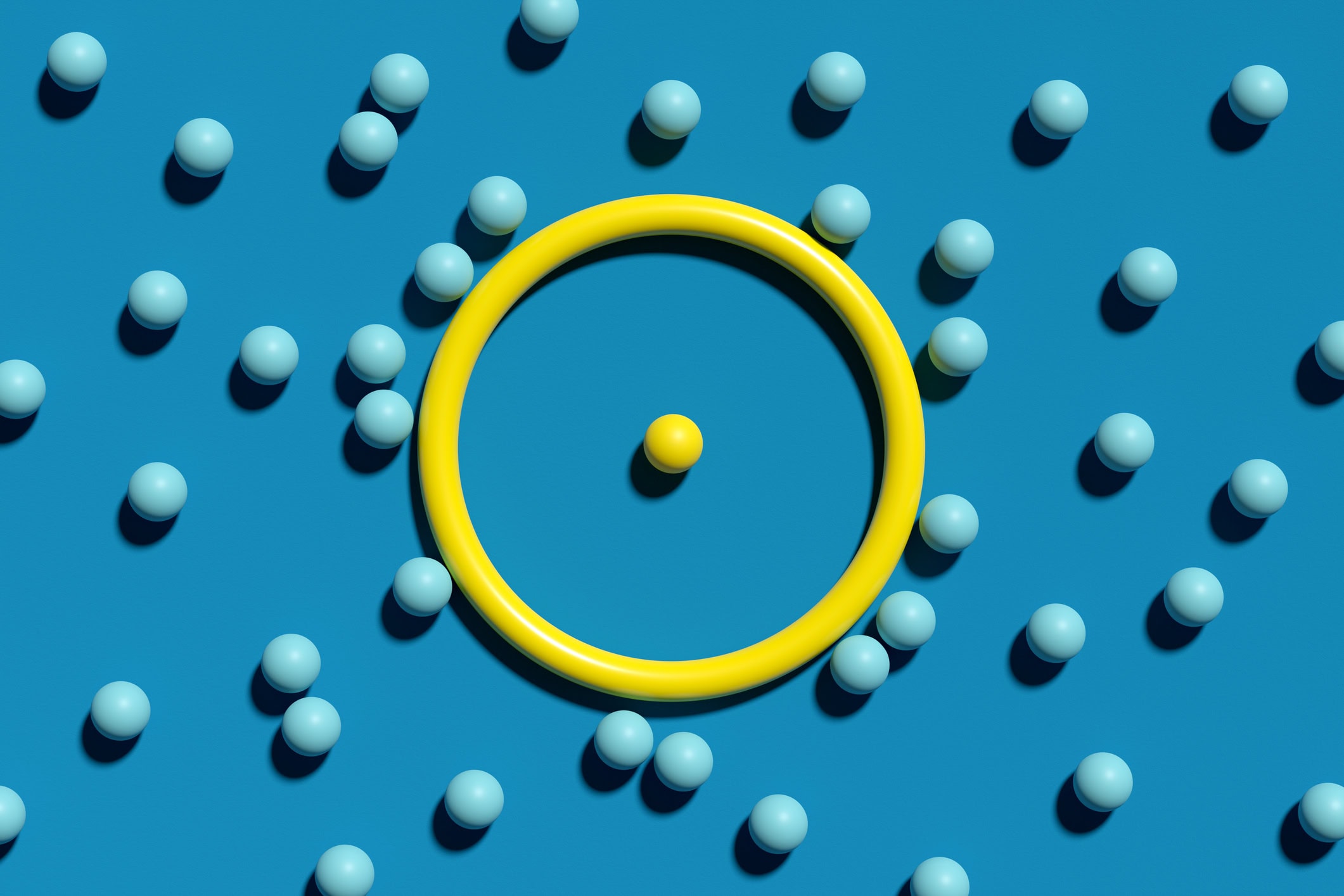
Risk and friction are part of what it means to be human.
Editors’ Note
This piece is based on Noelle Mering’s book, No Contact: How a Seductive Ideology Broke Families and Friendships and How We Can Repair Them, which will be published by Forum Books on September 8.
Mark exited his family group chat after Donald Trump’s victory in the 2024 election and, shortly after, stopped speaking to his family entirely. He knew his mom and siblings were conservative and pro-life, and though they didn’t really talk politics, his suspicions about their votes were confirmed when he pressed them. They had made a choice, and now he would too.
Mark had taken to social media the day after the election to rant about half the country, but there was little he could do with anger of that scale. His family offered something more manageable: a localized target for a generalized grievance. He couldn’t control how millions of Americans voted, but he could control whether the few he knew who voted for Trump remained in his life.
His mother, recently widowed, is heartbroken by her son’s decision to go no contact. She tries to focus her attention on the rich relationships she still has. Mark’s siblings vacillate between annoyance and deep hurt, bewildered that something so distant from the ordinary life of their family—national politics—could enter their intimacy and overwhelm it.
The no-contact phenomenon is one manifestation of a deeper spiritual jaundice. We’re estranged from ourselves in a way that makes the risk and friction of other people difficult to bear. Politics gives that interior unease somewhere to go. It can be particularly potent as a repository for discontent because it supplies both a diagnosis and a culprit. Diffuse dissatisfaction is difficult to metabolize. Ideology offers a simplistic answer for why you feel bad and who did it to you. And once the culprit is someone you know, you can do something about it.
Obvious forces are contributing to the rise of this phenomenon, a topic I explore in my forthcoming book, No Contact. Social media is an accelerant driving estrangement in a couple of ways. We habituate ourselves to a curated “community” and proceed to block, unfollow, and mute voices that introduce friction into the seamless zombie scroll. Social media also spawns what I call TikTok psychologists, whose endless short-form videos invite you to examine your workplace, family, or childhood for the hidden toxicity, narcissism, or trauma—and, for a fee, you can sign up for courses that will help you “break the cycle.”
The promise is seductive: excavate your past, locate the wound, identify its author, and your present unhappiness begins to make sense. Pundits and politics offer the same explanatory relief in the present tense, supplying villains and catastrophes with enough regularity to keep us perpetually activated. Past or present, the gaze remains trained outward. We will go surprisingly far down rabbit holes to discover what someone else did to us or is doing to us while avoiding the much more frightening journey down the rabbit hole of our souls.
The accelerants, however, presuppose something already combustible. Social media can supply the siloes, pundits the villains, and therapists the permission, but none fully explains the strange zeal with which we have embraced the promise that amputating even our most primordial relationships can make us well. And we’ve been amputating them at a rapid pace. According to recent polling, 38% of Americans are estranged from a family member, with political and ideological disagreement accounting for a significant share of these ruptures.
While it can be entirely healthy and prudent to distance oneself, even permanently, from an abusive or dangerous friend or relative, the hundreds of estranged parents I’ve encountered across the country—and those I interviewed for the book—testify to a different phenomenon: a diminishing willingness—particularly among young people—to endure the risks and friction that durable relationships require. And nowhere are the risks higher, the friction more unavoidable, or the returns less certain than in family life.
Weighing the Costs
By our current calculus, family is a fool’s bet. It’s a long-term investment in other human beings, with few variables or outcomes under our control. We choose a spouse without knowing who they will become in 30 years. We have children knowing they will suffer and make us suffer, without knowing what kind of people they will become, what they will believe, what they will make of their lives, or ultimately what they will make of us.
Besides the risk, there is relentless friction along the way: competing needs, irritating habits, misunderstandings, disappointments, heated political disagreements, and obligations that arrive at the most inconvenient times. Family continually frustrates our preferences and interferes with our plans. The people closest to us are those with the greatest opportunity to disturb our peace. The friction is certain, but the return on investment is not, as the no-contact phenomenon makes painfully clear.
For anyone seeking a controlled, frictionless existence, cutting people off offers a deceptively clean solution: eliminate the point of contact. And there is good reason to think its justifying logic metastasizes easily. Colleges that implemented no-contact orders to protect students from predation now report demands for such orders because a roommate ate their bagel, or someone looked askance at them in the cafeteria. Avoidance pays an immediate dividend.
But the costs of avoidance compound. First, avoidance makes us more brittle. The more accustomed we become to eliminating friction rather than navigating it, the less friction we become capable of bearing. Avoidance trains us in avoidance. What begins as relief from a difficult encounter can become an increasing dependence on controlling the conditions of encounter.
Second, avoidance keeps us stuck. Friction is a form of contact with reality. Once contact ends, we lose one of the most powerful correctives to our grievances: the encounter with the actual person. In memory, the mother who wounded us can remain frozen in our minds at the moment of injury. In person, she is harder to reduce so neatly. She is irritating and funny, selfish and generous, capable of the same old failure and suddenly vulnerable in some way we hadn’t expected. The living person keeps interfering with the story we tell about her.
There is a third cost: avoidance can become a means of avoiding ourselves. Rehearsing the reasons for a cutoff can be a vital reminder to stay away when estrangement is necessary. Persons escaping abuse may need to remember clearly what happened, particularly when guilt or loneliness threatens to draw them back imprudently.
But when the relationship was merely difficult but not dangerous, that same rehearsal can work against us. Avoidance invites us to continually recount our grievances, quieting the dissonance that might otherwise invite us to question our narrative. It’s far easier to rehearse our righteousness than it is to wrestle and reckon honestly with a more complicated account that might in part implicate ourselves.
A culture organized around minimizing risk and friction will eventually find family difficult to justify, because family is a long-term wager on goods that cannot be secured in advance and a daily encounter with people we can’t control.
Before deciding to go no contact, consider that you may be losing far more than you gain by cutting ties. Risk and friction are prerequisites of life and love. Family is indeed a bad bet if what we prize is control and an untroubled life, but it might be our best bet if what we want is a more human one.
Mark can eliminate the friction his family creates. He cannot make them cease to be his family. Nor can he know what might have happened had he stayed in contact long enough for all of them to become again something more than the worst thing he believed about them. There is a terrible risk of remaining. But there is a risk in leaving too: that in protecting ourselves from the people who disturb our peace, we slowly become people incapable of loving and knowing anyone—and will secure one terrible result: remaining a stranger to all and to ourselves.
The American Mind presents a range of perspectives. Views are writers’ own and do not necessarily represent those of The Claremont Institute.
The American Mind is a publication of the Claremont Institute, a non-profit 501(c)(3) organization, dedicated to restoring the principles of the American Founding to their rightful, preeminent authority in our national life. Interested in supporting our work? Gifts to the Claremont Institute are tax-deductible.
Suggested reading

The American people should demand an answer.

Some friendly liberal advice to Republicans.
The roadmap for systemic censorship is receiving little attention because the Court punted on the substance of the issue.

Why an end to monogamy is bad news for us all.

