
The Great American Rascal
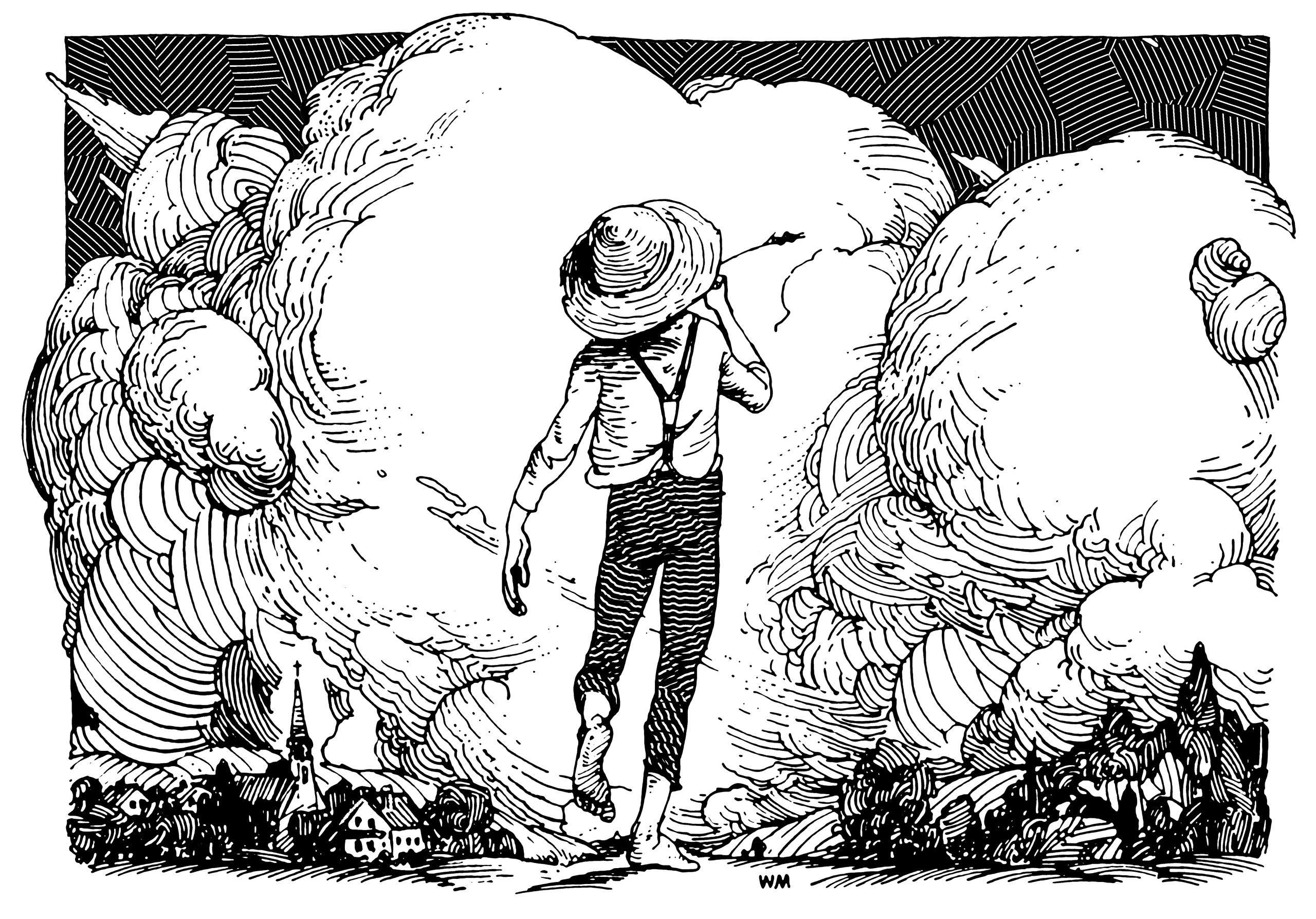
The Adventures of Tom Sawyer at 150.
What follows is an excerpt from Dorothea Israel Wolfson’s essay, “The Great American Rascal,” from the Fall 2026 issue of the Claremont Review of Books.
The Adventures of Tom Sawyer marks its 150th anniversary this year. It was first published in 1876, the centennial year of the American Founding. The novel itself marked its own kind of founding moment for American literature, which had been laboring—to borrow a phrase from The Federalist—under the “arrogant pretensions of the European.” America may have broken free of Great Britain in 1776, but we remained enthralled to Europe culturally for much longer. In his 1837 essay “The American Scholar,” Ralph Waldo Emerson lamented that American writers had “listened too long to the courtly muses of Europe” and scraped by on the “sere remains of foreign harvests.”
Emerson then issued what Oliver Wendell Holmes, Sr. dubbed an “Intellectual Declaration of Independence.” For Emerson, “genius looks forward.” He wanted to find, as he put it in his 1844 essay “The Poet,” the Homer of America—a bard “with a tyrannous eye” who “knew the value of our incomparable materials, and saw, in the barbarism and materialism of the times, another carnival of the same gods whose picture [one] so much admires in Homer.” In much the same spirit, Walt Whitman longed for a “democratic literature” filled with “archetypal poems” that could thicken America’s cultural “marrow.”
American men of letters such as James Fenimore Cooper, Edgar Allan Poe, Nathaniel Hawthorne, Herman Melville, and Henry Wadsworth Longfellow each made their contributions in the struggle to pull away culturally from Europe. But it was Samuel Clemens—Mark Twain—who made the decisive revolutionary break. In the words of the critic William Dean Howells, “I knew them all…our sages, poets, seers, critics, humorists; they were like one another and like other literary men; but Clemens was sole, incomparable, the Lincoln of our literature.”
With The Adventures of Tom Sawyer, his first novel, Twain offered a new archetypal hero for democracy. He replaced the squeaky-clean “model boys” that tended to star in mid-19th century serials like McGuffey’s Eclectic Readers and Peter Parley’s Magazine, to which Twain’s father had subscribed. Tom is an altogether more vivid, more fully realized kind of boy. He leaps off the page from the very first word of the novel, which is his name, printed in huge capital letters: “‘TOM!’” yells his Aunt Polly. “‘What’s gone with that boy, I wonder? You, TOM!” An early review from England criticized the “queer Americanizing of the language.”
The frontier vernacular was part of the point, however, as distinctive as the behavior of the boy hero. In the first chapter, on day one alone, Tom hides in a closet gorging on forbidden jam, runs away from Aunt Polly’s whipping, plays hooky from school to go swimming, opportunistically steals sugar at the dinner table, lies to his aunt about being in school, and gets into a fight with a new boy in town because he is well-dressed and wearing shoes. Twain announces outright that Tom “was not the Model Boy of the village.” He reinforces this theme so well throughout the novel that the Brooklyn Public Library excluded The Adventures of Tom Sawyer from their reading room upon its publication.
Other reactions were more appreciative and far-seeing. Moncure Conway, Twain’s friend and literary agent in London, observed: “The book will no doubt be a favorite with boys, for whom it must in good part have been intended; but next to boys we should say that it might be most prized by philosophers and poets!” Conway was among the few (even to this day) to grasp the deeper import of the novel, which is often wrongfully dismissed as simply a humorously nostalgic tale for children. But one philosopher who seems to have appreciated Tom Sawyer’s many subtleties was Friedrich Nietzsche. He wrote to his friend Franz Overbeck in 1879 that his mother had been reading it to him so he could rest his strained eyes. In another letter, this one to the novelist Paul Rée, he declared that he preferred Mark Twain’s American “silliness” to German “cleverness.”
The Mischief-Maker of Missouri
Perhaps there is a Nietzschean streak to Tom. He certainly delights in upending the staid morality of St. Petersburg, Missouri, whose inhabitants Twain describes as “grave, unromantic men.” They are locked into the drab ritual formalities of what Leo Strauss called the joyless pursuit of joy: grinding labor without much delight in profit; dutiful rote piety without genuine religious passion. Tom shocks and offends the sensibilities of almost everyone around him, but he also enlivens their world and broadens their horizons, turning the dour solemnities of the town into a backdrop for his playfully mischievous imagination. The most famous scene in the book is the one in which Aunt Polly punishes Tom for playing hooky by making him whitewash her fence on a Saturday morning. In late edits, Twain enhanced the fence from four feet high to mythic proportions—a forbidding structure nine feet tall and 30 yards wide. Yet Tom somehow convinces the other boys in town that whitewashing may not be work after all.
“What do you call work?” Tom asks his peer Ben Rogers. “Why ain’t that work?” replies Ben. “Well, maybe it is, and maybe it ain’t,” says Tom. “All I know, is, it suits Tom Sawyer.” Tom neither denies nor affirms that whitewashing is work, shrouding the act in an air of mystery and bending reality by the sheer force of his will until his friends look with envy at a dull chore. An engrossed Tom refuses Ben’s initial pleas to take a turn by telling him Aunt Polly is very particular about this fence, lying that he had to turn away his half-brother, Sid, and the enslaved Jim, who wanted to try. Soon the boys pour out all their worldly goods at Tom’s feet, essentially paying him for their own labor and putting three fine coats of paint on the entire fence.
Twain calls this a “slaughter of innocents,” in which Tom discovers “it’s not such a hollow world after all.” He learns, writes Twain, that “Work consists of whatever a body is obliged to do and that Play consists of whatever a body is not obliged to do.” He resolves Karl Marx’s problem of the manual worker’s alienation from his labor, yet he still makes a good capitalist profit. It’s a win-win. Harry V. Jaffa, in his definitive 1972 essay on the novel, “Tom Sawyer: Hero of Middle America” (collected in The Conditions of Freedom: Essays in Political Philosophy, 1975), captures the enormity of Tom’s ruse: “What he realizes is pure profit, purer profit indeed than Karl Marx ever imagined in his wildest polemics, against the iniquity of surplus value.”
Read the rest here.

The American Mind presents a range of perspectives. Views are writers’ own and do not necessarily represent those of The Claremont Institute.
The American Mind is a publication of the Claremont Institute, a non-profit 501(c)(3) organization, dedicated to restoring the principles of the American Founding to their rightful, preeminent authority in our national life. Interested in supporting our work? Gifts to the Claremont Institute are tax-deductible.

The minor prophets of conservatism may be past their sell-by date.
What Greta Gerwig’s 'Little Women' misses.

The human person is irreducible.
This isn’t a proletarian revolution. This is a generational fight within our ruling elite class.

The 2020 election is a battle for the soul of America.

