

A constitutional and prudent way to redress an abuse of power.
States Must Do More to Secure Our Elections
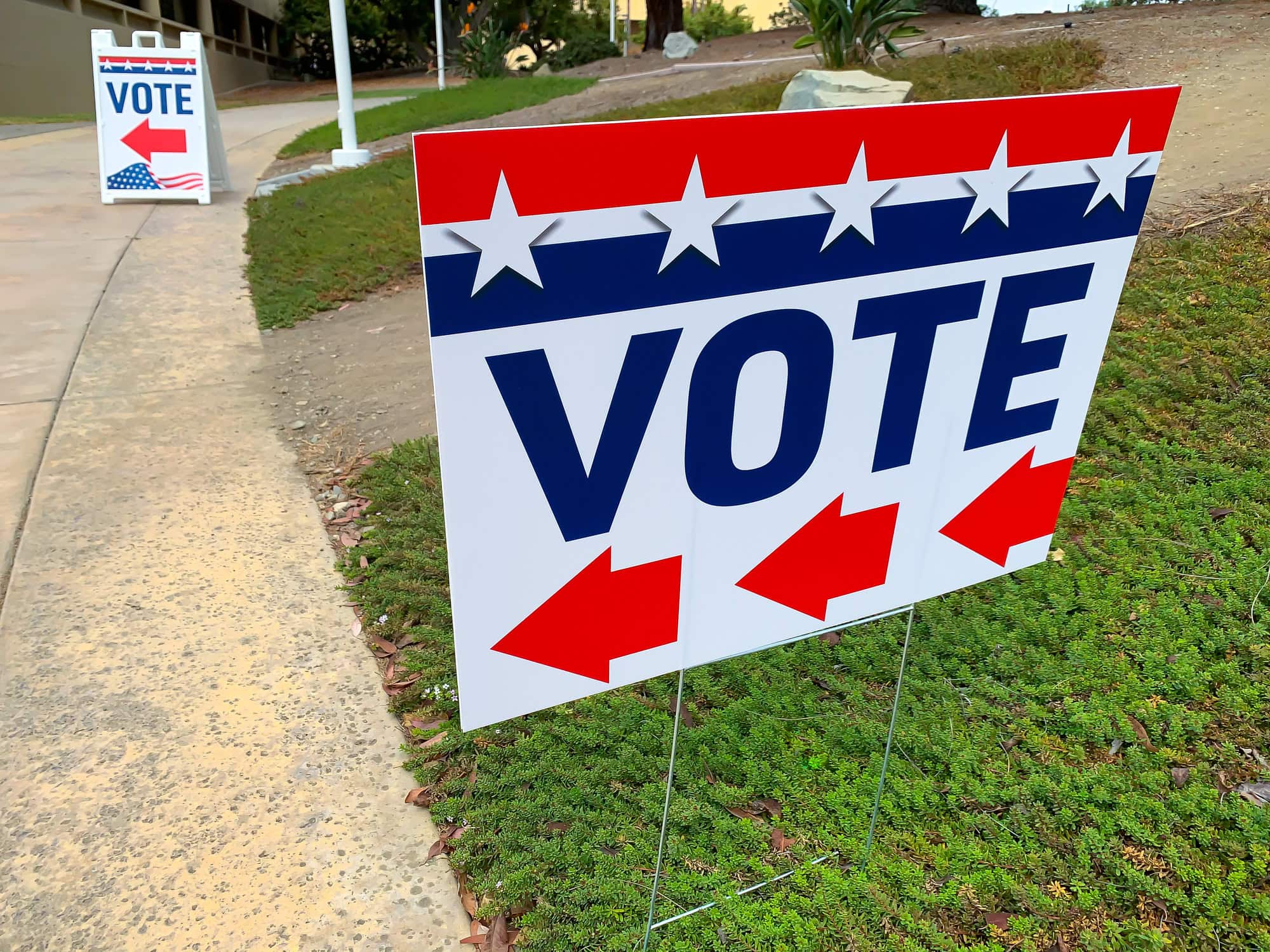
Only American citizens should decide who governs them.
Americans can’t afford to be complacent about our election security. The right to vote is one of the most indispensable civil rights in a constitutional republic, but it is not self-executing. Laws must protect that right, ensure its proper administration, and defend it against error, fraud, and foreign influence.
Citizenship must be verified when voters register. States must maintain accurate voter rolls and give federal authorities the data to which they’re legally entitled. They must also have reliable proof-of-eligibility requirements and prosecute election-law violations.
This is ultimately not merely an election-administration issue—it is a matter of sovereignty.
The proposition that only American citizens may vote in elections is a cornerstone of our republic. The citizenship requirement preserves self-government and ensures that those who decide our elections are members of the American political community. If these basic rules are treated as mere aspiration rather than an enforceable legal requirement, then American sovereignty is at risk.
The vote—and the machinery that receives, records, verifies, counts, and reports it—is how the American people confer legitimate authority on public officials.
The size of the illegal immigrant population in the country underscores the point. The Department of Homeland Security estimated that roughly 11 million unauthorized immigrants—or 3.3% of the U.S. population—resided in the country in January 2022. The Federation for American Immigration Reform’s March 2025 estimate puts this population at approximately 18.6 million at the beginning of 2025.
Whatever the precise number, the practical consequence is the same: a large non-citizen population resides in communities served by state voter-registration systems.
The cost of waiting to verify eligibility until after an election is too high, because even one unlawful vote dilutes a lawful citizen’s vote and undermines confidence in the electoral process.
Recent reports only reinforce the need for scrutiny. DHS has found that preliminary reviews identified more than 250,000 potential non-citizens on voter rolls in four states and asked those states to work with the department on election security. Some state officials and election experts have disputed that claim. Fine. Then investigate it thoroughly, transparently, and promptly. The answer to a serious allegation is verification, not indifference.
Though Congress began requiring states to offer voter registration when people apply for or renew driver’s licenses through the National Voter Registration Act of 1993, convenience is not the enemy of integrity. The NVRA did not relieve states of their duty to maintain accurate voter rolls. States must ensure that illegal aliens and other ineligible persons do not vote in elections.
History supplies ample warning on this score. A review of Department of Motor Vehicles records revealed that Philadelphia mistakenly allowed non-citizens to register to vote around 2016. State officials later revised the system, but the episode demonstrates why citizenship verification cannot be left to bureaucratic happenstance.
And the problem isn’t limited to administrative error.
In the Eastern District of North Carolina, federal prosecutors charged 19 foreign nationals with voting in the 2016 election. In the Southern District of Florida, three non-citizens pleaded guilty to illegally voting in federal elections and committing related election offenses.
These numbers may not be large in isolation, but that misses the point. Election crimes are crimes against public trust. They injure every lawful voter whose ballot is entitled to equal weight under law.
To combat this, states and municipalities should require reliable proof of citizenship and verification before an ineligible registration can result in a ballot being cast. State election officials should coordinate with federal authorities to obtain accurate citizenship and immigration-status information, consistent with law. The Department of Justice should continue to prosecute those who breach the system.
Encouragingly, some states have begun to act. The National Conference of State Legislatures reports that four states enacted documentary-proof-of-citizenship requirements in 2026. Thirteen states now have such laws at some point in the registration process, though litigation and court decisions have prevented some provisions from taking effect.
Other states have adopted bifurcated systems that allow voters who have not provided documentary proof of citizenship to vote in state elections, while still requiring verification for federal elections. These reforms reflect a necessary shift toward verifying citizenship rather than relying solely on a voter’s word.
The reason is obvious. If election safeguards are weak enough to allow non-citizens to register, vote, or otherwise influence elections, public policy could be shaped by individuals who have not assumed the duties of American citizenship or pledged allegiance to the constitutional order. That is a clear breach of the social compact.
The federal government already recognizes the critical nature of citizenship when public trust and national interest are at stake. For example, many national security positions require U.S. citizenship because they involve access to sensitive government information.
Though voting is different from government employment, it is still an exercise of sovereign authority. Through the ballot, citizens choose who will make law, set policy, spend public money, appoint officials, and direct the machinery of government. Sovereignty is preserved not by slogans but by laws faithfully enforced, passed by representatives chosen by American citizens.
State legislators must give election officials the tools to reinforce safeguards, confirm citizenship, maintain accurate voter rolls, and protect citizen self-government. Americans have fought too long and sacrificed too much to surrender sovereignty to administrative negligence and foreign influence.
The rule is simple, just, and essential: American citizens—and only American citizens—must decide American elections.
The American Mind presents a range of perspectives. Views are writers’ own and do not necessarily represent those of The Claremont Institute.
The American Mind is a publication of the Claremont Institute, a non-profit 501(c)(3) organization, dedicated to restoring the principles of the American Founding to their rightful, preeminent authority in our national life. Interested in supporting our work? Gifts to the Claremont Institute are tax-deductible.
Suggested reading
The Democratic Party’s center cannot hold.
The Democrats love to play pretend.

The philosopher’s focus on citizenship is consistent with Donald Trump’s message.
From English history to the 14th Amendment, the record makes a strong case for the Trump Administration.
Efforts to sow confusion and chaos in our election systems must be confronted.

