

Spend your life preparing for death rather than ignoring it
Rejecting Effective Altruism’s New Atheism
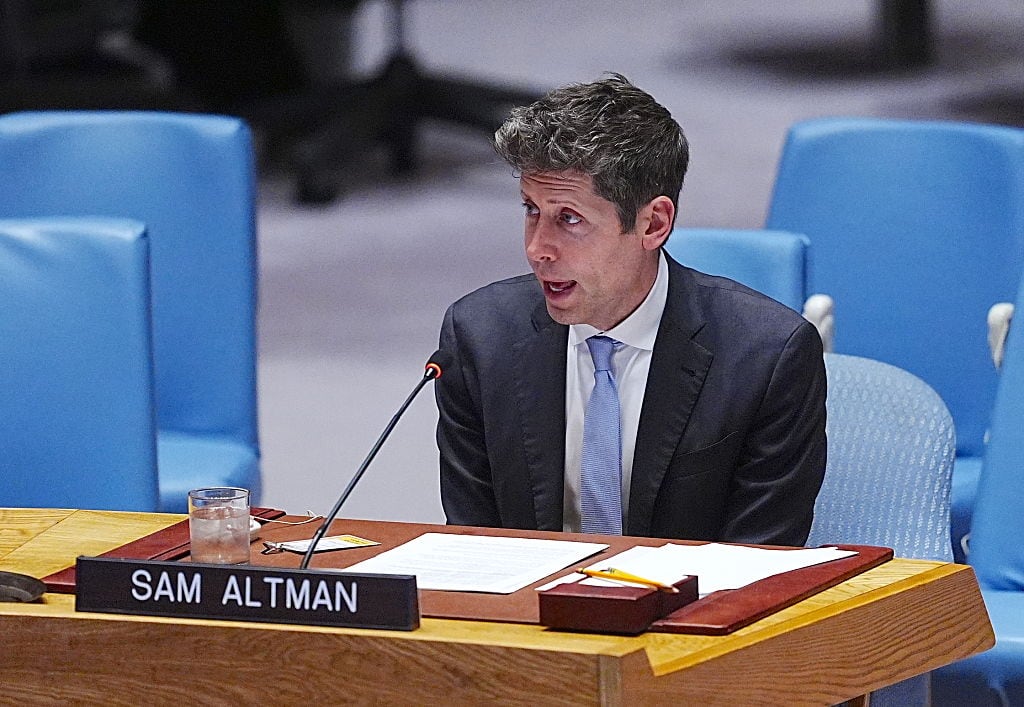
A startling technocratic vision for the digital age.
On May 25, 2026, Pope Leo XIV stood in the Vatican’s Synod Hall and presented Magnifica Humanitas, his encyclical on artificial intelligence. Beside two cardinals sat the lay speaker chosen to address the room, Chris Olah, a co-founder of Anthropic and self-described atheist working to develop the “soul” of its AI model, Claude.
The Catholic Church, the West’s oldest institution, has long stood at the forefront of the day’s most important moral questions. It has often found itself opposed to insidious ideologies that swept the globe. In the 1930s and ’40s, the Vatican waged a secret war against Nazism. Then it took on Communism. But at the start of the 21st century, a new ideology emerged that would eventually take hold among wealthy tech elites called Effective Altruism, or EA.
Developed from the stark utilitarian philosophy of Princeton University’s Peter Singer, EA claims to use evidence and reason to determine how to benefit others as efficiently as possible. Effective Altruists like Bill Gates and Anthropic’s Dario Amodei direct enormous sums of money toward causes they believe will produce the greatest measurable benefit, regardless of whether those causes are personally meaningful to them.
The problem with Effective Altruism is that its genealogy runs through the rationalist and New Atheist online hovels of the 2000s and 2010s, where cheeky Redditors “debunked” Christianity and advanced rationalist systems to replace it. EA is one such system, even asserting its own eschatology—just without God.
In the age of artificial intelligence, some of its proponents believe they are crafting new gods to replace the old one. OpenAI CEO Sam Altman has described his creation as a “magic intelligence in the sky.” The company’s former chief scientist Ilya Sutskever has likened interacting with ChatGPT to “almost a spiritual experience.” Another AI engineer believes explicitly that “We’re creating God. We’re creating conscious machines.” Elon Musk has also weighed in, asserting that Google co-founder Larry Page envisioned a “digital super-intelligence” that would become “basically a digital god.”
If AI really is to become something approaching godlike, then the question of who controls its development becomes considerably more consequential. This helps explain why Effective Altruists have become some of the loudest voices calling for AI regulation, as they believe humanity is racing toward a technology powerful enough to eradicate civilization. For the “long-termist” wing of EA, the stakes are existential.
But in our current debate between AI accelerationism and doomerism, there is reason to be suspicious of the AI leaders’ arguments for government regulation. Though they clearly believe in EA’s tenets, their renewed calls for government intervention appear to use the philosophy as a means of securing their own market share.
For years, EA’s money and allies were deeply embedded in the Biden Administration, and two of its biggest AI-safety donors, Dustin Moskovitz and the now-convicted fraudster Sam Bankman-Fried, were also two of Joe Biden’s biggest donors. Then Trump won, and the AI-safety movement lost its seat at the table. In recent weeks, Trump and Vice President JD Vance have pushed to accelerate artificial intelligence development, chiefly to stay ahead of the Chinese.
However, in the years since Donald Trump won re-election, EA’s donor apparatus started a new project: working with religious institutions. Since 2025, EA-linked funders, particularly the Future of Life Institute (FLI), have put $3.3 million into churches, seminaries, and faith networks across nearly every faith tradition in the country.
In March, a group of Catholic theologians filed an amicus brief backing Anthropic in its legal dispute with the Department of War over the company’s use of its AI systems. FLI’s “faith liaison,” Brian Boyd, was among the signers. Weeks later, Anthropic convened 15 Christian thinkers, including Boyd, for a two-day summit on Claude’s ethics. Then came the Pope’s encyclical and Olah’s appearance in the Synod Hall.
This sequence of events reveals that EA-aligned groups have deliberately been building relationships with AI-skeptical religious institutions. They are using these institutions’ moral authority to issue warnings about the supposedly impending AI apocalypse. Anthropic has been cultivating relationships in these same circles, which independently view AI safety as a matter of grave moral concern. It is using them to launder its own agenda under the appearance of an independent moral and theological imperative. The most radical leaders of the EA movement ultimately seek to replace religion with a kind of AI-led technocracy shepherded by our tech oligarchs.
If Effective Altruists and their allies believe they are building something capable of destroying humanity, their growing influence over both AI policy and religious institutions is cause for concern. Faced with EA’s renewal of New Atheism, America’s political class ought not to be swayed by the promises of its gods, but should remember the true God who upholds our civilization.
The American Mind presents a range of perspectives. Views are writers’ own and do not necessarily represent those of The Claremont Institute.
The American Mind is a publication of the Claremont Institute, a non-profit 501(c)(3) organization, dedicated to restoring the principles of the American Founding to their rightful, preeminent authority in our national life. Interested in supporting our work? Gifts to the Claremont Institute are tax-deductible.
Suggested reading


Weaponizing American privileges to own America.

Pope John Paul II’s forgotten wisdom on the American Founding.
Boeing’s Starliner debacle is a symptom of a much bigger problem infecting the Beltway ecosystem.

Artificial intelligence is a new pagan god.
A nation casts about in search of its God.

