

America’s unserious political class is totally unequipped to deal with the threat.
Reining in D.C.
Home rule is an unconstitutional failure.
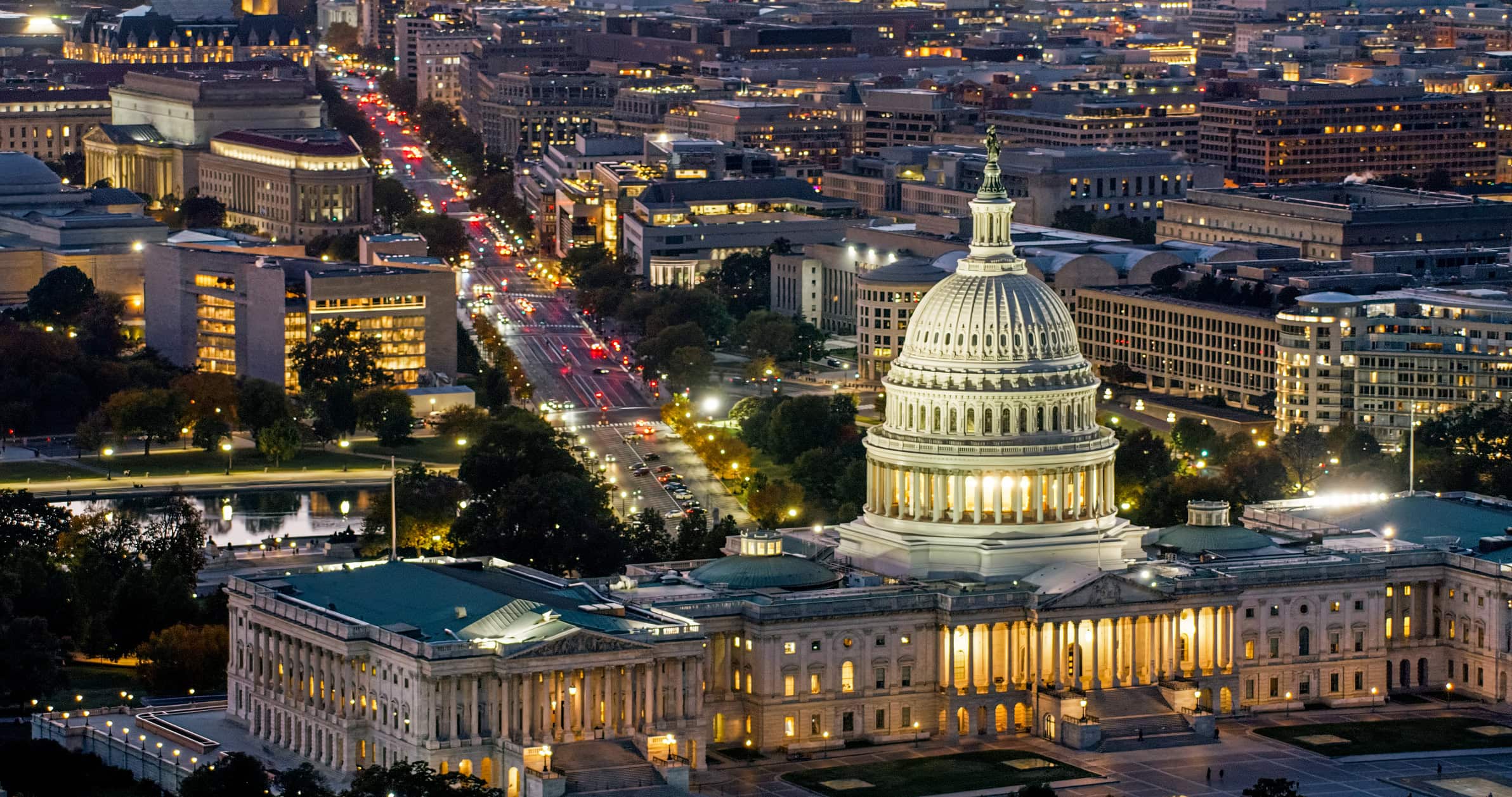
D.C. wasn’t supposed to be like this. Hard as it is to believe today, the capital was set apart as its own district not to make it an untouchable bureaucratic citadel, but to make it work for all Americans. Unattached to any one state and free from the control of any one constituency, our government was supposed to serve the whole country. Decades of misunderstanding, however, have muddled this design. Federalization gives us a fighting chance of restoring it.
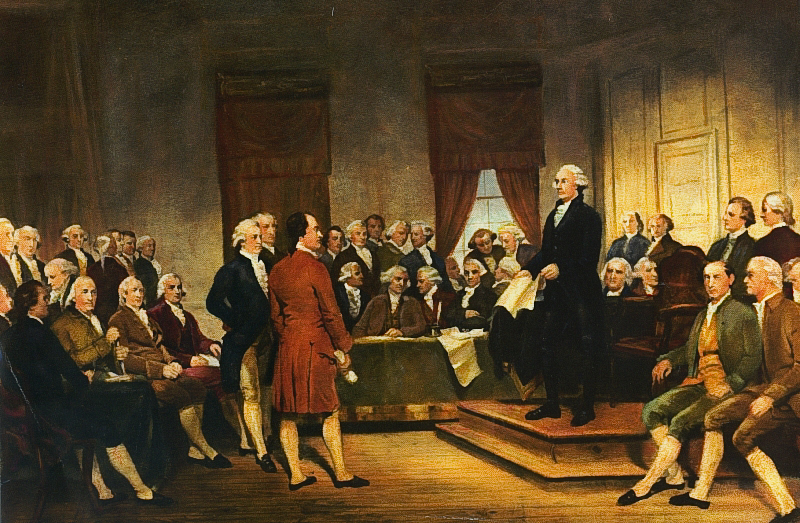
Under the Articles of Confederation, the federal government resided in Philadelphia until a military mutiny prompted it to leave. With this in mind, the framers proposed an optional federal district. Under the proposal, Congress could create a capital and be vested with “exclusive” legislative authority over it. This would put the government in a position to contemplate and sympathize equally with all Americans. The states approved. And so the framers’ proposal was ratified under Article I, Section 8, Clause 17 of the Constitution. Congress then placed the capital along the Potomac River, and D.C. was organized in 1801.
Puzzlement quickly ensued. Congress tried many approaches to local governance and settled on a semi-independent model, enacted as the D.C. Home Rule Act of 1973. This established a congressionally appointed judiciary and a popularly elected city council, mayor, and attorney general. Under home rule, D.C. could make its own law, albeit with congressional oversight.
The Founders warned us about this model, however. They anticipated that self-governance would embarrass, impede, and endanger the federal government.
Trump derangement syndrome has only vindicated this position. In 2017, D.C.’s attorney general joined litigation against Trump’s so-called Muslim ban. Then in 2020 D.C. painted a “Black Lives Matter” memorial along 16th Street Northwest, flipping an urban bird at the Trump White House. And in 2025, the District’s attorney general protested Trump’s public-safety initiative, contesting his right to seize the Metropolitan Police Department and deploy the National Guard across the city.
One might overlook these obstructions if the District’s fierce independence enabled it to ensure safe and efficient self-governance. But that doesn’t describe D.C. In 2023, a Senate staffer traversing the northeast part of the city was knocked to the ground and repeatedly stabbed in the head and chest. Then in May 2025 two embassy interns were murdered outside the Capital Jewish Museum. The following month, a congressional intern was fatally shot in the Mount Vernon Square neighborhood.
Nor is partisanship the only problem. D.C. behaves almost as poorly when Democrats wield federal power. In April 2024, pro-Palestinian protesters erected an encampment at George Washington University (a federally chartered school). City officials refused to remove the protesters for two weeks even though their disruptions interfered with students’ final-exam preparations.
Bringing the capital to heel will ultimately require legislation. There’s already a proposal to repeal home rule. It’s a great start, but the proposal doesn’t detail how D.C. would operate afterward—not a promising omission when Congress tends to be so ineffective. Perhaps the most prudent solution would be to subsume the District’s entities into the federal government. Then Congress need not work from a blank slate by creating new bodies for local governance. Instead, D.C.’s city council could become an advisory body to recommend local laws. This would meet the Constitution’s requirement that Congress make the laws without requiring it to fuss over the minutiae of local governance.
This idea won’t appease locals who want equal electoral representation to that enjoyed by other Americans, if not greater. We know that D.C. residents (or, more accurately, the Democrats in their ears) seek D.C. statehood. But if it’s a state they’re after, then they should entertain retrocession or repeal the District’s charter. Bastardizing the Constitution to preserve the mock state is not the way to go.
Knowing that Democrats in Congress will object on these grounds to any discussion of federalization, we should use litigation to force a solution on this matter. The difficulty with litigation is finding a plaintiff—a D.C. resident who believes in a federal capital and whose case wouldn’t be easily dismissed by local judges seeking to avoid the issue. But with so many conservatives currently serving in D.C. under the Trump Administration, now might be the time to bring a suit.
The right litigant has two ways to attack home rule—challenge D.C.’s lawmaking power or neuter its prosecutorial authority. The lawmaking approach likely faces two objections. First, judges might question how Congress’s ultimate legislative authority under home rule meaningfully differs from exclusive authority under the Constitution. Second, they might raise the constitutional-liquidation theory, which posits that the post-enactment tradition fleshes out constitutional indeterminacies.
Neither objection holds water. For one thing, exclusive legislative authority means what it says—one body enacts the law. Using D.C.’s city council as a think tank wouldn’t violate this principle, because only Congress would oversee legislation from introduction to enactment. But home rule fails because Congress shares its authority with another body. In fact, a law could exist under home rule without Congress touching it at all. The Constitution doesn’t envision such an anomaly.
Relatedly, liquidation presupposes that a constitutional provision is ambiguous. But here, the framers couldn’t have written a clearer provision. Congress’s authority over D.C. is exclusive; that means only Congress can exercise it. And so even though Congress has handed lawmaking power to D.C. on multiple occasions, viewing this abdication as indicative of the Constitution’s original meaning would only sanction congressional laziness and cowardice.
The prosecutorial approach would open a more straightforward path to a more limited victory. The pitch is simple: the D.C. attorney general is a federal creation. And yet, he’s elected and can sue the federal government at will. This flouts the appointment process, as well as the president’s power to remove officers and direct executive-branch entities. Now would be the perfect time to press this argument, as the Supreme Court aims to clarify the president’s removal power later this term, and the D.C. Circuit recently questioned whether “the District possesses an independent sovereignty that can give rise to an Article III injury from actions of the federal government.” The only issue is that D.C. could still make law. But some of that law will be unenforceable if the attorney general cannot prosecute. Hence, a small win—but a win, nonetheless.
Congress has subverted the Constitution by entertaining home rule. The results have been ugly, and will get uglier. District residents will grow increasingly radical in their demands for self-governance. The framers, in their wisdom, didn’t create a sovereign D.C.—they bequeathed us a federal city to preserve a neutral national government. We should restore that vision.
The American Mind presents a range of perspectives. Views are writers’ own and do not necessarily represent those of The Claremont Institute.
The American Mind is a publication of the Claremont Institute, a non-profit 501(c)(3) organization, dedicated to restoring the principles of the American Founding to their rightful, preeminent authority in our national life. Interested in supporting our work? Gifts to the Claremont Institute are tax-deductible.
Suggested reading


The “common good” didn’t mean what its modern proponents want it to mean.

Official conservatism would rather harumph about dissidence than address core issues.

Andrew McCarthy is wrong about Trump’s Perkins Coie executive order.
Updated in real time.

