

America shouldn’t ask its daughters to fight its wars.
Machines Under Command
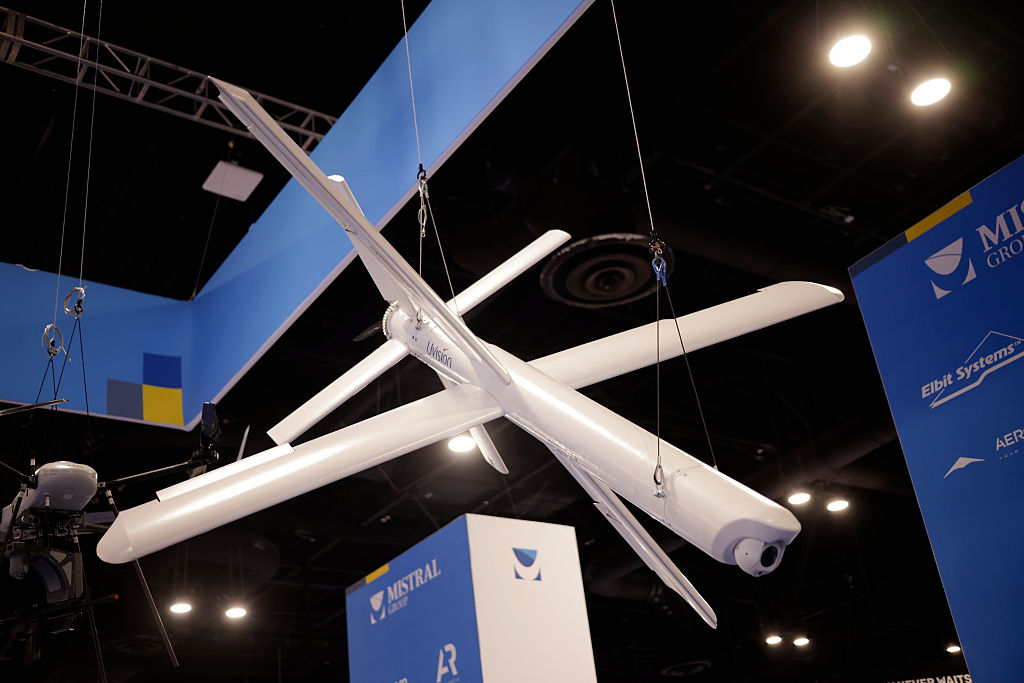
The military’s existing framework answers the hardest questions about autonomous lethal force.
The debate over autonomous weapons has started from the wrong premise. Critics ask whether the United States should permit machines to kill. Advocates frame the question as whether we can afford to fall behind adversaries who will deploy such systems regardless. Both sides treat autonomous lethality as a novel moral category that demands a novel governing framework. The U.S. military already possesses such a framework, however. It has been used for decades, it scales naturally to autonomous systems, and the public debate would improve considerably if both sides understood these realities.
The military governs the use of force through weapons control statuses, a graduated system that every air defense operator and ground commander knows by three commands. Weapons hold authorizes engagement only in self-defense or under specific order. Weapons tight authorizes engagement only against targets positively identified as hostile. Weapons free authorizes engagement against any target not positively identified as friendly.
A commander sets the status based on mission, threat, and environment, as units within his command may operate under different statuses depending on the situation. The framework already calibrates lethal authority to circumstance. It does not require a soldier to seek individual approval for every trigger pull, because the controlling judgment comes from the posture the commander has set rather than in each discrete engagement.
This structure maps directly onto the problem of autonomous weapons. The objection that a machine cannot exercise the contextual judgment that distinguishes a combatant from a civilian, a threat from a bystander, has force only in environments where discrimination is genuinely difficult—precisely the condition the weapons control framework already addresses. The Taiwan Strait and downtown Tehran are not the same operating environment, and no serious framework should govern them in the same way.
Consider the contrast. An autonomous system operating in the Taiwan Strait is tasked with engaging naval vessels in a declared conflict zone where civilian traffic is minimal. Every surface combatant of a certain signature is presumptively hostile and faces a discrimination problem that is nearly trivial. The environment is uncluttered, the targets are large and militarily unambiguous, and the consequences of restraint include the loss of American ships and sailors to adversary missiles that outpace any human operator’s reaction time. A weapons free or weapons tight posture for autonomous engagement in that environment is defensible on the same grounds that justify those postures for human-operated air defense.
The same autonomous system operating in a dense urban environment such as downtown Tehran, where combatants and civilians occupy the same streets, should operate under weapons hold, which requires a human to authorize each engagement. The environment dictates the posture, and the framework already exists to make that determination.
The Department of Defense has in fact started to incorporate this framework into existing policy. DoD Directive 3000.09, updated in January 2023, requires that autonomous and semi-autonomous weapon systems allow commanders and operators to exercise appropriate levels of human judgment over the use of force. It also requires that the design of such systems confine each engagement to a timeframe and geographic area consistent with commander and operator intentions. The directive presupposes that the appropriate level of human control varies with the system and mission rather than holding constant across all cases.
What the directive does not yet do, and what the public debate has not yet grasped, is connect that variation to the weapons control vocabulary the force already uses, which would render the entire question legible to commanders, policymakers, and the public in terms the military has been employing for generations.
Adopting this approach requires trusting the military to set the posture, which is the crux of the matter for a public institution. The objection that the U.S. cannot trust commanders to calibrate autonomous lethal force responsibly proves too much. We already trust those same commanders to calibrate human lethal force through an identical framework—one that, when commanders adopt the wrong posture, produces civilian casualties. An autonomous system governed by the same logic inherits the same accountability structure, because the commander who sets a weapons free posture for an autonomous system owns the consequences exactly as the commander who sets it for a battery of human-operated interceptors.
A public institution governing an autonomous force must establish this policy explicitly rather than allow it to emerge on a case-by-case basis from procurement decisions and after-action reviews.
The military should state as a matter of doctrine that autonomous weapon systems operate under weapons control statuses set by the responsible commander; that the status a commander may set for a given system depends on the discrimination difficulty of its operating environment; and that the most permissive postures remain available only in environments where the discrimination problem is genuinely simple.
This codification would accomplish two things that the current ambiguous debate does not. First, it would give commanders a clear and familiar vocabulary for governing systems that would otherwise arrive without doctrinal handholds. Second, it would give the public a transparent standard by which to hold the institution accountable, because a weapons control status is a decision with a name and an owner rather than a diffuse property of an algorithm that no one can identify.
The alternative is not a world without autonomous weapons. Adversaries are building them, the technology is proliferating, and the United States will field autonomous systems regardless of whether the public debate reaches a satisfying resolution. The alternative to adopting a clear framework is fielding these systems under an ambiguous one, in which the absence of explicit doctrine forces operators and engineers to improvise the hardest decisions in the moment rather than letting commanders govern them in advance within a system the nation has already validated across decades of use.
The military knows how to use lethal force. The framework is sound, familiar, and accountable. The task now is to apply it deliberately to new autonomous systems rather than assume that such systems require the country to invent its ethics of force from scratch.
The American Mind presents a range of perspectives. Views are writers’ own and do not necessarily represent those of The Claremont Institute.
The American Mind is a publication of the Claremont Institute, a non-profit 501(c)(3) organization, dedicated to restoring the principles of the American Founding to their rightful, preeminent authority in our national life. Interested in supporting our work? Gifts to the Claremont Institute are tax-deductible.
Suggested reading


Let’s be honest about Mark Milley’s legacy.
The burden of combat should be the responsibility of men alone.

We need to send them elsewhere.

Whoever wins, we’ve got work to do.

It licked its wounds, it went underground—and now it’s learning to be effective.

