

Revisionist Black supremacist history can't grasp our shared equality.
John Quincy Adams and the Promise of an American Golden Age
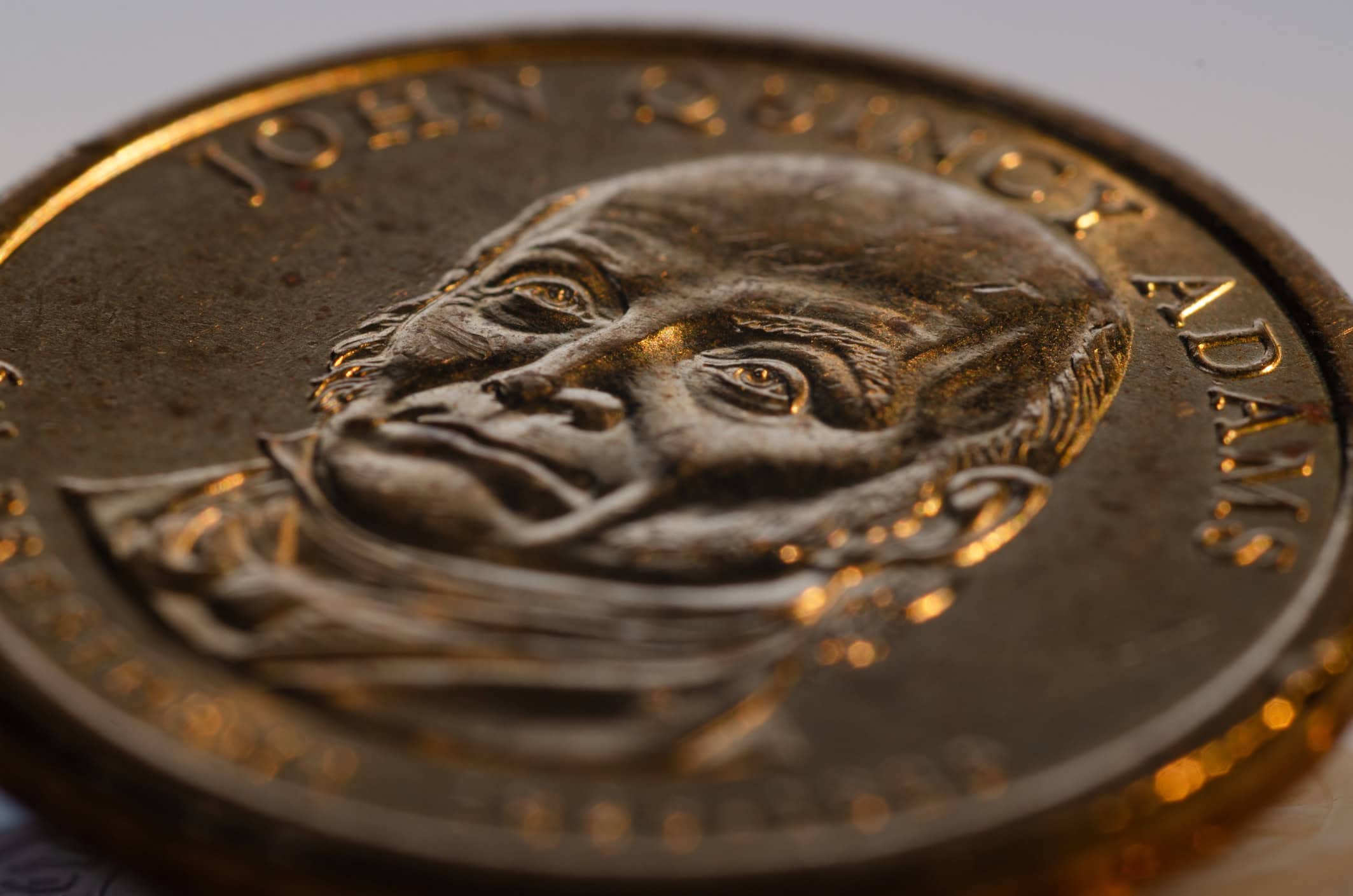
Why the Declaration of Independence—not conquest or invention—was America’s greatest gift to the world.
Editors’ Note
As we continue to celebrate the 250th anniversary of the American Founding, we will keep publishing reflections on the meaning of the Declaration of Independence, some by Claremont scholars and others by learned friends. In this piece, Professor Casey Wheatland reflects on John Quincy Adams’s famous July 4, 1821, address to Congress. Read all the entries in our “Declaration at 250” series here.
One of the earliest civic traditions to emerge in the United States was the Fourth of July oration. Prominent citizens gave speeches in churches, town halls, and philanthropic societies reflecting on what it meant to be an American. These speeches often included a full reading of the Declaration of Independence, an exercise recommended by founding mother Mercy Otis Warren to American youth “as a palladium of which they should never lose sight, so long as they wish to continue a free and independent people.”
One of the most famous—and arguably best—of these orations was delivered by Secretary of State John Quincy Adams on July 4, 1821, on the floor of the House of Representatives.
Today, Adams’s speech is best known for his brief concluding remarks on foreign policy—that America “goes not abroad in search of monsters to destroy.” But his task was even larger than sketching out an enduring approach to U.S. foreign policy. The speech was intended to show his fellow citizens that the principles of justice and philosophical claims embedded in the Declaration of Independence cohered with their own political experience and could guide them to national greatness.
Up from Monarchy
Adams opens his address by pointing to a contradiction in English history. Her kings reigned “in the name of the meek and humble Jesus” but ruled as despots and subjugated her people to a degrading servitude. Over the course of 700 years, the English people extracted civil and religious liberties from their rulers, but only in the form of grants of rights, not acknowledgments of inalienable natural rights. Political and religious liberty emerged in the British Isles, but only partially.
Though the English were a spirited and intelligent people and made use of the mariner’s compass, gunpowder, and the printing press, Adams wryly notes that they discovered none of these inventions. Their scientific and civilizational progress was impeded by political servitude to what Abraham Lincoln called “king-craft” in a speech he gave in Chicago in 1858.
Adams’s lesson is that the people and the government both matter; they must fit one another. America can reach the pinnacle of civilization if it nurtures a culture in which the spirited and intelligent are free to use their natural gifts for the sake of moral and economic self-improvement. He avers that Americans must couple the gifts we inherited from our British ancestors with purer principles of government.
British despotism made American independence necessary. However, even benign rule from English overlords would not have kept the empire together. Adams notes that Parliament had little knowledge of the colonies it governed and few personal connections with the colonists. He says that “the administration of justice” is “the greatest moral purpose of government.” But justice cannot be expected where the rulers do not know or understand the ruled.
Adams identifies two moral elements that make possible a just and free government: sympathy between members of society and sympathy between lawgivers and the people writ large. These bonds begin within the family, spread to neighbors and friends, develop into “the broader and more complicated relations of countryman and fellow citizen,” and conclude with a sense of charity for all mankind. Though we may have a sense of sympathy with foreigners, Adams says that the bonds between neighbors, friends, and citizens are “more deeply seated in our nature” and thus serve as the foundation for shared government.
A Nation Born
At the heart of his speech, John Quincy Adams turns to the Declaration of Independence itself and declares that “A nation was born in a day.” He did not mean that a mere proposition suffices for creating a nation. Adams instead thinks that real, tangible bonds between fellow citizens and between rulers and ruled are necessary. A government may exist without these bonds, but such a government is apt to be an alien despot that, at best, treats its subjects as sheep to be sheared. A nation—a real people—is a prerequisite to free and good government.
For Adams, the Declaration of Independence gives philosophical and legal meaning to those bonds forged by the nascent American people: “It proved that the social compact was no figment of the imagination; but a real, solid, and sacred bond of social union.” The social compact formalizes the moral relations between friends and neighbors in a legal framework, laying out the rights and duties of citizens.
To understand the elusive meaning of “a nation was born in a day,” let us turn to the ancient world. In his classic study of the religious foundations of Greek and Roman political life, Numa Denis Fustel de Coulanges boldly claimed that Rome was in fact built in a day. Romulus, upon choosing the site for his new city with the help of an augury, initiated a new religious rite, first purifying himself and his companions with sacred fire, then tracing the dimensions of the city walls by digging a trench with a copper plow. But Coulanges notes that the Romans preexisted the city itself. Before Romulus could inaugurate the city, the necessary social bonds already had to be in place:
As soon as the families, the phratries, and the tribes had agreed to unite and have the same worship, they immediately founded the city as a sanctuary for common worship, and thus the foundation of a city was always a religious act.
The Declaration of Independence serves for America what Romulus’s cult served for Rome. It formed a common purpose and belief for an emerging people—but without being founded on pagan superstition. The Declaration asserts the universal and proper grounds for legitimate government, which Adams calls the “unalienable sovereignty of the people.” By explaining these principles, providing a model of the spiritedness, intelligence, and moral character that make self-government possible, and avoiding unnecessary conflicts, America fulfilled all obligations it had to the rest of mankind.
Near the conclusion of his address, Adams contrasts America with Rome and Britain. These empires found glory in dominion and conquest. America would find glory elsewhere. If someone were to ask what America has done for the world, Adams tells us not to look to scientific innovation or to any Old World standard of glory, but to our Declaration of Independence, which “proclaimed to mankind the inextinguishable rights of human nature, and the only lawful foundations of government.”
Adams gives the last word in his address to our Lord, the “meek and humble Jesus.” If “that Spirit, which dictated the Declaration” would deign to address the nations of the world at this moment, “his words would be, ‘Go thou and do likewise!’” Adams is quoting Luke 10:37, the conclusion of the Good Samaritan parable.
Indeed, America of 1821 had not yet produced a great epic or novel. The poetry it produced was more or less relegated to our own shores. It had not discovered any inventions akin to gunpowder or the mariner’s compass. Instead, it gave mankind a greater gift: the best guide to moral and political excellence that had yet been written. This, for Adams, is the model of Christian charity.
America First
At the conclusion of his speech, Adams turns to foreign policy, because he recognizes that all great nations aspire to glory, an aspiration that usually manifests as an imperial impulse. That impulse is usually self-defeating, especially in a republic.
Adams warns his listeners that if America went abroad in search of monsters to destroy, her own governing principles would be transformed; we might rule the world, but we would certainly lose our own republican spirit. Adams intends to channel the aspiration to glory toward national self-improvement.
Though the Declaration of Independence asserts the universal grounds for just government, it is not an invitation to invade or invite the world. Adams reminds us that for the Declaration to have a wholesome and practical purpose, Americans must tend to our own nation and our fellow citizens. The best we can do for the rest of the world is serve as a model nation that might set an example by which other peoples can attain self-government.
John Quincy Adams believed that America would achieve a golden age. We were destined to become a great nation, one that could rival the greatness of Rome or Britain. In time, we would accomplish scientific, literary, and cultural achievements to rival or even surpass those of the Old World. But the peaks of civilization are fragile things. It is easy to forget that these are the products, not the sources, of civilization. Adams’s goal in 1821 was to remind his fellow citizens that our prosperity depends upon human reason, unleashed by political liberty but guided by morality, law, and religion.
Ultimately, Adams’s speech reminds us of the primacy of politics over all other arts. He relays the story of a musician in ancient Athens who asked Themistocles if he knew how to play the lute. “No!” replied Themistocles, “but he knew how to make a great city of a small one.”
We cannot achieve a golden age if we disengage from political life, if we permit Washington bureaucrats to dictate regulations to citizens with whom they share no attachment, if we let rogue judges thwart policies enacted through the consent of the people, or if we invite millions of strangers to our land with no ties to our culture or creed. We cannot solve the world’s problems—and our politicians have no right to demand that our blood and money be used to do so. We must instead direct our talents to moral and civic improvement within our own nation.
In both war and peace, John Quincy Adams’s advice is to put America first.
The American Mind presents a range of perspectives. Views are writers’ own and do not necessarily represent those of The Claremont Institute.
The American Mind is a publication of the Claremont Institute, a non-profit 501(c)(3) organization, dedicated to restoring the principles of the American Founding to their rightful, preeminent authority in our national life. Interested in supporting our work? Gifts to the Claremont Institute are tax-deductible.
Suggested reading

Social media fosters a reduced preference for freedom.

U.S. meddling in West Africa will backfire.

The West abandoning its ideological imperialism is the first step.

America should officially recognize it as an independent state.

