

No future awaits those who rage against family, work, and community.
How States Can Fix the Failed Teacher Education Model

Replacing America’s declining schools of education.
It’s time to dismantle one of the most degraded sectors in American higher education: schools of education. The colleges responsible for training and certifying the majority of our nation’s teachers have become factories for mediocrity and indoctrination—the embodiment of what Allan Bloom termed “the closing of the American mind.” States have both the authority and obligation to replace these monolithic institutions by promoting better teacher-prep pathways that are already proving their worth across the nation.
As recent graduates of Stanford University’s Graduate School of Education, we believe that teachers must be more than competent technicians—they must deliberately form American citizens.
Today, however, schools of education are the chief culprits in the growing disquiet among pundits and everyday Americans about the value of the traditional four-year college experience. Graduates with bachelor’s degrees in education are among the lowest earners of any college major. Even more alarmingly, recent research shows their degrees aren’t worth what they paid and are often financed with loans.
These schools are also failing to live up to their own promises. The National Council on Teacher Quality found in its most recent study that only one in eight teacher prep programs dedicates “sufficient time” to covering fundamental math content; 28% of elementary programs “adequately address” all core components of reading instruction; and 3% require candidates to take courses in necessary science and social studies content. Other research has further exposed education schools’ century-old dismissal of, and contempt for, rigorous academic content.
What are these institutions of higher learning teaching instead? American schools of education have long been infiltrated by the Left’s “long march through the institutions” and serve as havens for neo-Marxist ideas.
At Stanford, we weren’t taught about the science of reading or what knowledge children should learn. Rather, we read Paulo Freire’s Pedagogy of the Oppressed, a radical polemic that rejects the teaching of received knowledge as oppressive and envisions schools as drivers of political activism. This intellectual lineage explains why Critical Theory and its offshoots such as the 1619 Project, which is riddled with historical inaccuracies yet was taught in 4,500 classrooms in a single year, have become so dominant in American public education. At our alma mater, the influential education professor Jo Boaler has led efforts, backed by debunked research, to remove algebra from California middle schools while simultaneously building a consulting enterprise that charges schools thousands of dollars to implement these same “reforms.”
All of this points to a simple conclusion: education schools will not be reformed from within. A machine built on a flawed foundation cannot be repaired by replacing a few parts. And we should not expect universities to solve the problem. They are the problem. When it comes to any attempt to impose accountability on their classrooms, the reflexive posture of college faculty is “Leave us alone.” The declining value of schools of education is an opportunity for states to look elsewhere for teacher preparation.
States can improve the quality of teacher preparation and boost teacher effectiveness by promoting alternative teacher training programs that are already proving their worth. Prospective teachers should first earn a bachelor’s degree in the subject they will teach—history, biology, math, or literature—then enter a focused, apprenticeship-style training under veteran classroom teachers.
Across the country, a growing ecosystem of alternative programs is allowing individuals without education degrees to enter the teaching profession. To be most effective, such programs should emphasize clinical practice, a proven predictor of teacher effectiveness that is often missing from university teacher preparation. This approach also enables new educators to earn their credentials while working and earning a good wage. Clinical practice means educators are trained not in the ideological vacuum of schools of education, but inside real classrooms, learning from real teachers, and working with real students. In this way, teachers are grounded in the practical knowledge and skills that impact students’ academic outcomes, not ideology.
Studies show that in the first few years of teaching, demonstrated effectiveness is a far better predictor of long-term quality than the pathway through which a teacher was certified—and that greater differences exist among teachers who trained in the same program than those who bypassed such programs entirely. Teach For America corps members, who are generally young, non-education majors, on average produce stronger gains for students than their traditional counterparts. At worst, they are no less effective than those who spent four years in a typical teacher prep program. Even earning a master’s degree in education does not reliably produce better educators.
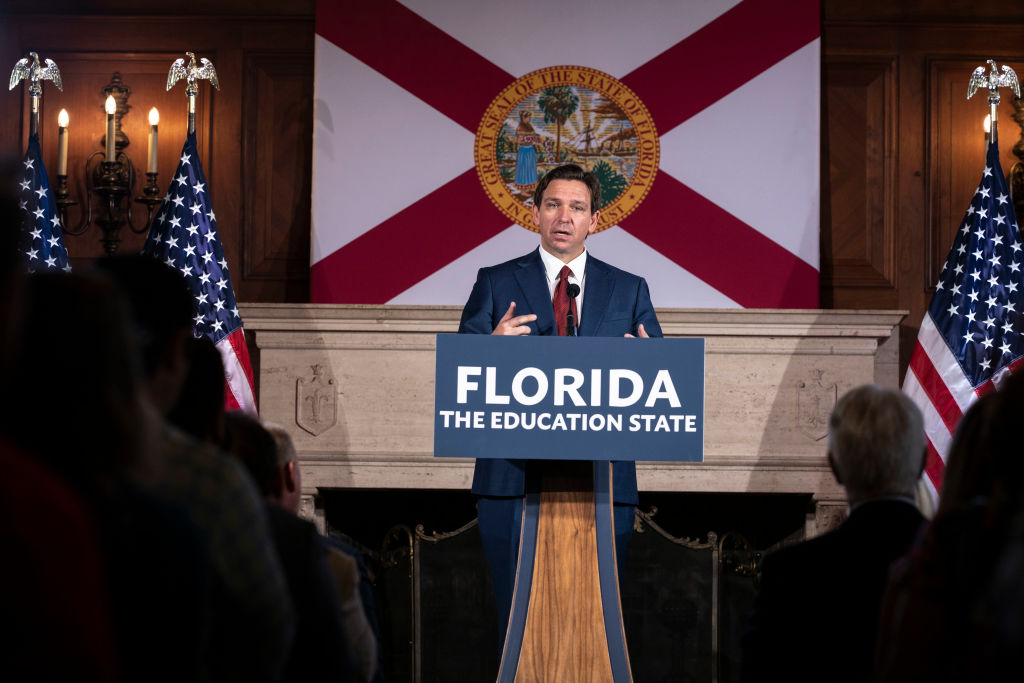
Florida, for example, has developed a teacher certification program for professionals with non-education bachelor’s degrees and an apprenticeship program for those with associate’s degrees. These programs feature high-quality, self-paced curriculum modules for participants. Tennessee offers the Job-Embedded Practitioner Licensure Program, enabling new educators to bypass the traditional credentialing bureaucracy entirely and earn their license while serving as teachers of record. Arizona provides an Alternate Teaching certificate that similarly emphasizes real-world preparation, including a requirement that candidates demonstrate proficiency in both the U.S. Constitution and the Arizona Constitution, ensuring that even non-traditional entrants receive a grounding in civics free from ideological overlay.
Any replacement for the failed ed-school model must form educators capable of passing along the blessings of liberty to future generations. It’s time to recover the true purpose of public education: pursuing truth, cultivating virtue, and forming citizens who are morally capable of sustaining a free republic.
The American Mind presents a range of perspectives. Views are writers’ own and do not necessarily represent those of The Claremont Institute.
The American Mind is a publication of the Claremont Institute, a non-profit 501(c)(3) organization, dedicated to restoring the principles of the American Founding to their rightful, preeminent authority in our national life. Interested in supporting our work? Gifts to the Claremont Institute are tax-deductible.
Suggested reading


Say the word. Scare the establishment.
The Sunshine State’s education reforms are a model for the nation.

A golden age is within our grasp—but we must act now.
Our system of university accreditation empowers unaccountable authority.

The University of Michigan needs real change on DEI.

