

How Straussians interpret the founding.
Harry Jaffa, America 250, and the Creed-Culture Debate
How the founders resolved the theological-political problem.
Editors’ Note
As we continue to celebrate the 250th anniversary of the American Founding, we will keep publishing reflections on the meaning of the Declaration of Independence, some by Claremont scholars and others by learned friends. In this piece, Claremont Institute Senior Fellow Glenn Ellmers brings Harry Jaffa’s scholarship to bear on the ongoing creed-versus-culture debate on the Right. Read all the entries in our “Declaration at 250” series here.
The 250th anniversary of the Declaration of Independence has reignited an old debate on the Right between the immoderate defenders of “creed” and the equally immoderate advocates of “culture.” The either/or nature of this argument was already stale 50 years ago in the lead-up to the Bicentennial, and it hasn’t improved with age.
Harry V. Jaffa, whose students founded the Claremont Institute, was a key figure in the intellectual wrangling over the meaning of America in 1976, and his name is still invoked today—wrongly—as a champion of the extreme “creedalism” position. Though his argument has often been misinterpreted, Jaffa demonstrated that American republicanism requires both creed and culture and showed why both are necessary. What both the creedalists and the culturists miss is that American constitutionalism was a moral and intellectual solution to a set of problems that had been afflicting Western civilization for more than a thousand years.
What Shakespeare Almost Saw
In his monumental work, A New Birth of Freedom, Jaffa turns to Shakespeare to clarify the moral and political problems of medieval Europe that the American Founders were trying to escape. For centuries, two doctrines—the divine right of kings and state-sponsored religion—had dominated European politics. But by the early 17th century, Shakespeare could see the growing tensions undermining the stability of both. Hereditary monarchy had never been able to unite legitimacy (Who is the king’s rightful heir?) with competence (Why shouldn’t the most able claimant to the throne rule?).
At the same time, there was never a satisfactory accommodation between ecclesiastical and political authority. Monarchs claimed to rule by God’s dispensation, yet they chafed at the interference of meddling popes. Citizens were caught between the commands of priest and prince, which did not always coincide. In Henry V, Shakespeare offers an exquisite portrayal of these unresolved conflicts. As Jaffa explains, the play examines both “the disjunction between the fate of the individual and the fate of his [country]” and the misery of perpetual civil war: “The crown is always being contested, and there is no peaceful way of deciding the contest.”
Perceiving, vaguely, that a tremendous change is underway, in Othello and The Merchant of Venice, Shakespeare traces what would become the commercial republic. The old feudal caste system is buckling; the rights of the common man are a dim glow on the horizon. But generations before Locke and Montesquieu, Shakespeare was not quite able to “provide any alternative theory of political obligation,” as Jaffa notes. Only with the American Revolution—when all the necessary ingredients were finally present—did it become possible to discover and implement a practical solution.
America’s Political Tradition
One might argue that the founders should never have fought a war for independence in order to establish a new nation, but instead ought to have remained colonists loyal to the British king. There are some extreme traditionalists who take this position even now. But if we set aside this peculiar minority view, we must answer the question: What form of government should the new nation have adopted once it achieved independence?
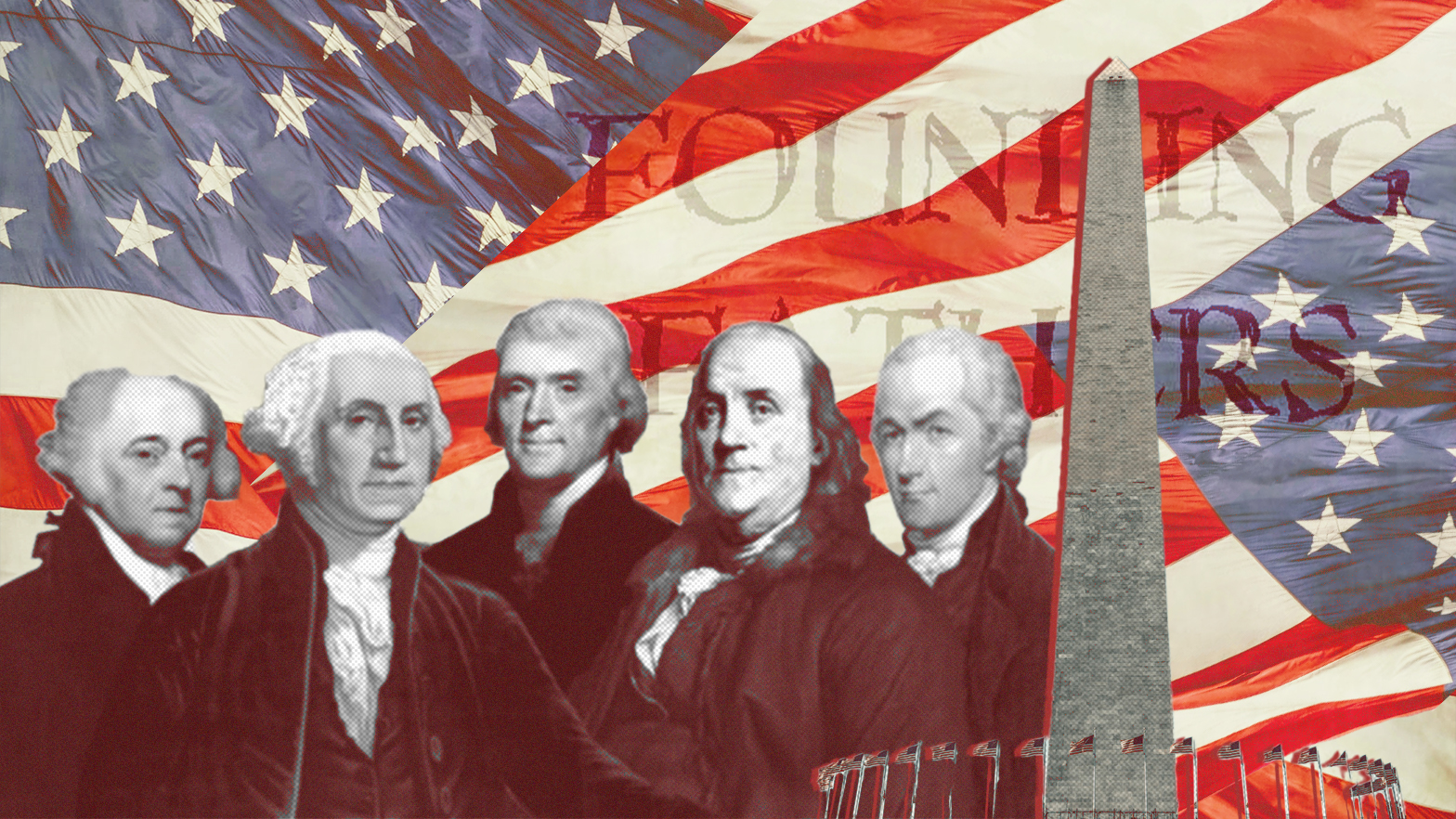
There was little support for replacing one King George with another in the person of General Washington, who didn’t want the job, as he had to remind one of his own renegade colonels in 1782. There was even less enthusiasm for creating a new class of degenerate nobility who enjoyed special privileges based on the happenstance of birth. Virtually all the colonists wanted a free society devoted to the aristocracy of merit. For that to work, however, the government had to be directed principally to protecting the equal natural rights of all the citizens, without hereditary class distinctions, and certainly without a royal ruler claiming to be appointed by God.
As Jaffa explains, the founders had what Shakespeare lacked: a doctrine of social compact, which finally offered an alternative to hereditary monarchy by vesting all legitimate authority in the sovereignty of the people. The natural right of consent, the checks and balances of a written Constitution, and the guarantee of religious liberty made it possible—at long last—to distill popular government from mob rule. Those innovations could work only because the American people possessed the requisite virtues of literacy, industriousness, and law-abidingness, which drew on the liberty-loving tradition they inherited from England. The intellectual and the moral ingredients were inseparable.
Under the circumstances, the framers had no choice but to devise new institutions and practices for a new kind of polity. The Declaration’s creed, therefore, is not an afterthought we can simply set aside; and its critics err in ignoring or diminishing this part of our tradition. The fantasy of an organic American “culture” stripped of universal principles of politics and human nature has no basis in historical fact. What self-respecting patriot would regard baseball and hot dogs as more essential to our national character than freedom of speech and property rights?
Of course, as the founders stated in numerous letters, speeches, and official documents, only a moral and religious people could make the republican experiment work. Self-government requires, first and foremost, that citizens govern themselves as individuals by exercising their own rights responsibly and respecting the rights of others. Moderation with spiritedness, strong families supporting vibrant communities, duty to God and country—these are all essential. But the founders knew, as Federalist 51 observes, “if men were angels, no government would be necessary.”
The advocates of traditional “culture” should know better than anyone that we are all sinners, and even the most virtuous human beings lapse into selfishness, anger, and intemperance. That is why the Declaration proclaims in such stirring terms that no man is by nature the ruler of another: legitimate political authority, in this earthly realm, arises only from consent. The framework ordained in the Constitution and explained in great detail in The Federalist Papers is arguably the best blueprint for a free society ever devised. That America has in many ways abandoned the original intent of the Constitution, as well as the underlying social compact theory of the Declaration of Independence, is no reason to reject principles as such.
Creedal Confusion
Does all this mean that the United States is only a set of ideas? Of course not. None of the founders believed anything so foolish, and neither did Harry Jaffa. (His critics never actually quote anything he wrote when they try to attribute this preposterous view to him.) The “proposition nation” argument is just as erroneous as the extreme culture position.
In fact, the radical creedalists don’t even understand the creed itself. The social compact theory proclaimed in the Declaration of Independence is the strongest argument against open borders and the absurd notion that anyone can become an American at will. The men who signed the Declaration pledged their lives, their fortunes, and their sacred honor to securing the rights of “the good People of these Colonies”—not the rights of human beings everywhere. The Revolution was waged by Americans for Americans. Though the founders hoped their bravery and prudence might be an inspiration to the world, they were clear that other nations and peoples must claim their natural rights for themselves.
Morality—though essential—is not enough, which is why the Declaration proclaims that the people never surrender their natural right to “institute new Government, laying its foundation on such principles and organizing its powers in such form, as to them shall seem most likely to effect their Safety and Happiness.” Harry Jaffa’s genius was to remind us of this great lesson: a virtuous people must have a sound theoretical understanding of human nature, along with a wise form of government.
Creed without culture is idle talk, but culture without creed is a dangerous delusion. Americans of faith should recall that moral freedom cannot exist in a political vacuum, and the need to establish prudent safeguards against tyranny has not abated since man was cast out of the Garden.
The American Mind presents a range of perspectives. Views are writers’ own and do not necessarily represent those of The Claremont Institute.
The American Mind is a publication of the Claremont Institute, a non-profit 501(c)(3) organization, dedicated to restoring the principles of the American Founding to their rightful, preeminent authority in our national life. Interested in supporting our work? Gifts to the Claremont Institute are tax-deductible.
Suggested reading
It makes little sense for the Right to chastise our country’s forebears.
It’s hard to see how Publius and his fellow founders could have done better.
A reply to Matthew Continetti's recent critique.
Rhapsodies in red, white, and blue.
From “created equal” to “born equal.”

