

Part I: Unfettered reason cannot conserve anything.
“Critical Thinking” Is Not Enough
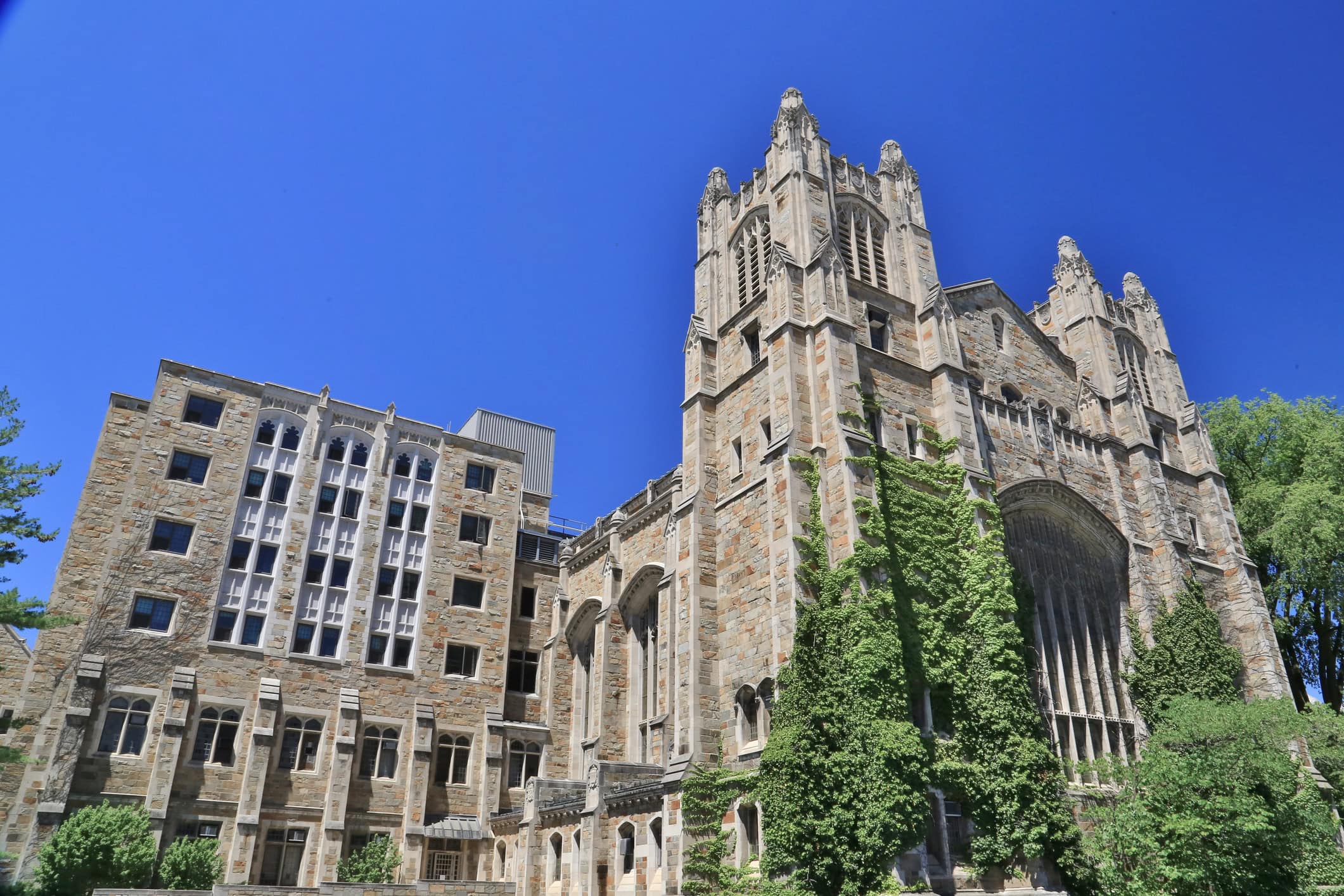
Why higher education must reclaim disciplined inquiry.
Practically every school and university in America claims to teach “critical thinking.” It appears in mission statements, accreditation documents, course catalogs, and commencement addresses with the regularity of a loyalty oath. Ask any dean what distinguishes a college education from a YouTube tutorial, and “critical thinking” will come up within the first sentence. It has become the universal binding agent of higher education’s value proposition—the one phrase that justifies tuition, tenure lines, and the institutional architecture.
This is a problem. Critical thinking, as commonly understood and widely practiced, is not enough to form a young mind. And our failure to say so clearly is costing us something we may not be able to rebuild.
Critical thinking is essentially reactive. It is a filtering mechanism applied to information already in front of you. You encounter a claim in an article, a courtroom brief, a policy memo, or a social media post; and critical thinking helps you decide whether to accept it, reject it, or suspend judgment. It involves evaluating evidence, identifying logical fallacies, recognizing cognitive bias, and testing internal consistency. These are genuine intellectual skills. But they are also insufficient.
Disciplined inquiry and rigorous learning operate along a fundamentally different axis. They are generative rather than reactive.
Disciplined inquiry is how you build knowledge: through sustained engagement with primary sources, methodological self-awareness, iterative refinement of questions, and accountability to evidentiary standards that exist independent of your own preferences. It is not just asking “Is this true?” but “What would I need to know, and how would I need to know it, to arrive at a defensible answer?”
That second question is harder. It is slower. It is less satisfying in the moment. And it is the question that our institutions are increasingly failing to help students ask and answer. Consider what happens when critical thinking operates without disciplined inquiry. The person who “does his own research” on YouTube is exercising a version of critical thinking. He is questioning authority, evaluating competing claims, looking for inconsistencies in official narratives.
What this person lacks, however, is the infrastructure of disciplined inquiry: peer review, falsifiability, methodological rigor, and an awareness of confirmation bias operating not at the level of individual claims, but at the structural level of how questions are framed and evidence is selected.
It follows that critical thinking unmoored from disciplined inquiry does not produce enlightenment. It produces confident ignorance with footnotes. This is not a hypothetical problem. It is the epistemological crisis of our time. A cognitive posture of skepticism toward received authority and insistence on evaluating evidence independently, when it is inevitably transferred from an academic context to the realm of online sleuthing, can equally well lead a person to the peer-reviewed literature or to conspiracy forums. In this way, the educators who profess the strongest aversion to our culture’s flare-up of conspiracism, and who think of themselves as valiantly inoculating their students against the paranoid mindset, often end up unwittingly among its chief enablers.
The speed problem compounds this. Critical thinking is a cognitive posture you can adopt in the moment, scrolling through a news feed or listening to a podcast. Disciplined inquiry is inherently slow. It requires reading widely before forming a view, sitting with ambiguity, and revising positions as evidence accumulates over weeks or months, or even years.
Our institutions—universities, newsrooms, policy shops—have increasingly rewarded the performance of critical thinking while defunding the infrastructure of disciplined inquiry. The seminar has given way to the hot take. The research sabbatical has given way to the content cycle.
I have seen this firsthand. I have spent decades in higher education, watching the institutional scaffolding of disciplined inquiry weaken in real time. Peer review processes have become more perfunctory. Mentorship in research methodology has been squeezed by teaching loads and administrative demands. Tenure review, which at its best functions as a quality-control mechanism for sustained scholarly inquiry, has in some quarters become a bureaucratic exercise disconnected from its original intellectual purpose. Meanwhile, every strategic plan and every accreditation self-study continues to invoke “critical thinking” as though the phrase alone were a curriculum.
There is also a structural distinction that gets lost in the rhetoric. Critical thinking is typically framed as an individual competency, something a student possesses or develops, like a muscle. Disciplined inquiry is a practice embedded in communities and institutions. It depends on norms, peer accountability, editorial standards, and shared evidentiary commitments that no individual can sustain alone.
This is the difference between a smart person with good instincts and a research culture that catches errors its members cannot see in their own work. When we tell students we are teaching them critical thinking, we are promising them a personal skill. When we practice disciplined inquiry, we are maintaining an institutional culture. The skill is portable. The culture is fragile.
The emergence of generative artificial intelligence has made this distinction urgent. AI can simulate critical thinking with remarkable fluency. It can evaluate claims, identify logical inconsistencies, summarize competing arguments, and flag potential biases in a text. What it cannot do is perform disciplined inquiry. It cannot sit with a primary source for three hours and notice what is absent. It cannot design a methodology calibrated to a specific evidentiary gap. It cannot experience the productive discomfort of having its foundational assumptions challenged by a peer reviewer who has spent a career in the same field. If the only thing distinguishing a university education from a conversation with ChatGPT is critical thinking, the university will ultimately fail to justify its own existence. The distinguishing value is disciplined inquiry. It is the one capacity that cannot be automated, simulated, or scaled.
Universities that define their value proposition around critical thinking alone are ceding their most distinctive ground. They are competing on terrain where they no longer hold the advantage. A well-prompted AI, a well-curated podcast, or a well-edited YouTube channel can now deliver a reasonable facsimile of the product. Academics should instead be advocating and exemplifying the harder, slower, less marketable work of training students in the methods, norms, and institutional practices of disciplined inquiry.
That means not just teaching students to question claims, but teaching them how knowledge is built, tested, challenged, and revised within communities of practice that hold themselves accountable to standards they did not invent and cannot unilaterally change.
As the nation approaches its 250th anniversary, this is worth remembering: the founders did not merely envision a citizenry capable of skepticism. Skepticism was cheap in 1776; the taverns were full of it. What the founders envisioned was an informed citizenry, capable of the sustained, disciplined engagement with evidence and argument that self-governance requires. Critical thinking was the starting point. Disciplined inquiry was the destination.
We have dug our heels into the starting point long enough. It is time to head for the destination before we forget the difference entirely.
The American Mind presents a range of perspectives. Views are writers’ own and do not necessarily represent those of The Claremont Institute.
The American Mind is a publication of the Claremont Institute, a non-profit 501(c)(3) organization, dedicated to restoring the principles of the American Founding to their rightful, preeminent authority in our national life. Interested in supporting our work? Gifts to the Claremont Institute are tax-deductible.
Suggested reading


The battle over slavery intensifies as we approach America’s 250th birthday.

A response to recent misrepresentations of our work.
The prospective student college tour as propaganda platform.

The radicals are reaping what they’ve sown.
The Biden administration seeks to impose a radical ideology on campuses.

