

No future awaits those who rage against family, work, and community.
Can the Smithsonian Be Saved?
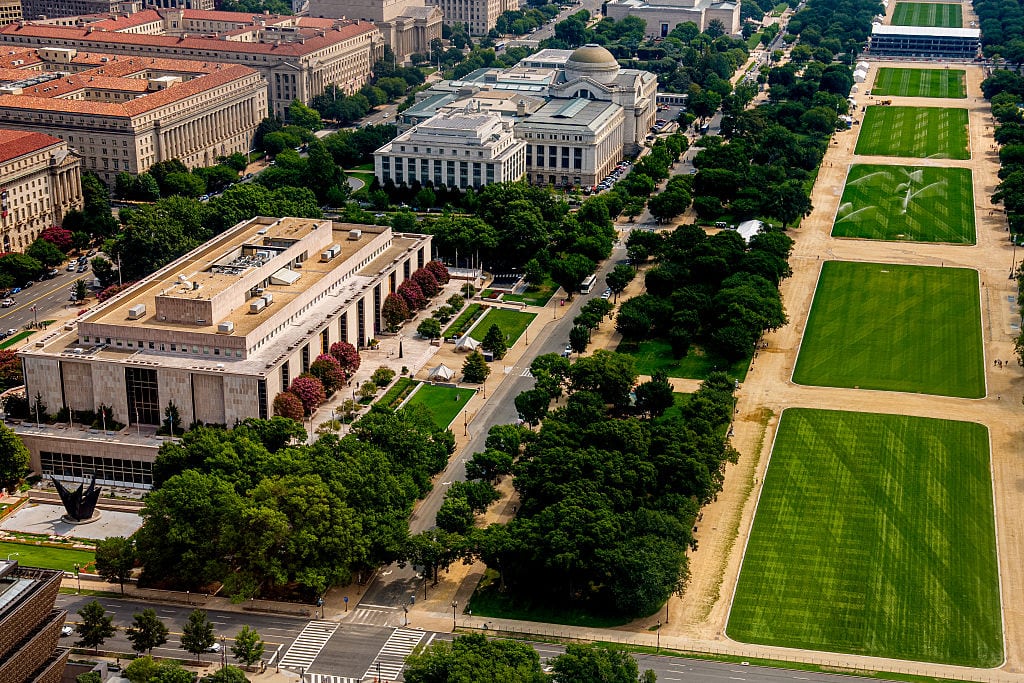
Ideological leftism has corrupted the institution.
Lonnie G. Bunch III, who became Secretary of the Smithsonian Institution in June 2019, will retire at the end of this year. One month before being sworn in, he told a New York Times interviewer his desire to help the Smithsonian “transform America.” Despite his avuncular, friendly, and personal style that fooled some, Bunch has governed as a hard-core partisan of the progressive Left. During his tenure, he has advanced a strong progressive ideological agenda.
The Smithsonian Magazine reported on “Bunch’s insistence that the Smithsonian support the New York Times 1619 Project,” which sought to “reframe the country’s history, understanding 1619 (the beginning of slavery in America, rather than 1776) as our true founding.” The 1619 Project asserted many falsehoods, yet Bunch “took pains to ensure the Smithsonian’s name would be publicly associated with it.” He expressed his desire for “the Smithsonian to legitimize important issues, whether it’s 1619 or climate change. Everybody…saw that the Smithsonian had its fingerprints on [the 1619 Project]. And that to me was a great victory.”
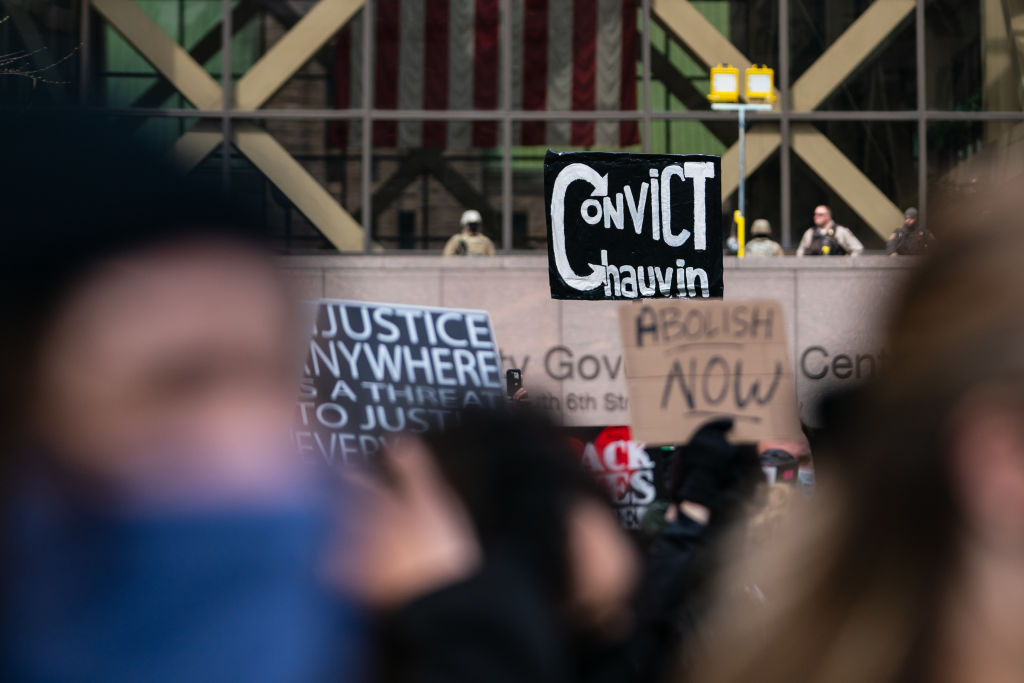
In June 2020 during the George Floyd riots, Secretary Bunch told the Atlantic, “I’ve always shown that protest is the highest form of patriotism.” Regarding the riots, he noted, “It is really about systemic racism throughout, not just the police department but many parts of the American system.” Bunch even tried to justify the rampant law-breaking that was a hallmark of the Floyd protests across the nation: “Well, that kind of protest is really one of the few ways the voiceless feel they have power. And while I am opposed to violent protests personally, I understand that frustration sometimes pushes you over the edge.” Apparently for Bunch, $2 billion in damages, thousands of small businesses ransacked, countless livelihoods destroyed, and the deaths of two dozen Americans are simply collateral damage to the “clarion call for change.”
Bunch’s left-progressive agenda was implemented at the Smithsonian’s National Museum of American History (NMAH) under the direction of one of his chief lieutenants, Anthea Hartig, formerly president of the Organization of American Historians.
Like Bunch, Hartig stated that she saw history as a “prime tool of social justice connecting…research and scholarship to activism and advocacy.” She declared that museum professionals would have “to figure out” how “we’re going to problematize” the 250th anniversary of the signing of the Declaration of Independence.
Upon becoming director of the NMAH, Hartig instituted a plan that directed staff, “whatever the topic,” to address seven “core issues of our time”: race/identity, gender/sexuality, climate change, immigration/migrations, economic inequality, technological change, and nationalism/globalism. These areas are taught from a left-progressive viewpoint. For example, race/identity emphasizes the horrors of “whiteness”; gender/sexuality highlights transgenderism; and immigration/migration advocates for illegal aliens.
In 2019, under Hartig’s leadership, NMAH staff co-authored a document of more than 200 pages, “Museums as a site for Social Action Toolkit.” Its explicit goal was to “truly transform the museum space” that “privileges dominant Western ideals of race, class, and gender.” The toolkit informs American History Museum staff that these “Western ideals” are
linked with white supremacy, hetero-patriarchy, abuse of labor, colonization, imperialist theft of art and artifacts, destruction or absencing of alternative ways of interpreting or representing art and artifacts, structural racism and other oppressions.
Indeed, the toolkit tells readers that character traits such as objectivity, individualism, a sense of urgency, and worship of the written word are indicative of “whiteness” and “white supremacy culture.”
The NMAH has worked with illegal alien activists and advocated for their unconditional amnesty and citizenship. A page on the museum’s website (since deleted) compared the illegal aliens’ demand for citizenship to the emancipation struggle of the anti-slavery movement and the civil rights movement’s efforts to end segregation. Museum staff have even traveled to Mexico City and conducted sympathetic interviews with deported illegal aliens, presenting them in a heroic light and promoting their demands for American citizenship. Staff from the Smithsonian Latino Museum Studies Program went to North Carolina to conduct favorable interviews with pro-illegal alien activists who had helped defeat a pro-enforcement sheriff in a local election.
On July 4, 2026, the White House Domestic Policy Council issued a scathing report denouncing NMAH’s leadership for instituting an “ideological capture” of the museum’s mission. Instead of “straightforward historical education and scholarship,” the museum has moved “towards an extreme political activism that seeks to transform our country.” After the report was released, two House committees held hearings highlighting the Smithsonian’s political activism and ideological partisanship under Bunch and Hartig’s leadership.
A Battle of Regimes
Readers of The American Mind will instantly recognize what is at stake in the controversy over the Smithsonian. As Angelo Codevilla famously put it, we are in a “cold civil war.” We are in a conflict over ideological hegemony: Whose principles and ideas will prevail in American society? The Smithsonian is but one front in an all-encompassing philosophical-cultural struggle. Throughout history, leading political philosophers of all persuasions—from Aristotle to Gramsci to Italian elitism theorists Gaetano Mosca and Vilfredo Pareto to American conservative thinkers Harry Jaffa and Willmoore Kendall—have recognized that every regime has a core set of prevailing principles, ideas, values, and orthodoxies that ultimately determine the way of life of a people.
Bunch, Hartig, and their allies clearly repudiate American history, culture, principles, and people. They claim to want America to “live up to its ideals,” but their tendentious overview of our country’s past and contempt for how the American people have lived suggests otherwise. A history of America centered on “structural racism and other oppressions,” “hetero-patriarchy,” “colonization,” and “imperialist theft,” as Hartig recommends, is a conceptual framework that repudiates and delegitimizes the American way of life. She has remarked that “loving America is difficult” and that under her leadership, the National Museum of American History would move away from an “Anglo-centric” focus on the American Founding.
Instead of “living up to our ideals,” the Bunch-Hartig agenda—and woke progressivism in general—substitutes a radically different set of values. Equality rightly understood, citizenship, individual rights, and national patriotism are replaced by racial, ethnic, and gender-based group preferences and consciousness. By valorizing some racial and gender groups as the “oppressed” and denigrating others as the “oppressors,” they pit Americans against Americans and place the progressive trinity of race, ethnicity, and gender above the rights of individuals and the nation itself.
With Bunch’s impending retirement, a new secretary will be chosen. The secretary is nominated by the Smithsonian’s Board of Regents and approved by Congress in a joint resolution signed by the president. The 17-member board includes two ex officio members: the chief justice of the Supreme Court and the vice president. It also includes nine citizen regents and six members of Congress (three appointed by the House speaker and three appointed by the Senate president pro tempore), who are currently split evenly by party.
Several citizen regent seats are vacant, and it is unclear when they will be filled, as new appointments require approval by Congress and the president. The Smithsonian officially lists five citizen regents who are either registered Democrats or Democratic funders. The Trump Administration could block poor choices for secretary and new board members. In the past, the board has chosen an acting secretary to serve before a permanent secretary is approved.
Who should replace Bunch? Ideally, the secretary should be someone very knowledgeable in American history and culture, devoted to transmitting the American way of life to future generations, and ready to fight for this vision. He should be media savvy, be familiar with the ways of Washington politics and Congress, and have sufficient managerial and bureaucratic skills. A number of people possessing some of the qualities listed above include, in no particular order: Steven Hayward, Bradley Watson, Bill McClay, Mark Bauerlein, Stanley Kurtz, Allen Guelzo, Matthew Spalding, Peter Wood, and my former Hudson Institute colleague Jeff Anderson, who has become an expert on the Smithsonian. There are certainly others whom I have not mentioned who would be a good choice.
Given the post-midterm political climate and the situation on the Smithsonian’s Board of Regents, choosing a new secretary looks like it will be trench warfare. In his 2019 book, A Fool’s Errand, Lonnie Bunch wrote that “there continues to be a battle for the soul of America.” He is right about that.
The American Mind presents a range of perspectives. Views are writers’ own and do not necessarily represent those of The Claremont Institute.
The American Mind is a publication of the Claremont Institute, a non-profit 501(c)(3) organization, dedicated to restoring the principles of the American Founding to their rightful, preeminent authority in our national life. Interested in supporting our work? Gifts to the Claremont Institute are tax-deductible.
Suggested reading

Say the word. Scare the establishment.
The Sunshine State’s education reforms are a model for the nation.

A golden age is within our grasp—but we must act now.
America must be refounded—again and again.
An appeal in the George Floyd case could spark a new round in the national conversation on race.

