

Woke identity politics is liberalism’s successor ideology—from the New York Times on down.
America’s Winning Playbook Against China
The answer is limited government, not command and control.
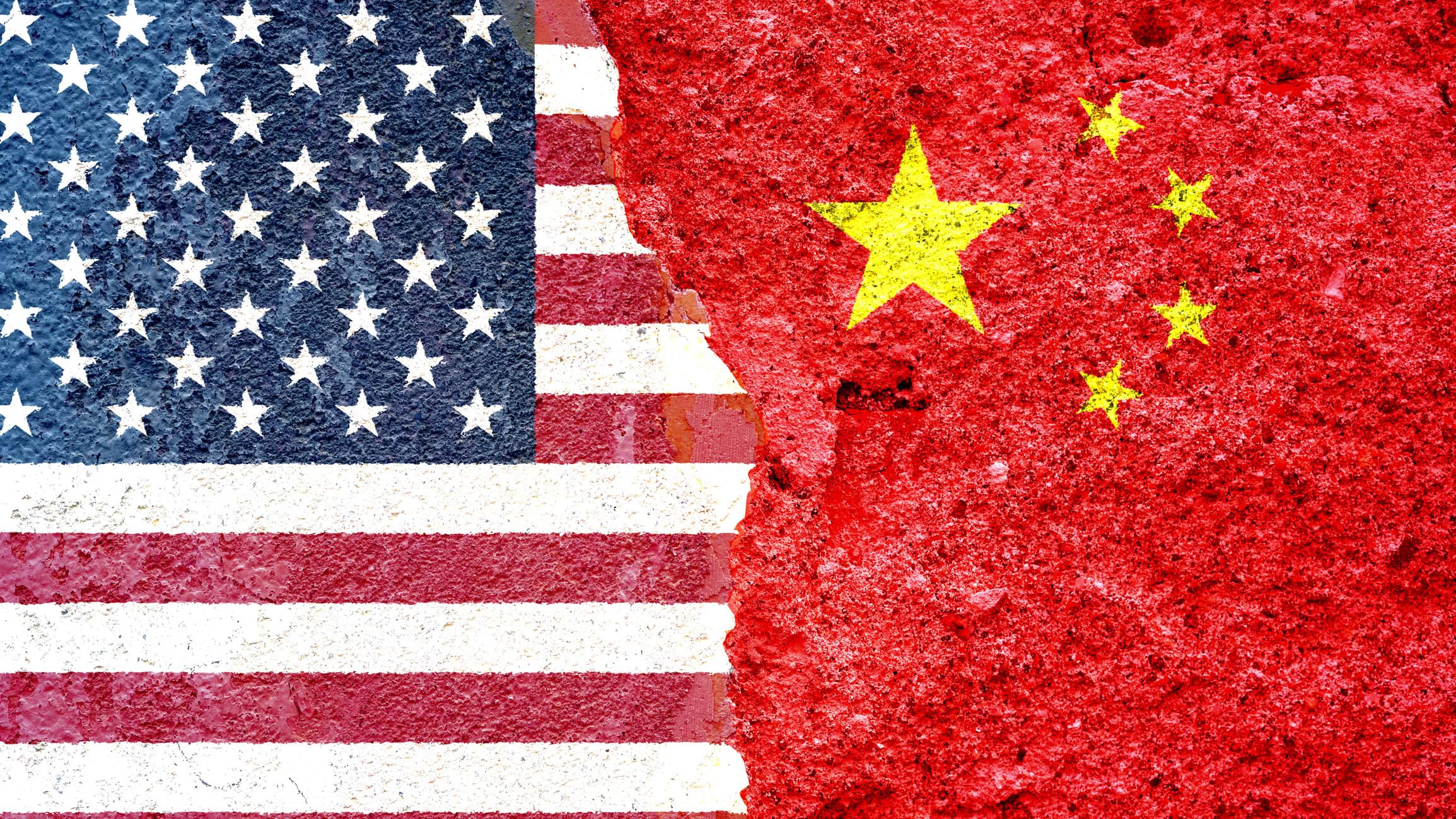
On foreign policy, Washington agrees on almost nothing. How much or whether to arm Ukraine, how hard to push Israel, what to do about Iran—these questions split both parties. But one issue cuts across the partisan divide with something close to consensus: China is the greatest strategic challenge of our era, and America must prevail.
That consensus is both practical and ideological. Unlike when our competition with the Soviet Union during the Cold War was mostly measured in missiles, ships, semiconductors, and satellites, our competition today with China is mostly measured in economic growth, minerals, manufacturing, and supply chain security. In both cases, the ultimate competition is between a nation built on freedom and limited government and one built on command and control.
The parallel runs deeper than most people appreciate. When America competed against the Soviet Union, we did not try to out-Soviet the Soviets. We did not build a command economy to match theirs. We built a freer one, trusted it to outperform, and won. The technologies that defined American victory—GPS, the microchip, the internet—were byproducts of a freedom-driven competition that unleashed American ingenuity at a scale no command economy could match.
And yet the temptation to abandon this system is growing stronger.
As a Communist country, China does not play by free-market rules. It subsidizes relentlessly, dumps strategically, and builds dependency globally. In response, Washington is reaching for tools that would have been unthinkable in an earlier era of conservative governance—direct government subsidies, price floors, and even federal equity stakes in private companies. The impulse is understandable because the stakes are so high for the future of economic growth and supply chain security. But before cheering an anything-goes industrial policy, it is worth asking what has worked before. Because America already has a robust, limited government policy playbook that leans libertarian and away from government strong-arming.
The model is simple: government funds the pre-commercial frontier where private capital will not go, entrepreneurs scale the breakthrough once viability is demonstrated, markets determine the winners, and—when the industry can stand on its own two feet—government steps back. This is not industrial policy in the European or Chinese sense, which picks winners, sustains losers, and builds permanent bureaucratic constituencies around protected industries. It is something distinctly American: strategic intervention followed by competitive freedom.
History shows how effective this approach can be.
Building American Strength
The internet began as ARPANET, a Defense Advanced Research Projects Agency experiment launched in 1969 to link four computer nodes at research universities. The original purpose was to create a distributed network that could survive a nuclear strike. But the vision was broader. For two decades, DARPA and the National Science Foundation funded the network’s expansion, trained a generation of computer scientists, and built the basic architecture of what would become the most transformative communications technology in human history.
It’s hard to imagine a private company that would have funded this without the magic of future hindsight. The payoff horizon was too uncertain, too distant, and too diffuse for any single firm to capture the return. The federal investment was patient and risky in a way that markets cannot be.
Then, in 1991, the government lifted restrictions on commercial use of the network and stepped back. What followed is one of the great stories of American entrepreneurship: an ecosystem that began with dial-up has, within a generation, entered the age of AI. The return on that government investment—economic and strategic—is incalculable.
The shale revolution followed the same arc. The Department of Energy invested $92 million beginning in the 1970s to develop the enabling technologies for shale gas extraction—massive hydraulic fracturing, microseismic imaging, and directional drilling. The expert consensus at the time was that shale gas was not commercially viable. The private sector largely agreed. But the DOE funded the frontier anyway, launching the Eastern Gas Shales Project in 1976 and working through the following decades with national laboratories, university researchers, and small private operators.
George Mitchell, the Texas oilman who would ultimately crack the Barnett Shale and prove the doubters wrong, relied on DOE mapping techniques and Gas Research Institute data throughout the 1980s and 1990s. Dan Steward, Mitchell’s own geologist, put it plainly: “They did a hell of a lot of work, and I can’t give them enough credit for that. DOE started it, and other people took the ball and ran with it.” After the private sector took charge, America became the world’s largest oil and gas producer.
Semiconductors are the same story—and one that is still being written.
America invented the transistor at Bell Labs in 1947 and the integrated circuit in the late 1950s. Then, in subsequent decades, it offshored the manufacturing until nearly 90% of the world’s leading-edge chip production was concentrated in Taiwan.
Although Taiwan has long been a strong, strategic ally of the United States, such a high concentration of critical capabilities in one place that China claims as its own is not the definition of supply-chain resilience. The strategic vulnerability this created became undeniable when COVID-era supply-chain disruptions froze automotive production and exposed how dependent the American economy had become on a single country for its most critical technology.
The CHIPS and Science Act invested $52.7 billion to rebuild domestic capacity. The result so far has been positive. Private sector commitments linked to CHIPS incentives have exceeded $920 billion across 160 projects in 30 states. Annualized semiconductor manufacturing investment surged from under $7 billion per year before 2020 to roughly $90 billion by 2024. TSMC’s Arizona fab is already producing advanced chips ahead of schedule.
The critical question—whether Washington will have the discipline to step back once domestic industry can genuinely compete—remains open. The answer will determine whether CHIPS becomes a model or a missed opportunity.
Because America has missed opportunities before.
Taking the Wrong Path
Corn ethanol is what happens when government funds the frontier, achieves its objective, and then refuses to leave. Beginning in the 1970s, federal subsidies for ethanol were defensible—a nascent industry needed support to prove viability and reduce oil dependency. It was a worthwhile mission, and not every early-stage government investment should be expected to transform the global market.
Nonetheless, instead of stepping back as the industry matured, Washington layered on a federal mandate called the Renewable Fuel Standard. Taxpayers have spent $45 billion in tax credits alone since 1980, on top of mandates, tariff protections, and more. The result is a mature industry locked in distorted agricultural and food markets that has lost its innovation edge because of guaranteed subsidies.
Instead of bridging the gap between a promising technology and a self-sustaining market, the government has created an entrenched interest that can’t be touched without committing political suicide. That is what permanent industrial policy looks like—not industrial strength, but industrial dependency dressed in the language of national security.
Washington should keep that image in mind as it deploys an industrial playbook against China today—because the temptation to make every bridge permanent will be strong.
The American Way
We can already see this in critical minerals. China has undercut global markets through decades of state-subsidized overcapacity, leaving American and allied producers unable to compete on price. It controls the refining of 19 of 20 strategic minerals the global economy depends on, and has already demonstrated willingness to weaponize that position—banning exports of gallium and germanium to the United States in December 2024, then restoring access as a trade bargaining chip.
Washington made its bet that somewhat limited government action can level the playing field against such predatory practices. The $7.5 billion provided by the One Big Beautiful Bill to support domestic mining and processing, the Forum on Resource Geostrategic Engagement’s coordinated friendshoring across 54 allied nations, and the Department of Energy’s $1 billion critical minerals initiative funding pilot projects, partnerships, and new rare-earth facilities reflects this logic. While this bet seems to be paying off for now, Washington should reject the temptation for further intervention by making price floors and equity stakes permanent.
We must remember that the ultimate goal is a competitive American minerals industry, not a government-dependent one.
Thankfully, the U.S. government is starting to make the right moves on solar. The subsidies that originally helped the industry get off the ground were poorly structured—rewarding developers for how much they spent rather than how efficiently they produced, accelerating dependence on Chinese supply chains. The Trump Administration rightly allowed these subsidies to expire on July 4 while tightening limits on Chinese components. Policy now targets distortion instead of creating it, giving more room for market efficiency to drive superior results.
The government should also resist the temptation to get involved in other nascent industries. American artificial intelligence, for example, is making incredible strides and attracting private capital faster, and at a much larger scale, than Washington could ever direct. The biggest risk is not that government fails to assist the technology, but that our leaders stifle it by banning data center construction or choking the industry with regulations.
When the market has already arrived, the government’s job is to clear the road, not build it.
The American way that built the internet and powered the shale revolution, and is now rebuilding the semiconductor, critical-minerals, and solar industries is more effective and dynamic than command-and-control economies. It requires the discipline to engage before viability is proven and the equal discipline to step back when viability is achieved.
The American industrial playbook works. The only question now is whether Washington will continue to use it.
The American Mind presents a range of perspectives. Views are writers’ own and do not necessarily represent those of The Claremont Institute.
The American Mind is a publication of the Claremont Institute, a non-profit 501(c)(3) organization, dedicated to restoring the principles of the American Founding to their rightful, preeminent authority in our national life. Interested in supporting our work? Gifts to the Claremont Institute are tax-deductible.
Suggested reading


Pope Francis’s dalliance with a tyrannical ideology needs to be confronted.

Its influence extends far beyond Cuba.
Taiwan, Xi Jinping, and America’s year of danger

Trauma dumping on the for you page sucks young girls into a pit of self-loathing.

A strategy to beat China in the tech race.

