

A new doll raises some fundamental questions about the value of human life.
A Symphony for America’s 250th
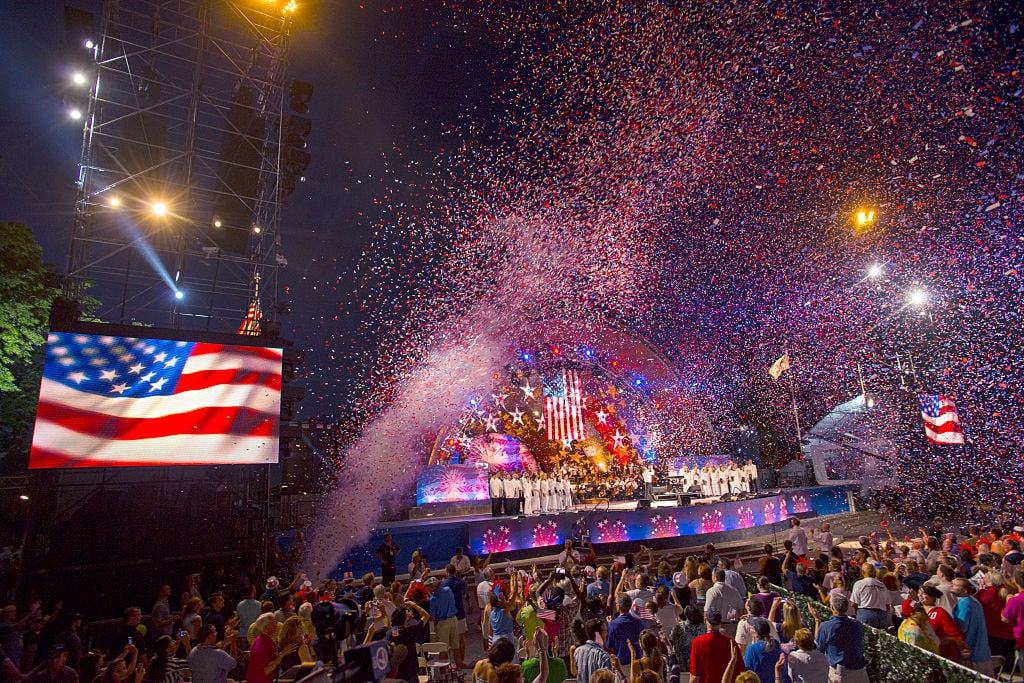
Tapping into our country’s rich musical tradition.
Few ideas are more daunting to an artist than opening up their creative process on the merciless sewer that is social media. Yet this is precisely what my dear friend Josh Steinman suggested when I shared my plan to write a symphony for America’s 250th birthday on a hot SoCal day in December 2024. “You should post live-to-tape updates with all of the mistakes, insecurities, decisions, and improvisation,” he proposed.
Thus began a process that no longer involved cloistered introspection. In the digital age, millions of creators vie for attention with stunts, AI slop, and general vapidity—yet almost none have capitalized on audiences’ desire for authenticity. What better way to be authentic than an egoless public struggle against oneself in the construction of a large-scale symphonic work!
In that initial pursuit of authenticity, the conduit for inspiration revealed itself in the form of a fundamental question: “What is America?” It is from meditating on that question that the American essence gathers through the rightly crafted language of music.
Music is a language. It is the most poetic language because it is the most abstract language, as words never seem to elucidate its emotional or spiritual power. There are, however, clear stylistic markers or syntactic structures that may evoke truths of specific peoples. America is no exception.
The American musical idiom, rooted in its rich, indigenous folk traditions, was masterfully integrated into classical music by composers such as Dvořák, Copland, and Gershwin, then further enriched by John Williams’s cinematic scores. These artists collectively forged a distinctive American symphonic vocabulary. This idiom conjures up a range of American experiences: the bustle of Manhattan in Rhapsody in Blue, the barn dances in Copland’s Rodeo, or the electricity of a Hollywood blockbuster in the opening bars of Williams’s score for Star Wars. Nobody in the world confuses this music with that of Europe’s because it is so stylistically recognizable. My symphony seeks to extend this vibrant tradition not by replicating the past, but by augmenting it for our present moment.
Unlike other contemporary approaches that eschew tradition, my work embraces the structural rigor of the symphonic form—exemplified by a first movement crafted in strict sonata form—while weaving a sonic tapestry that is unmistakably of our time. This balance ensures that the symphony is neither a nostalgic echo nor a rejection of heritage, but a bold synthesis that captures the essence of America as it exists today. That creative process began not with a chronicle of historical events, but by engaging in philosophical inquiry about the meaning of America. This serves as the wellspring for the symphony’s melodies, themes, and sonic moods, which emerge organically through a deep engagement with this question.
Since work began, the public updates have garnered nearly four million views on X. A crowdfunding campaign to record the piece with a 75-piece orchestra has raised $25,000 (the minimum total needed is $75,000). None of the fears I expressed to Josh Steinman have manifested, as the response has been almost exclusively positive. Everyone is welcome to follow the progress on X.com/StephenLimbaugh.
The high arts set the table for the projective disclosure of the possibilities of the American people. These are not ends that can be reached with UFC fights, race cars, AI nonsense, or any contemporary iteration of “bread and circuses.” A symphony forces collective reflection on our identity, our past, and our path forward. It is a fitting tribute to America’s 250th anniversary—a testament to the enduring power of the symphonic form to inspire greatness and cultivate virtue.
I will continue to work diligently to completion and, with the help of readers like you, will be able to raise the remaining recording funds so the work may be enjoyed by audiences 50 years from now, when we celebrate the 300th anniversary of the founding.
The American Mind presents a range of perspectives. Views are writers’ own and do not necessarily represent those of The Claremont Institute.
The American Mind is a publication of the Claremont Institute, a non-profit 501(c)(3) organization, dedicated to restoring the principles of the American Founding to their rightful, preeminent authority in our national life. Interested in supporting our work? Gifts to the Claremont Institute are tax-deductible.
Suggested reading


How “Mark Twain” got his start.
Elect those with merit and civic virtue.

Rage meets self-pity as the permanently offended root out false thought.

The Beach Boys’ Smile is an American masterpiece.

It’s not a list of benefits to acquire but a duty to be honored.

