

Some words of advice for Jim Banks's new anti-woke caucus.
Restoring Affordability from the Bottom Up
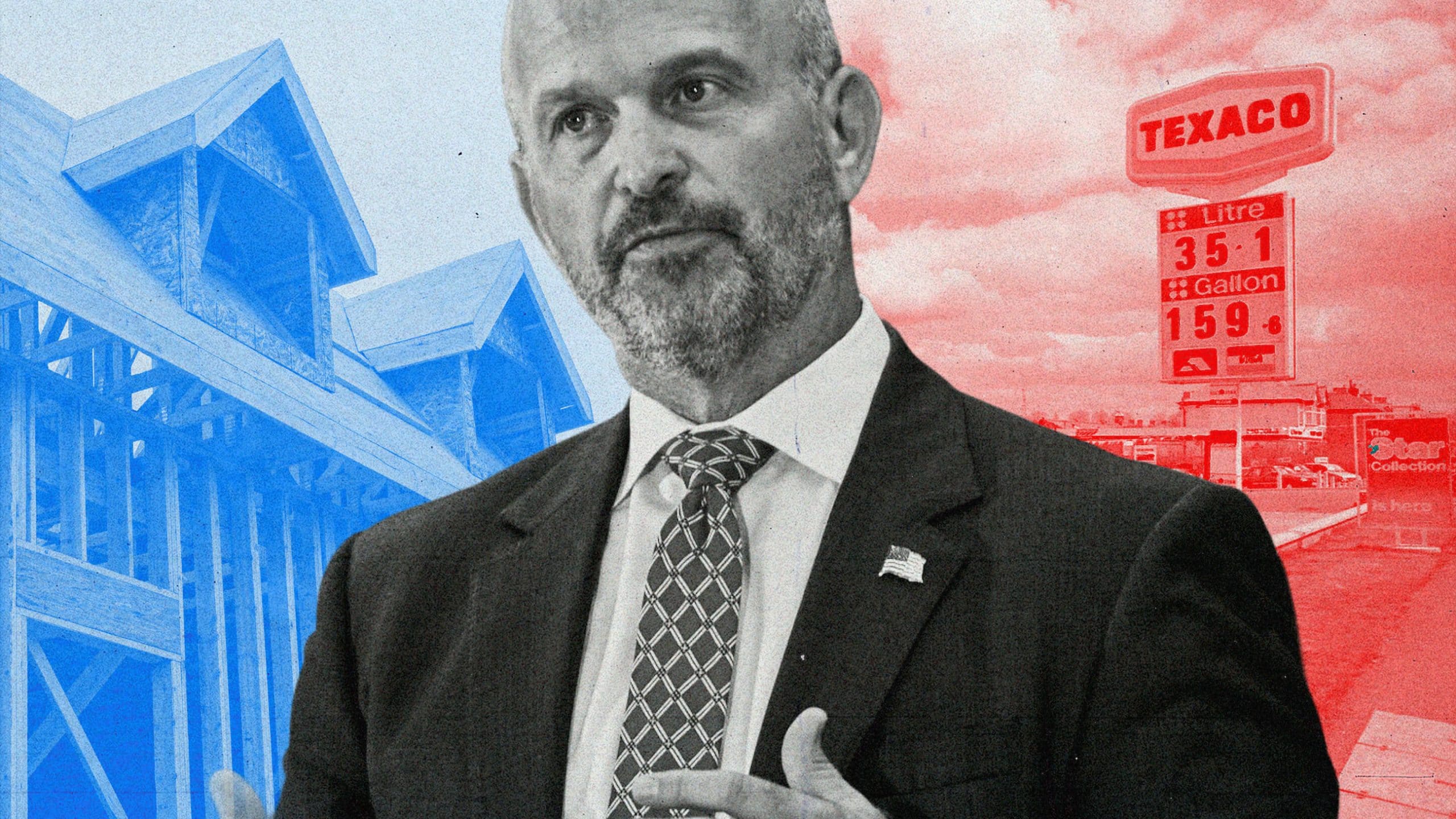
Republicans should focus on building a more local, more cooperative, and more human economy.
As the Trump Administration and congressional Republicans work to lower Americans’ cost of living this year, they should be guided by a simple principle: all affordability is local.
Democrats and too many establishment Republicans still think they create jobs, economic growth, and opportunity. Whenever high prices pinch consumers, lawmakers huddle up with K Street lobbyists to see what Big Business, Big Tech, and Big Banks want…and give it to them. Yet they scratch their heads as corporate profits surge while working families’ monthly bills only climb higher.
We’ve seen this pattern again and again. Obamacare. Federal student loans. Subsidized mortgages. The Build Back Better inflation bomb. These policies doled out billions to insiders and middlemen but left everyday Americans holding the bag.
Instead of writing more checks this time, congressional Republicans should focus on rewriting the rules that are contributing to our affordability crisis. Federal regulations—mostly imposed by Deep State bureaucrats, not elected legislators—cost the U.S. economy more than $2 trillion per year. That’s five times the size of last year’s Working Families Tax Cuts legislation. Reforming these regulations would lower prices, spur job-creating investment, and produce the broadly shared prosperity Republicans promised on the campaign trail.
Their first priority should be to reform the federal permitting process, an issue the White House and Congress have been working on together. However, despite real progress to improve efficiency and remove unnecessary red tape, the response has yet to match the urgency of the moment.
The permitting process has become a punchline—it’s wasteful, corrupt, and self-defeating. Federal agencies are blocking massive, urgent infrastructure investments in energy, mining, defense, transportation, AI computing, and manufacturing. Sometimes it seems like the U.S. economy’s greatest rival is not China, but our own government.
Our energy needs alone warrant wholesale regulatory reform. The United States today has neither the energy production nor transmission capacity we need to keep up with AI-driven electricity demand. New rules should be streamlined, transparent, and, most of all, fair. Our economic competitiveness and national security depend on these investments. A more prosperous, more secure future is not going to build itself.
The second priority, related to the first, is housing. President Trump has already signed executive orders to reform regulations that are holding back new home construction. Congress needs to follow his lead. The inability of working families to afford homes today has metastasized into more than an economic drag—it’s becoming a social crisis.
Current housing regulations seem intentionally designed to drive up home prices. This is great for well-off Boomers who see their homes primarily as 401(k)s with finished basements. But it’s catastrophic for young couples hoping to get married and start families.
By some estimates, the U.S. housing shortage is already more than four million units. Federal regulations should not stand in the way of new home building—nor should Washington subsidize state and local governments’ regulatory obstruction.
Federal rules drive up costs in every sector of our economy. Health care, education, business, and occupational licensure all present golden opportunities to reform-minded policy entrepreneurs in the House and Senate.
And while they’re fixing regulations in those industries, Congress should also key in on the industry that ties them all together: banking. Right now, federal banking regulations are tilted in favor of the Big Banks, unfairly hamstringing some community banks and forcing many others to merge or close. Industries dominated by huge corporations always seem robust. But as we saw during the financial crisis—and as we see every time an artificial bubble bursts—healthy, consumer-friendly markets are diverse and decentralized.
While outright bank failures have remained relatively limited in recent years, community banks are steadily disappearing through mergers, consolidations, and voluntary closures. In 1990, there were around 12,000 community banks scattered across the U.S. Today, only around 4,000 remain.
According to the FDIC, the number of community banks continues to decline each quarter, with 44 of them either closing or being absorbed by larger institutions in the fourth quarter of 2025 alone. That trend matters because community banks are not interchangeable with Wall Street giants.
Corporate consolidation makes life easier for lawyers, lobbyists, bureaucrats, and politicians. But it makes life much more expensive for everyone else.
Too many federal regulations treat all banks the same, putting compliance burdens on small lenders that only Megabanks can afford. That squeezes resources out of the local financial institutions that growing communities rely on. Especially in the AI era, the real-world human economy will depend more than ever on personal relationships, community solidarity, and interpersonal trust. Right now, Washington disadvantages those things and the community banks defined by them.
The American people are ready to make our economy affordable again—as soon as Washington lets them. Streamlining federal rules will allow Americans to build, drill, mine, invest and lend, and compute and compete as never before.
Lawmakers must remember that a more affordable economy is a more local, more cooperative, and more human economy. Regulatory reform—from national infrastructure to community banking—is an investment in America’s most powerful and undervalued resource: our people.
The American Mind presents a range of perspectives. Views are writers’ own and do not necessarily represent those of The Claremont Institute.
The American Mind is a publication of the Claremont Institute, a non-profit 501(c)(3) organization, dedicated to restoring the principles of the American Founding to their rightful, preeminent authority in our national life. Interested in supporting our work? Gifts to the Claremont Institute are tax-deductible.
Suggested reading


We can’t afford to overlook its potential to both educate and indoctrinate.
The House Anti-Woke Caucus is rooting out wokeness in the federal government.
Tech for the American people.
The Fairness in Higher Education Accreditation Act attacks wokeness at its core.
A “dynamic dozen” could both advance our industry and preserve our form of government.

