

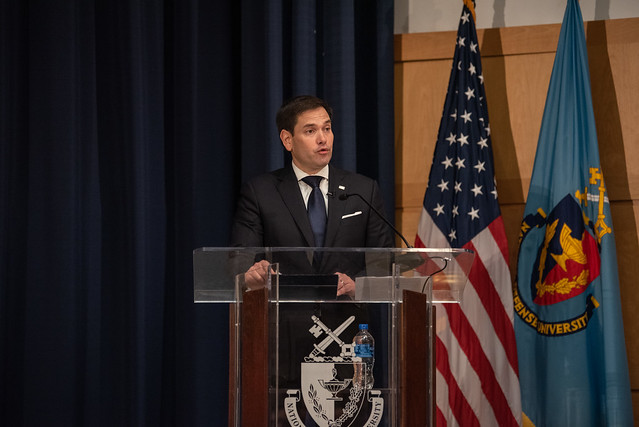
Senator Marco Rubio speaks at National Defense University on the need for a ‘pro-American industrial policy’ to counter China.
From Alaska to Antarctica: The Next Great American Expansion
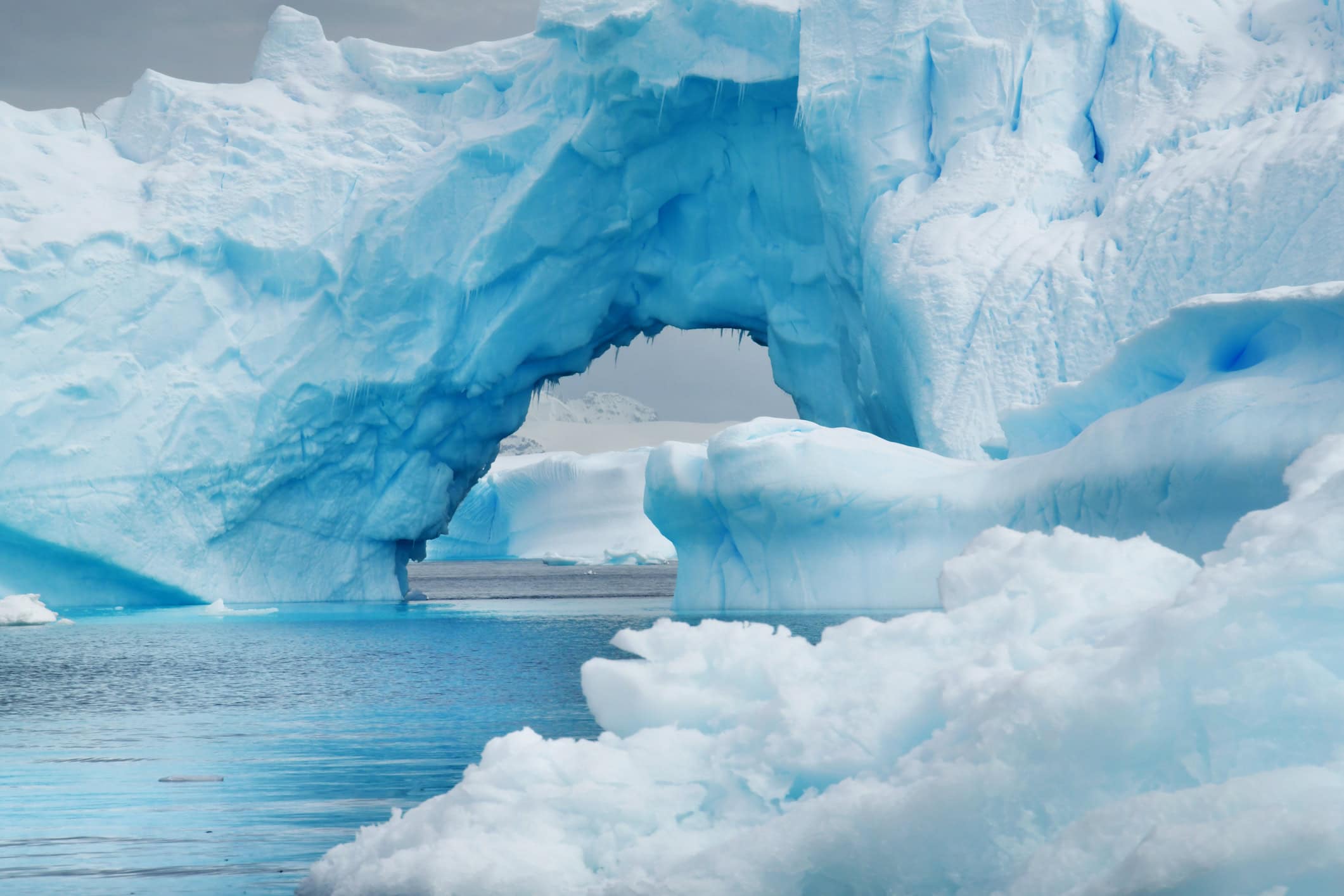
The Trump Administration should claim Marie Byrd Land.
While many eyes are focused on Iran, the Trump Administration’s policies suggest that reasserting the Monroe Doctrine in the Western Hemisphere could rank among its highest geopolitical priorities. As laid out in the 2025 National Security Strategy, the Trump Corollary “is a common-sense and potent restoration of American power and priorities, consistent with American security interests.” What if America could project its dominance quickly, dramatically, and without firing a single shot? With one bold stroke, President Trump could expand America’s sovereign territory by nearly 20% and recover the largest unclaimed tract of land left on the planet.
Marie Byrd Land is the name for 620,000 square miles of Antarctica, a territory roughly the size of Alaska. It belongs to no nation and is governed by no sovereign power. It is desolate, largely uninhabited, and of enormous strategic importance. Claiming it would be the largest expansion of American sovereign territory since William Henry Seward’s purchase of Alaska in 1867.
The moment is right. The case is overwhelming. And the window is closing.
The territory carries an American name for a reason. Richard Byrd—U.S. Navy rear admiral, aviator, and the most celebrated polar explorer of his generation—surveyed and mapped the region in the late 1920s, naming it for his wife. America has maintained a presence in Antarctica ever since, operating research stations, conducting flyovers, and asserting its right to make a claim. But it never has. The 1959 Antarctic Treaty halted existing territorial claims and committed signatories to peaceful, scientific use of the continent. However, it did not require anyone to relinquish the right to make new claims. America explicitly reserved that right. Sixty-six years later, America still has not used it, and the world has changed considerably since Eisenhower signed the Treaty.
The resource case alone justifies the move. Antarctica sits atop estimated offshore reserves of roughly 45 billion barrels of oil equivalent, plus coal, iron ore, and rare earth minerals that remain largely uncharted. The Madrid Protocol, which added environmental protections to the Treaty framework, currently prohibits extraction, but it is up for review beginning in 2048. That is only 22 years away. A prohibition that depends on the continued goodwill of all signatories, including China, which acceded to the Treaty in 1983, is a different kind of guarantee than actual sovereignty. One is a diplomatic norm. The other is a legal fact.
But the strategic case runs deeper than oil and minerals. The great infrastructure competition of the 21st century will be fought over low-earth-orbit communications networks, the constellation of satellites that will carry the world’s most sensitive data, military communications, and economic traffic. Those networks require polar coverage. The physics is simple: polar orbits deliver global reach, and the ground infrastructure at high latitudes controls latency, resilience, and network security. The northern approaches, Greenland, Iceland, and Svalbard, have been contested and militarized for decades. The southern pole has barely registered.
This is what a strategic chokepoint looks like. The world is learning that lesson right now in the Strait of Hormuz. The Strait’s strategic importance was hardly a mystery, but for almost everyone, it was theoretical. Until it wasn’t.
Since the start of the U.S.-Israeli bombing campaign against Iran, 20% of the world’s oil supply has been trapped by a strip of water 21 miles wide, caught between great powers playing out a global strategic game. The results include the largest disruption to global energy supply since the 1970s; South Korea capping fuel prices for the first time in 30 years; and Bangladesh shuttering its universities to conserve power. The world now understands, viscerally, what a chokepoint costs. The poles are the global chokepoints of satellite communications. The question is whether America secures its position before the lesson has to be learned the hard way.
The answer cannot wait. In March 2025, Russia and China jointly announced plans to build new research stations in Marie Byrd Land. This was not a scientific gesture. It was the same playbook Beijing ran in the South China Sea: establish a presence, build infrastructure, wait for the world to normalize it, and then dare someone to undo it. It worked at Fiery Cross Reef. It worked in the Spratlys. The window between “no one is paying attention” and “it is too late” is shorter than Western governments typically think.
Strategic ambiguity has its uses. It served American interests during the Cold War, when the Soviet Union could be managed through mutual deterrence, and the goal was to avoid locking both sides into positions that could escalate. Ambiguity gave everyone room to step back. That logic made sense when the Soviets were the main adversary. It makes considerably less sense when your adversary seeks to exploit ambiguity rather than be restrained by it.
The only power that benefits from murky Antarctic sovereignty today is China.
The diplomatic path is more navigable than it appears. Chile, Argentina, Britain, France, Norway, and Australia all hold Antarctic claims, some overlapping, which is its own managed absurdity. The British, Chilean, and Argentine claims have never been formally resolved; all three parties simply agreed to disagree and keep the Treaty functioning. Marie Byrd Land overlaps with none of those claims. A U.S. sovereignty declaration would stake out genuinely unclaimed territory. Moreover, it could catalyze something broader: a coordinated Western territorial framework that organizes allied claims, provides a legal architecture for resource governance when the Madrid Protocol comes up for review, and, most importantly, excludes adversaries from positions of strategic leverage before those positions become entrenched.
The historical precedents are instructive. The Louisiana Purchase looked reckless in 1803: Napoleon needed cash, Jefferson needed room, and $13 million bought 828,000 square miles that doubled the size of the country. Contemporaries called it constitutionally dubious and geopolitically impulsive. They were wrong. Seward’s Folly in 1867—the purchase of 586,000 square miles of Alaska for $7.2 million—was mocked almost universally at the time. History was not kind to the mockers. In both cases, the critics had a point about process and a blind spot about geography. Marie Byrd Land is in that tradition: counterintuitive at first glance, obvious in retrospect. And unlike those other two cases, the U.S. doesn’t even have to pay a dime for it.
The objections are predictable. Treaty purists will say a claim violates the spirit of international agreement—but they are technically wrong. The Treaty halted existing claims; it did not prohibit new ones on unclaimed land. The foreign policy establishment will warn of diplomatic friction with partners, a real concern. But allies with their own Antarctic stakes have more to gain from a coherent Western framework than from the current vacuum. Environmentalists will invoke the Madrid Protocol—but a sovereignty declaration changes nothing about current extraction rules. The precedent argument—if America claims land, does everyone else?—has the weakest foundation of all. That scramble is coming whether the United States acts or not. The question is whether America shapes it or watches other countries take the lead.
A declaration of sovereignty on Independence Day would wrap a bold geopolitical move in the most durable possible American framing: expansion as destiny, strength as inheritance, and the republic still growing into its potential 250 years on. Jefferson did not agonize about whether purchasing Louisiana would set an awkward precedent. Seward did not lose sleep over what Alaska said about the American appetite for territory. They saw geography, they saw the future, and they moved.
There is one large piece of unclaimed earth remaining. It carries an American name. Russia and China are already building there.
July 4th, 2026, would be a fine day to make it official.
The American Mind presents a range of perspectives. Views are writers’ own and do not necessarily represent those of The Claremont Institute.
The American Mind is a publication of the Claremont Institute, a non-profit 501(c)(3) organization, dedicated to restoring the principles of the American Founding to their rightful, preeminent authority in our national life. Interested in supporting our work? Gifts to the Claremont Institute are tax-deductible.
Suggested reading
An economic weapon to best its magnet monopoly.

Donor dollars shouldn’t be made in China.
America cannot turn its back on a spacefaring future.
American voters will decide if the PRC wins.
China’s stranglehold over B12 is a problem.

