

We need to think big as Americans—and as heirs of our noble inheritance.
The Machiavellian Moment Returns
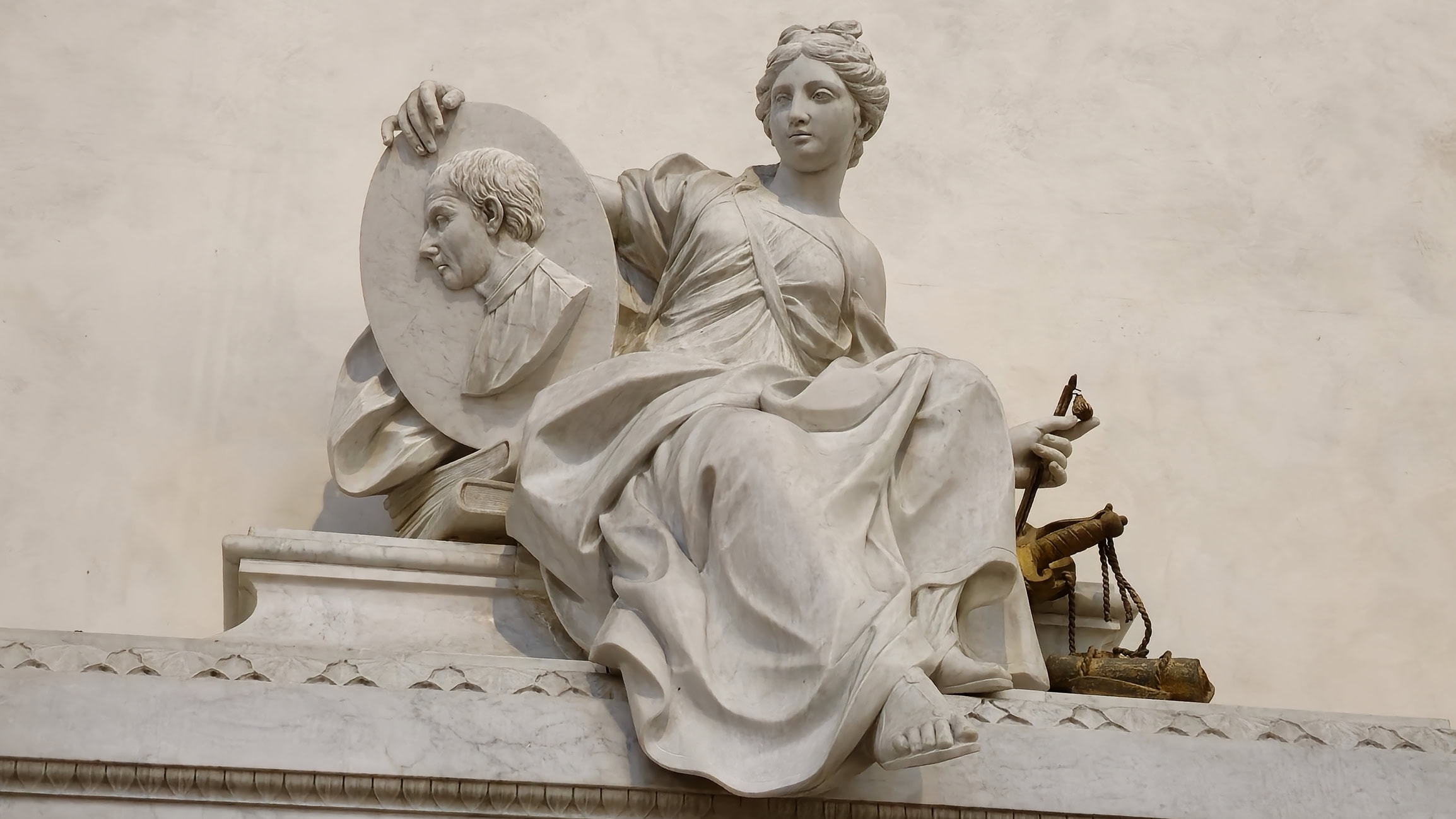
American renewal requires going back to our foundations.
In the third book of the Discourses on Livy, Niccolo Machiavelli argues that republics “do not last if they do not renew themselves” by recourse to their origins, when they were at their most pure. “Because in the process of time that goodness is corrupted, unless something intervenes to lead it back to the mark, it of necessity kills the body.”
Historian J.G.A. Pocock elaborates on this idea, arguing for a “Machiavellian moment” (the title of his sprawling and majestic book on the subject) in which a republic must act to save itself by returning to first principles. Per Pocock, the Renaissance Florentines, the Commonwealthmen of 18th-century Britain, and the Revolutionary-era Americans all faced such a moment and were forced to act against the corruption of their regimes. These moments, however, are not always successful. The Florentines lost their republic, and the Commonwealthmen remained a minority in Britain, whose legacy was predominantly to influence the American patriots at the end of the century.
I was strongly reminded of Machiavelli and Pocock while reading Spencer Klavan’s meditation on America on its 250th birthday. “Americans will need to recover a sense of their country as an era-defining project,” Klavan writes, “forward-looking but steeped in ancient traditions of faith and law—not just a Western nation, but the Western nation par excellence.” This is the language of Pocock, of Machiavelli, and even of Polybius, the Greek-born historian whose history of Rome influenced James Madison and the American founders.
History is not, as Francis Fukuyama declared, at an end. Though Americans have always been forward-looking, we remain sensitive to a lingering threat of what Polybius termed the anacyclosis—history’s tragic cycle of birth, zenith, and decay. There is a persistent doubt that everything we have built not only can be destroyed but will be, if history is any guide. Corruption is the natural consequence of all human institutions. The Revolutionary generation, after all, was obsessed with the Roman Republic, and they well understood that it devolved into empire.
If a Machiavellian return to first principles is needed at this moment, I agree with Klavan that ours were not established de novo with Thomas Jefferson’s Declaration of Independence. Indeed, one cannot read Jefferson’s claim of a natural and equal right to life, liberty, and the pursuit of happiness without thinking of John Locke’s liberalism, the moral sense theory of Francis Hutcheson, or even Aristotle’s notion of eudaimonia. The founders created a novus ordo seclorum, a new order for the ages, but they did so by reorganizing and reimagining political, philosophical, and spiritual ideas that had been in the Western mind since antiquity. They were self-conscious in their scavenging. Moreover, they left us plenty of clues about their project—read The Federalist by “Publius” or the Anti-Federalist writings of “Brutus,” or visit the neoclassical U.S. Capitol in Washington, D.C.
Machiavelli teaches that this process of renewal comes either through extrinsic accidents, like foreign invasion, or through intrinsic ones—institutions that require citizens to account for their behavior, or leaders who revive the founding principles and laws through their extraordinary examples. But even the path of institutional restoration requires civic virtue in Machiavelli’s rendering. Even good laws need to be “brought to life by the virtue of a citizen who rushes spiritedly to execute them against the power of those who transgress them.”
This Machiavellian virtue is not the anodyne civic-spiritedness of wearing an “I voted” sticker. The examples of such leaders are “excessive and notable”—and come at genuine personal cost. They inspire people to arrest and reverse civic decline. Think of George Washington’s resignation of his military commission at the conclusion of the Revolutionary War, Abraham Lincoln’s refusal to negotiate with the Confederacy, Teddy Roosevelt challenging the hegemony of corporate corruption, or Ronald Reagan recovering America’s moral clarity against the Soviet Union, bucking a bipartisan consensus that had embraced accommodation.
This points to a frustrating paradox of American republicanism, exhibited most clearly by James Madison in Federalist 10. We recognize that “Enlightened statesmen will not always be at the helm.” And yet we desire leaders who can “refine and enlarge the public views,” whose “wisdom may best discern the true interest of their country, and whose patriotism and love of justice will be least likely to sacrifice it to temporary or partial considerations.” Madison and the founders built our Constitution to endure in the absence of enlightened statesmen, but good laws cannot renew themselves. They require a conscientious embodiment of the virtues that produced those laws in the first place, even at personal cost. That is the mandate for Americans in our 250th year.
The American Mind presents a range of perspectives. Views are writers’ own and do not necessarily represent those of The Claremont Institute.
The American Mind is a publication of the Claremont Institute, a non-profit 501(c)(3) organization, dedicated to restoring the principles of the American Founding to their rightful, preeminent authority in our national life. Interested in supporting our work? Gifts to the Claremont Institute are tax-deductible.
Also in this feature
Americans must look to the principles of nature and eternal reason.

It was the cornerstone of the American founding.

Though our task is daunting, our moral duty remains.
Equality and liberty rightly understood are bulwarks against despotism.
The bonding of religious and civil liberty we enjoy in America would have been impossible in the ancient world.

