

We need to think big as Americans—and as heirs of our noble inheritance.
One Nation Under Providence
It was the cornerstone of the American founding.
Spencer Klavan has invited us to contemplate the American age, to think again in civilizational, epochal terms, and to search out the prerequisites for its continuation.
The chaos (good and ill) of the past decade has made it difficult to look beyond the immediate. But Klavan is right: Trumpism, whether embattled or dead, is more a harbinger of a possible future than its fulfillment. To carry on, “Americans will need to recover a sense of their country as an era-defining project, forward-looking but steeped in ancient traditions of faith and law—not just a Western nation, but the Western nation par excellence. Much depends on whether we can learn to see ourselves that way again.” This is a spiritual inquiry as much as an intellectual one.
The singular trait most essential to American renewal—perhaps the most predominant, central belief during the founding period—is what I have called “Protestant Providentialism.” Here we find the American soul that gives shape to the body and governance to the mind, and promise to America’s future.
A Providential Nation
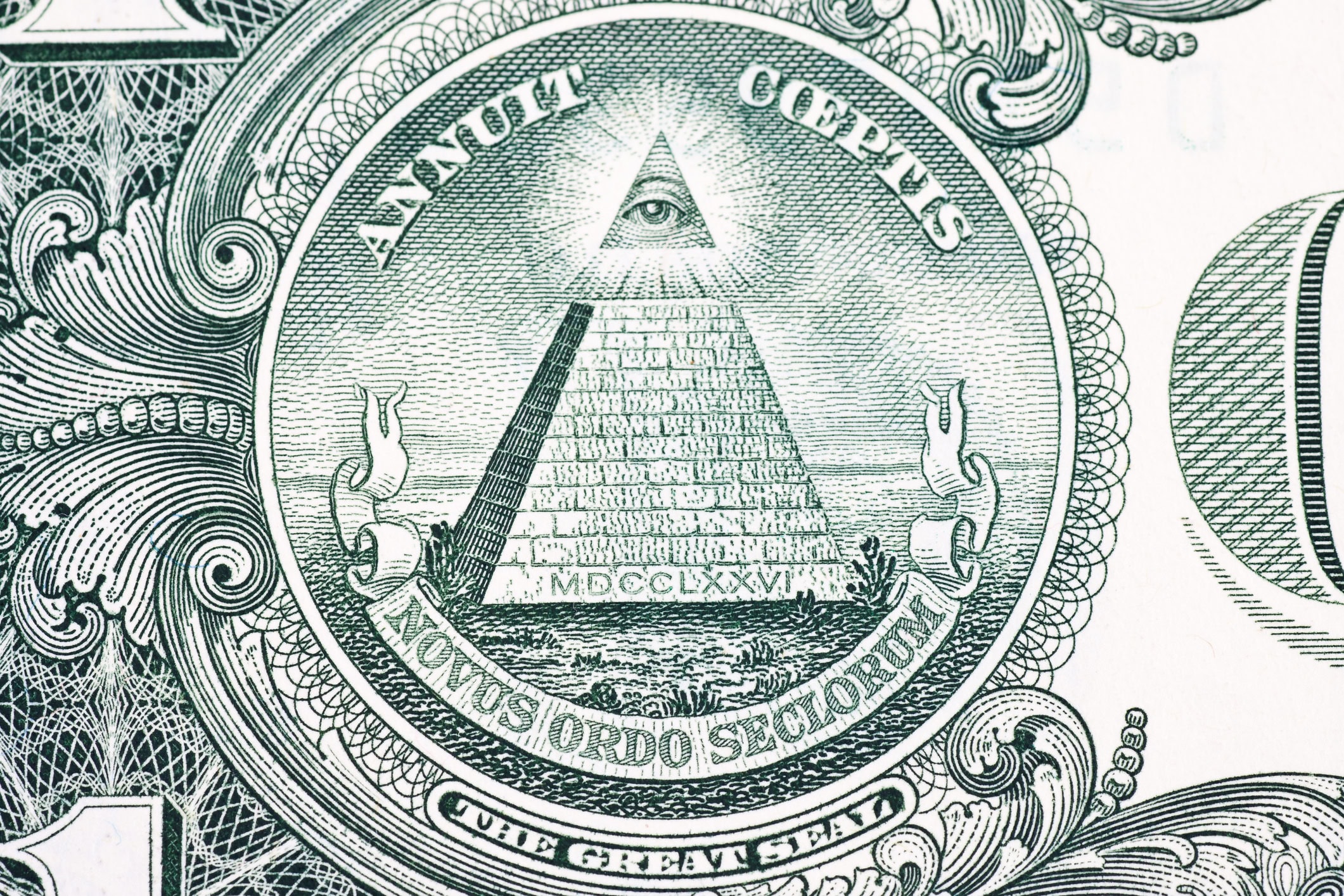
On the Great Seal of the United States is the well-known motto novus ordo seclorum (“new order of the ages”). Less remembered or mentioned is the other motto affixed above, annuit coeptis (“He favors our undertakings”). The latter phrase hovers over the eye of Providence atop a pyramid. At the base of the structure is the year 1776 in Roman numerals. Given the image, annuit coeptis is typically (and was intended to be) translated as “Providence has favored our undertakings.” As Charles Thomson, the seal’s primary creator, explained, “The pyramid signifies Strength and Duration: The Eye over it & the Motto allude to the many signal interpositions of providence in favor of the American cause.”
Both mottos are traceable to Virgil. Thomson, like many of his contemporaries, was a Latinist, and the Aeneid was a particular colonial favorite. (Given Thomson’s biblical scholarship, to which he dedicated his retirement years, it is surprising that the Great Seal was not covered in the Greek of the Septuagint—which he translated into English for the first time in 1808—or the synoptic Gospels.)
Annuit coeptis comes from a prayer of Ascanius, son of Aeneas, to Jupiter before battle, a prayer answered with victory and the eventual establishment of Rome. It was uttered after the founding of a new city by a man of piety who carried the religion of his ancestors with him. The phrase “novus ordo seclorum” was lifted from a prophecy in Virgil’s Eclogues: “the great cycle of ages is born anew.” As Tom West has explained, the fourth Eclogue announces a new, divinely endorsed golden age of prosperity and peace. According to Thomson, these two phrases described “the beginning of the New American Era.”
But while foreigners might have tended to refer to America as a “New Rome,” Americans themselves had historically applied different monikers: a new England and, more importantly, a new Israel.
At its genesis, America was a historicist and biblicist nation.
Contrary to conspiracies, none of the members of the design committee were Freemasons, save Benjamin Franklin, whose suggestions were entirely biblical anyway. The Eye of Providence within a triangle is an historic Christian symbol for Trinitarian omnipotence. As David Hackett Fischer reports, New England pulpits were sometimes adorned with a great, watchful eye, the lone décor of otherwise austere meetinghouses.
Thomson was himself no stranger to such imagery, considering that his liturgy was Presbyterianism. When he was not serving as secretary for the Continental Congress, the Ulsterman was performing the same role for the First Presbyterian Church in Philadelphia, where he was an elder.
For Thomson and the founding generation more generally, the new American era was an act of God, not man, a manifestation of Providence, of divine governance. God was the foundation of all the efforts of the Americans; the source of their confidence to act was “a firm reliance on the Protection of Divine Providence.”
Providence directed all human affairs, and it smiled on God’s covenanted people. The socio-political necessity of religion and virtue was, of course, a classical insight, but it was the history of Israel that confirmed the principle. As Ezra Stiles preached in 1783, observance of “the history of the hebrew theocracy shews, that the secular welfare of God’s antient people depended upon their virtue, their religion, their observance of that holy covenant.” Recall that it was Franklin, Jefferson, and Adams who wished to cast America as delivered Israel and Britain as Pharaoh on the Great Seal. Preachers like Samuel Langdon and Israel Evans had regularly made the analogy in their sermons.
It is the doctrine of Providence, not equality or liberty, that is definitive for America. It unlocks the deepest understanding of our past and shows our (potential) future. It is this doctrine that conditions and shapes all else, and our apprehension (or lack thereof) of it determines our national character.
In God They Trusted
The chief American doctrine is providentialism. Every founder, as Carl Richard has pointed out, professed and invoked an active Providence: God’s deliberate and active shaping of human history.
It was, accordingly, the doctrine the founders most frequently and freely invoked. There were no “deists” among them, as Mark David Hall has proved, for a deist by definition categorically denies divine intervention. Even Thomas Paine could not go there; his rather untraditional exegesis of 1 Samuel against monarchy would have been as readily shouted down as his Age of Reason. Franklin, often dubbed a deist, made a name for himself attacking the idea of divine noninterference. No deist would call for private and national prayer as Franklin often did, noting that God made the world, governs it, and hears the cries of his people. Franklin’s final confession left out the divinity of Christ, but it affirmed Providence.
Patrick Henry considered the rise of deism the greatest threat to the new American republic. It was only the assurance of its opposite—Providence—that comforted him. Benjamin Rush was similarly apprehensive about deism, which he considered an import spilling over from the continent that had its origin, he averred, in Epicurean and Stoic thought.
To understand the founders as they understood themselves, we must grasp the pivotal place of Providence in their political thought. The new order of the ages was not grounded in some amorphous set of “permanent things,” but in the constancy of Providence.
Apprehension of the American soul must come before her body can be renewed: America’s soul is Protestantism, and her fundamental doctrine is Providentialism.
The Republican Cornerstone
Providence, the defining doctrine of Protestantism, was in turn the defining doctrine of America, in no small part because it was the favorite doctrine of the national father. George Washington referred to or called upon Providence hundreds of times in correspondence, and he seemed aware of his reputation for highlighting the doctrine. It was Washington’s firm belief that the “all-powerful dispensations of Providence” had preserved him; as he told William Gordon, no one trusted in Providence more than he.
American independence was acquired “under the smiles of Heaven”—God’s “divine interposition was so frequently manifested in our behalf” during the Revolution. Her endurance and prosperity were entirely dependent on the same “Providential Agency” that had delivered “the Hebrews from their Egyptian Oppressors [and] planted them in the promised land.” For Americans, “the hand of Providence” of the “great Lord and Ruler of Nations” is ever “conspicuous,” a confidence in an active, special divine assistance.
It is not, of course, that Roman Catholics have no comprehension of or place for Providence. It is that the emphasis, expression, and use in view were distinctly Protestant.
Max Weber rightly understood that Protestant soteriology encouraged agency and activity. He correctly identified the Protestant work ethic as pivotal (and appropriately looked to Richard Baxter for explanation), but he did not understand how predestinarian theology (and cosmology) instigated moral energy and worldly effort. It was not so much that soteriological anxiety—the urgency of making one’s calling and election sure—drove men to political and economic exertion, although there is something to that. Rather, assurance and confidence in election and divine Providence facilitated the work ethic that supplied the necessary confidence for the active life. Earthly work is not a means of internal persuasion but of external demonstration, a duty that can be performed only with the aid of supreme confidence in both immediate and remote outcomes, and confidence of special, elect status.
For our God is a God of means, that is, the active cooperation of his people. Hence, we arrive at both the sinfulness of sloth and the source of confidence to act, namely, assurance secured by the doctrine of Providence. Inaction and endless, tortured deliberations were sinful when “God’s will is manifest,” instructed Richard Sibbes. Only a “false heart” would delay. “What coward would not fight when he is sure of victory?”
It was this ethic that propelled both the Mayflower and the Arbella across the Atlantic and comforted the instigators of the third English Protestant revolution—the colonists fighting the American Revolution. There was a deep trust that Providence would “smile” on their “exertions,” as Washington put it to John Hancock in 1776 (apparently one of his preferred phrases). The chief doctrine of Americanism drove men to use the means with which God had furnished them, with profound confidence in divine pleasure with both their efforts and the ends.
The doctrine of Providence enabled the necessary public spirit for American republicanism. “My rule in which I have always found satisfaction,” wrote Franklin, “is to never turn aside from Publick Affairs thro’ Views of private interest, but to go straight forward in doing what appears to me right at the time, leaving the Consequences to Providence.” Diligence in duty, the active life, the Protestant work ethic, and American independence itself: all these are owed to the profound sense of Providence embedded in the American people, a belief that transcended denominational lines and was the one dogmatic principle all the founders shared.
Reviving the American Soul
Following the attempt on President Trump’s life in 2024, 65% of Republicans said they believed his survival showed he was “favored by divine providence or God’s will.” Naturally, only 11% of Democrats agreed. For 18th-century Americans, this would have been an easy question.
Though most Americans now still believe in God, half are deists, which is detrimental to the republican spirit. Americans work fewer hours than they used to, have generally lost the virtue of thrift and charity, and no longer think in generational terms economically. Worse, however, is the decline in public spiritedness. Patriotism as sentimental fandom survives, but it is not the genuine article. “Volunteerism” is not a great measurement of this spirit, but its decline nevertheless speaks to the problem. Fewer than 1% serve in the military, and even fewer serve in public office of any kind. Americans are less, not more, political.
Stacey Schiff recounts how men like Samuel Adams were rarely home for dinner because they were so involved in local political associations and municipal governance. As Paul Rahe has depressingly described, these things have been debased. What talented, aspirational young man would now eagerly serve in the New England township life that Thomas Jefferson so admired? The most likely to do so these days are atheists.
The soul of Americanism is waning.
If the American age is to endure, then a deep and abiding understanding of the all-watchful eye atop the pyramid will have to return. A moral people cannot govern without this. Only America’s indigenous religion, Protestantism, can reinject America with her central dogma, a belief in the divine governance of the affairs of men. This begins in the pulpit, as it did with John Witherspoon in 1776, but not only there. The moral energy and identity of our civilization will continue to deplete until this fuel is recovered. If Americans are to be an exceptional people, they must see again the divine shape of history.
The American Mind presents a range of perspectives. Views are writers’ own and do not necessarily represent those of The Claremont Institute.
The American Mind is a publication of the Claremont Institute, a non-profit 501(c)(3) organization, dedicated to restoring the principles of the American Founding to their rightful, preeminent authority in our national life. Interested in supporting our work? Gifts to the Claremont Institute are tax-deductible.
Also in this feature
Americans must look to the principles of nature and eternal reason.
Though our task is daunting, our moral duty remains.
Is it coming to a close, or just getting started?

