

When God recedes, nihilism takes His place.
The Murder of Charlie Kirk
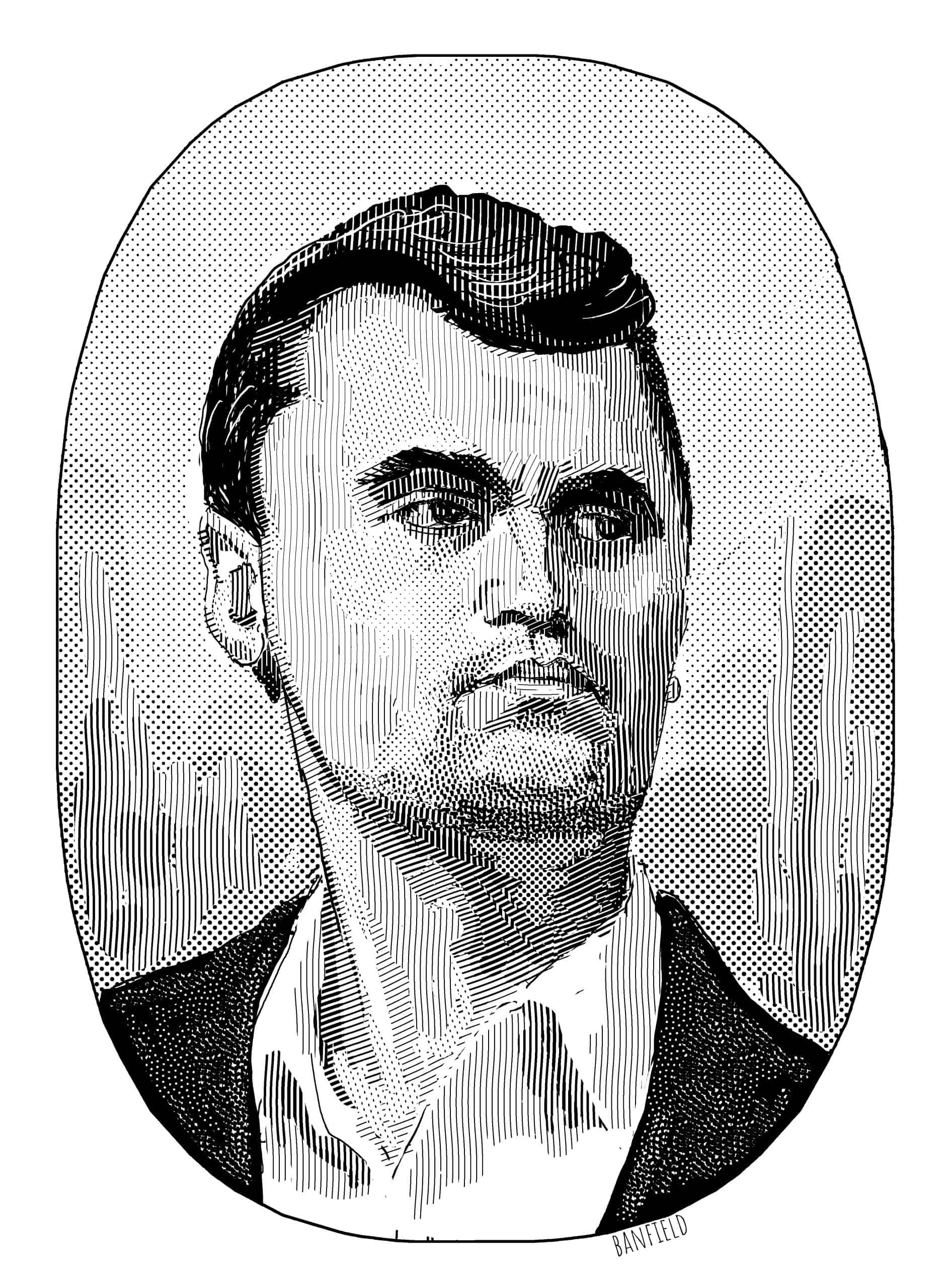
A once-in-a-century talent who will not be replaced.
Editors’ Note
What follows is an excerpt from Helen Andrews’s essay, “The Murder of Charlie Kirk,” from the 25th anniversary Fall 2025–Winter 2026 issue of the Claremont Review of Books.
The assassins who conspired against Julius Caesar could have stabbed their victim in the street, but they chose to commit their crime in the Curia of Pompey while the Senate was in session. The location’s symbolism was part of the message they intended to send. Charlie Kirk was assassinated on a college campus with a microphone in his hand as he answered questions from the crowd. It was the style of debate that earned him the love of millions and the admiration of many powerful figures, including the president of the United States. It was also the activity that led his murderer to mark him as someone who “spreads too much hate” and therefore deserved to die.
Charlie Kirk was a once-in-a-century talent who will not be replaced. He had boundless energy, acute judgment, and a capacity to evolve that was unusual in a public figure. His organization, Turning Point USA (TPUSA), and its political affiliate, Turning Point Action, managed a turnout operation for President Donald Trump’s 2024 presidential campaign that helped achieve the biggest popular-vote victory in a generation. Kirk himself could have been on a presidential ticket someday, possibly even the first ticket for which he would have been eligible. Had he lived, he would have turned 35 a month before the 2028 election.
It was a shock, then, to see how Kirk was described in mainstream news outlets in the days following his assassination. The print edition of The New York Times in its obituary headline called him “Organizer of Young Voters Who Helped Shape the Rise of the Hard Right.” The Guardian called him a “divisive provocateur.” That was the respectable media. Down in the gutters of TikTok, X, and its liberal alternative, Bluesky, people were proclaiming their indifference to his death or saying he got what he deserved.
Two things were clear from this reaction. These people didn’t understand who Charlie Kirk was and what he meant to people, and they didn’t grasp how the response to his death would be taken by the Right. Conservatives observed with horror how many people were gloating over the death of a young father because they disagreed with his political opinions. They rightly took it as a portent of a dark period for American democracy.
Open to Questions
Charles James Kirk was born in 1993 and grew up in Prospect Heights, Illinois, a suburb of Chicago. The high school he attended, Wheeling High School, tipped to being majority Hispanic during his time there and many of his classmates were illegal immigrants. His first effort at political organizing was a success: as a senior, he got his fellow students to protest the raising of the price of cookies in the cafeteria from 25 cents to 50 cents, and the old price was restored.
He chose not to go to college, which led many people in later years to write him off intellectually. This was a mistake. Everyone who thought he was too sophisticated for Charlie Kirk, but gave him a chance, came away impressed. He had an enormous appetite for self-education. One example was his participation in the Claremont Institute’s Lincoln Fellowship in 2021. He had already founded an empire by then—Turning Point USA took in over $55 million in revenue that year—yet he wanted to learn what Claremont had to teach him. He was exceptionally humble for someone with his accomplishments.
Instead of enrolling at a university, at age 18 he founded Turning Point as a student group dedicated to standing up for small government on college campuses. By the time of his death, TPUSA had 900 college chapters and 1,200 high school chapters with hundreds of thousands of members. Like many Republicans, Kirk evolved from the small government emphasis of the Tea Party years to a more rounded conservatism that fit in well with the Trump agenda. On social media, where he had tens of millions of followers, his most popular video clips were taken from his campus appearances in which he would throw himself open to questions from anyone, on any topic, from the existence of God to the national debt.
Read the rest here.
The American Mind presents a range of perspectives. Views are writers’ own and do not necessarily represent those of The Claremont Institute.
The American Mind is a publication of the Claremont Institute, a non-profit 501(c)(3) organization, dedicated to restoring the principles of the American Founding to their rightful, preeminent authority in our national life. Interested in supporting our work? Gifts to the Claremont Institute are tax-deductible.
Suggested reading

The warning is coming from inside the bubble.
Christians must reclaim a robust understanding of Christianity’s role in public life.
A clarifying exchange.
A letter from Claremont Institute President Ryan Williams to Nicolas Berggruen and Nathan Gardels of the Berggruen Institute

Tim Kaine’s idiocy on natural rights.

