

A survival guide for raising your kids in a woke world.
The Mothers Behind the Men Who Won the West
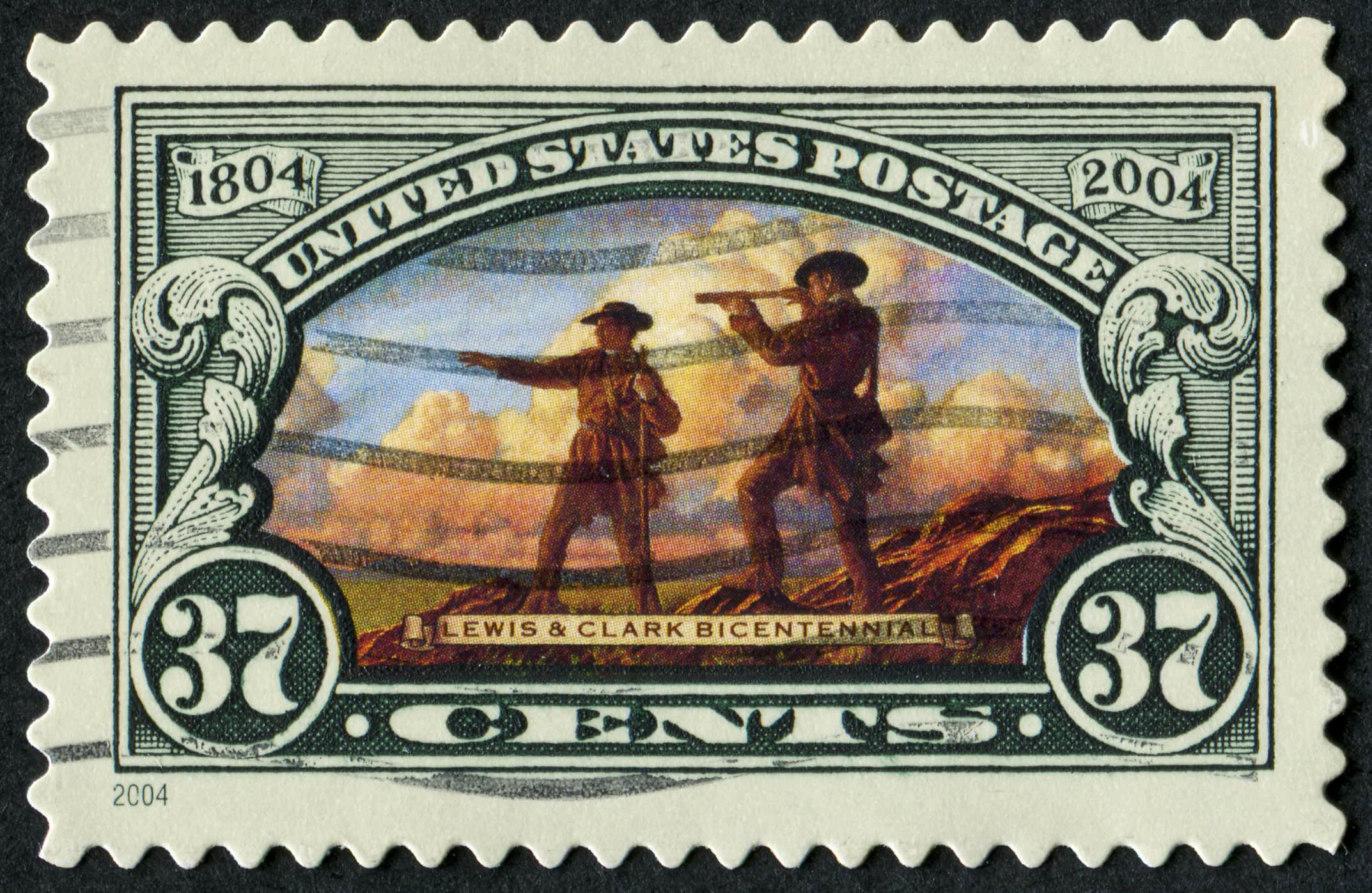
How they kept our national memory alive.
On my mantelpiece sits a silver teapot. It is boxy rather than delicate, in the 18th-century American Federal style, with a thick band of vines traced elegantly below the lid. The teapot was a wedding gift in 1797 for my great-great-great-great-great-grandmother, Frances Eleanor Clark.
For over two centuries, mother has gifted that teapot to daughter, keeping alive the gathered memories of our family. Crafted by a Virginian silversmith, it has traveled from Kentucky to Missouri, from the Montana Territory to California, before returning to the East Coast. One day, I will take my own place in the line of “teapot grandmas,” woven into the long memory of that teapot and its new familial guardian.
Though women who treasured that teapot did not make history—several of them spent their lives with men who left a lasting mark on the American West—they performed an important task: keeping it alive for future generations.
Fanny Clark, widowed early, packed the teapot and her four children and moved into the frontier bachelor pad of two of her older brothers. They were General George Rogers Clark, Revolutionary War hero and conqueror of the Old West, and Captain William Clark, who would unlock the western half of the continent with Meriwether Lewis. Fanny, her children, and the teapot witnessed the final preparations of the Corps of Discovery. I like to imagine the teapot at that final family dinner before Lewis and Clark set off downriver to rendezvous with their men. Two western explorers, three excited boys, the old war hero with his toddler niece on his knee, and my pretty young grandmother were presiding over that one last taste of home before they entered the great wilderness.
The teapot was probably a gift from another of my grandmothers: the siblings’ mother, Anne Rogers Clark, who died just a year after Fanny’s wedding. In 1971, the Honorable John Sherman Cooper, senator from Kentucky, gave remarks on the Senate floor about the Clark family. He noted that Anne was “described by a close relative as ‘the grandest, most majestic woman he ever saw.’” As I look at her portrait, I know this was not a comment about her looks. You could write a complete military history of the American Revolution simply following the adventures of her oldest five sons (she had ten children, all of whom survived to adulthood).
George almost single-handedly won the Western war. Out east, Jonathan and Edmund endured Valley Forge and the siege of Charleston. John, a POW, and Richard, MIA, paid the ultimate sacrifice. William, her youngest boy, must have figured he was doomed to obscurity in their shadow before Thomas Jefferson tapped him and Meriwether Lewis to lead the Corps of Discovery, launching them into history.
So what made Anne so majestic and grand? Unlike her boys, Anne’s life would not make very exciting reading. She wrote nothing but family letters, now mostly lost, and notes about births, marriages, and deaths in the family Bible. She was married at 15 in Virginia and died in Kentucky at 72, surrounded by her surviving children and grandchildren, on Christmas Eve. Anne is known to history as a mother and grandmother—a little blip at the beginning of the biographies of men far more significant.
But as I delve into the historical record of my family in an attempt to better appreciate our teapot and its story, I have realized that Anne made being a wife and mother grand and majestic. We are all familiar with the truism that “the hand that rocks the cradle rocks the world.” Anne did not simply rock the cradle of American heroes; she threw her entire life into nurturing a strong, dependable American family. It was Anne’s sort of family that made her sons the kind of men who would risk death for a new civilization.
The iconic image of the man who conquered the American West is the rugged individual, setting out alone into the wilderness. Many of these sorts spread west. But more important than the wandering loner were those who came west because they wanted to tame it for their families. They envisioned the sort of society where you could find a home with an elegant silver teapot. The Clark men set out to win the West for their mother and father, wives, children, nephews, and nieces. Their vision of the American West was a vision of home.
Reading the letters of the Clark siblings, you discover a tight-knit family that strove to uphold each other, support each other, and promote each other, based on genuine affection that spans multiple generations and over three states.
The four sisters married their brothers’ friends. Uncles set up nephews in business; aunts looked around their social circles for potential partners for their nephews and nieces. All of them welcomed newcomers into the family like they had always belonged. William even “adopted” the children of some of his friends, supporting their education and early careers—including Sacajawea’s children. The resulting benefit to their communities, towns, and states was truly historic.
Such a family dynamic is not one that simply happens. Nor is it one guaranteed to last. Grand, majestic Anne and her quiet, practical husband John cultivated familial pride and affection, as well as a deep sense of duty, in their children. They created a home that their adult children deemed worth coming back to visit across the mountains, through dangerous Indian territory, and through swampy, mosquito-filled rivers. They lavished their attention, affection, and interest upon their family without being overbearing or domineering. Their children responded enthusiastically to this love and showered it in turn upon the next generation, and the one after that.
When William Clark stepped into the great wilderness of the Louisiana Territory, it was to make that land a home for his family. Fanny’s little girl, Anne, who was present at that last family dinner, would take the teapot to Lewis and Clark County, Montana, quietly following in the footsteps of her famous uncle.
I cherish the fact that the one item that links my generation of our family to that of the Clarks, almost 250 years ago, is a teapot. Every self-respecting American lady had a teapot in the 18th and 19th centuries. It was historically a wife’s instrument of welcome, a mother’s preferred invitation to friendship. William Clark and Meriwether Lewis sipped Grandma Fanny’s tea from our teapot as a friendly, familial goodbye, and just a few months later were smoking peace pipes with Native American chiefs. The teapot and the peace pipe do much the same sort of work.
I do not serve tea in our teapot these days. I doubt it has held tea in a hundred years. But it sits comfortably on my mantelpiece at home. Every time my eye catches it, I think of Anne, Fanny, and all of my teapot grandmas who kept history alive by tending to familial love and memory. History sweeps most of us along, and only a few will ever grace its pages. But as long as those of our families carry on our legacy of love and devotion, that is well.
The American Mind presents a range of perspectives. Views are writers’ own and do not necessarily represent those of The Claremont Institute.
The American Mind is a publication of the Claremont Institute, a non-profit 501(c)(3) organization, dedicated to restoring the principles of the American Founding to their rightful, preeminent authority in our national life. Interested in supporting our work? Gifts to the Claremont Institute are tax-deductible.
Suggested reading

Homemaking is a daily battle for self-governance in an increasingly hostile world.

Are legacy conservatives willing to move the ratchet in the other direction?

What is the right architecture for a republic?

America should officially recognize it as an independent state.

Declining American fertility signals a psychological cost for women.

