

Trump’s approach to peacemaking has its origins in the Reagan era.
The Fall of the NGO-Administrative Complex
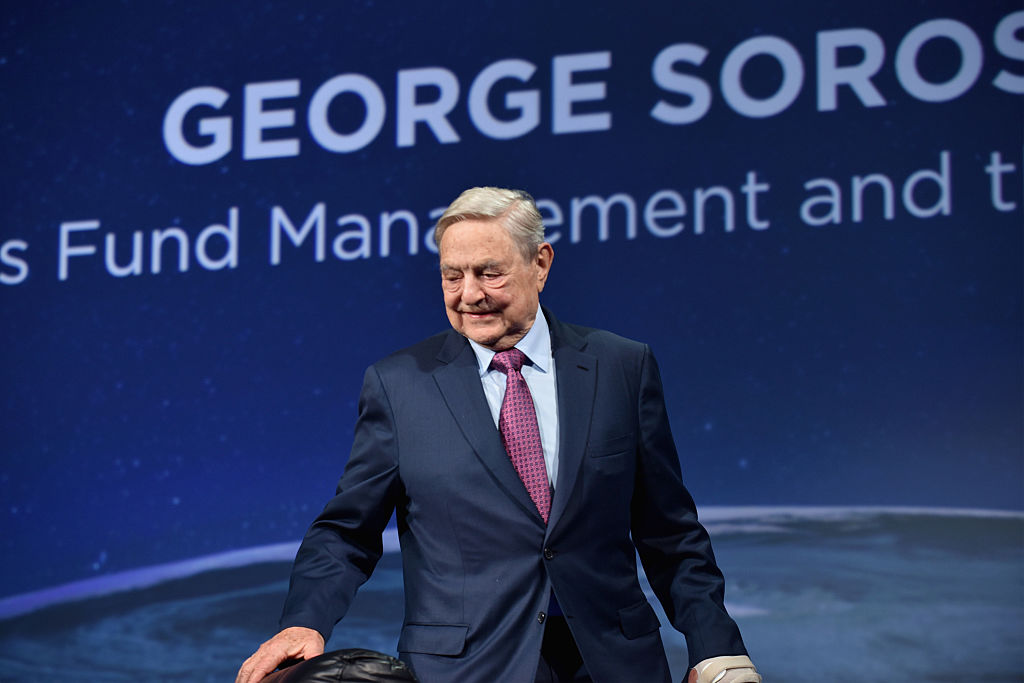
Operation Epic Fury and the collapse of the multilateral myth.
At first glance, it seems that the Western establishment should welcome Operation Epic Fury. As Joshua Lisec and I document in our upcoming book, Unelected, the entire post-World War II order has been built on the premise that global security depends on the spread of democracy (or the downfall of tyrants at the very least). As United Nations Secretary-General Kofi Annan said in a 2001 speech, there is “a need for more democracy on the global level, which is what the United Nations has been about from the very beginning.”
The global order is no fan of Iran. Atlantic writer and former National Endowment for Democracy board member Anne Applebaum has consistently named Iran, alongside Russia and China, as one of the three greatest autocracies threatening the world. Senator Chris Murphy, a member of the Senate Foreign Relations Committee and a speaker at the Council on Foreign Relations, drew an explicit parallel during the 2022 Mahsa Amini massacres, declaring, “Just as we stood together with the people of Ukraine during their revolution of dignity, the United States must continue standing with the people of Iran.”
One might think that these defenders of democracy would celebrate the removal of the Ayatollah Ali Khamenei, a brutal fundamentalist religious totalitarian.
Instead, those same voices are now loudly condemning the airstrikes. Murphy’s reaction offered no sympathy for the thousands of Iranians killed by the regime—only outrage at Trump: “In America, we don’t allow one doddering, self-obsessed old man to waste our money on a dangerous, disastrous overseas war.” Similarly, Applebaum has criticized Operation Epic Fury’s supposed lack of strategic coherence, not the target.
What is louder than the condemnations of the establishment now is what they failed to do over the previous four decades. They never deployed the same aggressive democratization strategies toward Iran that they’ve applied across the Middle East and Africa. Instead, successive administrations released billions in frozen Iranian assets, negotiated the infamous Iran nuclear deal, and—as Politico’s 2017 Project Cassandra investigation documented—deliberately limited prosecution of Hezbollah drug trafficking networks operating inside the United States to protect those negotiations.
In short, those backing the so-called “rules-based liberal international order” actually wanted Ali Khamenei’s regime to remain in place. Actions speak louder than words. For an order that defines itself by the spread of democracy, this is a striking paradox.
The instinct is to reconcile it through a conventional foreign policy lens: BRICS versus the West. Since Iran is a member of BRICS, the Western establishment should welcome action against it. But that model breaks down immediately. The Council on Foreign Relations, the Atlantic Council, and Carnegie—all institutions lamenting the ongoing strikes in Iran—are among the most aggressively pro-NATO voices in Washington. They have no sympathy for Russia or China. Yet Iran, a member of the same bloc they oppose, has enjoyed their implicit protection for decades.
To resolve the paradox, I do what I’m known for best: follow the money.
In January 2025, the Quincy Institute for Responsible Statecraft published a foreign funding transparency report calling out Qatar and the UAE for pouring money into American foreign policy institutions. On its face, it was a principled stand against foreign influence. But the same report makes no mention of Chinese money flowing into those same think tanks—despite China representing a far larger geopolitical adversary. Quincy also routinely calls for restraint in Ukraine, placing it at odds with the NATO-aligned establishment that funds it.
Quincy co-founder Trita Parsi also co-founded the National Iranian American Council, an organization whose internal communications, obtained through federal court proceedings, revealed extensive coordination with Iranian government officials. And yet Quincy attracts institutional funding from the same Western-aligned order it critiques: George Soros’s Open Society Foundations and Charles Koch’s network provided its founding capital, with additional backing from the Rockefeller Brothers Fund and others.
And this pattern repeats everywhere. The Soros-backed Indivisible coalition regularly organizes alongside anti-NATO revolutionary groups such as the ANSWER Coalition in the anti-ICE protests that have erupted across America. The think tank world and the street activist world appear to operate from opposite ends of the establishment spectrum—yet they coordinate, share funders, and converge on the same targets.
This pattern becomes undeniable when examining not just where the multilateral order directs its intellectual fire, but where Iran has directed its actual fire.
Over the past decade, Iran and its network of proxies have conducted strikes against a remarkably consistent set of targets: Israel, which was struck directly by Iranian ballistic missiles in Operation True Promise in April and October of 2024; Saudi Arabia, whose oil infrastructure at Abqaiq was devastated in the 2019 Houthi drone strikes—one of the most significant attacks on the global energy supply in modern history; the United Arab Emirates, struck by Houthi drones in January 2022 in Abu Dhabi; Bahrain, subject to sustained Iranian influence operations and support for armed opposition movements seeking to destabilize the Sunni monarchy; and Qatar, which has maintained its own working relationship with Tehran, but also hosts a major U.S. military base.
Look at those countries again: Israel. Saudi Arabia. UAE. Bahrain. Qatar.
Now look at where America parks its military: Al Udeid Air Base in Qatar—CENTCOM’s forward headquarters, home to roughly 10,000 U.S. troops; Al Dhafra Air Base in the UAE—a hub for American air power and surveillance across the Gulf; Naval Support Activity Bahrain—headquarters of the U.S. Fifth Fleet; Prince Sultan Air Base in Saudi Arabia; and a deep, decades-long military partnership with Israel that includes pre-positioned American equipment and intelligence infrastructure.
Iran has spent over 40 years targeting the architecture of American military presence in the Middle East. The Quincy Institute has spent six years targeting the intellectual infrastructure that justifies it. Different instruments—one fires missiles, the other publishes white papers—but an identical target set.
What the money shows is that the relevant organizing principle of global foreign policy is not which civilizational bloc you belong to. It is whether you believe the United States should maintain a sovereign military presence and bilateral relationships in the world—or whether American power must be subordinated to multilateral frameworks and institutional consensus.
On one side are the countries hosting American bases. On the other hand, there’s Iran’s proxy network, anti-NATO revolutionary protest networks, and establishment voices calling Operation Epic Fury a catastrophic mistake.
The multilateral framework has a structural flaw, however, that it cannot acknowledge. To function, it requires what I call “legible adversaries”—states whose demands are known, whose behavior is predictable, and whose continued existence makes negotiation possible. The Iran nuclear deal required a counterpart. Gulf security architecture required regional stability. For 47 years, Khamenei provided both. He was brutal, but he was manageable. He was the right kind of authoritarian: one whose survival was more useful to the framework than his removal. The 36,500 Iranians documented in the regime’s own massacre records were, from this perspective, an acceptable cost.
Trump’s faction rejects that calculus. In Unelected, Lisec and I document how supranational interests have systematically eroded American sovereignty from within—through NGOs, foundations, and the institutional apparatus. Operation Epic Fury is the inverse of that story: a sovereign nation acting in its own interest, without multilateral permission, against an adversary the global order had quietly decided to protect.
The network that safeguarded Ali Khamenei for four decades is the same NGO-Administrative Complex we documented in Unelected—the same foundations, the same NGOs, the same multilateral frameworks—that has increasingly controlled American domestic life on immigration policy, energy regulation, education standards, election infrastructure, and more. The Rockefeller Brothers Fund does not choose between funding the Quincy Institute’s Iran engagement advocacy and funding domestic climate and democracy initiatives. It does both because to them, it is all one single project. George Soros does not choose between the Open Society’s foreign policy work and its domestic electoral investments. It is the same apparatus, operating at every level simultaneously.
There is no separate foreign policy establishment and domestic policy establishment. There is only one establishment.
This is why the establishment’s condemnation of the Iran strikes is so disproportionate to the event. They are not mourning Khamenei. They are recognizing, with alarm, what Trump is actually doing. The regime change Trump is attempting is not Iran’s. It is theirs.
Every act that reasserts American sovereignty—on Iran, on trade, on immigration, on energy—is an act of regime change against the supranational order that has governed American life, foreign and domestic, for at least 70 years. The strikes on Khamenei’s compound are a demonstration that a sovereign nation, acting in its own interest, does not need institutional permission. The Trump Administration just showed that the veto that the multilateral order spent decades embedding into American foreign policy—through think tanks, through NGOs, through carefully managed BRICS adversaries—can simply be ignored.
This is how the NGO-Administrative Complex dies. One sovereign act at a time.
The American Mind presents a range of perspectives. Views are writers’ own and do not necessarily represent those of The Claremont Institute.
The American Mind is a publication of the Claremont Institute, a non-profit 501(c)(3) organization, dedicated to restoring the principles of the American Founding to their rightful, preeminent authority in our national life. Interested in supporting our work? Gifts to the Claremont Institute are tax-deductible.
Suggested reading

Tim Kaine’s idiocy on natural rights.
The dark money network shaping the Biden Administration and America’s schools.

The Trump Administration has an opportunity to promote quality civics.

Trump rebuilds the U.S.-Hungary relationship.
A Cold War relic that needs to be discarded.

