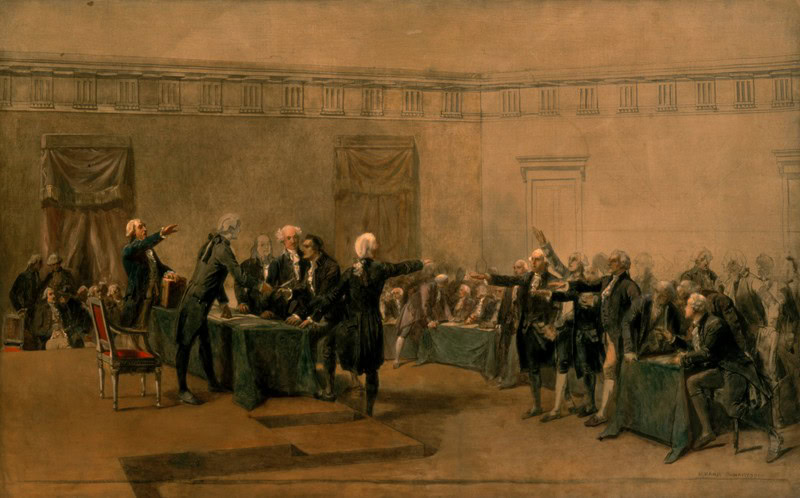

The cure for what ails America.
John Adams and the Meaning of Independence
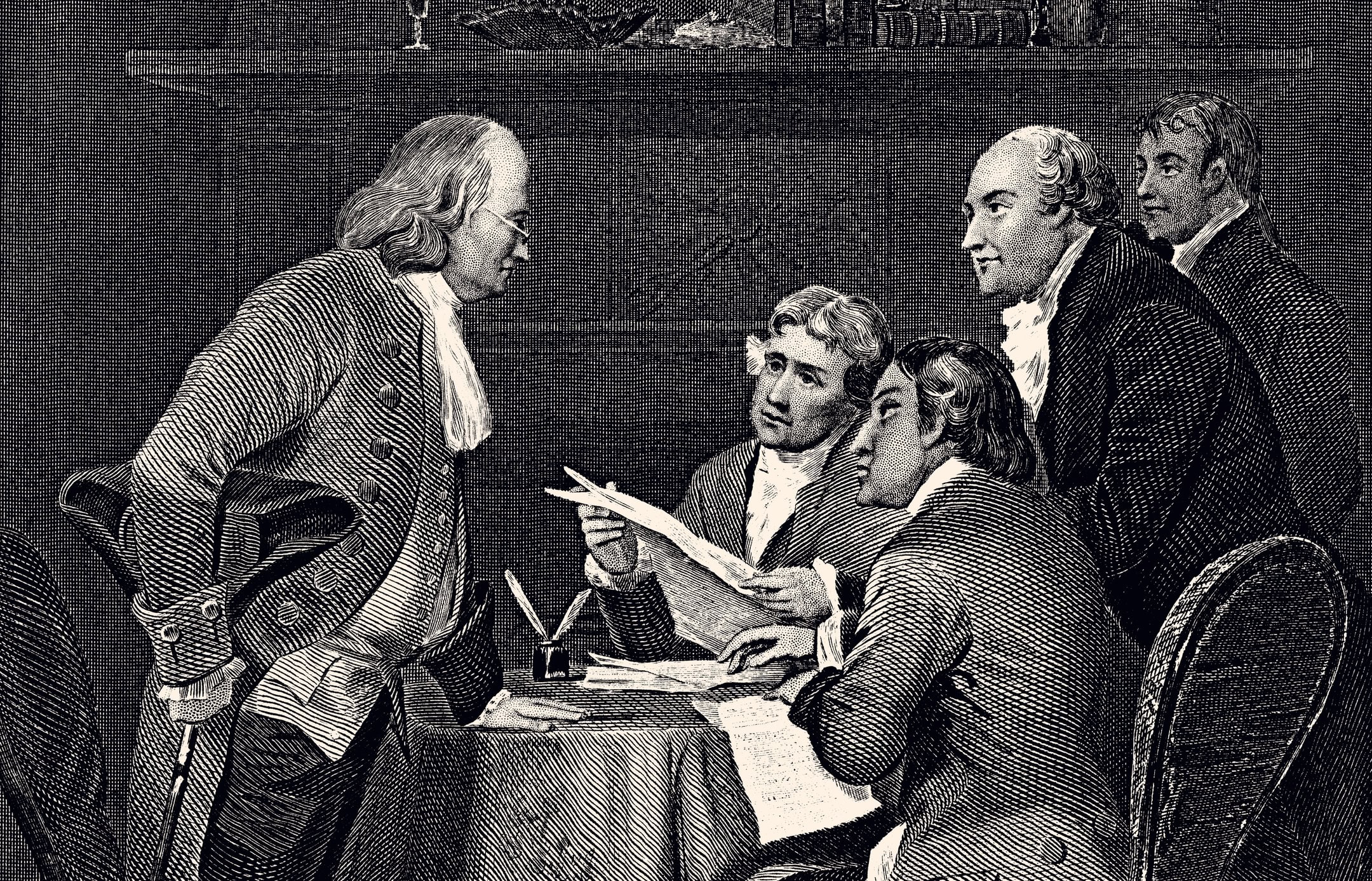
A revolution in self-government happened 250 years ago.
According to John Adams, if you cannot fail, you’re not truly free. In his last public statement, honoring the 50th anniversary of American Independence in 1826, Adams wrote that the American Revolution would be
A Memorable epoch in the annals of the human race; destined, in future history, to form the brightest or the blackest page, according to the use or the abuse of those political institutions by which they shall, in time to come, be Shaped, by the human mind.
That was not a new thought. In the Preface to his Defence of the Constitutions of Government of the United States of America, Adams mused that Americans “have now the best opportunity and the greatest trust in their hands, that Providence ever committed to so small a number, since the transgression of the first pair.” Should “they betray their trust,” Adams contended, “their guilt will merit even greater punishment than other nations have suffered, and the indignation of Heaven.”
What does this have to do with the Declaration of Independence? Everything. Compared to founding a successful new country, making revolution is relatively easy. Tearing down an existing government can be a challenge, but it’s the simpler part of the battle. The real test is to produce a better situation than before. Most revolutions fail that test; the American Revolution did not.
From Resistance to Revolution
Adams was well aware of the challenge from the start. And he was confident Americans would meet it.
On July 3, 1776, John wrote to Abigail:
I am apt to believe that it will be celebrated, by succeeding Generations, as the great anniversary Festival. It ought to be commemorated, as the Day of Deliverance by solemn Acts of Devotion to God Almighty. It ought to be solemnized with Pomp and Parade, with Shews, Games, Sports, Guns, Bells, Bonfires and Illuminations from one End of this Continent to the other from this Time forward forever more.
You will think me transported with Enthusiasm but I am not.—I am well aware of the Toil and Blood and Treasure, that it will cost Us to maintain this Declaration, and support and defend these States.—Yet through all the Gloom I can see the Rays of ravishing Light and Glory. I can see that the End is more than worth all the Means. And that Posterity will tryumph in that Days Transaction, even altho We should rue it, which I trust in God We shall not.
More than anyone else in Congress, Adams had been pushing Americans to declare independence since the Second Congress convened in the wake of the battles of Lexington and Concord. After mere resistance had turned into full-scale battles, Adams realized that reconciliation was no longer possible. But he also knew it was necessary to allow public opinion to catch up to that reality. And so he waited.
Sometimes he let others talk themselves out during floor debates, discussing futile measures of compromise. Although Adams could be quite contentious, an excess he recognized in himself but was often only partly able to contain, he also knew that gaining consensus in Congress was crucial to victory. Going outside of official channels because he was convinced he was right and the majority was wrong was unthinkable.
In the spring of 1776, Congress came around. And by the winter of 1776, Adams was quoting Algernon Sidney to support the American cause against the British: “He that draws his sword against the prince, say the French, ought to throw away the scabbard.”
Independence was necessary. But could the Americans successfully govern themselves?
Historians like Timothy Breen think Adams’s revolution was merely conservative, with a small “c.” Breen writes that after independence “for Adams the American Revolution was now complete. The British Parliament could no longer disturb the inherited forms of government with their alien innovations.” That hardly describes Adams’s thoughts in 1776. He had hopes for America that went beyond merely preserving the goods the colonists did, in fact, enjoy.
Equally important, Adams knew that standing still was impossible. The day Americans ceased to be British was the day a whole new set of political possibilities and, importantly, realities opened before them. If an analyst goes beyond what scholars call “ideology” (a term coined in the 1790s) to consider the regime in the classical sense, one recognizes that reality. Having broken from Britain, life after 1776 would be very different from life before 1776, like it or not. Hence, as Adams would write, the American Revolution was “a change in their religious sentiments of their duties and obligations.”
As resistance turned into revolution, several of Adams’s colleagues asked him what to do about the colonial governments (soon to be state governments). Adams discussed this question a good deal, most famously in “Thoughts on Government,” published in April 1776. There he endorsed a government with a bicameral legislature, an executive with a veto, and the separation of legislative, executive, and judicial powers.
The pamphlet concludes with a reflection on the responsibility and opportunity presented by 1776. America would have founders, like the great men of old:
You and I, my dear Friend, have been sent into life, at a time when the greatest law-givers of antiquity would have wished to have lived. How few of the human race have ever enjoyed an opportunity of making an election of government more than of air, soil, or climate, for themselves or their children. When! Before the present epocha, had three millions of people full power and a fair opportunity to form and establish the wisest and happiest government that human wisdom can contrive?
The American people now had a special opportunity to prove the doubters wrong and demonstrate that men are, in fact, capable of self-government.
Free and Equal
A few years after 1776, Adams would have the opportunity to bring these thoughts home to Massachusetts as the principal author of the state constitution. It would be the first state to have a special convention draft its constitution and then submit it to the people for their assent or rejection.
The Massachusetts Constitution begins with a Declaration of Rights:
I. All men are born [equally] free and independent, and have certain natural, essential, and unalienable rights, among which may be reckoned the right of enjoying and defending their lives and liberties; that of acquiring, possessing, and protecting [their] property; in fine, that of seeking and obtaining their safety and happiness.
II. It is the duty of all men in society, publicly, and at stated seasons, to worship the SUPREME BEING, the great Creator and Preserver of the universe. And no subject shall be hurt, molested, or restrained, in his person, liberty, or estate, for worshipping GOD in the manner most agreeable to the dictates of his own conscience; or, for his religious profession or sentiments; provided he doth not disturb the public peace, or obstruct others in their religious worship.
The first article marked the end of slavery in Massachusetts, a reality that the state Supreme Judicial Court recognized in 1783 in the Quock Walker case.
In 1780, the people of Massachusetts had approved a Declaration of Rights holding that “all men are born free and equal.” The court recognized that slavery was incompatible with the new constitutional order.
The second article brought religious liberty to the old Puritan commonwealth. No longer would Quakers, Baptists, and others be persecuted for refusing to worship in the Puritan church.
Article III, which Adams did not draft, required each town to pick one or more churches to support with town funds, creating a plural establishment. Not surprisingly, the religious liberty enshrined in Article II would, in time, render Article III untenable by allowing more and more sects to grow in the state. The people of Massachusetts would repeal the provision roughly 50 years later. Those changes were both direct results of a revolution built upon the equality of men.
In short, Massachusetts would be more free and more equal than it had been before. That was the change the Revolution brought, one that Adams foresaw in 1776. But he also recognized that ensuring so much liberty would be a great challenge.
One important element of human equality is that we are all sinners. “It is weakness rather than wickedness,” Adams wrote, “which renders men unfit to be trusted with unlimited power.” Hence the need for limited government and checks and balances—and among the founders, Adams was Mr. Checks and Balances.
He clearly understood that liberty without responsibility produces tyranny. Hence President Adams’s oft-quoted comment that “Our Constitution was made only for a moral and religious People. It is wholly inadequate to the government of any other.” That might be why he called worshipping God a “duty of all men.” In his 1774 Summary View of the Rights of British America, Adams’s friend and fellow man of 1776, Thomas Jefferson, noted that “The God who gave us life gave us liberty at the same time; the hand of force may destroy, but cannot disjoin them.”
The long-term success of the American Revolution can be achieved, Adams thought, only when citizens humbly recognize their status as beings made in the image of God. They must recognize that no one is above another by birth, and that every one of us might succumb to the temptations of tyranny if given the opportunity.
This tracks with Genesis 2’s suggestion that it is bad for man to be alone, as he needs what the Hebrew calls an “ezer kenegdo.” Commonly, that is translated as a “fitting helper.” That’s okay as far as it goes, but a stricter translation might be a helper “opposite him.” As with home life, so too with government.
The common good of a large republic should allow for a great deal of individuality and communal diversity, albeit within a larger whole.
The American Revolution succeeded where so many others failed because the founders knew that even the greatest men sometimes need correction from within the tent. One of Jefferson’s criticisms of slavery is that it produced men with tyrannical souls. Adams and his brothers of 1776 knew that. Hence they recognized the need to hang together, amid their disagreements and the differences in their ways of life, so that they did not hang separately.
The American Mind presents a range of perspectives. Views are writers’ own and do not necessarily represent those of The Claremont Institute.
The American Mind is a publication of the Claremont Institute, a non-profit 501(c)(3) organization, dedicated to restoring the principles of the American Founding to their rightful, preeminent authority in our national life. Interested in supporting our work? Gifts to the Claremont Institute are tax-deductible.
Suggested reading
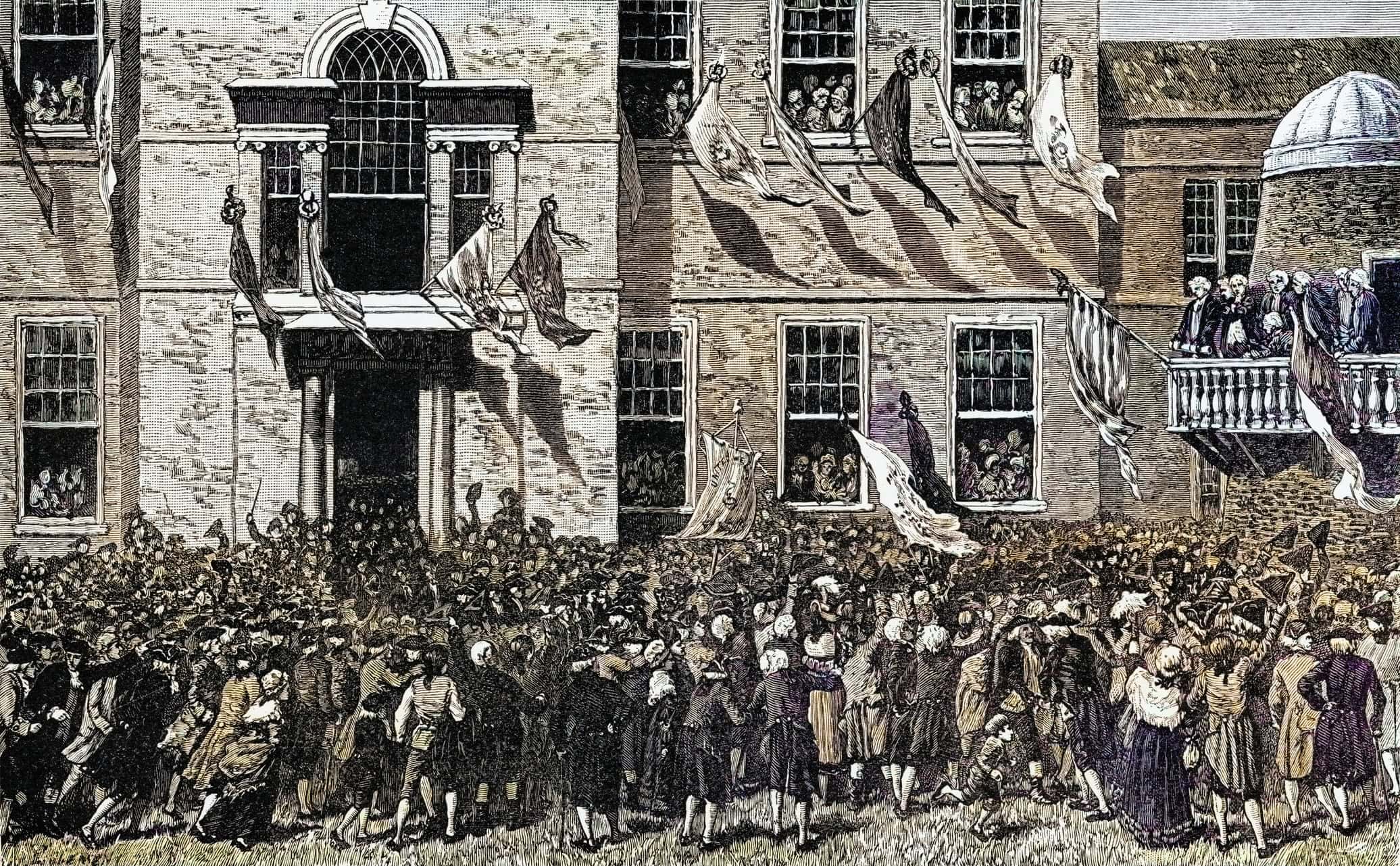
Letting the world know of American independence.
Chief Justice Roberts forgot the Declaration of Independence.

Yale is caught between what it should practice and what it must preach.
What to watch in preparation for July 4th.