

It assumes that clarity on matters of principle precedes consensus.
Defending Trump’s Latin America Policy
He’s breaking up the axis of tinpot dictators.
A common argument against the Trump Administration’s policy in South America is that it will inevitably drive the region toward China. But for the most part so far, the opposite appears to be true.
American presidents including John Quincy Adams, both Roosevelts, John F. Kennedy, and Ronald Reagan understood that the United States cannot successfully compete overseas if it neglects its own backyard. These presidents all invoked the Monroe Doctrine (and in Adams’s case, wrote it), indicating that Washington would view any new great-power incursions into the Western Hemisphere as a hostile act.
Over a period of some 12 years, the Obama-Biden approach was the opposite: they explicitly dismissed the Monroe Doctrine and neglected U.S. security concerns in Latin America while Beijing’s influence advanced. They looked to appease left-wing dictatorships, including Cuba and Venezuela, and deferred to a liberal guilt complex regarding America’s supposedly awful Cold War policies in the region. Thankfully, that approach is now over.
The 2025 U.S. National Security Strategy and 2026 National Defense Strategy both make it very clear that hemispheric defense is among this administration’s highest priorities. That is as it should be. The first Trump Administration’s Latin America policy was a major improvement over Obama’s, and the second Trump Administration is a major improvement over Biden’s.
At one point during Biden’s presidency, nearly every government in Latin America was left-of-center. But El Salvador’s President Nayib Bukele disrupted that pattern by ruthlessly cracking down on transnational criminal organizations. Crime rates in El Salvador dropped dramatically, and Bukele was re-elected in a landslide. He is now one of the most popular leaders in the region.
Late in 2023, voters in Argentina elected the libertarian Javier Milei to take a chainsaw to generations of dysfunctional governance. Leftist governments in Ecuador, Bolivia, Peru, Chile, and Costa Rica have since fallen through peaceful, democratic, and constitutional processes. In every case, incoming leaders have been more friendly to the United States and less enamored of progressive shibboleths.
To be sure, leftist governments in the region are losing elections—when they permit them—mainly on issues of crime and migration, apart from the United States. But incoming center-right leaders have been willing to work with the U.S. on these issues, and on restraining Chinese influence. Moreover, the United States is asserting its traditional predominance in Latin America, and, in certain cases, governments that want to flourish will either cooperate or pay a price. In a region long familiar with strongman rule, most people get the picture.
In the case of Panama, President Trump used his trademark method of loud public warnings to highlight an essentially valid concern, namely, indirect Chinese influence over the strategically vital trans-isthmus canal. Last year, the American firm BlackRock announced that it would help lead efforts to buy CK Hutchison’s 80% holdings; Panama’s high court has since ruled that its holdings were invalid in the first place. If the canal is nudged away from Chinese influence while preserving Panama’s underlying partnership with the United States, this is all to the good.
The Trump Administration has also rightly called for Mexico’s cooperation on issues of border security, illegal migration, transnational crime, and commercial relations with China. President Claudia Sheinbaum has responded by making careful concessions on each of these points. Meanwhile, American strikes on drug-trafficking boats in nearby Pacific and Caribbean waters, however controversial, have sent a clear message to transnational criminal organizations: approach the United States at peril of your lives.
In the case of Venezuela, President Trump authorized a stunningly successful raid leading to the capture of longtime despot Nicolas Maduro, who was indicted in the U.S. on charges of narco-terrorism. Avoiding yet another frustrating exercise in nation-building, Trump left the rest of Maduro’s government in place. Though liberal internationalists have heavily criticized this decision, they will not be the ones paying the price if dismantling the Chavista regime leads to disaster. The current U.S. goal, it appears, is to secure a better outcome on the ground, including a regime less hostile toward the United States, with or without Maduro’s successor, Delcy Rodriguez. Starved of energy from its former Venezuelan patron, Cuba may very well be next.
In sum, when approaching Latin America, the second Trump Administration has correctly invoked the Monroe Doctrine to combat nearby threats that have expanded in the 21st century, including illegal immigration, drug trafficking, and growing Chinese influence. As a result, the so-called Bolivarian alliance of anti-American regimes in the region is dying. Good riddance to that motley axis of tinpot dictators, along with their enablers at home and abroad.
The American Mind presents a range of perspectives. Views are writers’ own and do not necessarily represent those of The Claremont Institute.
The American Mind is a publication of the Claremont Institute, a non-profit 501(c)(3) organization, dedicated to restoring the principles of the American Founding to their rightful, preeminent authority in our national life. Interested in supporting our work? Gifts to the Claremont Institute are tax-deductible.
Suggested reading

Biden's historians fantasized about FDR, but the reality will be closer to Carter.
Will the Democrats give up power if they lose?
A constitutional and prudent way to redress an abuse of power.
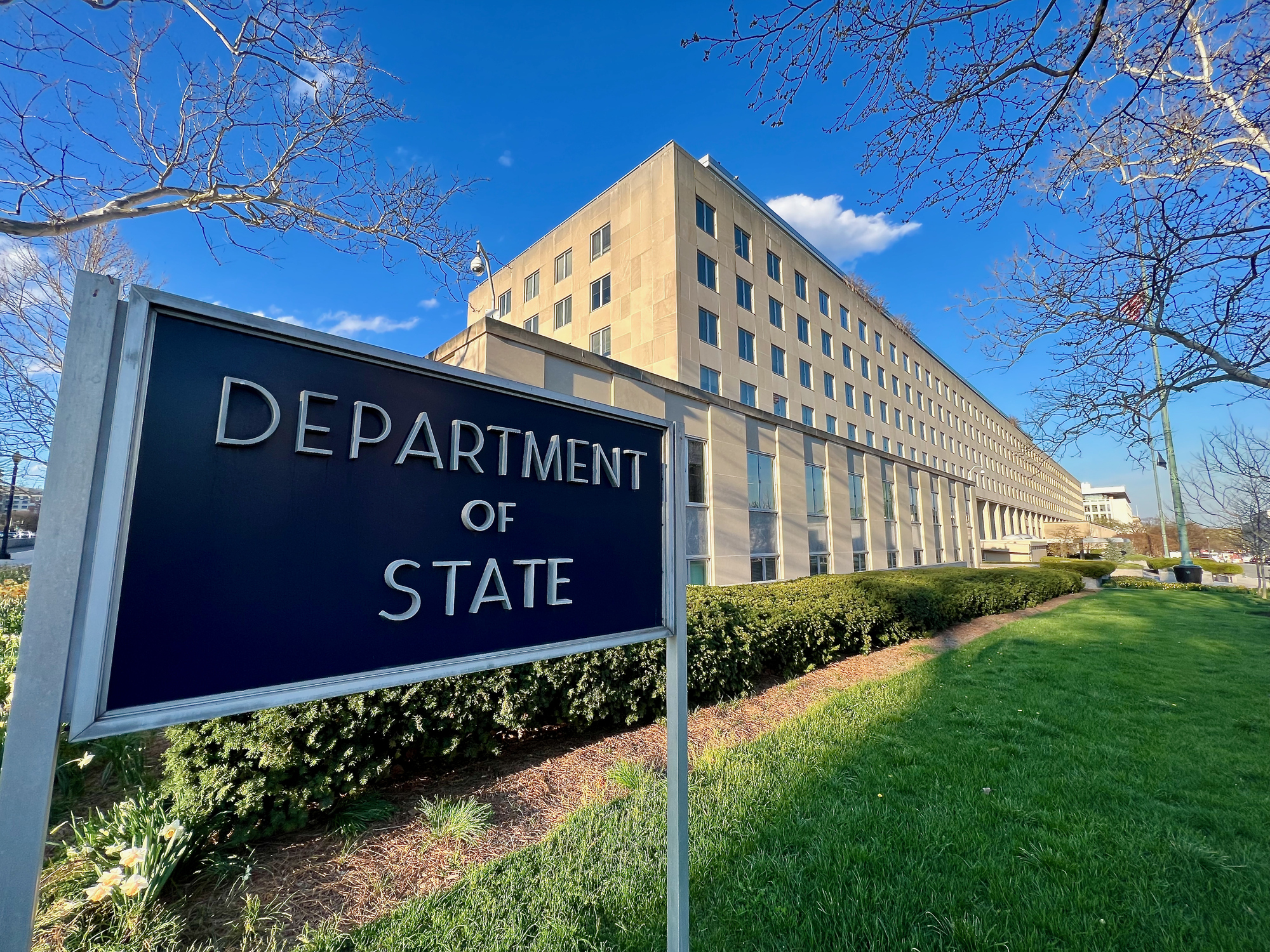
A long-overdue reorganization of the State Department.

Mexico’s red line and America’s selective amnesia.

