

America’s unserious political class is totally unequipped to deal with the threat.
Building an America First Development Strategy
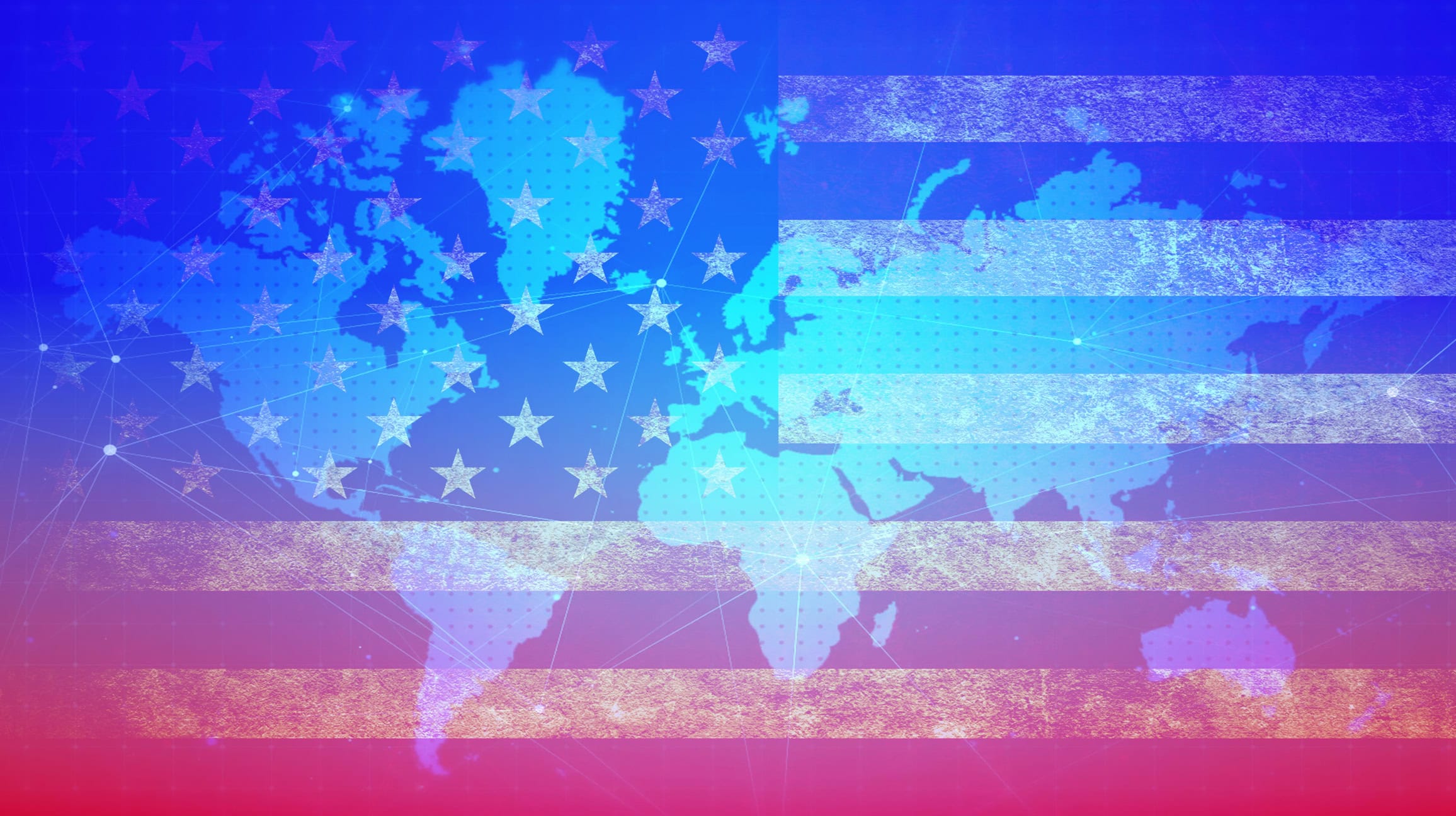
The Trump Administration should champion entrepreneurial capitalism as the basis for a new world order.
Over a year ago President Trump began dismantling the U.S. Agency for International Development (USAID). While bemoaned by many in the foreign policy community as a mistake, in reality the agency had long ago strayed from its initial purpose, namely, helping developing nations establish prosperous and growing free market economies. Indeed, its initial purpose as envisioned by President Kennedy was to bring the economic promise of America to the poorest nations in the world. Just as with our opening to China in 1972, we were confident that democracy would follow.
Yet the tragedy of USAID was its failure to bring a single new market-based economy to life. After several decades it could produce no examples of even having brokered an alliance between a Third World country and the United States. USAID’s annual core operating budget of $22 billion and its ineffective record rightly proved too much for the Trump Administration’s DOGE review.
This state of affairs might be seen as inevitable given that USAID’s initial thesis of how prosperous economies come about was terribly flawed. President Kennedy’s friend, Walter Rostow, provided a plan in The Stages of Economic Growth: A Non-Communist Manifesto that would govern USAID’s thinking until well into this decade. Published in 1960, Rostow’s book is an entirely conjectural effort long on ideas about how development should happen and short on empirical information about how free market economies actually start.
In the post-USAID era, however, the United States cannot afford to appear to withdraw completely from its historic commitment to helping poorer countries achieve sustained growth. Serious alternatives have been slow in coming, largely because “nation-building” has been out of fashion since Iraq.
Even so, Washington knows that China has been more or less effectively working to export economic development for at least two decades. Its strategy, the Belt and Road Initiative, once admired for its innovation, has brought several countries closer to China. Now, however, it is widely seen as a method of extortion, where China can steer the economies—and ultimately the allegiance—of debtor nations.
The U.S. presumes that stable relationships with nations we seek to help must rest on the mutual embrace of individual freedom that derives from market-based economies. Such an economic order must be based on indigenous entrepreneurship. Recent contributions from Nobelists Paul Romer, Ned Phelps, and Joel Mokyr have laid heavy emphasis on the critical importance of entrepreneurs in the dynamics of economic expansion at the nation-state level.
Having shuttered USAID, President Trump should recast assistance to nations the U.S. deems of strategic importance to our economic and security interests. This might be thought of as an America First development policy. Essentially, we would be building a bespoke community of allies. Rather than relying on the demonstrably unworkable formula of a “rules-based world order” and the ineffective record of operationalizing the “Washington Consensus,” American development policy should be rebuilt around what I have called “Expeditionary Economics,” which supports the emergence of entrepreneurial capitalism.
Our outbound support for targeted countries would not start, as American assistance once did, with an externally imposed plan. President Trump has already previewed this approach in Venezuela. Once free, the country can figure out its own path to growth, as Friedrich Hayek’s notion of spontaneous order suggests.
U.S. assistance should:
- Support an indigenous population of entrepreneurs capable of building scalable firms.
- Strengthen the rule of law, particularly as a means to eradicate corruption, and provide predictability to businesses.
- Stabilize the target nations’ currencies, including the possibility of pegging them to the U.S. dollar.
- Encourage a local banking system as a first line of finance to startups.
- Develop uniquely valued products and talented human capital to compete in an inevitably globalizing marketplace.
The core of an America First development policy is advancing entrepreneurial capitalism as the basis for a new world order. As such, it must animate U.S. thinking on reforming the roles that various international organizations play, from the U.N. and the World Bank to many of their bureaucratic dependencies. These post-war institutions gravitate toward recognizing the interests of giant global firms at the expense of startups—the very businesses nations aspiring to economic renewal need.
The American Mind presents a range of perspectives. Views are writers’ own and do not necessarily represent those of The Claremont Institute.
The American Mind is a publication of the Claremont Institute, a non-profit 501(c)(3) organization, dedicated to restoring the principles of the American Founding to their rightful, preeminent authority in our national life. Interested in supporting our work? Gifts to the Claremont Institute are tax-deductible.
Suggested reading
Securing America’s interests should be the guiding principle of our nation’s foreign policy.

The president can reset U.S. foreign policy in a pivotal region.

Secretary Rubio’s reforms need to be expanded.
The elite war on free enterprise.

The Trump Administration will soon undo the disastrous Biden-Harris agenda.

