

America increasingly resembles a failed state.
An Impressive Year One for Trump 2.0
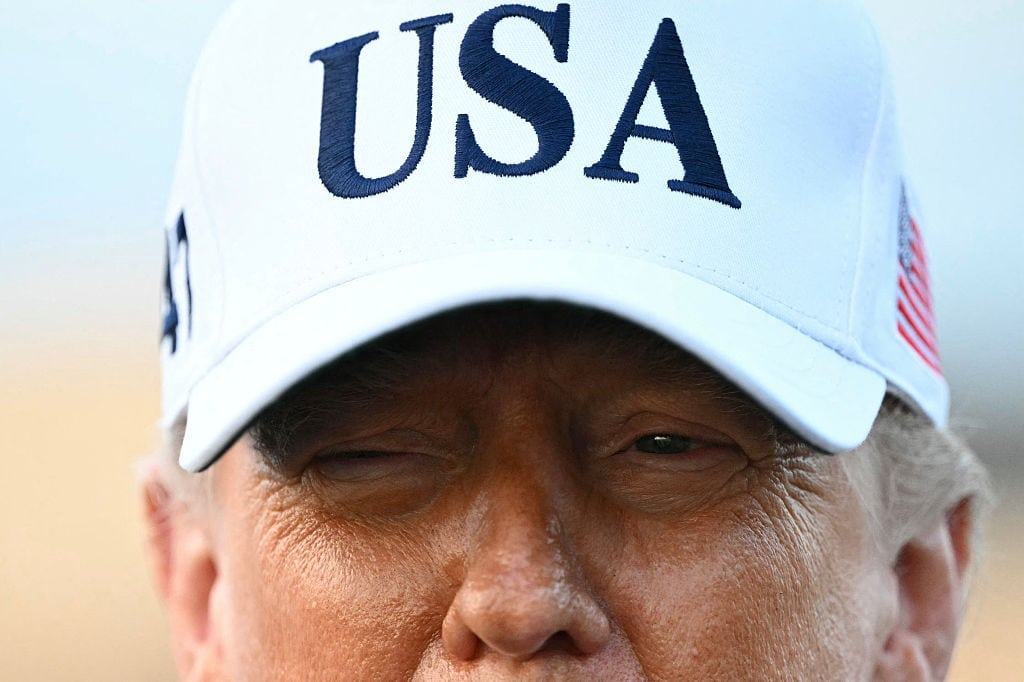
The administration has racked up countless victories.
MAGA world seems to be down at the mouth lately. Though still months away, the latest polling seems to portend defeat in the upcoming midterms. And yet, looking back over the past year since January 20, 2025, I see not gloomy defeat but an America that has—for the first time in decades—a fighting chance.
The first year of President Trump’s second administration gives me hope that America will not continue on the path that seemed inevitable just over a year ago: tyrannical censorship, weaponized government agencies, and a Rubicon as heavily trafficked as the Rio Grande. Instead, the Trump Administration has racked up a series of clear victories in several major areas of policy that they can build on in the years ahead to inaugurate a new American golden age.
Monumental Immigration Enforcement
No issue was more central to Trump’s ascent than finally getting immigration under control, a demand from American voters that both parties had previously ignored for decades. In his first administration, Trump controlled the border. But in his second term, he’s done far more than that (crossings these days are virtually nil, something the political class said just a couple of years ago required an act of Congress). He’s taken massive steps toward removing the many millions who reside in the United States illegally.
Despite furious and often unlawful interference by lower courts, the Department of Homeland Security reports that it deported over 600,000 people in 2025. In addition to deportation quotas, made harder to meet in blue states because of sanctuary policies necessitating community raids, many more illegal immigrants are choosing to take the administration’s deal: $1,000 to self-deport rather than wait for ICE to get them. An estimated 2.5 million aliens left America during the first year of Trump’s second term.
And the new attitude toward those who would exploit our generosity has not been cabined to DHS or ICE. The State Department is reviewing over 55 million people with valid visas for violations, including overstays, criminal convictions, and support for terrorist organizations. President Trump has suspended visas entirely from 75 countries, including most of the Muslim world.
For the first time in decades, it is difficult to get access to the United States.
All these incentives have not gone unnoticed. The U.S. is experiencing net negative migration for the first time since the Great Depression. The foreign-born population has dropped by more than two million people. The Center for Immigration Studies estimated last summer that there had already been a 10% decline in the number of illegal aliens in the U.S., which doesn’t even count the administration’s stringent immigration enforcement during the second half of 2025.
As Stephen Miller has pointed out repeatedly, this substantial reduction in the number of illegal aliens in the country will increasingly pay dividends across a whole host of areas beyond immediate reductions in crime and fraud. It will lessen the burden on municipal services, reduce the competition for housing, and de-clog medical facilities.
Dismantling the Bureaucracy
Aside from immigration, Trump’s most long-lasting achievement may be his war against the unconstitutional deep state. Our long slide into governance by the unelected bureaucrats who populate our fourth branch of government has been the subject of chattering class conservative and think tank lamentations for generations. How many times have we been told that America’s turn away from the Constitution began with Woodrow Wilson and his vision of rule by experts?
But for the first time in a century, a major counteroffensive against the once-inexorable expansion of the administrative state and “independent agencies” has been launched. Thousands of bureaucrats have been fired, with key removals setting up a series of SCOTUS cases like Trump v. American Federation of Government Employees that are likely to restore the unitary executive and cut off the agencies’ ability to act as lawmakers, enforcers, and judges.
It is probable that by the end of Trump’s second term, rather than exchanging figureheads astride a vast federal bureaucracy, the American people will truly be able to change the direction of the ship of state in Washington. In other words, Trump is well on his way to restoring a central piece of the Founders’ constitutional governance.
Ending Woke Discrimination Against White Men
Immediately upon taking office, President Trump signed a series of executive orders to eliminate racially discriminatory practices like DEI and other such ideologies. A pair of EOs instructed his administration to deal with discrimination within the federal government and enforce the Civil Rights Act against private institutions like companies and universities. For the past year, the Trump Administration has been busily engaged in making the promise of those EOs come true—that every American deserves to be judged on merit, not where he may fall on the Left’s oppressor/oppressed racial hierarchy.
One of Trump’s best appointments has been Harmeet Dhillon to head the Justice Department’s Office of Civil Rights. Under Dhillon, OCR has opened investigations into states like Rhode Island, California, and Minnesota, as well as into private companies like Greyhound, for race-based employment practices (which are illegal even in a private context). She has also launched lawsuits against multiple states for not complying with federal investigations into their voter roll irregularities and race-based redistricting. She’s even warned newly elected Mayor Zohran Mamdani about engaging in anti-white discrimination and hinted at lawsuits if he tries to institute race-based policies in the Big Apple.
Additionally, the DOJ issued a rule eliminating the pernicious doctrine of disparate impact, which treats mere statistical racial disparities as the result of discrimination. Andrea Lucas, the brave commissioner who once put Mark Cuban on notice for his stated illegal, discriminatory hiring practices, has been a warrior for the neutral enforcement of Title VII. Lucas is now the Chair of the EEOC, the agency tasked with enforcing rules and statutes against the racial regime the Left erected.
On the cultural front, a series of mega-viral pieces about eye-popping open discrimination against white males in various career sectors has created the permission structure for lawsuits to be filed. Both Dhillon and Lucas are actively seeking to open more cases on behalf of white plaintiffs alleging race-based discrimination. Expect much more from these offices now that they are under capable leadership.
A Reckoning for Universities
Universities have not been exempt from the new, aggressive, and even-handed enforcement of the Civil Rights Act. A higher education sector that’s been dependent for generations on the generosity of taxpayers through millions in grants and billions in subsidized government student loans is finally seeing the slack taken in on its reins. Between Dhillon’s OCR at DOJ and the Department of Education headed by Linda McMahon, universities are being held accountable for flagrantly violating the law.
By pushing policy levers Republicans have never considered, Trump has forced Harvard, Columbia, the University of Pennsylvania, and other top schools into expensive settlements, cutting off millions in funding and upending the gravy train that has supported institutions that have long lost the trust and support of the American public. His demands are simple and popular everywhere—except on campus: that universities follow the CRA and the Constitution, that they admit and hire on merit, and that they attend to the escalating costs that have made them rich and placed two generations of students in debt.
The administration has used Title VI (the responsibility of the university to provide a safe environment free from race- or religion-based harassment), Title VII (the obligation of the university to hire without regard to race), Title IX (the responsibility of the university to prevent harassment and discrimination based on sex), and the 2023 Supreme Court case Students for Fair Admissions (the obligation of the university to admit in a colorblind manner) to hammer away at higher education from all angles.
In the One Big Beautiful Bill signed last summer, taxes on the largest university endowments soared sixfold. Caps were imposed on all federal student lending programs, which make up the overwhelming majority of loans for students and parents. This year, for the first time, tuition is going down at many of America’s four-year colleges and professional schools. The University of Santa Clara School of Law, for example, has already posted its tuition rates for the 2026-27 school year: exactly the new $50,000 cap, a price it hasn’t charged since 2018, and a full $13,000 cheaper than 2025-26’s tuition.
Thanks to the Trump Administration’s first year, higher education is facing a reckoning it never anticipated.
Restoring the Definition of Sex—and Sanity
The administration has used the CRA for one more important goal: the restoration of a sane definition of sex in the law, and an end to policies that treated the delusional self-identification of males as more important than the reality of biology.
On day one, it quashed the appalling Biden-era regulations that redefined sex in Title IX, restoring not only the recognition of basic truths but also constitutional protections for free speech and due process in university kangaroo courts over alleged sexual misconduct. But the second Trump administration has not stopped at restoring the first Trump administration’s admirable Title IX rule and reversing Biden’s regulations; it has used Title IX as yet another club with which to beat universities, suing them for permitting males into sports teams and locker rooms meant for women. If Title IX’s harassment protections mean anything in the university context, surely being forced to see unwanted genitalia as a condition of being on the swim team qualifies.
And the administration is likely poised to celebrate another victory in the Supreme Court as it considers whether gender identity is protected by the Equal Protection Clause (spoiler alert: it is not).
Of course, work remains to be done on each of these issues, and many more besides. President Biden alone allowed approximately 6.7 million new illegal migrants into the United States, and millions more remain here illegally. The rank-and-file bureaucrats in Washington remain in mostly open revolt, even as they get fired, and surely many more quietly retain that attitude. Blue states continue to pump out insane policies driven by a slavish adherence to the nonsense of gender ideology, like allowing male sex offenders to transfer to women’s prisons and burly men to compete against women in the long jump. Universities will continue to resist the inexorable logic of their budgetary bottom lines for as long as possible. And anti-discrimination lawsuits, whether housed at the EEOC or privately, take time to work through the legal process.
But progress on these issues—each absolutely critical to making America great again—is not illusory, but concrete. The steps the Trump Administration took in its first year far outstripped the impact of any conservative administration in my lifetime, and perhaps in more than a century. This is no sclerotic D.C. regime, overpromising and underdelivering. It’s an administration fully focused on pulling hard on the yoke, tackling the enormous challenges that previous administrations created.
Those who hope for a full and permanent rout of the Left after a single year are not being realistic. The doomers online who have already given up on achieving significant political victories are betraying their unseriousness. If the next three years look anything like this past one, I will have gotten more for my vote than I ever would have dreamed or expected. At one year, this is an administration firing on all cylinders to fulfill President Trump’s promises to the American people.
The American Mind presents a range of perspectives. Views are writers’ own and do not necessarily represent those of The Claremont Institute.
The American Mind is a publication of the Claremont Institute, a non-profit 501(c)(3) organization, dedicated to restoring the principles of the American Founding to their rightful, preeminent authority in our national life. Interested in supporting our work? Gifts to the Claremont Institute are tax-deductible.
Suggested reading

Ilhan Omar’s bizarre speech must be understood in the broadest sense of “constituency.”

The H-1B visa program undermines our nation.
Lincoln’s natural rights statesmanship should be our guide.
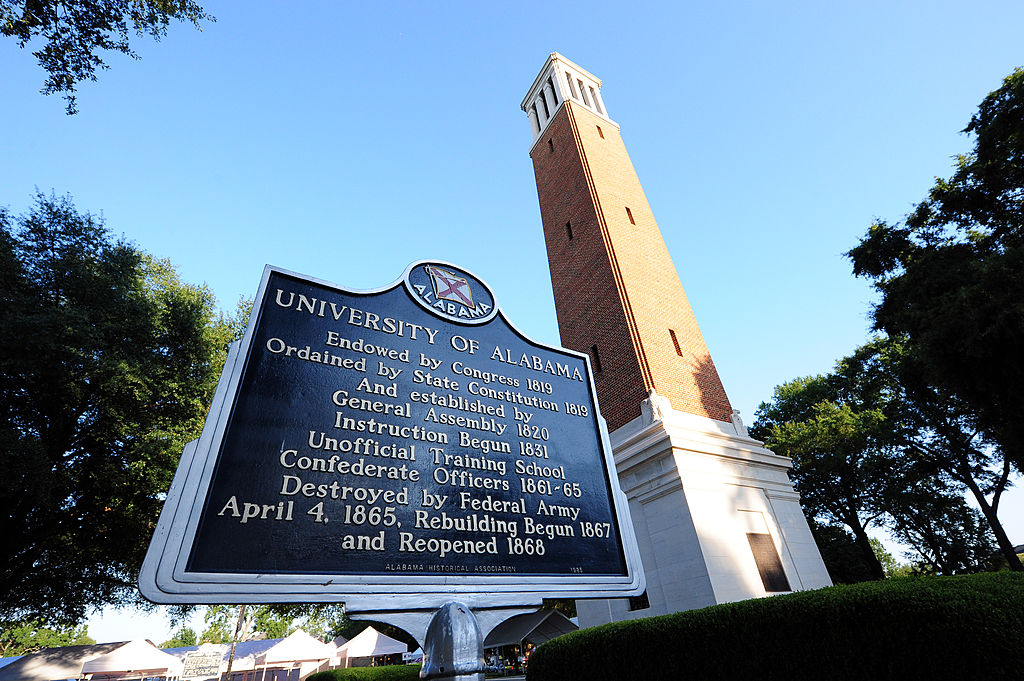
Ideologues are rewriting the history and traditions of the University of Alabama.

The University of Michigan needs real change on DEI.

