

Tightening the screws on the guest-to-permanent-resident pipeline.
DEI by Default
The case for creating the Sasse Society to cultivate higher-ed leaders.
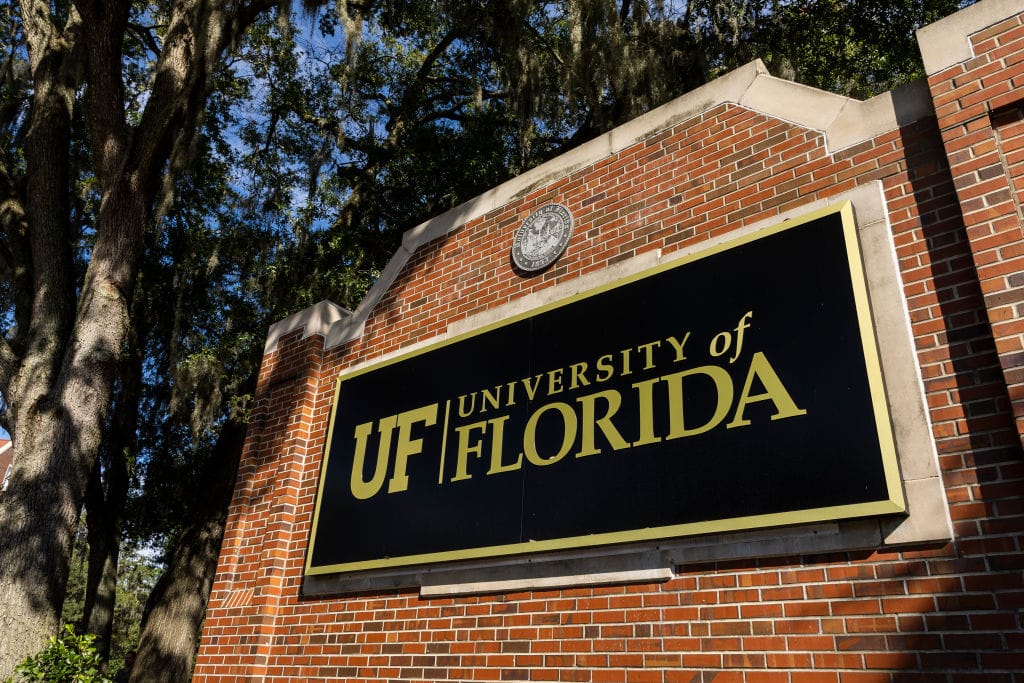
The University of Florida can’t seem to find a candidate for president who doesn’t have a track record championing Diversity, Equity, and Inclusion.
First, its presidential search committee tried to hire Santa Ono from the University of Michigan; now they’re targeting Stuart Bell from the University of Alabama. Florida supposedly opposes DEI, but it’s business as usual in the presidential search process. It seems that the best UF’s committee can get—now that a cruel fate has removed Ben Sasse from public service—are standard-issue products of the academic cursus honorum who blandly assure Florida’s policymakers that they didn’t really believe any of the things they said for years.
This points to a real supply problem. America isn’t just short of tradition-minded professors. It’s almost devoid of quality candidates for leadership positions in higher education administration.
Education reformers are needed to fill thousands of higher-ed administrative positions across the United States. In 2020-21, there were 1,587 public colleges and universities: 752 four-year and 835 two-year. Good candidates for presidents, provosts, and deans—the latter two roles serving also as pipelines for future presidents—are needed to fill positions at these institutions. In the medium term, we must aim to install roughly 20 reformers per institution across the 800-odd public universities where tradition-minded reform has a real foothold. That’s 16,000 education reformers needed just to lead the public universities in the more tradition-minded half of the country.
Unfortunately, the selection procedures in academia almost universally prevent tradition-minded candidates from getting onto the first rungs of academic administration. Faculty committees filter nominees for deans, the lowest position in higher-ed leadership, and radical faculty ensure that no committed opponents of DEI or any similar ideology are elevated to administrative roles. Even external professional search companies (when not committed to DEI policies themselves) are rarely able to sidestep the effects of the dean filtration process. A figure such as Ben Sasse—a tradition-minded U.S. senator who had served as a university president before coming to the University of Florida—becoming president of a public university is extraordinarily rare.
Education reformers need to take immediate measures to begin increasing the number of candidates for higher education administration.
In the short term, they should create an institution that’s a cross between a professional search company and the Federalist Society. Let’s call it the Sasse Society. Its first task should be to assemble a list of 100 education reformers who can fill dean, provost, or university president vacancies in any part of the country the moment an academic search is announced.
This list cannot rely just on tradition-minded reformers currently serving as higher-ed administrators. There are not enough of them. It must include lieutenant governors and state legislators, businessmen and heads of policy institutes—reformers from every walk of life. Ideally, it will have politicians of the rank of Ben Sasse who are willing to spend years of their lives leading a university. Just as Mitch Daniels went from governor of Indiana to president of Purdue University, so the Sasse Society should include individuals such as Under Secretary of Education Nicholas Kent and Florida Governor Ron DeSantis. If we truly wish to reform the academy, we will need men of their caliber to lead our universities.
The Sasse Society’s candidates should be publicly presented as available for any higher-ed leadership position. This is not normal procedure. But the search process for the president of the University of Florida has demonstrated that there must be a steady drumbeat of public pressure on search committees to ensure they will include any reform-minded candidates for higher education administration positions. Reformers should not be forced to criticize the University of Florida search committee after they have already announced a mediocre choice. They should be able to champion better alternatives from the start of the search process—but to do so, those better alternatives must be known to the public.
Baseball players are willing to put their names in for the Major League Draft. If they can do it, so can education reformers.
In the medium and long term, education reformers must prioritize transforming the pipeline for higher education administration. Faculty committees must be removed from the selection of deans so that tradition-minded reformers can gain the experience they need to become provosts and university presidents. Once they have been established, the new autonomous civics institutes should be strip-mined for candidates to lead our universities.
Boards of trustees and state legislators must also ensure that non-academics can enter public university administration. We need administrators of practice, in parallel to professors of practice, regularly appointed as deans and provosts, and eventually elevated to university presidencies. The headmaster of a classical school, for example, should be allowed to serve for a year as a dean of a school of arts and sciences, with the possibility of further promotion in higher ed.
Education reformers should embrace these and other strategies that will bring us more candidates for higher education administration. We need at least 16,000. Currently, we are far closer to zero.
We can and must do better than watching DEI apparatchiks lead our public universities.
The American Mind presents a range of perspectives. Views are writers’ own and do not necessarily represent those of The Claremont Institute.
The American Mind is a publication of the Claremont Institute, a non-profit 501(c)(3) organization, dedicated to restoring the principles of the American Founding to their rightful, preeminent authority in our national life. Interested in supporting our work? Gifts to the Claremont Institute are tax-deductible.
Suggested reading


The Optional Practical Training program must be reformed—or ended outright.
A start toward true and lasting reform.
Philanthropists must aim for total and unconditional victory.
A new project lays bare the use of public funds to promote hateful discourse.

Training policy personnel is crucial in mounting a counter-offensive.

