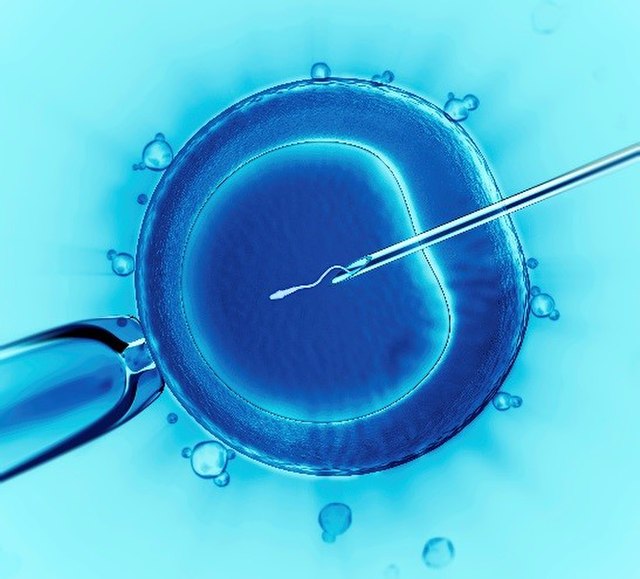

Challenges and opportunities in a fraught domain.
Morally Responsible IVF
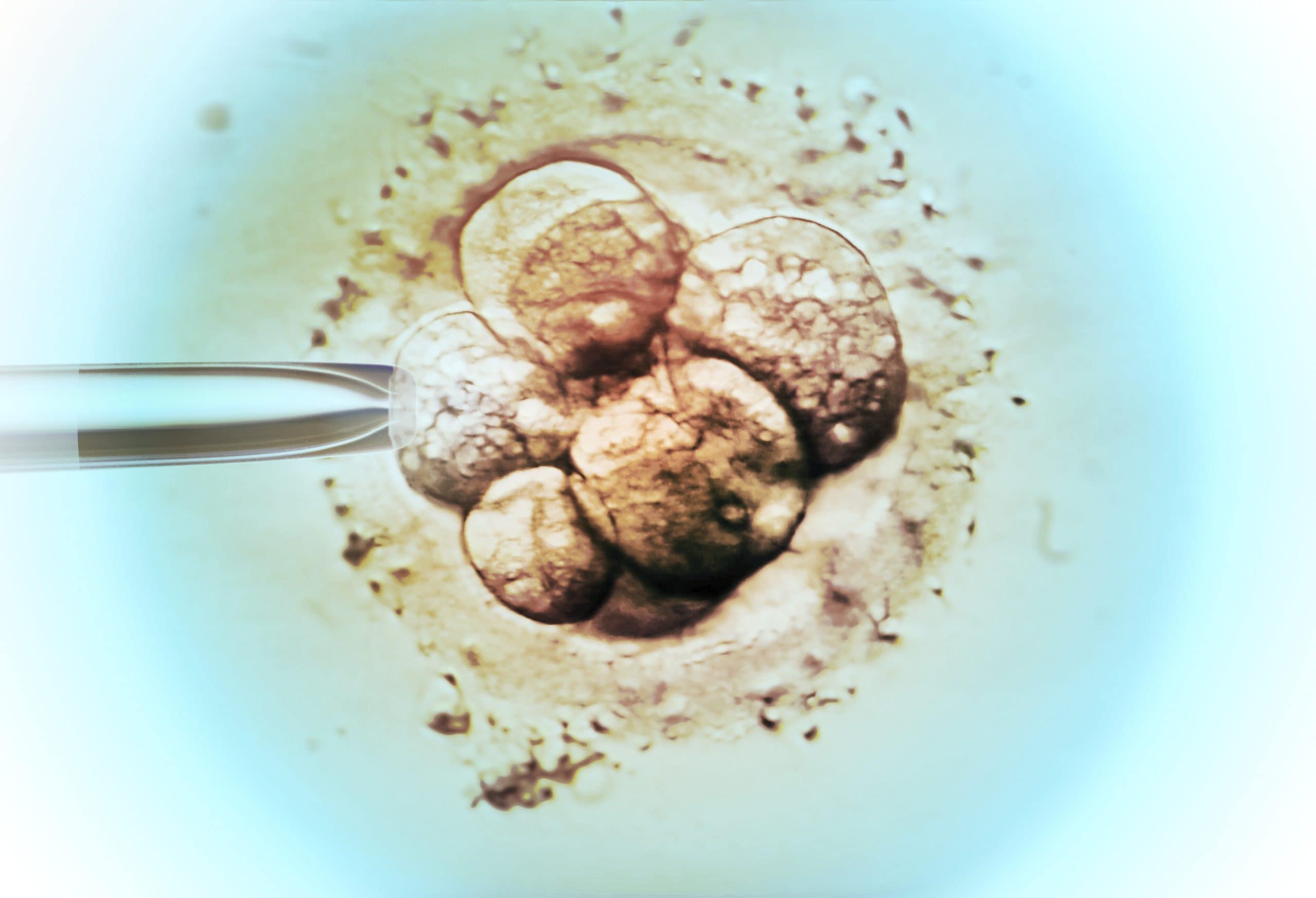
What the pro-life movement needs is clarity, not reactionism.
The debate over IVF has revealed a deep fissure inside the pro-life movement—not over whether life is sacred, but over whether we trust human beings to act in accord with that truth.
When President Trump announced a suite of policies to subsidize and support some forms of IVF, the fiercest criticism didn’t come from the Left. It came from those who consider themselves the most devout defenders of life. They denounced IVF as inherently immoral, condemned those who use it as selfish, and warned that creating embryos outside the womb violates the natural order.
This reaction was characterized more by moral discomfort than by moral clarity. Though the modern pro-life movement has done inestimable good, there are some among its number who conflate the misuse of fertility technology with the immorality of all fertility technology per se. It’s a reactionary posture that treats human innovation as a threat rather than a tool—one that, if guided rightly, can aid nature in its sacred purpose of bringing new life into the world.
I know this because I’ve lived it.
When my husband and I tried to start a family, we never imagined we’d face infertility. We had grown up with the idea that pregnancy happens easily—that it’s almost inevitable. But month after month of disappointment changed everything. When we finally turned to IVF, it wasn’t about convenience. It was an act of faith. Where nature stalled, we decided to pursue life.
There is nothing casual about IVF. It is among the most expensive, invasive, and physically punishing medical procedures available. One cycle costs between $12,000 and $25,000, and many couples must endure multiple rounds before success. Every embryo created represents sacrifice, hope, and a willingness to undergo extraordinary suffering for the chance to hold a child.
Critics point to the roughly 1 to 1.5 million frozen embryos in storage as evidence that IVF “cheapens life.” They misunderstand what those embryos represent. They are not evidence of moral failure; they are proof of human longing. Each one exists because someone wanted that child enough to preserve it, usually at personal expense. These are not discarded lives—they are protected ones, waiting for their turn to be born.
It’s true that some embryos remain frozen indefinitely, and that this raises moral concerns. But every human technology carries risk. Organ transplants, neonatal medicine, and even pain relief can all be corrupted when we lose sight of the ends they serve. Yet we do not reject them wholesale. We regulate them, discipline them, and direct them toward good. IVF deserves the same moral stewardship. The problem isn’t that IVF creates life—it’s that our laws and culture have not caught up with the truth of what that life is.
This is also the right approach from a theological perspective. Scripture never condemns the use of human tools to cooperate with God’s creative power. It condemns the arrogance of replacing Him. IVF, when practiced responsibly, is an act of cooperation, not defiance. It affirms what the pro-life worldview has always taken as its basis: that life is sacred from conception onward, and that our duty is to protect it wherever and however it begins.
IVF becomes morally impermissible only when it separates creation from responsibility—when embryos are discarded, experimented on, or created without a plan for birth. The moral line is not drawn at the lab door; it is drawn the moment we abandon what we have made.
That distinction matters. The real moral failure is not IVF itself, but the abandonment of embryos after creation. The right approach to policy is to redress that failure, not to forbid the procedure altogether.
There are already some state laws that set a model for enforcing responsible use of IVF. The Alabama Supreme Court’s 2024 ruling—defining frozen embryos as children under state wrongful-death law—was denounced by the usual leftist commentators as backward and theocratic. But it proved something profound: when the law recognizes embryos as babies, it fundamentally changes how parents, doctors, and clinics act. If every embryo is legally a child, no one can casually discard, donate, or destroy one. The decision-making matrix changes entirely. The so-called “convenience user” of IVF must now approach it with the same gravity as any act of parenthood. Far from destroying IVF, the clarity provided by these kinds of laws can redeem it.
True responsibility begins with acknowledging that an embryo is a baby. From there, a coherent pro-life policy framework follows. Limit embryo creation to the number a family intends to bring to term. Require clear disposition plans before treatment begins, so that no child is left indefinitely frozen. Ban embryo destruction and experimentation. Expand embryo adoption programs modeled on organ donation. Clarify legal parenthood and personhood for embryos in storage.
These principles would eliminate the abuses critics cite while preserving the freedom of families to pursue children ethically. Abuses of IVF would end if the law simply required parents to treat their embryos as what they already are: their own children.
That is exactly what my husband and I did. We committed to giving every embryo we created a chance at life—either through my own pregnancies, or through embryo adoption if I could not carry them. We worked with the National Embryo Donation Center, whose board includes faith leaders committed to protecting life. That decision brought us peace, knowing our embryos—our babies—would be cared for and given the opportunity to be born.
We also refused to genetically test or rank embryos by “quality.” Life is not a hierarchy of worth. We would never end a pregnancy because of a diagnosis; why would we reject an embryo for the same reason?
Some will say that any act of assisted conception undermines the mystery of creation—that to touch the process is to profane it. But the truth is the opposite. IVF makes visible what we too often ignore: the miracle of conception itself. It forces us to confront the human person at her earliest and most fragile stage. If anything, IVF deepens our reverence for life by showing us just how miraculous it really is.
The pro-life movement now faces a choice: to cower from modernity or to redeem it. Technology will march forward whether we bless it or not. The question is whether it will serve a culture of death or a culture of life. In this battle, IVF is not the enemy of life. Moral negligence is. And the future of a truly pro-life society depends on knowing the difference.
The American Mind presents a range of perspectives. Views are writers’ own and do not necessarily represent those of The Claremont Institute.
The American Mind is a publication of the Claremont Institute, a non-profit 501(c)(3) organization, dedicated to restoring the principles of the American Founding to their rightful, preeminent authority in our national life. Interested in supporting our work? Gifts to the Claremont Institute are tax-deductible.
Also in this feature