

We need to think big as Americans—and as heirs of our noble inheritance.
The American Founding as the Best Regime
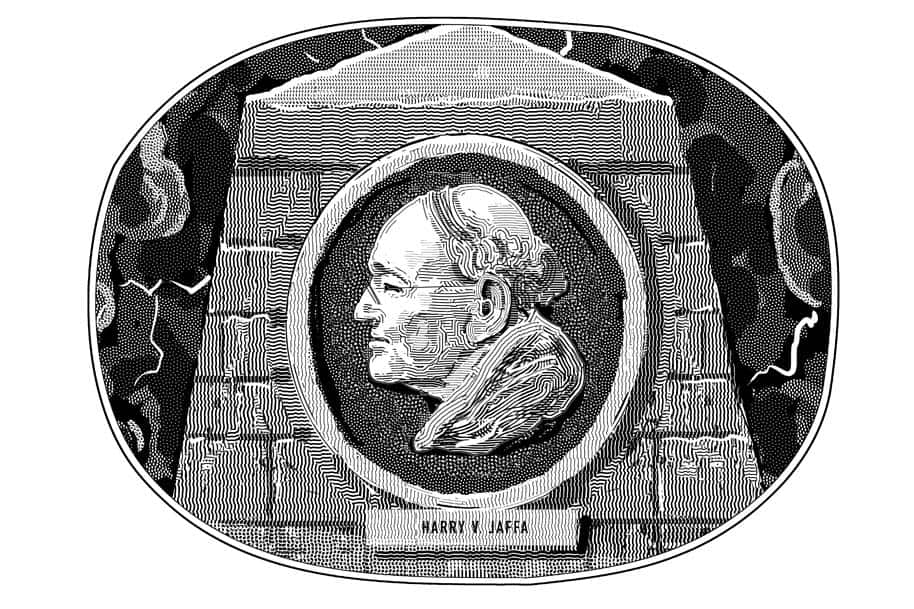
The bonding of religious and civil liberty we enjoy in America would have been impossible in the ancient world.
Editors’ Note
In this monograph from the Claremont Review of Books archives, Harry V. Jaffa argues that America is very close to the best regime possible in practice, given the nature of the modern world.
In the great journal of things happening under the sun, we, the American people, find our account running, under date of the nineteenth century of the Christian era. We find ourselves in the peaceful possession, of the fairest portion of the earth, as regards extent of territory, fertility of soil, and salubrity of climate. We find ourselves under the government of a system of political institutions, conducing more essentially to the ends of civil and religious liberty, than any of which the history of former times tell us.
— Abraham Lincoln January 27, 1838
The Preamble of the Constitution crowns its enumeration of the ends of the Constitution by declaring its purpose to “secure the blessings of liberty to ourselves and our posterity.” No words of the Constitution reveal the intention of the Constitution more profoundly than these. The Preamble is the statement of the Constitution’s purposes, and this culminating purpose embraces and transcends those that have gone before. Alone among the ends of the Constitution, to secure liberty is called a securing of “blessings.” What is a blessing is what is good in the eyes of God. It is a good whose possession—by the common understanding of mankind—belongs properly only to those who deserve it. We remember that the final paragraph of the Declaration of Independence appeals to “the Supreme Judge of the World for the rectitude of our intentions.” It is by “the authority of the good people of these colonies” that independence is declared. It is because of this assurance of their rectitude that this good people, and their representatives, placed “a firm reliance on the protection of Divine Providence.” We commonly call blessed those who enjoy in great measure wealth and health and freedom. And so it is that men pray for these things. Yet the sufferings of the innocent and the flourishing of the wicked—especially the great tyrants—teach us that to be blessed is not the same thing as to be in the enjoyment of worldly goods, of what Aristotle calls external goods. It is an element of the natural theology of mankind—that is partly implicit and partly explicit in the Declaration of Independence—that the compensations, both of evil and of good, are not altogether those visible in the natural order. Hence Aristotle says that what men should pray for is that these external goods be good for them. When men are poor, they seem to wish only for wealth. When they are ill, for health. When they are enslaved, they long only for freedom. This is altogether understandable.
Nevertheless, reflection teaches us that the possession of health, wealth, and freedom are not the ultimate measure of human well-being. We know that there have been human beings who, being in the full possession of health, wealth, and freedom, have yet committed suicide. Health, wealth, and freedom must be combined with something else before they become ingredients of the human good, before they become blessings, properly so called. Aristotle says that no man, even with all the other goods for which men pray, would wish to live without friends. And—although they are usually surrounded by flatterers—tyrants do not have friends, certainly not the kind of friends who make life worth living. The Virginia Bill of Rights of June 12, 1776, affirmed a fundamental principle of the Revolution and of the Founding—providing by anticipation a gloss upon the words of the Preamble—when it declared that:
…no free government, or the blessings of liberty, can be preserved to any people, but by a firm adherence to justice, moderation, temperance, frugality, and virtue, and by a frequent recurrence to fundamental principles.
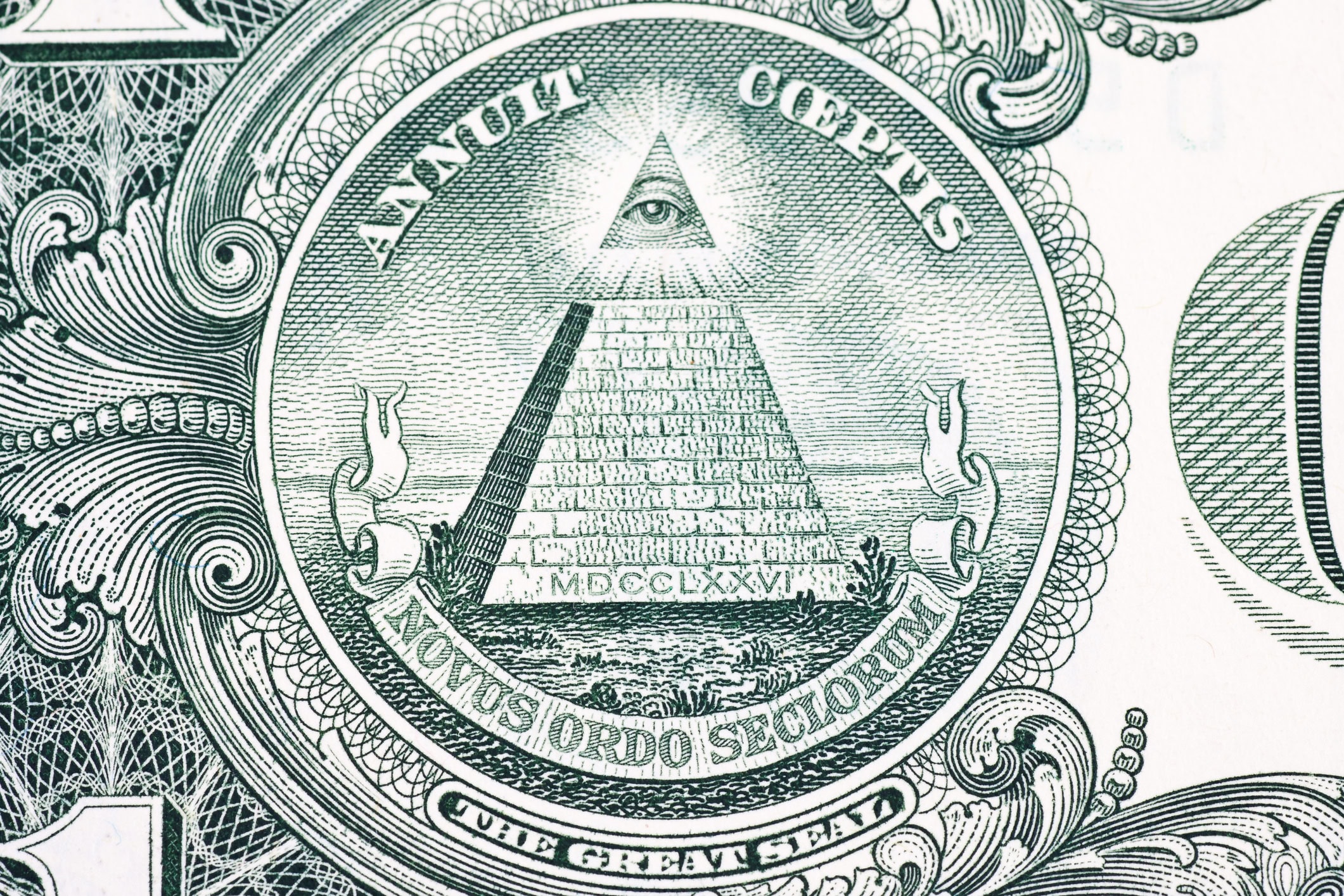
The idea of liberty—or the liberty which is a blessing—being an emancipation of the passions from moral restraint had no place in the constitutional doctrine of the novus ordo seclorum. The liberty which is a blessing must be good for the one who possesses it. It must therefore be a good in the sight of God, who is the source of blessings. Such a good must point to felicity, whether in this world or the next, as its consummation. By calling the advantages of liberty “blessings,” the Constitution, which in certain respects makes perhaps the most radical break in all human history with all that has gone before it, nonetheless, in its understanding of the connection between happiness and virtue, aligns itself decisively with traditional moral philosophy and moral theology.
***
The Constitution of the United States meant to do what, in fact, it has done. By grounding the regime in the doctrine of human equality, proclaimed in the Declaration of Independence, it has, as Lincoln said, cleared paths for all, given hope to all, and, by consequence, enterprise and industry to all. To a degree hitherto unimagined as possible, it has lifted the burden of unjust inequality—”the oppressor’s wrong, the proud man’s contumely”—from the backs of the common people. As the Virginia Bill of Rights shows, the Framers never conceived the blessings of liberty in nonmoral terms. They never imagined it to encompass the exhibitionism of lesbians, sodomites, abortionists, drug addicts, and pornographers. The people are the source of the authority of the Constitution—of all lawful authority. In Jefferson’s words, the people “are inherently independent of all but moral law” (letter to Spenser Roane, September 6, 1819). Let us not, however, forget, that “but.” Absent the moral law, a people becomes a mob. And mobs give rise not to free government, but to despotism. That is the theme of Lincoln’s Lyceum speech in 1838.
Read the rest here.
The American Mind presents a range of perspectives. Views are writers’ own and do not necessarily represent those of The Claremont Institute.
The American Mind is a publication of the Claremont Institute, a non-profit 501(c)(3) organization, dedicated to restoring the principles of the American Founding to their rightful, preeminent authority in our national life. Interested in supporting our work? Gifts to the Claremont Institute are tax-deductible.
Also in this feature
Americans must look to the principles of nature and eternal reason.
It was the cornerstone of the American founding.

Though our task is daunting, our moral duty remains.
Is it coming to a close, or just getting started?

