

It’s in the hands of the judicial and legislative branches.
The Enduring Quest for Self-Government
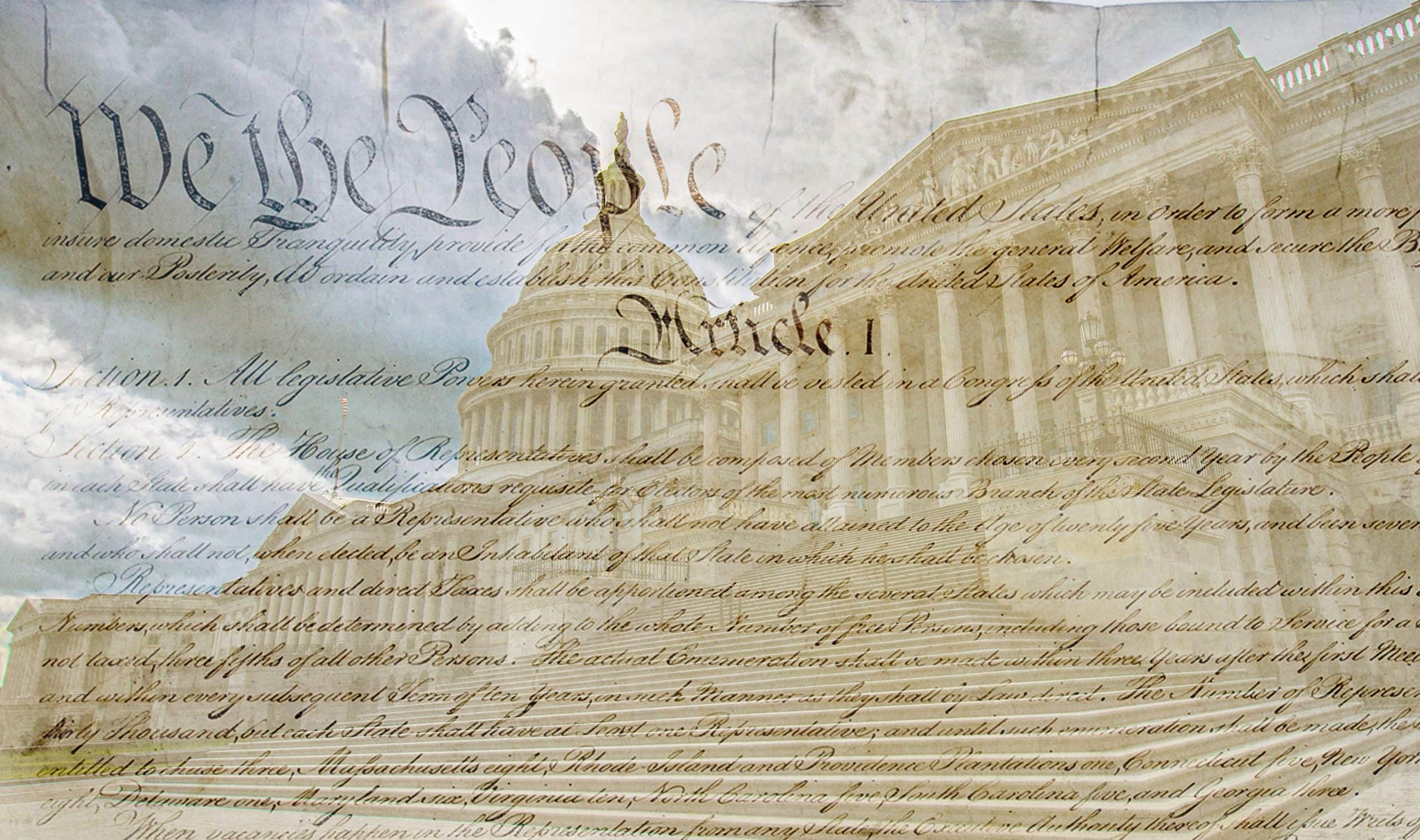
It’ll take more than one administration to end the administrative state.
We no longer live in a republican regime, properly speaking. We are instead governed by a class of administrators whose claim to rule is based on expertise rather than the consent of the governed. As Ronald J. Pestritto argues, President Trump’s administration has embarked “on the most extensive project since at least the 1930s to reclaim executive power from unelected bureaucrats and judges.” It’s hard to disagree with Pestritto’s observation that, in a more constitutionally sound world, we would not have to rely on the executive branch alone to do this heavy lifting. But as the saying goes, here we are. Whatever one might think of the current occupant of the White House, he is elected by the people—which is more than can be said of federal bureaucrats and judges. Ironically, those who complain most loudly about assaults on “our democracy” are least committed to restoring it.
The reality is that Congress has abdicated its constitutional responsibilities. Scholars have long noted that Congress’s function and self-understanding have shifted dramatically away from the framers’ design. These shifts began in earnest in the mid-20th century and have continued largely uninterrupted in the 21st. Congress no longer concentrates on legislation or careful constitutional oversight of the administrative state it has created. Instead, individual members find re-election rewards in acting as ombudsmen between the massive federal bureaucracy and various coalitions of constituents or interest groups. Congress has come to have a more or less permanent interest in solving bureaucratic problems—and therefore in maintaining and even expanding the bureaucracy. There is little incentive to engage in the risky business of large-scale legislation, much less in cutting or exercising meaningful control over the vast administrative apparatus of modern American government.
The Trump Administration has engaged the problem of administrative autonomy in a variety of ways, including demanding the repeal of facially unlawful regulations and the review of new ones by the Executive Office of the President. And it has demanded accountability from agencies by exercising the power to hire and fire senior officials. The administration has also argued for the power to remove certain senior officials at will, even when Congress attempts to insulate them from executive removal and control. This is a power the Supreme Court is poised to grant, if, as seems likely, it overturns the 90-year-old precedent set by Humphrey’s Executor v. United States (1935).
But what are the long-term prospects for the success of this project? Our constitutional history shows that the present administration’s efforts are only the latest in a long series of attempts to bring the administrative state to heel. The form of our regime began to change long ago. The problem of administrative autonomy from the political branches has been around at least since the New Deal.
Headless Wonder
The problem was noted by none other than President Franklin Roosevelt, who paradoxically led the effort to establish the federal administrative state. By 1936, he was so worried about the independence of a new class of expert administrators that he struck a committee to study the problem. Headed by the progressive intellectual Louis Brownlow, the committee coined a phrase, the “headless ‘fourth branch’ of government,” to describe those entities whose autonomy and opacity allowed them to operate independent of the executive branch to which they nominally reported. Speaking in language that might be music to the ears of the Trump Administration, the committee report noted that “The President is indeed the one and only national officer representative of the entire Nation.”
Confronted with the problem of multiplying New Deal agencies, the committee insisted on modern principles of management, including centralizing a large team of presidential advisors in what would become the Executive Office of the President. Their task would be to “facilitate the flow upward to the President of information,” and the flow downward of presidential decisions. Only through these modern principles, according to the committee, could the proper balance be struck between expert management and the consent of the governed. Alas, in the post-war decades, the balance continued to shift in favor of the experts.
Richard Nixon was America’s first modern president. He not only confronted the New Deal Leviathan, but also the full panoply of Great Society programs and bureaucracies that still radiate from Washington, D.C. Nixon was famously highly suspicious of the power of these unaccountable bureaucracies, as well as the danger of capture by interest groups not accountable to the people. He specifically cited the Brownlow Committee in a special message to Congress in 1971, wherein he claimed that “the most significant consequence of scattered responsibility in the executive branch is the hobbling effect is has on elected leadership—and, therefore, on the basic principles of democratic government.”
In his memoirs, Nixon articulated his desire to break the “iron triangle” of lobbyists, congressional committees, and bureaucrats, who routinely act in concert to repose more power in the organs of the permanent state at the expense of the people and their representatives. He reports that in his first term, he urged cabinet members to act with alacrity lest they become captives of the bureaucracy. By 1972, his view had changed. He notes his “mistake” of leaving initiative to individual cabinet members. By his second term, he sought to ensure accountability by concentrating power to an even greater degree around the president. He had concluded that there was simply no other way to bring the administrative state under constitutional control. Nixon aide John Ehrlichman sardonically remarked in late 1972 that senior presidential appointees were only seen at White House Christmas parties. They then “go off and marry the natives.”
As President Reagan was leaving office in 1988, he too lamented that an iron triangle had shifted America from its constitutional foundations. He identified the points of the triangle as Congress, the media, and interest groups. Its power, he said, derives from its permanence. While administrations come and go, Congress endures as a permanent chamber with remarkably little turnover. Furthermore, it no longer represents the people, but serves as a tool of the media and their fleeting obsessions, along with interest groups, which push in unison to preserve and expand the administrative state. Reagan was, in effect, lamenting his administration’s failure to tame the beast. The presidency, he noted, had become a vastly weakened institution.
Just Getting Started
There is a clear line of continuity from FDR to Nixon, to Reagan, to Trump. Each president sought in his own way to grapple with the tension that progressive political theory laid bare at the beginning of the 20th century: purportedly apolitical “expertise” cannot be reconciled with republican self-government. Only the most determined chief executive is likely to tilt the balance back toward the republican form. Despite President Trump’s willingness to engage our constitutional disorder, it remains to be seen whether he can succeed beyond racking up evanescent victories.
I am not sanguine about the likelihood of courts being reliable allies in a sustained effort to roll back the administrative state. As I have argued elsewhere, by the mid-20th century progressives and conservatives alike had became suspicious of unaccountable administrative power. But by the 1970s it was progressives who harnessed the energy of courts to challenge administrative actions, or a lack thereof, that did not please them. They often sued not to restrain the exercise of administrative power but to demand it in pursuit of a variety of objectives they could not successfully pursue at the ballot box. They succeeded in energizing interest groups to move the levers of the administrative state in ways that the Nixon and Reagan administrations did not want, thereby insulating the administrative state from political direction and control.
By the time the Chevron case was decided, many conservatives were fully on board with having courts step back from meddling in what they understood to be executive affairs. Nowadays, progressives are similarly challenging the Trump Administration at every turn. While the present Supreme Court has shown some willingness to protect properly executive power from unreasonable challenge, there is no guarantee that courts will consistently defend self-government against the imperious claims of expertise, whether emanating from the bureaucracy or courts themselves.
Furthermore, it’s highly unlikely we can expect Congress to start doing its job and carefully draft statutes such that good-faith judges can interpret the will of the people. Congress might choose instead to delegate, in effect, to courts themselves, and thereby encourage a new era of rule by judicial decree.
Decisive shifts toward non-consensual government are almost a century old. Our Byzantine bureaucracies were not built in a day, and they will not be undone by a single administration. In 2026, we will not see the end of the long quest for the restoration of republican self-government. We will likely not even see the beginning of the end. But if the American people choose to embrace the present administration’s fight against administrative despotism, the year will give us something to celebrate.
The American Mind presents a range of perspectives. Views are writers’ own and do not necessarily represent those of The Claremont Institute.
The American Mind is a publication of the Claremont Institute, a non-profit 501(c)(3) organization, dedicated to restoring the principles of the American Founding to their rightful, preeminent authority in our national life. Interested in supporting our work? Gifts to the Claremont Institute are tax-deductible.
Also in this feature
Overturning Humphrey’s Executor is not enough.

Recovering republican government in the 21st century.

Opponents of the administrative state shouldn’t give up on the Founders’ design.
He’s taking on the modern administrative state.
Our problems are many, the solutions are few.

