

It’s in the hands of the judicial and legislative branches.
How the Trump Administration Is Taming the Administrative State
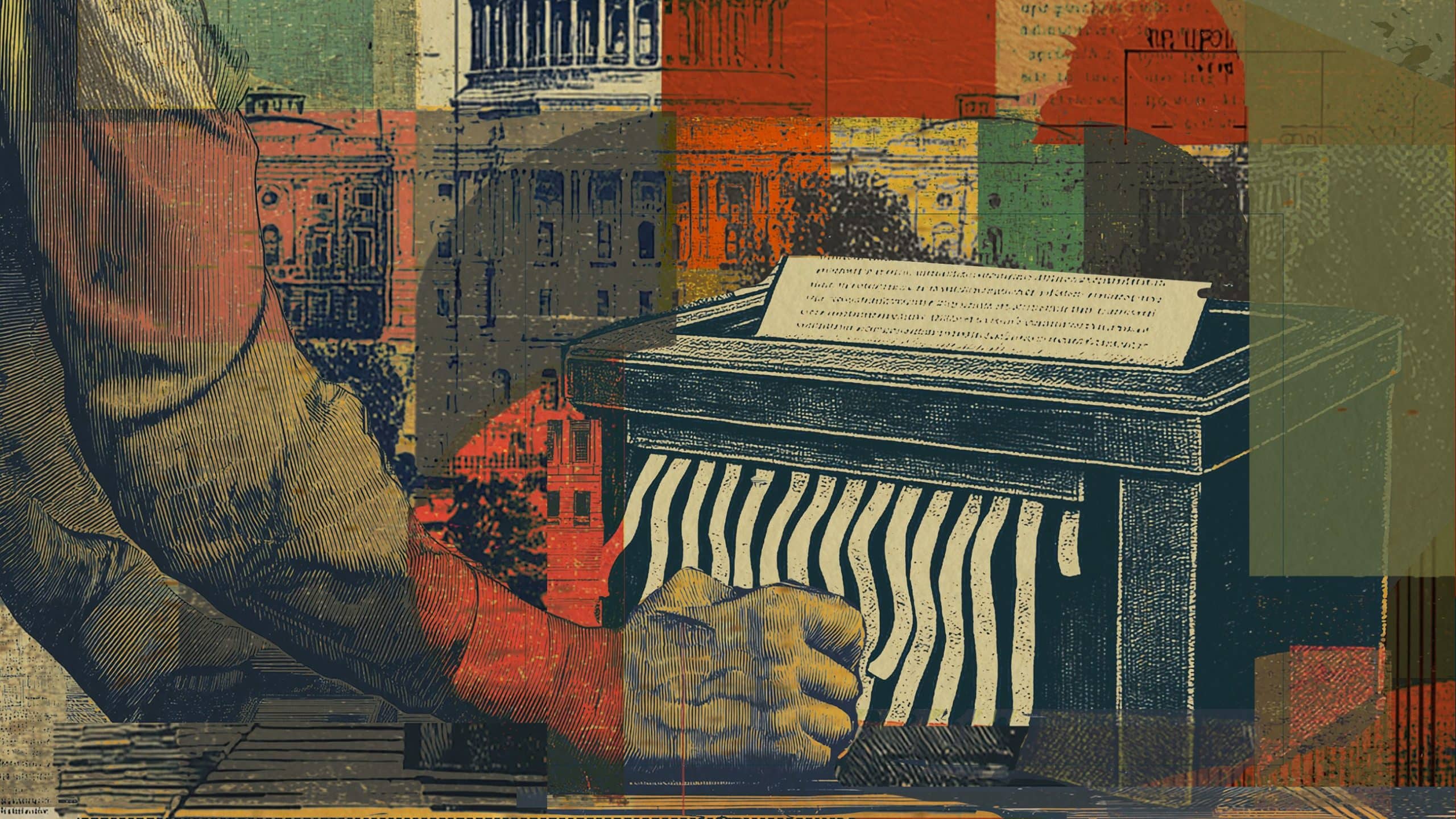
Recovering republican government in the 21st century.
Editors’ Note
The piece below, which opens our latest symposium, is based on Ronald J. Pestritto’s new Provocation for the Center for the American Way of Life, “Government by the Unelected: How it Happened, and How it Might be Tamed,” which is also available in paperback and e-book formats at Amazon. Contributors in this symposium will be mainly responding to Section III, “The Present Attempt at Restoration,” of the larger essay.
As part of its celebration of the 250th anniversary of American independence, the Claremont Institute’s Center for the American Way of Life has published my Provocation, “Government by the Unelected: How it Happened, and How it Might be Tamed.” This full-length essay seeks to assess how the Founders’ principles have fared after 250 years. I argue that government by the consent of the governed has gradually diminished—especially in the 20th and 21st centuries—and has been substantially replaced by the government of a permanent, unelected, and allegedly expert class.
The fuller work traces the history of this development, pointing both to the rise of the Progressives in the latter part of the 19th century and to the role of the federal courts in enabling the Progressive remaking of American government during the 20th century. These phenomena will not be unfamiliar to readers of my scholarly work or that of others in the Claremont Institute’s orbit.
My opening piece in this symposium focuses on the final part of “Government by the Unelected,” which covers the remarkable effort President Trump and his administration are undertaking to restore some semblance of government by consent. While the Left and its acolytes in the media decry this approach as an assault on “democracy,” the administration has, in truth, embarked on the most extensive project since at least the 1930s to reclaim executive power from unelected bureaucrats and judges.
It would be far preferable if we did not have to rely exclusively on the president in the current effort to restore government by consent. In addition to their elected president, the sovereign people are supposed to rule through their elected Congress—and Congress could certainly do much to stick up for its constituents and rein in the bureaucrats and judges. But it is because of Congress that we are in this position in the first place, and no fair-minded observer can plausibly believe that today’s congressmen are likely to take back the vast authority they have given away to agencies and courts. For better or worse, it has been left to the people’s other representative—the elected president—to regain for them the means to choose how they are governed.
Let’s set the scene for the situation coming into President Trump’s second term. Under the Obama and Biden administrations, rule by bureaucratic decree was standard practice. Unelected bureaucrats pushed through major policies that weren’t popular enough to be approved by voters, including immigration amnesty, climate change and vaccine mandates, student loan forgiveness, eviction moratoria, and biological males in schoolgirls’ bathrooms.
After decades of enabling bureaucratic rule, however, the Supreme Court has started to pare back the authority of the administrative state in important ways, and officials in the incoming Trump Administration have been clearly paying attention. Much of what is now being attempted by entities in Trump’s Executive Office, like the Office of Management and Budget (OMB) and the Office of Information and Regulatory Affairs (OIRA), has been inspired by the recent signals from the high court.
Within the last year or two, we have seen the demise of Chevron deference—a 40-year-old doctrine that permitted agencies to judge the extent of their own powers. In another major decision, the Supreme Court stopped agencies from imposing civil penalties without first going to an independent Article III court. (For years, they had been allowed to issue and enforce penalties simply by using their own in-house enforcement mechanisms.) And, finally, we have also seen the rise of the so-called “major questions” doctrine, where the courts have started to require what they should have been requiring all along: that agencies exercising power on a major question of public policy must first be able to point to a law where Congress has specifically granted them the power to do that.
Add to these important legal wins the fact that we again have a president who is focused on reining in the bureaucracy by making it accountable to voters. There are two important parts of this effort, the first of which has gone almost unnoticed.
Who Rules?
The president issued an executive order in February that massively reduced the independence of so-called independent regulatory commissions. These are very powerful agencies (for example, the FTC, FCC, NLRB, etc.) that have been free to regulate independently of presidential oversight ever since they were established. The Trump EO overturned an earlier Clinton EO, requiring all regulations from the agencies to go through the OIRA review process—basically to get the approval of the elected president. Most consequentially, it forbids these agencies from interpreting federal law in any way that contradicts the views of the presidential administration.
More well-known have been the president’s efforts to make top agency officials accountable to him as the elected president. Without bureaucrats being accountable to elected officials, we don’t really have a republic. Nowadays, we are effectively governed by these agencies—they make vaccine mandates, forgive student debt, tell you what kind of car to buy, and so on. The people vote for the president, but if the agencies in his executive branch don’t have to follow him, then the votes of Americans don’t affect how they are governed. The only way agencies can be made to follow the policies of the elected president is if he has the ability to hire and fire top agency officials. The same principle applies to any company or organization—boards hire a chief executive to carry out their policies, but they can’t really govern their organizations if employees are beyond the control of their chosen executive.
Yet we know that over the decades since the Progressives gave us the administrative state, Congress has created numerous agencies that defy this very principle of democratic accountability. Congress has walled off large parts of the bureaucracy from presidential control. This is typically done by writing in the law that its top officials cannot be removed by the president, or can only be removed “for cause” and not “at will.” How can this be if, per the Constitution, the elected president is the only one who is supposed to be able to exercise the executive power?
The Trump Administration has clearly decided to force the courts to answer that very question. Since the 1930s, they have botched the answer. But within recent years, the Supreme Court has given signs that it wants another shot at taking the test, and that it might get that answer right this time around. This is what helps explain the president’s firing of top officials from the National Labor Relations Board and the Federal Reserve, among others, even though the law and existing court precedent suggest he cannot do that.
It should be no surprise that the president is mostly losing on this issue in the lower courts. Even if district judges were more sympathetic to the president’s aims, the lower courts are not in a position to overturn existing Supreme Court precedent. Instead, these questions have to filter their way up the appellate ladder, where they can be reconsidered and where new, more constitutionally sound precedents can be handed down.
Ending the New Deal Nightmare
The worst precedent on this front is the 1935 case of Humphrey’s Executor v. United States. In a unanimous decision, the Supreme Court turned its back on the constitutional understanding that had prevailed since the Founding, deciding that it was permissible for Congress to remove parts of the executive branch from the control of the people’s elected chief executive. Without this decision, the administrative state as we know it would not exist. But the Supreme Court has, in recent years, been signaling a potential reconsideration of Humphrey’s, and the president’s high-profile firings of top agency officials indicate he is looking to seize on that opportunity.
Early indications are good that the Supreme Court will eventually overturn the Humphrey’s case. In May, the Supreme Court in Trump v. Wilcox supported the president in his removal of a commissioner of the National Labor Relations Board. Although the justices did not consider the full merits of the question, they did indicate that the president was likely to succeed if such a case came before them. In July, the Court—with identical reasoning—allowed the president to remove members of the Consumer Product Safety Commission. Overturning precedents like Humphrey’s Executor is necessary to begin getting the administrative state under control.
In its Wilcox decision, the Court seemed to say that agencies cannot be shielded from the president’s removal power—except maybe the Federal Reserve. But its reasons for this exception were vague, which is unsurprising, because it’s not clear why, as a matter of constitutional principle, the Fed gets special status. Even if as a matter of policy one might support the Fed being independent from politicians, that doesn’t answer the constitutional question. For any governing authority to be exercised in our country, it ultimately has to be ordained by the people. In the system of government outlined in the Constitution, the people do that ordaining by establishing three branches of government—and only three branches.
Is the Fed in either the legislative branch or the judicial branch? It is in neither, so it must be in the executive branch. But if that’s the case, how can the Fed be outside the control of the elected president? He’s the only one to whom the people grant executive power in the Constitution. It will be difficult for the Supreme Court to dance its way around this little conundrum, much as it may try to claim that the Fed is some kind of private institution that nonetheless exercises a huge amount of public authority.
Nor is President Trump inclined to help the Court dodge the question. Just a few months after the Court signaled that it might stop short of embracing presidential removal for the Fed, the president fired Fed Governor Lisa Cook. To no one’s surprise, including the administration’s, the removal was enjoined by a strategically chosen district judge. But the president is looking to the higher levels of the judicial ladder, and the Supreme Court will now ultimately have to explain why the Fed gets to make hugely consequential national policy decisions while retaining its independence from the only officials whom the voters have constitutionally empowered to make such decisions—an independence the Court no longer seems inclined to extend to any other federal entity.
And the Trump Administration has thrown one additional curveball in this case.
The law governing the removal of officials at the Fed is like many of the laws pertaining to independent agencies, mandating that officials may only be removed by the president “for cause.” Similar to ordinary employment or contract law, this is typically taken to mean that one cannot be fired “at will.” Or, in this case, one cannot be removed simply because a president may prefer an official more sympathetic to his own policy views. Instead, at least as these laws have generally been interpreted, as long as an official does not commit a serious wrong—theft, bribery, or other obvious forms of malfeasance—he is presumed to be safe from presidential removal, even if he is executing policy in a manner entirely at odds with the wishes of the elected chief executive.
The curveball with the firing of Fed Governor Cook is that President Trump maintains this was not an “at will” firing, but that he removed Cook “for cause.” She is the subject of a criminal referral for mortgage fraud from the Federal Housing Finance Agency. At the time of this writing, Cook is also the subject of a federal grand jury investigation. So even if one were to say that it is constitutionally permissible for Congress to restrict the president to “for cause” removals, he is saying in this case that there is cause, and is thus arguably following the letter of the law. As with the question of “at will” presidential removals, whatever the Supreme Court ultimately decides on “for cause” removals will also have deep significance for the power of the administrative state, and for the president’s ability to make the bureaucracy more politically accountable.
Hysteria on the Left about the “death of democracy” notwithstanding, this brief snapshot of what the Trump Administration is up to suggests that a serious effort is underway to re-establish democratic and constitutional government. Much rides on what the Supreme Court will decide in the several pertinent cases it has on its docket this term. Even more rides on whether voters, in the 2026 and 2028 elections, wish to take advantage of this opportunity to regain their status as republican citizens, or will instead choose to remain subject to bureaucratic despotism.
The American Mind presents a range of perspectives. Views are writers’ own and do not necessarily represent those of The Claremont Institute.
The American Mind is a publication of the Claremont Institute, a non-profit 501(c)(3) organization, dedicated to restoring the principles of the American Founding to their rightful, preeminent authority in our national life. Interested in supporting our work? Gifts to the Claremont Institute are tax-deductible.
Also in this feature
Overturning Humphrey’s Executor is not enough.
Opponents of the administrative state shouldn’t give up on the Founders’ design.
It’ll take more than one administration to end the administrative state.
He’s taking on the modern administrative state.
Our problems are many, the solutions are few.

