

DEI threatens the integrity of our military—and our republic.
America’s War in the Americas
Because of the Trump Administration, the U.S. finally has a strategy.
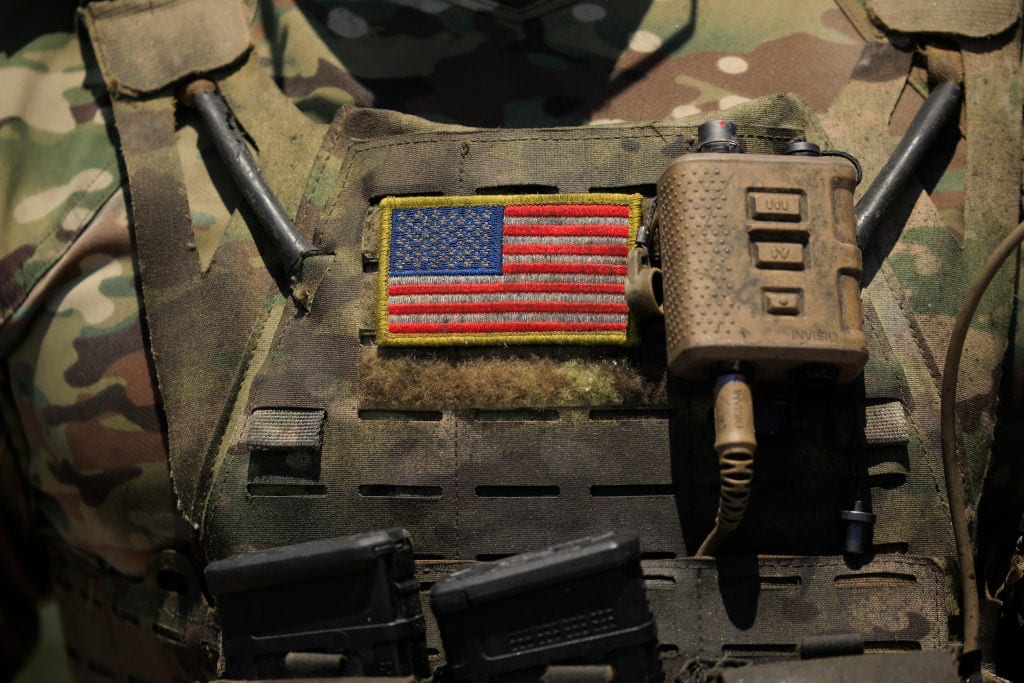
The footage was grainy and imprecise, the black-and-white nighttime combat visuals to which Americans have become accustomed over the past generation. Still there they were: American aircraft and American soldiers in action, another strike in defense of a nation at war. Yet this combat operation was not part of the American war with Iran, then only four days old: the announcement on March 3, followed by another on March 6, concerned American forces in Ecuador.
With the cooperation of Ecuadorian authorities, the United States attacked narco-terrorists who were reportedly a splinter faction of FARC, a guerrilla force that once sought leftist revolution in Colombia. Now having devolved into a cartel with socialist characteristics, its successors find themselves on the receiving end of American violence. The two military actions received relatively little attention in U.S. media: an air-assault infantry raid in the Andean region isn’t as telegenic as B-2s flying over Isfahan. But they just might be as portentous.
For the first time in history, beginning with the epochal Caracas raid of January 3, 2026, the U.S. Armed Forces have deliberately and programmatically entered direct combat on the South American continent. The 19th century saw a handful of gunboat-diplomacy episodes there, to be sure: the U.S. Navy landed on the Falklands once; U.S. Marines came ashore to guard against disorder in Montevideo, Buenos Aires, and Valparaíso; and a punitive expedition was sent to extract compensation for a Paraguayan attack on an American vessel. But these were episodic and indicative of no larger strategy on the part of the United States.
What we see now, however, is something else altogether: there is a strategy, there is engagement, and there is—in the euphemism beloved of the defense establishment—kinetic action, which does not look to be ending any time soon.
At the Shield of the Americas (SOTA) summit convened by President Donald Trump on March 7 in Doral, Florida, 17 Western-hemispheric chief executives committed to both the SOTA itself—which has a broad if undefined sphere—and, more significantly, to its military counterpart in the Americas Counter Cartel Coalition (ACCC). This is the operational heart of this incipient alliance. At its core, according to the president, “is a commitment to using lethal military force to destroy…cartels and terrorist networks.” (President Trump had previously declared these groups de facto the same in his January 20, 2025, executive order, “Protecting the American People Against Invasion.”) In effect, the United States is now the animating force—up to and including boots on the ground and fires delivered—against those networks. Perhaps more importantly, America under the ACCC also finds itself, by implication, acting against the governments that harbor and sponsor them while acting on behalf of the governments that oppose them.
Even before these announcements, combat was already underway well. Follow-up reports on the Ecuadorian actions revealed that one of the targets was in fact a dairy farm (by no means mutually exclusive with a guerrilla hideout), which illustrates the complexity and opacity of the theater in which American arms now engage.
Americans ought to grasp the novelty in these military actions because they are taking America and American forces into new territory, both strategically and literally.
Getting the Big Question Right
The ACCC, properly understood, is an operational partnership rather than an alliance as such. There is no treaty undergirding it, nor is there any multilateral coordination or superseding structure among the various parties. Instead, there is military-to-military cooperation on an apparently bilateral basis between the United States and willing regimes. Those regimes are a roster of the reemergent Latin American and Caribbean Right that has been winning elections throughout the past year.
Some of them—for example, the Dominican Republic and Trinidad and Tobago—have already been active participants in the American Armed Forces’ combat operations in the region. (Both nations provide staging support for Operation Southern Spear, and by implication the Caracas raid.) Some of them, like Argentina and Paraguay, are ideologically aligned but not necessarily militarily engaged. Paraguay, having tentatively agreed to a Status of Forces Agreement with the United States in December, may be headed in that direction. Still others, including Bolivia and Ecuador, are erstwhile stalwarts of the Latin American Left now in the midst of a realignment with the United States.
All of them may call upon American aid, firepower, and forces against domestic opponents that, either indirectly or directly, are influenced by cartels or terror organizations. This is fundamentally a U.S. relationship with regimes, not states, although this can be a distinction without a difference in Latin America.
It therefore carries two major consequences that Americans ought to understand.
One is that the United States will likely take action on a regime’s behalf for different reasons than those the regime itself has. The line between a narco-terror outfit and a domestic opposition can be difficult to discern, and the U.S. will have to avoid an overreliance upon a partner regime’s own assessments and designations, lest that regime’s priorities become its own.
This author has direct experience with a South American security apparatus that sought American combat engagement within its own ungoverned spaces. The idea was rejected for now as being too far afield from American interests. (That nation, as with all nations, ought to look to its own affairs, preferably with our aid rather than our arms.) However, now that there is a formalized cooperative framework by which these requests may be made, and because direct action is a metric of validation and success, it is exceedingly likely they will be accepted.
The other consequence is that, taken to its logical ends, the ACCC represents a significant strategic commitment of a kind not demanded by any U.S. interest over the previous two and a half centuries. It is a departure from longstanding American restraint in deploying forces on the South American continent—yet it is a fulfillment of longstanding American ambition to pursue hemispheric hegemony.
From July 4, 1776, to January 3, 2026, it was not the policy of the United States to fight in South America. Now it is, and it is a change whose limiting principles remain undefined.
This does not mean that this change in posture is necessarily wrong, either in prudential or analytic terms. The identification of transnational cartels as terrorist entities—including their partners in governments and guerrilla organizations across the region—has been the object of much work and policy advocacy by informed researchers (including this author) across the past several years. There is little question that the prior policy consensus was too complacent, too accommodating to cartels and their sponsoring regimes—especially in the cases of Mexico, Cuba, and Venezuela—and too hesitant to use America’s signal advantages in military and economic power.
In that light, what we see now from the second Trump Administration is an overdue correction that is directionally sound. FARC splinter groups, Venezuelan trafficking networks, and Mexican state-cartel partnerships are both morally and, in the view of U.S. law, legally terroristic. This is one of the cardinal virtues of President Trump: calling things what they are. In arguing that these groups are terrorists who merit military attention, he gets a big thing right that not one of his predecessors has since American paratroopers jumped into the night over Panama to fight a narco-regime on December 20, 1989.
What comes next will have to be seen to be fully understood. In this new strategic territory, we have mostly the precedents of the past year and the first Trump term to guide us. What seems to be emerging is a model of offshore presence (mostly naval) that is sustained in the Caribbean basin by a reconstituted network of American facilities.
At the successful conclusion of the Panama invasion in early 1990, the United States possessed a constellation of bases throughout the region for the provision of regional security, its own security, and the defense of the Panama Canal. Within a decade, the U.S. had surrendered nearly all of it, and by the beginning of the second Trump term, even local-regime partnerships across the region had mostly collapsed. Narco-regime leaders, including Bolivia’s Evo Morales and Mexico’s Andrés Manuel López Obrador, for example, had effectively ended cooperation with American law enforcement, and a partnership with the American military was unthinkable.
That position has been clawed back in a hurry during the first year of the second Trump Administration, thanks in no small part to a remarkable operational partnership between the secretaries of state and war. The focus has been on the Caribbean basin, including the littoral of the old Gran Colombia—what Secretary of War Pete Hegseth has termed “Greater North America.” Now we will see how much further the U.S. will extend its footprint.
While an enduring presence in that geographic sphere is likely, what is not likely, and certainly not as desirable, is a commitment of permanent forces in the immense South American interior. Raids such as those in Ecuador are for political signaling as much as military efficacy. U.S. troops will no doubt be sent again elsewhere in the vast, ungoverned spaces that characterize the continent. The Colombian Amazon, the Peruvian Andes, the Bolivian Altiplano, and the Paraguayan Gran Chaco are all candidates for action. To the extent that the new model is viable long-term, it enables partner regimes to consolidate internal stability and facilitates the improvement and operations of their own armed forces.
The alternatives of disengagement and militarization, proponents of the plan would argue, have been tried, and they have failed. For all the strategic and operational cautions at hand, the main point should not be missed: those proponents are probably correct.
Tres Problemas
Missing at Doral were three of the major states and regimes at the heart of the narco-terror problem in the Western Hemisphere: Mexico, Colombia, and Cuba.
The Mexican regime, helmed by a political party in MORENA with its own dubious past of cartel partnerships, is struggling to stay out of American sights as a target for action: the recent killing of the Jalisciense cartel boss “El Mencho” can be interpreted as an effort toward this end, an offering to the Americans in lieu of the narco-politicos the Americans have demanded. The public announcement of U.S. aid in the operation is evidence for it, tying the Americans to the Mexicans’ preferred approach.
Yet that regime now confronts the reality that the Americans are setting up a hemispheric superstructure in pursuit of the narco-terrorists, and—not least because President Trump’s personal prestige is committed to it—they will expect Mexico to join it sooner rather than later. This is an insoluble problem for the Mexican regime absent the strategic choices it has been unwilling to make. Having chosen to harbor cartel-aligned politicians within its leadership for years, it deserves no sympathy for the wrenching decisions ahead.
For the Colombians, burdened with the far-left ex-terrorist President Gustavo Petro, but with legislative elections this month and a presidential election in May, it is a waiting game. Colombia is arguably the keystone nation for American strategy in South America. Whether it aligns with or against the United States’s efforts is consequential in ways that the choices of other nations are not.
In the opening of the American Civil War in 1861, Abraham Lincoln wrote of Kentucky’s indispensable geography that “to lose Kentucky is nearly the same as to lose the whole game.” Colombia is now surpassingly important for similar reasons. American strategy and operations alike await the choices of that nation’s electorate. But given the influence that many of the narco-cartels have on that electorate in their quasi-sovereign control of Colombia’s rural areas, we may ask whether American action may make itself felt there before the ballots are cast.
Cuba, finally, has been pronounced the next domino to fall to American grand strategy, not just in the hemisphere but globally. As of this writing, there are reports that the Cuban regime is close to agreeing to a sort of concordat with the United States in a bid to save itself, much as Delcy Rodríguez and her clique did in Venezuela. The Cuban dictator Miguel Díaz-Canel has publicly announced the existence of negotiations, and there is at least one confirmed report of a crowd of angry Cubans sacking a local headquarters of the Communist Party. There are also reports that the U.S. is planning direct military intervention on the island.
When and if events there culminate—an epochal triumph for the United States if it does—that regime too will be folded into the greater ACCC, either de facto or de jure. Cuba will, for a time at least, revert to what it was in the generation after its first independence: a strategic ward of the United States, this time with no need for a Platt Amendment to validate American stewardship. Given the Cuban Communist regime’s long history of support for, and creation of, the very narco-terror networks America now confronts, the trove of intelligence—not just on those cartels, but on their state partners—will be prodigious and revelatory.
The whole game hinges upon the credibility and presence of American hard power. In January it was real and compelling because it was visibly present. In March, the USS Gerald R. Ford, the sole capital vessel of the Caracas raid, was on the other side of the world, pursuing an entirely different war—although not a wholly unconnected one, as the Iranians established their terror networks in Latin America decades ago and have enhanced them since. That conflict draws in ever-growing echelons of American forces from all corners of the world. SOUTHCOM is not immune to the widening gyre. Nevertheless, it is notable that when the Ford left, it was replaced by the venerable USS Nimitz, whose planned 2026 decommissioning is now delayed to 2027 for this strategic mission.
One may ask whether and when the regimes in Havana and Mexico City might conclude that the American threat, real as it is, is also impermanent. To this end, the Congress ought to urgently consider making the Trump Administration’s strategic and deployment innovations in the Western Hemisphere permanent by legislation. The alternative is a swift reversal by a next administration less confident in American power abroad.
America has a strategy in the Western Hemisphere, and the Trump Administration is taking the United States and its armed forces places it has never been, for reasons it has never confronted in quite this way. As policy, it is eminently defensible. The verdict of history will refrain from making a pronouncement until the age to come. What we can say, though, is this: it is happening, and it is popular. In an American Right otherwise fractious over matters of war and peace, from NATO to Ukraine to Taiwan to Iran, the desirability of American hard power in the Western Hemisphere is the one point of unity. It means shots fired, troops deployed, and new strategic commitments, but this—not yesterday’s false peace—is what they voted for.
The American Mind presents a range of perspectives. Views are writers’ own and do not necessarily represent those of The Claremont Institute.
The American Mind is a publication of the Claremont Institute, a non-profit 501(c)(3) organization, dedicated to restoring the principles of the American Founding to their rightful, preeminent authority in our national life. Interested in supporting our work? Gifts to the Claremont Institute are tax-deductible.
Suggested reading
The president’s gut punch to the veterans.

“Prioritized Deterrence” can set the agenda for the Republican Party for generations to come.
Charting the new tech frontier.
Will George Soros turn the airwaves blue?
While a popular explanation, it doesn’t capture what really happened among the youth.

